
Kenya Safari for Seniors: Comfort, Access and the Right Pace
The question is not whether you are “too old” for a safari. It is whether the vehicle, camp, transfers and daily rhythm fit the person making the journey.

- Start with the traveller, not a number
- Vehicle comfort and getting in
- What makes a camp genuinely accessible
- Road safari or fly-in?
- A day that leaves room to breathe
- Kenya routes that make sense
- Health, medicines and cover
- What older travellers say
- What to settle before booking
- Frequently asked questions
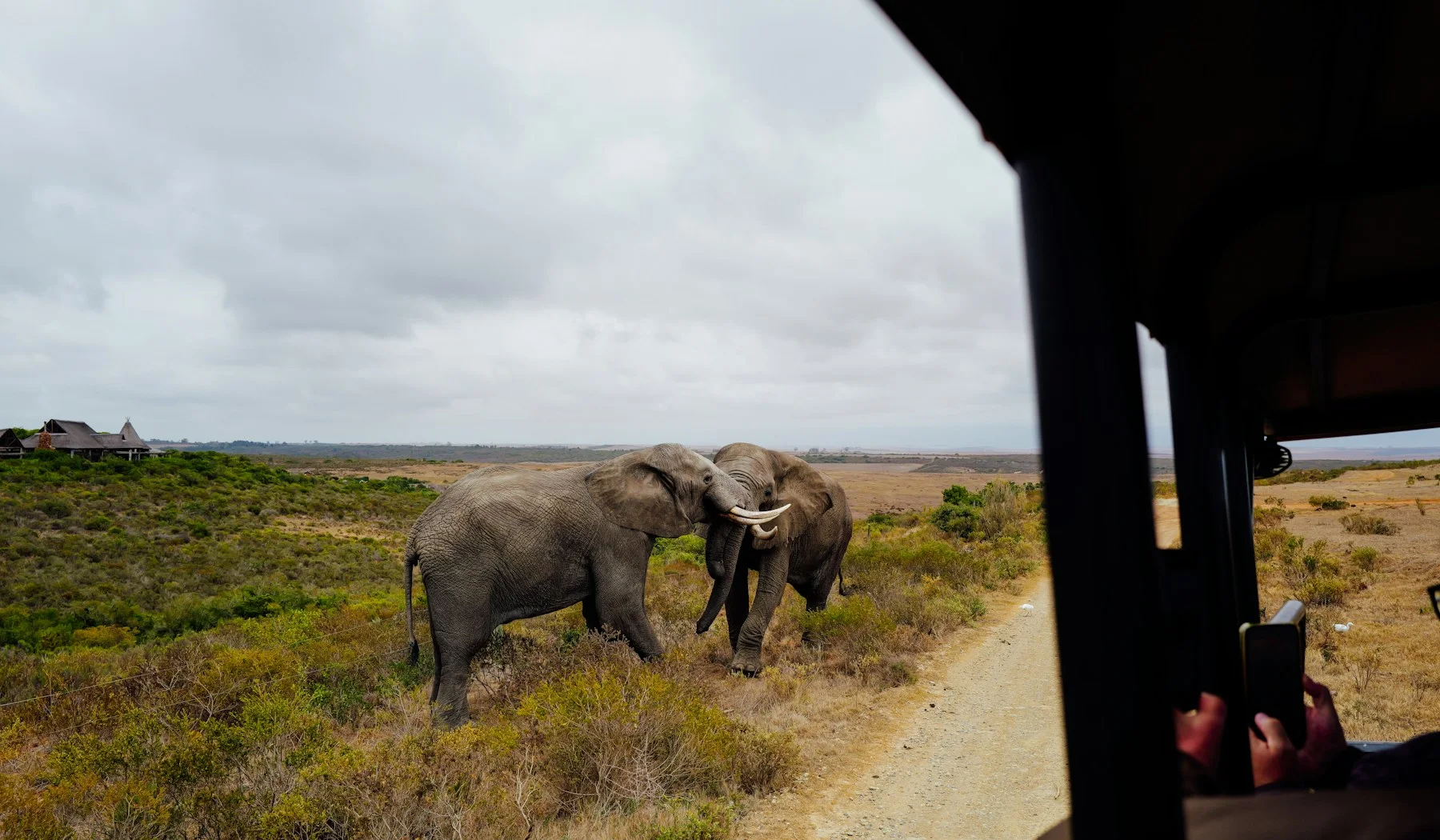
Picture the first morning: the door of the vehicle opens, someone takes a steady step up, and the guide waits while everyone settles into a comfortable seat. The drive begins slowly. An elephant crosses the track. There is no timetable forcing the group to stay out for six hours if a shorter morning feels right. A good Kenya safari for seniors is built from these ordinary details, not from an age label.
Many people in their seventies and eighties travel happily in the Mara, Amboseli and Laikipia. Others find a long, rough transfer hard at fifty. Mobility, stamina, health and personal preference vary. The best route starts with an honest conversation about what is easy, what is tiring, and which experiences matter most. It is entirely possible to prefer a slow safari simply because a slower holiday is more enjoyable.
Start with the traveller, not a number
A safari is mostly seated wildlife viewing, but “mostly seated” hides the awkward parts: climbing into a high 4×4, remaining comfortable over rutted tracks, standing to see through a pop-up roof, walking to a tent after dark and using steps or uneven paths at camp. A traveller who walks several kilometres at home might still find repeated jolts difficult. Someone with limited walking range may love a well-located lodge where wildlife is visible from a terrace.
Instead of asking “Is this trip senior-friendly?”, describe the actual needs: how far can the traveller walk on gravel? Can they manage a vehicle step? Is an arm for balance helpful? Do they need a walk-in shower, a firm chair, a room near dining or a toilet break every few hours? Is the priority long game drives, a quiet camp or a family trip with children? Those answers change the booking in useful ways.
The vehicle matters long before the wildlife appears
A private 4×4 can be a comfort choice as much as a luxury one. The guide can stop for a stretch, return to camp early, adjust how long a sighting lasts or leave later on a cold morning. In a shared vehicle, everyone’s day must work together. A private trip is not necessary for every older traveller, but it is valuable when rest, toilet breaks, seating position or hearing need more flexibility. Our private Kenya safaris guide explains what should be included in that arrangement.
Ask for a photo of the actual vehicle type, not merely a promise of a “luxury jeep.” Look at the first step, the grab handle, the height of the seat, the width of the door and how the roof opens. In an open-sided lodge vehicle, a step into the passenger row may still be high. In a road-safari Land Cruiser, a pop-up roof gives standing views, but a traveller who prefers to sit should have a good sightline through a window. Seat cushioning and legroom vary by vehicle.
| Vehicle detail | Why it matters | Useful confirmation |
|---|---|---|
| Entry height and handles | A difficult step is repeated several times each day | Photo or measurement of the actual vehicle entry |
| Seat position | Rear seats may feel bumpier and harder to reach | Named seat arrangement, not simply “window seat” |
| Roof and windows | Standing may be unnecessary or uncomfortable | Clear viewing while seated |
| Drive duration | Hours on corrugations can be tiring | Typical morning and afternoon drive, with flexibility |
| Toilet and rest stops | Park facilities are not always close | Planned stop options along the actual route |
| Private vs shared | Determines who can shorten or extend the outing | Whether the vehicle is exclusive to your party |
Do not promise a specially adapted vehicle without verifying one. A step stool, extra assistance or a particular seat can help some people, but it must be safe for the passenger and compatible with the vehicle and park rules. A traveller who cannot transfer independently may need a more specialised plan. That should be discussed before booking, not discovered at the first game drive.
A beautiful camp is not automatically an easy camp
Camp websites tend to show a room, a view and perhaps a pool. The journey between those places matters just as much. Some tented camps have long sandy paths; others have timber decks, steps into a bathroom or a dining area on a slope. A large lodge may have ground-floor rooms, but the best views might be reached by stairs. An accessible room label is only a starting point.
Ask where the proposed room sits relative to dining and the vehicle pickup, whether the path is level and firm, how many steps are involved, and whether staff can escort guests after dark. Ask about the shower threshold, grab rails if required, bed height and bathroom door. If hearing or vision is a concern, discuss lighting, written briefings and how staff communicate the morning schedule. A camp that answers with photos or a measured description is more useful than one that simply says it is “suitable for seniors.”
Wildlife can be enjoyed without a punishing activity schedule. A waterhole, river outlook or shaded veranda can make time at camp rewarding. At the Mara, the exact lodge location also affects travel time to game-viewing areas. Our where to stay in the Masai Mara guide compares those positions and the trade-offs behind them.

Road safari or fly-in: the comfort calculation
Flying can replace a long inter-park road transfer with a shorter journey, but the total day still includes airport travel, check-in, the flight, boarding and the drive from the airstrip to camp. Small bush aircraft can have steep steps, limited space and operational restrictions. A road safari avoids aircraft transfers and may carry more luggage, but it brings more hours over variable roads. Neither is universally easier.
If flying is attractive, disclose mobility needs to the airline before tickets are issued. AirKenya’s published terms require advance notice for passengers with disabilities, physical challenges, illness or old age and set conditions for passengers who cannot perform certain emergency actions unaided. Its baggage policy addresses collapsible mobility aids. These are that airline’s rules, not a promise about every operator or aircraft. Get written confirmation for the precise flight and equipment. Our domestic safari flight and baggage guide covers the small-aircraft context in more detail.
| Choice | What may feel easier | What still needs checking |
|---|---|---|
| Private road safari | Door-to-door continuity, familiar vehicle, stops when needed | Total hours, road surface, seat comfort and overnight breaks |
| Scheduled bush flight | Less time on long inter-park roads | Aircraft steps, assistance rules, baggage and airstrip transfer |
| One park for longer | Fewer pack-ups and transfers | Enough variety and a camp you enjoy between drives |
| Two carefully chosen bases | Landscape contrast without a daily move | Connection time and whether an extra night is needed |
A long road day can sometimes be broken with a comfortable overnight stop. A direct flight can sometimes be followed by a rough vehicle transfer. Compare the full door-to-door journey, not only the flying time or a map estimate. The private road safari guide and fly-in safari guide show the different travel patterns.
A safari day should have a middle, not only a beginning and end
The classic pattern is an early drive, breakfast, a rest around the warmer middle of the day and an afternoon drive. It is not compulsory to do every outing. A private guide can arrange a later start or an early return, subject to park opening times and the camp’s operations. On a longer safari, a quiet afternoon may improve the next morning more than another hour in the vehicle.
Long all-day drives have a purpose when reaching a distant river or exploring a large reserve. They also mean picnic meals, limited toilet options and more time on rough tracks. For some travellers, two shorter drives from a well-located camp are more satisfying. Discuss the trade-off honestly, particularly if the itinerary is built around a seasonal wildlife event that no guide can guarantee.
Balloon flights are often presented as an effortless alternative, but they usually involve a very early pickup and a basket entry and landing that may require particular mobility. Check the balloon operator’s own requirements before including one. A guided walk is optional too, not a test of fitness. There is plenty to see from a vehicle or camp terrace.
Kenya routes that give the safari room to breathe
For a first visit of five or six nights, one strong wildlife area plus a calm arrival night can be better than three parks linked by exhausting drives. A Mara stay offers rich wildlife and many camp styles. Amboseli offers elephant country and, on clear days, Kilimanjaro views. Ol Pejeta can combine rhino-focused game viewing with lodges where wildlife sometimes comes near the property. Each area has different drive surfaces and transfer logic, so the exact camp remains important.
With eight or nine nights, two bases make more sense. A night in Nairobi after a long-haul flight can protect the first safari day from jet lag. Then spend several nights in one area before moving to a genuinely contrasting landscape. Mara plus Laikipia or Ol Pejeta, or Amboseli plus the Mara, can work if the link between them is planned sensibly. It is not necessary to cross Kenya every other day to feel that you have seen the country.
| Time available | A calmer shape | What to avoid |
|---|---|---|
| 4 to 5 nights | Arrival recovery plus one main safari base | Three parks and repeated packing |
| 6 to 7 nights | One deep stay or two nearby, contrasting bases | A transfer that consumes the only full day in a park |
| 8 to 10 nights | Two substantial wildlife areas with travel margin | Assuming every flight or road link is direct |
| Longer trip | Two or three bases, with real rest days | Turning extra time into extra moves by default |
These are shapes, not fixed packages. A keen birdwatcher may want more time in one area. A family with grandparents and teenagers may need a private vehicle so people can choose different afternoons. Tailor-made Kenya safaris are useful precisely because the number of nights and transfers can follow the people travelling.
Health, medication and insurance: plan without making the trip about worry
A pre-travel discussion with a clinician or travel-health specialist is worthwhile for anyone with a chronic condition, mobility limitation or medication that needs temperature control. The CDC’s guidance for travellers with chronic illness emphasises preparation around existing conditions and medicines. The CDC Kenya destination page provides current destination-specific health information. Neither a safari article nor a tour operator should choose your medicines or vaccination plan.
Keep essential medicine in hand luggage, understand the airline’s rules for any medical equipment, and bring documentation your clinician recommends. If a device needs charging or refrigeration, ask the exact camp about power hours, backup supply and storage. Do not assume the word “luxury” means mains electricity all night or a refrigerator in every room. If a condition could require urgent care, discuss access from each camp and the suitability of medical and evacuation cover with the insurer. Our travel insurance guide explains the questions to compare without recommending a policy.
Water, shade, rest and a realistic day length matter to everyone. Early drives can be chilly even when afternoons are warm. Bring layers that are easy to add or remove in the vehicle, and tell the guide if you need to stop. Comfort is not a favour to ask for after the fact; it should be part of the trip design.
What older travellers say after going
The independent accounts are reassuring, but not unanimous. That is helpful: they point to the things a brochure tends to leave out.
We did Tanzania and Kenya in our late 60s with no problems.
This traveller described the benefit of a private vehicle and better accommodation, while still acknowledging that mornings are when wildlife is more active.
We did a safari about two years ago and it was a fantastic experience but very tiring.
Another traveller remembered the early starts and long days. That is a real experience too, and it is why drive length belongs in the plan.
I did it at 85
In the same conversation, an 85-year-old described a morning drive, lunch and a nap before a later drive. The two accounts differ because the pace differed.
None of those voices can predict how another person will feel. They do show why “safari for seniors” should not mean a single rigid itinerary. Build the day around the traveller rather than asking them to keep up with the day.
What to settle before paying a deposit
Have the vehicle type and seat arrangement, the door-to-door transfers, the exact rooms and their paths, and any airline assistance accepted in writing. Include the number of game drives, whether the vehicle is private, and how a shorter day would work. If stairs, shower access, power for equipment or refrigeration are essential, ask for photographs or a specific property response. A broad assurance that “the lodge is accessible” is not enough.
If anyone in the group needs a carer or transfer assistance, define who provides it at the airport, airstrip, vehicle and camp. A guide can help with ordinary luggage and a steady hand, but is not a trained medical attendant. Price the real arrangement, including any private vehicle, upgraded room, direct flight or extra night. Our deposit and cancellation guide helps you compare the terms once the right trip has been designed.
Frequently asked questions
Is a Kenya safari suitable for someone over 70?
Often, yes, but age alone is a poor guide. Match the vehicle, camp paths, transfer length and game-drive pace to the traveller’s actual mobility and preferences. Discuss health concerns with a clinician.
How much walking is required on a safari?
Game viewing is mostly from a vehicle, but you may need to walk between the room, dining and pickup point and manage uneven paths. Ask the exact property for distances, steps and surface details.
Are safari vehicles easy to climb into?
Entry heights, steps, handles and seats vary. Request a photograph or measurement of the vehicle planned for your trip, and confirm any assistance or step stool before booking.
Is a private safari better for older travellers?
A private vehicle lets your party shorten a drive, stop for a stretch and choose its own pace. It may be worth the extra cost when those freedoms matter, but many older guests are also comfortable on shared drives.
Is flying to the Masai Mara easier than driving?
It can remove a long road transfer, but small-aircraft steps, airline assistance rules, baggage and the airstrip-to-camp drive still matter. Compare the complete door-to-door journey.
Can a traveller bring a wheelchair or walking aid on a bush flight?
Policies differ by airline and aircraft. AirKenya publishes a policy for collapsible mobility aids, but the operator must confirm the exact device and assistance requirement for the booked flight.
Can we skip an early game drive?
Usually you can choose to rest, though shared vehicle schedules and camp arrangements vary. A private vehicle gives more control over when and how long you go out.
What should we check about a safari lodge room?
Ask about path length and surface, steps, bathroom door and shower threshold, bed height, lighting, power and distance to dining and vehicle pickup. An accessible label alone may not answer those questions.
Do older travellers need special travel insurance?
The right cover depends on the traveller’s health, itinerary and policy wording. Compare existing-condition terms, medical treatment and evacuation, and discuss suitability with an insurer or qualified adviser.
Continue planning
This is travel-planning information, not medical advice. Confirm health decisions with a qualified clinician, flight assistance with the operating airline and room accessibility with the named property.
Plan the safari that fits
Tell us your dates, travellers, mobility considerations and the wildlife areas you hope to visit. We will discuss the practical details before a booking decision.