
Solio vs Ol Pejeta for Rhino Viewing
Solio gives rhinos room to become the whole subject of a drive. Ol Pejeta connects wildlife encounters with population management, science and the final two northern white rhinos.
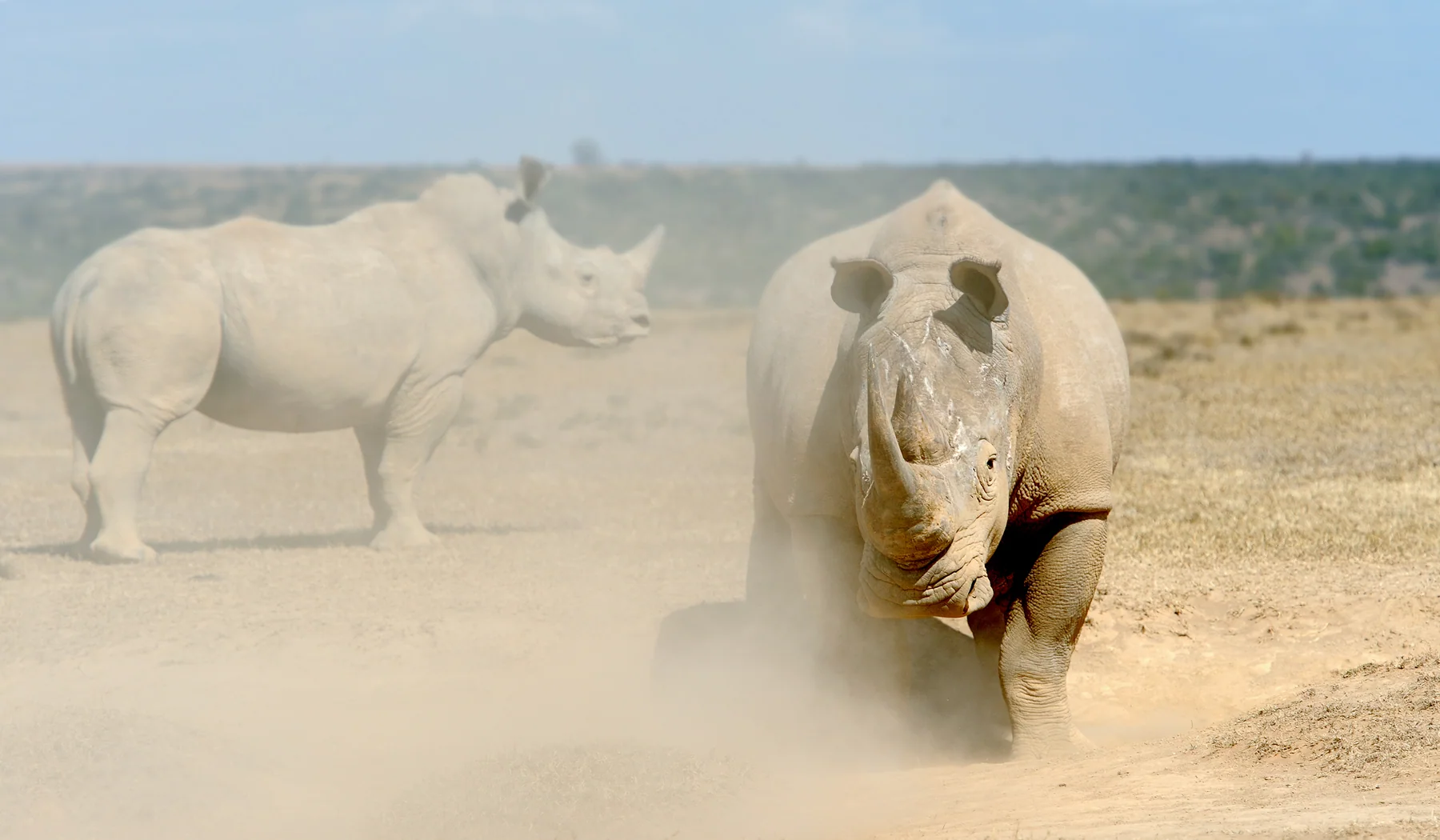
- Solio vs Ol Pejeta for rhino viewing at a glance
- The specialist answer is different from the general answer
- Start by knowing which rhinos live in Kenya
- White rhinos are often easier to watch
- Black rhinos reward a slower eye
- Solio’s strongest gift is repetition
- Ol Pejeta’s strongest gift is context
- Which is better for southern white rhinos?
- Which is better for eastern black rhinos?
- Northern white rhinos decide the choice for some travellers
- A northern white rhino visit is not a normal game drive
- Solio’s rhino story is a breeding and translocation story
- Ol Pejeta’s rhino story is recovery under pressure
- Baraka must now be remembered accurately
- Rhino counts need dates and owners
- Habitat shapes the encounter
- Solio can feel quieter
- Ol Pejeta offers more ways to learn
- The first five minutes can be misleading
- What a good guide notices before you do
- How to tell black and white rhinos apart
- A calf changes the meaning of distance
- Solio’s rules protect the sighting
- Ol Pejeta encounters also need restraint
- Which is better for photography?
- Vehicle choice matters more than camera brand
- Lens choice for rhinos
- Light behaves differently through the day
- Do not chase a horn count
- Families may prefer different winners
- A first safari may need more than Solio
- Ol Pejeta can be the more complete single stop
- One day at Solio should remain simple
- One day at Ol Pejeta needs more choices
- Two nights at Solio suit deep observation
- Two nights at Ol Pejeta suit layered learning
- Visiting both is not repetitive
- A practical three-night rhino route
- A four-night route gives each reserve a full day
- Cost should follow the type of encounter
- Questions for a rhino-specialist guide
- Questions for the booking desk
- Avoid promises that should make you suspicious
- Weather changes visibility, not conservation value
- Accessibility requires an encounter-by-encounter check
- What the photographs on this page really show
- Independent reviews are observations, not odds
- The choice by traveller type
- The choice by available time
- The choice by learning goal
- The honest winner
- Build the trip around the reason you care
- Your rhino safari brief
- Plan Solio and Ol Pejeta without rushing either
The best rhino safari is not always the one with the longest species list. Sometimes it is the morning when two white rhinos cross a dusty Solio plain and a third animal appears through the haze. Sometimes it is the moment at Ol Pejeta when a keeper introduces Najin and Fatu, and the phrase “the last two” stops sounding abstract.
Both places are exceptional. They are exceptional in different ways.
This specialist Solio vs Ol Pejeta for rhino viewing guide stays with the animals: which species you may see, how their behaviour differs, what habitat does to visibility, how to photograph without crowding and which experience will mean more to you.
Solio vs Ol Pejeta for rhino viewing at a glance
| Rhino question | Solio | Ol Pejeta |
|---|---|---|
| Best overall use | A whole drive centred on rhinos | Rhino conservation within a varied safari day |
| Eastern black rhino | Protected, sightings possible with patience | Major protected population and strong guiding |
| Southern white rhino | A defining open-country subject | Present and often seen on ordinary drives |
| Northern white rhino | No | Najin and Fatu, the final two living animals |
| Repeated rhino encounters | Central strength | Strong, but the conservancy has many other priorities |
| Structured interpretation | Guide and reserve story | Keeper-led and bookable conservation experiences |
| Photography style | Time, space and behaviour | Wildlife plus named conservation stories |
| Best for a first safari | Pair with another ecosystem | Easier to use as a broad standalone stop |
The specialist answer is different from the general answer
Our broader Ol Pejeta versus Solio comparison covers accommodation, access, other wildlife and general itinerary fit. That wider contest often favours Ol Pejeta for mixed interests.
Once the question becomes only “Where should I go for rhinos?”, Solio gains ground. Its protected landscape is so closely associated with black and white rhinos that repeated observation can replace the usual safari pattern of searching for one rare individual.
| Traveller's real question | Better page or answer |
|---|---|
| Which is the more complete destination? | Read the broad Ol Pejeta versus Solio guide |
| Where can I spend a drive focused on rhinos? | Solio first |
| Where can I understand the northern white rhino story? | Ol Pejeta |
| Can I see several African safari priorities in one stop? | Ol Pejeta |
| Can I compare black and white rhino behaviour in open habitat? | Solio, with a patient guide |
Start by knowing which rhinos live in Kenya
Kenya protects eastern black rhinos and southern white rhinos in several reserves. Ol Pejeta is also home to Najin and Fatu, the last two living northern white rhinos. The names “black” and “white” do not describe a dependable colour difference. Feeding anatomy and behaviour are more useful.
| Rhino | Scientific context | Useful field clue |
|---|---|---|
| Eastern black rhino | A subspecies of black rhino | Pointed, prehensile upper lip for browsing |
| Southern white rhino | A subspecies of white rhino | Broad, square mouth for grazing |
| Northern white rhino | A white-rhino subspecies extinct in the wild | Seen at Ol Pejeta only through its protected conservation programme |
White rhinos are often easier to watch
White rhinos spend much of their feeding time with broad mouths close to the grass. Open habitat makes their bodies visible from farther away, and females may be seen with calves or in loose social groupings.
That does not make them tame. A rhino can change direction quickly, and a mother decides how much space her calf needs. The vehicle should never convert visibility into entitlement.
| White-rhino behaviour | What a patient visitor may notice |
|---|---|
| Grazing | Head low, broad mouth sweeping the grass |
| Resting | Body turned to wind or shade, ears still active |
| Mother and calf | Calf positions itself close to the adult and responds to her movement |
| Loose group | Animals tolerate shared feeding space without behaving like a herd |
| Alert response | Head rises, ears turn, body angle changes |
Black rhinos reward a slower eye
Black rhinos browse leaves and twigs. Their pointed upper lips help them pull vegetation, and thicker bush can hide a large animal with surprising efficiency. They are generally more solitary and can appear more watchful.
The best black-rhino encounter may begin with an ear, a branch moving against the wind or a dark curve behind a shrub. A guide who slows the vehicle before the animal steps into view creates a far better experience than one who drives past while chasing a reported location.
| Black-rhino clue | Why it helps |
|---|---|
| Hooked upper lip | Confirms browsing adaptation |
| Higher head position | Often accompanies feeding from shrubs |
| Scraped dung or midden | Part of territorial communication |
| Moving vegetation | Can reveal an animal before the whole body appears |
| Fresh track | Helps a guide decide where patience is worthwhile |
Solio’s strongest gift is repetition
In many parks, a rhino sighting arrives late in the drive and disappears quickly. At Solio, a first encounter may be followed by another in a different habitat and then a mother with a calf. Repetition gives the visitor permission to stop counting and start watching.
| First encounter | Later encounter |
|---|---|
| “We found a rhino” | “This animal is feeding differently” |
| Quick identification photograph | Behaviour, light and landscape composition |
| Species excitement | Individual differences and social spacing |
| Pressure to move closer | Confidence to wait at a respectful distance |
The complete Solio visitor guide explains the wider reserve, while this page keeps the lens on rhinos.
Ol Pejeta’s strongest gift is context
Ol Pejeta can place an ordinary black-rhino sighting beside ranger protection, population monitoring, assisted reproduction, the northern white rhino programme and a memorial to animals lost to poaching.
The conservancy's official rhino page describes it as a sanctuary for more than 165 eastern black rhinos. A later official 2025 update states that the population had reached 183 and explains the ecological pressure created by success. That tension matters. Conservation is not simply putting more rhinos behind a fence. It is securing enough habitat, managing territory and moving animals safely when a sanctuary reaches its limit.

Which is better for southern white rhinos?
Solio is the stronger first choice for a day built around southern white rhinos in open country. Ol Pejeta also offers good southern white rhino viewing, but the conservancy invites attention in many other directions.
| Southern white rhino priority | Better fit |
|---|---|
| Repeated open-plains encounters | Solio |
| Comparing grazing individuals | Solio |
| Southern white rhino plus northern white rhino context | Ol Pejeta |
| Rhino viewing plus chimpanzees or Big Five interests | Ol Pejeta |
| One full day devoted only to rhinos | Solio |
Which is better for eastern black rhinos?
Both can produce excellent black-rhino encounters. Ol Pejeta has the stronger public, current population reporting and a large formal conservation programme. Solio's concentrated rhino identity and long sanctuary history make it equally compelling in the field.
| Black-rhino priority | Better fit |
|---|---|
| Current population and management interpretation | Ol Pejeta |
| Quiet search within a rhino-focused reserve | Solio |
| Ranger or monitoring story | Ol Pejeta |
| Combining black and white rhino observation through one long drive | Solio |
| A guarantee of a sighting | Neither |
No ethical guide can promise a black rhino on a particular drive. Dense cover, weather and the animal's decisions still matter.
Northern white rhinos decide the choice for some travellers
Najin and Fatu are the final two living northern white rhinos. They live under close protection at Ol Pejeta, and their story connects extinction in the wild with veterinary care, assisted reproduction and the difficult question of whether science can preserve a subspecies after natural breeding is no longer possible.
Solio has no equivalent. If seeing Najin and Fatu and understanding the programme is the central reason for the trip, choose Ol Pejeta and reserve the appropriate experience in advance.
The northern white rhinos and chimpanzee sanctuary guide gives the full context and helps keep the day from becoming a hurried attraction list.
A northern white rhino visit is not a normal game drive
The encounter is structured because the animals live under intensive protection and care. The value lies in listening, asking questions and understanding what “extinct in the wild” means. It should not be sold as a chance to get closer than wildlife ethics normally allow.
| Go for | Do not expect |
|---|---|
| The individual histories of Najin and Fatu | A wild, unplanned sighting |
| Assisted-reproduction context | A guaranteed scientific milestone on your date |
| Keeper interpretation | Unlimited access or private contact |
| A difficult conservation story | A cheerful photo stop without emotional weight |
Solio’s rhino story is a breeding and translocation story
Solio's official history traces the fenced reserve to 1970, when five black rhinos were moved into protected habitat. Southern white rhinos arrived in 1978, followed by more black rhinos in 1980. Breeding success later allowed animals to be moved out and help establish or reinforce other Kenyan populations.
The reserve's significance therefore extends beyond the rhinos visible on one drive. An animal born at Solio may become part of another sanctuary's future.
| Conservation chapter | Meaning for the visitor |
|---|---|
| Protected breeding space | The reserve was designed around rhino survival |
| Black and white rhinos | Two species reveal different feeding and social behaviour |
| Translocations | Success contributes to populations beyond Solio |
| Continued security | Every relaxed-looking sighting depends on serious protection |
Ol Pejeta’s rhino story is recovery under pressure
Ol Pejeta's official 2025 account says its black-rhino population reached 183, with 17 calves born that year. It also says the conservancy had exceeded an earlier estimate of sustainable carrying capacity. More births are good news, but more territorial black rhinos need more space.
| Conservation success | New management question |
|---|---|
| More calves survive | Is there enough territory? |
| Poaching pressure is controlled | Can security remain strong across a larger landscape? |
| Population grows | Which animals can be moved safely? |
| Tourism funds protection | How can visits avoid disturbing behaviour? |
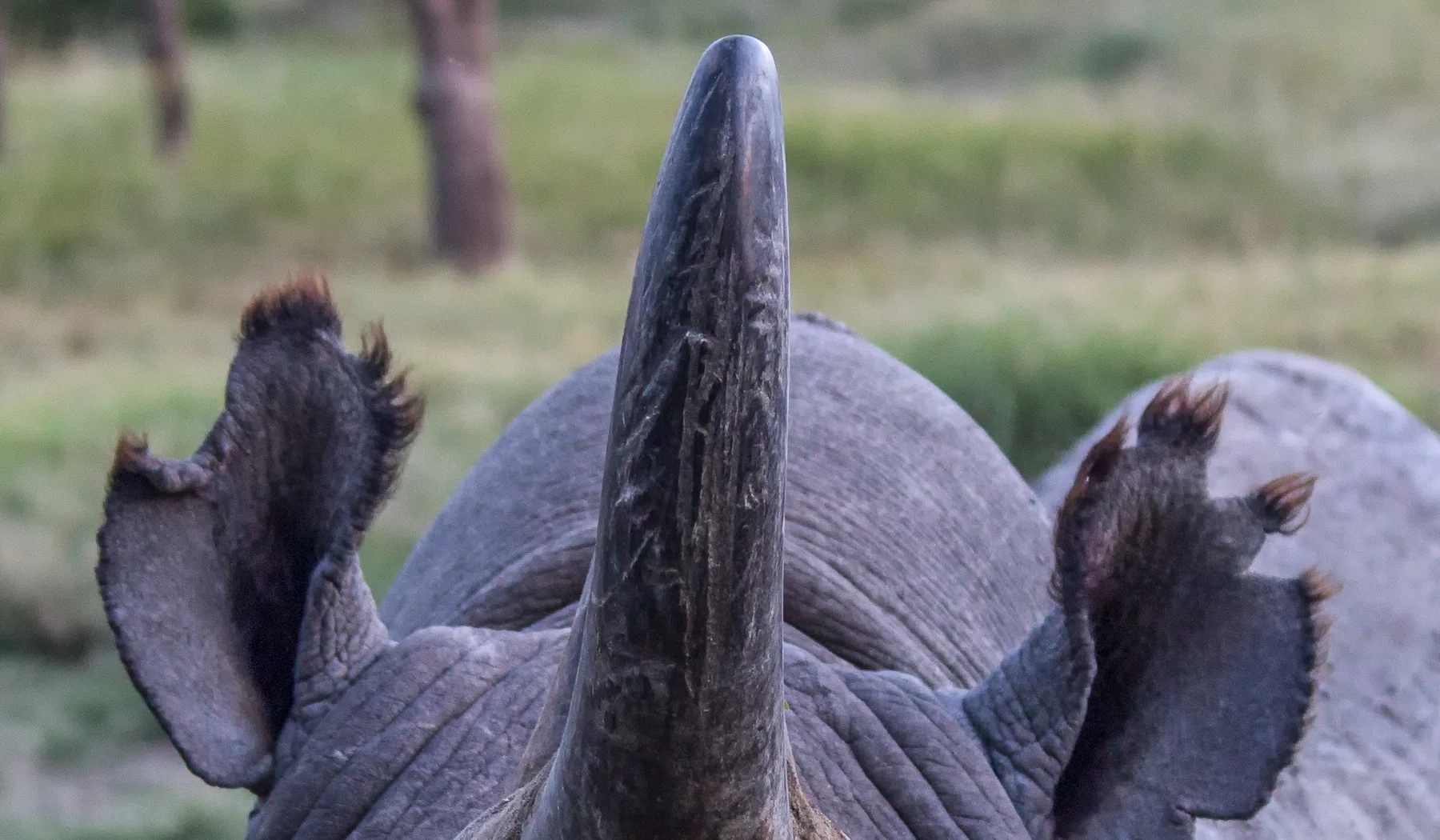
Baraka must now be remembered accurately
Baraka, the blind black rhino who became one of Ol Pejeta's most recognised conservation ambassadors, died on 16 August 2026 at the age of 31. The conservancy announced his death two days later.
Older guides still tell visitors they can meet or feed him. That information is no longer true. The photograph in this guide was taken at Ol Pejeta in 2018 and is used to remember an individual whose story helped many visitors care about black rhinos.
| Baraka's story | What it taught |
|---|---|
| Lost sight after injury and cataracts | Individual animals may need lifelong care |
| Lived in a protected enclosure | Welfare can require an alternative to release |
| Met generations of visitors | One known animal can make conservation personal |
| Died in August 2026 | Current content must not keep selling an encounter that ended |
Rhino counts need dates and owners
Solio population numbers vary widely across lodge, media and tour pages. Many do not state when the animals were counted. This guide does not choose the largest number and repeat it.
| Number type | Editorial treatment |
|---|---|
| Official and dated | State the date and organisation |
| Official but undated | Use carefully and avoid implying a current census |
| Lodge or tour claim | Do not treat as population evidence |
| Reviewer's number seen | One day's observation, not reserve population |
| “Guaranteed” sightings | Reject |
At Ol Pejeta, the official 2025 population update is useful because it gives a date and explains the management consequences. At Solio, the honest statement is that both black and white rhinos are central to the reserve and repeated sightings are a well-established strength.
Habitat shapes the encounter
Solio's broad grass and yellow-barked woodland can reveal several white rhinos across one scene. Black rhinos may remain closer to cover. Ol Pejeta is larger and more varied, with plains, bush, water points, riverine ground and visitor sites spread across the conservancy.
| Habitat | Likely viewing effect |
|---|---|
| Open short grass | Easier white-rhino detection and cleaner backgrounds |
| Tall grass | Bodies may disappear below the backline |
| Shrub and woodland edge | Better black-rhino browsing habitat, harder photography |
| Waterhole | Possible repeated visits, but animal timing remains unpredictable |
| Dusty open track | Backlight and dust can create atmosphere or obscure detail |
Solio can feel quieter
Independent visitors sometimes notice how few vehicles they meet. One Solio reviewer wrote that they “only passed 2 cars” during a six-hour visit. Another called the reserve “definitely a highlight”. Both comments come from independent Tripadvisor reviews.
Those impressions do not guarantee solitude. Lodge occupancy, day visitors, sightings and season change the road. Solio's rules still matter when several vehicles converge.
Ol Pejeta offers more ways to learn
An Ol Pejeta reviewer called its approach “truly unique”, while another chose to “do all the activities instead” of upgrading accommodation. These independent visitor comments reveal a real planning choice: spend the budget on the room, or on keeper-led and conservation experiences.
| Learning style | Better fit |
|---|---|
| Learn by watching wild behaviour over time | Solio |
| Learn through keepers, rangers and scheduled experiences | Ol Pejeta |
| Compare two rhino species in the field | Both |
| Understand northern white rhino science | Ol Pejeta |
| Understand a breeding and translocation reserve | Solio |
The first five minutes can be misleading
A Solio reviewer reported seeing “a handful of rhinos” within the first five minutes. That can happen, but it is not a booking promise. The next traveller may spend the first hour watching giraffes and scanning grass.
Fast success should make the day slower, not shorter. Once the pressure to find a rhino disappears, look at feeding, scars, horn shape, ear notches, calves and the animal's response to wind and vehicles.
What a good guide notices before you do
| Guide observation | Why it matters |
|---|---|
| Ear notches and individual marks | Supports identification without guessing |
| Wind direction | Helps predict whether an animal has detected the vehicle |
| Browsed branch tips | Suggests recent black-rhino feeding |
| Dung midden | Indicates communication and territorial use |
| Calf position | Helps the vehicle avoid separating mother and young |
| Ear and head movement | Signals alertness or discomfort |
| Other vehicles | Determines whether to wait, leave or approach later |
Ask for a guide who enjoys rhinos, not only someone who knows the roads. Specialist curiosity changes the conversation from “there is one” to “here is what it is doing”.
How to tell black and white rhinos apart
| Field mark | White rhino | Black rhino |
|---|---|---|
| Upper lip | Broad and square | Pointed and prehensile |
| Feeding | Grass | Leaves, shoots and woody plants |
| Head carriage | Often low while grazing | Often higher while browsing |
| Body impression | Longer head and pronounced shoulder hump | More compact, with a different back profile |
| Social pattern | Females and young may tolerate loose groups | Often more solitary and territorial |
| Colour | Not a reliable field mark | Not a reliable field mark |
Use mouth shape and feeding behaviour first. Dust, mud, light and camera settings can make the same animal look pale or dark.

A calf changes the meaning of distance
The Solio photograph in this guide shows a calf sitting close to an adult in open grass. It is a beautiful scene, but it is also a reminder that the adult is making safety decisions.
| Calf behaviour | Vehicle response |
|---|---|
| Moves behind the mother | Hold position and give more room |
| Adult turns toward vehicle | Do not advance |
| Calf lies down | Avoid surrounding or lingering beyond the rules |
| Pair crosses the track | Stop early and leave a wide corridor |
| Another vehicle arrives | Coordinate rather than competing for angle |
No photograph is worth pushing a mother to move her calf.
Solio’s rules protect the sighting
The reserve's rules set a minimum distance of 20 metres, a maximum of three vehicles around an animal and a ten-minute limit beside the same animal. They also prohibit harassment, off-road driving and excessive speed.
| Rule | Better viewing result |
|---|---|
| Keep 20 metres | Animal has room to choose its path |
| Maximum three vehicles | Less crowding and engine noise |
| Ten-minute limit | Other visitors get a fair opportunity |
| Stay on permitted roads | Habitat and tracks remain usable |
| Obey speed limits | Wildlife and visitors are safer |
The time limit encourages quality. Look first, photograph second and leave before the animal has to ask.
Ol Pejeta encounters also need restraint
Structured access can create the mistaken idea that an animal exists for visitor contact. It does not. Keeper instructions, barriers and time limits are part of welfare and security.
| Ethical question | Good answer |
|---|---|
| Can we touch a rhino? | Only if a current official programme explicitly permits it and welfare comes first |
| Can we leave the vehicle? | Only at designated sites or under ranger instruction |
| Can we use a drone? | Never assume permission in a protected area |
| Can we call the animal closer? | No |
| Can children run near an enclosure? | Follow staff instructions and maintain calm behaviour |
Which is better for photography?
Solio usually wins for a portfolio centred on free-ranging rhinos, particularly white rhinos against open space. Ol Pejeta wins when the photographic story includes conservation staff, protected northern white rhinos, memorials and a wider wildlife narrative.
| Photograph wanted | Better starting point |
|---|---|
| Rhino in a broad grass landscape | Solio |
| Mother and calf behaviour | Either, with luck and patience |
| Black rhino emerging from cover | Either |
| Several white rhinos in one scene | Solio |
| Northern white rhino conservation story | Ol Pejeta |
| Rhino plus other Big Five subjects in one day | Ol Pejeta |
Vehicle choice matters more than camera brand
| Photography need | Booking choice |
|---|---|
| Two long-lens users | Private vehicle with separate clear sides |
| Low morning light | Gate-ready departure and stable support |
| Behaviour sequence | Time with one animal, not a species race |
| Dust protection | Covers, cloth and careful lens changes |
| Battery use | Confirm charging in vehicle or room |
| Quiet recording | Guide willing to switch off engine where safe |
A crowded shared vehicle can make a costly lens useless. Decide how many photographers need a window before deciding how many nights to buy.
Lens choice for rhinos
| Lens range | Useful role |
|---|---|
| 24 to 70 mm | Landscape, vehicle context and close animals at safe distance |
| 70 to 200 mm | Behaviour, pairs and environmental portraits |
| 100 to 400 mm | Flexible safari workhorse for individuals and details |
| 400 mm and longer | Distant black rhino, ear notches and compressed backgrounds |
| Phone | Wide scene and video, without leaning outside the vehicle |
Carry enough focal length to respect distance. Never ask the driver to close the gap because the lens is too short.
Light behaves differently through the day
| Time | Opportunity | Limitation |
|---|---|---|
| Early morning | Soft light, cool air and active animals | Cold hands, low shutter speed and gate formalities |
| Midmorning | Clear identification and feeding | Contrast grows quickly |
| Midday | Dust, texture and behaviour at water or shade | Harsh light and heat shimmer |
| Late afternoon | Warm backlight and long shadows | Exit or activity timing limits the scene |
| Cloudy highland day | Even skin detail and softer contrast | Mountains may disappear |
Solio rewards a full day when the rules allow. Ol Pejeta rewards careful placement of booked experiences so that the best game-drive light is not spent in a queue.
Do not chase a horn count
Rhino horn shape varies with age, wear, breakage, injury and management. Security or veterinary decisions may also affect appearance. A long horn is not proof that the animal is older, rarer or more valuable.
| Better observation | What it reveals |
|---|---|
| Feeding rhythm | Species adaptation |
| Ear notches | Monitoring and individual identity |
| Scars | A life history, without inventing the cause |
| Dung and scent marking | Territorial communication |
| Calf position | Relationship and security |
| Oxpeckers | Small ecological interactions |
Families may prefer different winners
Solio can be wonderful for a child who arrives fascinated by rhinos. The repeated sightings make identification easier and remove the frustration of a long search. Ol Pejeta can hold mixed attention through a sequence of game drives, the northern white rhinos, chimpanzees and other activities.
| Family pattern | Better fit |
|---|---|
| One rhino-obsessed child | Solio |
| Siblings with different interests | Ol Pejeta |
| Young child needing flexible stops | Private vehicle at either reserve |
| Teen interested in science | Ol Pejeta northern white programme |
| Family wanting a calm nature day | Solio |
Use the Kenya family safari guide to balance attention, transfers and rest across the whole trip.
A first safari may need more than Solio
Solio does not need to imitate the Mara or Amboseli. Its specialisation is its value. A first-time traveller who also wants elephants, large lion-pride dynamics and a broad species list should add another ecosystem rather than judging Solio for not being everything.
| Missing priority | Companion destination |
|---|---|
| Elephants and Kilimanjaro | Amboseli |
| Migration and plains predators | Masai Mara |
| Dry-country species | Samburu |
| Forest and waterfalls | Aberdares |
| Mixed conservation activities | Ol Pejeta |
Ol Pejeta can be the more complete single stop
If only one central Kenya destination fits, Ol Pejeta can satisfy more members of a mixed party. Rhinos remain a major strength, while elephants, predators, chimpanzees and structured activities broaden the day.
That breadth can also become a weakness if every hour is booked. Leave empty space for an ordinary game drive. A black rhino does not check the activity calendar before stepping onto the road.
One day at Solio should remain simple
| Part of day | Rhino-focused rhythm |
|---|---|
| Gate opening | Enter with documents and current payment arrangements ready |
| Early drive | Scan open grass, then slow near woodland edges |
| Midmorning | Stay with behaviour rather than chasing another count |
| Lunch | Use an approved place and keep the stop light |
| Afternoon | Revisit a different habitat as light and temperature change |
| Exit | Turn toward the confirmed gate with a safe margin |
The Solio cost and booking guide covers the exact quote lines, gate process and current rate discipline.
One day at Ol Pejeta needs more choices
| Priority | Protect time for |
|---|---|
| Wild rhino viewing | Early and late game-drive windows |
| Najin and Fatu | Pre-booked northern white rhino experience |
| Chimpanzees | Published sanctuary visiting window and closure |
| Photography | A private vehicle or clear shared-seat plan |
| Children | Meal and rest break between structured visits |
Use the Ol Pejeta entry fees and activities guide to choose rather than stacking every add-on.
Two nights at Solio suit deep observation
An inside stay can provide an arrival drive, a full day and a final morning. The advantage is not simply more sightings. It is the chance to see how weather and light change the same landscape.
| Stay moment | Rhino opportunity |
|---|---|
| Arrival afternoon | First orientation and broad habitat scan |
| Full morning | Cool conditions and patient behaviour work |
| Midday | Rest, review photographs and learn identification |
| Full afternoon | Different light, movement and social spacing |
| Departure morning | Return to a subject without pressure to “complete” the list |
Two nights at Ol Pejeta suit layered learning
Two nights reduce the temptation to place the northern white rhinos, chimpanzees, lunch and a full game drive into one compressed day. They also make an early or late drive easier.
| Day | Useful focus |
|---|---|
| Arrival | Gentle drive and orientation |
| Full day | One major conservation experience plus long wildlife windows |
| Departure | Final drive or one short activity, then realistic transfer |
See where to stay in Ol Pejeta for sector, gate and room decisions.
Visiting both is not repetitive
Solio can teach you to watch rhinos as animals in a landscape. Ol Pejeta can teach you to understand them as populations, individuals and a scientific challenge. The experiences reinforce one another.
| First reserve | Second reserve | Story created |
|---|---|---|
| Solio | Ol Pejeta | Begin with abundance and behaviour, then add science and population management |
| Ol Pejeta | Solio | Begin with conservation urgency, then spend a quieter day watching free-ranging behaviour |
Three or four nights across the two can work when road and accommodation choices are efficient.
A practical three-night rhino route
| Day | Plan |
|---|---|
| 1 | Nairobi to Solio or nearby highland base, with a gentle afternoon if timing works |
| 2 | Full Solio rhino-focused day |
| 3 | Transfer toward Ol Pejeta, with one carefully timed conservation experience |
| 4 | Early Ol Pejeta drive, then continue to Nanyuki, Nairobi or Samburu |
The Nairobi to Solio route guide and Nairobi to Laikipia route guide help make the transfer days honest.
A four-night route gives each reserve a full day
| Night | Base | Purpose |
|---|---|---|
| 1 | Solio or nearby | Arrive without forcing a late drive |
| 2 | Solio or nearby | Full rhino-behaviour day |
| 3 | Ol Pejeta | Transfer and settle |
| 4 | Ol Pejeta | Full conservation and wildlife day |
This is the better plan for photographers, families and anyone who dislikes choosing one major activity over another.
Cost should follow the type of encounter
This page does not repeat every fee because the companion guides maintain those current figures. The decision is still easier when you know what the money is buying.
| Spend | Rhino-viewing value |
|---|---|
| Private vehicle | Pace, clear sightlines and quieter observation |
| Inside-reserve accommodation | Early light and less gate travel |
| Specialist guide | Behaviour, identification and ethical positioning |
| Northern white rhino experience | Keeper-led context unavailable at Solio |
| Extra night | Less compression and more natural variability |
| Room upgrade | Comfort, but it may not improve the wildlife encounter |
If the budget is fixed, protect the guide and vehicle before adding decorative luxury.
Questions for a rhino-specialist guide
| Ask | Listen for |
|---|---|
| How do you distinguish black and white rhinos? | Lip, feeding and body shape, not colour |
| How do you respond to a mother with a calf? | More distance and no blocking |
| How do ear notches work? | Monitoring context without inventing identity |
| What if three vehicles are already present? | Waiting or leaving, not forcing a position |
| Can we switch off the engine? | Safety-aware willingness where permitted |
| How do you photograph without off-roading? | Lens choice and patience |
Questions for the booking desk
| Topic | Confirm |
|---|---|
| Vehicle | Private or shared, seat count and roof style |
| Guide | Experience in the chosen reserve |
| Entry | Current fees, documents and gate |
| Activity | Exact name, time, duration and age limit |
| Photography | Support, charging and vehicle restrictions |
| Mobility | Boarding height, walking surface and assistance |
| Children | Ages, seats, meal times and activity rules |
| Cancellation | Deposit and refund deadlines |
Avoid promises that should make you suspicious
| Promise | Why it is wrong |
|---|---|
| “Guaranteed black rhino” | Free-ranging wildlife remains unpredictable |
| “You can still feed Baraka” | Baraka died in August 2026 |
| “Unlimited close-up access” | Welfare, security and reserve rules set limits |
| “Solio has exactly X rhinos” without date | Undated sales number is not a census |
| “White rhinos are white” | Colour is not the useful distinction |
| “Northern white rhinos are a separate species” | They are a white-rhino subspecies |
Weather changes visibility, not conservation value
Rain can move animals, soften roads and make vegetation denser. Dry periods can concentrate animals around water and increase dust. Neither condition guarantees better sightings.
| Condition | Solio effect | Ol Pejeta effect |
|---|---|---|
| Fresh rain | Green landscape, slippery tracks and dispersed grazing | Greener bush, road changes and broad dispersal |
| Dry spell | Dust and open visibility | Water-point activity and harsh midday light |
| Cloud | Soft detail and hidden mountains | Soft detail and cooler drives |
| Cold morning | Active-feeling highland atmosphere | Similar Laikipia chill, especially in open vehicles |
Accessibility requires an encounter-by-encounter check
A standard game drive can often be adapted more easily than an experience involving steps, uneven ground or vehicle changes. Ask about the precise route, not whether the destination is “accessible” in general.
| Movement | Detail needed |
|---|---|
| Boarding safari vehicle | Step height, grab point and assistance |
| Northern white rhino visit | Walking distance, surface and seating |
| Information centre | Entrance, toilet and internal route |
| Photography | Stable seat and space for equipment |
| Long drive | Pressure relief, medication and comfort stops |
What the photographs on this page really show
The two Solio images were photographed in Solio Reserve and show white rhinos in open, dusty grassland. The Ol Pejeta white-rhino image was photographed in the conservancy. The close black-rhino portrait is Baraka in 2018 and belongs to his history, not the current activity list.
| Image | Truth carried in the caption |
|---|---|
| Two dusty Solio rhinos | Exact Solio location |
| Solio adult and calf | Exact Solio location and respectful calf context |
| Two Ol Pejeta white rhinos | Exact Ol Pejeta location |
| Baraka portrait | Ol Pejeta, 2018, with his August 2026 death stated |
Precise captions prevent a beautiful image from becoming a misleading claim.
Independent reviews are observations, not odds
One Ol Pejeta traveller described the northern white rhino visit as “very special”. That exact independent comment reveals emotional value, not a measurable probability.
Reviews can help answer these questions:
| Useful review clue | What it can tell you |
|---|---|
| Time spent | Whether the visitor rushed or stayed long enough |
| Number of vehicles | One person's crowding experience |
| Weather and road | Conditions on that date |
| Guide quality | Specific teaching or positioning examples |
| Emotional response | Why the encounter mattered to that individual |
They cannot tell you how many rhinos you will see next Tuesday.
The choice by traveller type
| Traveller | First choice | Reason |
|---|---|---|
| Dedicated rhino photographer | Solio | Repeated free-ranging subjects and open habitat |
| Conservation-science traveller | Ol Pejeta | Northern white rhinos and population-management context |
| Family with mixed interests | Ol Pejeta | More varied wildlife and structured experiences |
| Repeat safari visitor | Solio | A specialised day that feels different |
| First safari with only one central Kenya stop | Ol Pejeta | Broader standalone experience |
| Traveller who wants both depth and context | Both | The stories complement each other |
The choice by available time
| Time available | Best use |
|---|---|
| One day from Nyeri | Solio |
| One day from Nanyuki | Ol Pejeta or Solio, depending on priority and gate |
| Two nights | Choose one and give it a full day |
| Three nights | Solio full day plus one focused Ol Pejeta experience |
| Four nights | Two nights at each |
| Longer northern circuit | Add Samburu after Ol Pejeta or Solio |
The choice by learning goal
| I want to understand | Choose |
|---|---|
| How white and black rhinos feed differently | Solio or both |
| How a sanctuary breeds and translocates rhinos | Solio |
| How a large black-rhino population is managed | Ol Pejeta |
| Why northern white rhinos are functionally extinct | Ol Pejeta |
| How visitor behaviour affects wildlife | Both |
| How one individual can become an ambassador | Remember Baraka through Ol Pejeta's current interpretation |
The honest winner
For pure rhino viewing, Solio is the winner. Its strength is the chance to let black and white rhinos become the whole subject of the drive rather than one achievement within a busy day.
For rhino conservation interpretation, Ol Pejeta is the winner. Najin and Fatu, the eastern black rhino programme, population pressure and the memory of Baraka connect individual animals with the hardest questions facing conservation.
| Category | Winner |
|---|---|
| Repeated open-country rhino viewing | Solio |
| Northern white rhinos | Ol Pejeta |
| Structured conservation learning | Ol Pejeta |
| Slow free-ranging photography | Solio |
| Mixed-interest first safari | Ol Pejeta |
| Most complete rhino-focused journey | Combine both |
Build the trip around the reason you care
If you want photographs, tell us how many photographers share the vehicle and which lenses they carry. If you want conservation science, protect time for the correct Ol Pejeta experience. If a child has dreamed of rhinos for years, build a calm day rather than an exhausting checklist.
For Solio pricing and gate planning, use the Solio safari cost and booking guide. For Ol Pejeta's wider destination, use the complete Ol Pejeta Conservancy guide. For lodging across the region, see where to stay in Laikipia.
Your rhino safari brief
| Tell us | Your answer |
|---|---|
| Dates and available nights | |
| Adults and children's ages | |
| First safari or repeat visit | |
| Black, southern white or northern white priority | |
| Photography equipment | |
| Private or shared vehicle | |
| Conservation experiences wanted | |
| Starting point and next destination | |
| Accommodation level | |
| Mobility and dietary needs |
Plan Solio and Ol Pejeta without rushing either
The final choice should feel like a decision about experience, not a contest between two logos. Solio gives you room to watch. Ol Pejeta gives you layers of meaning. Put the right guide, vehicle and amount of time around the version that matters most, or join them into one of Kenya's strongest conservation journeys.
Plan a thoughtful rhino safari
Share the dates, nights, travellers, species priorities, photography, vehicle, accommodation, mobility and wider Kenya route. We will match the reserve and pace to the reason you care.