
Tsavo West National Park Guide: Springs, Lava, Hills and Patient Wildlife
Explore Mzima Springs, Shetani Lava Flow, Ngulia’s rhino story, real gate logic and camps placed correctly within Tsavo West’s rugged landscape.

- Is Tsavo West worth visiting?
- Tsavo West in one sentence
- Tsavo West, Tsavo East and the wider conservation area
- How large is Tsavo West?
- Where is Tsavo West?
- Why Tsavo West looks so different
- Mzima Springs
- Where Mzima’s water comes from
- What the walk is like
- Hippos at Mzima
- Crocodiles and fish
- The underwater viewing chamber
- What travellers say about Mzima
- How long to allow at Mzima
- Shetani Lava Flow
- Walking on the lava
- Shetani Cave
- Chaimu Hill
- Roaring Rocks
- Poacher’s Lookout
- Five Sisters hills
- Lake Jipe
- Ngulia Rhino Sanctuary
- Black rhinos
- Rhino viewing without false promises
- Elephants
- Lions
- Leopards
- Cheetahs
- Buffalo
- Giraffes, zebras and antelope
- Hippos beyond Mzima
- Birds
- Wildlife visibility
- How many nights do you need?
- A balanced three-night rhythm
- Best time to visit
- Dry-season planning
- Green-season planning
- Heat and elevation
- Gates
- Gate hours and speed
- Getting there from Nairobi
- Getting there from Mombasa
- Getting there from Diani
- Getting there from Amboseli
- Arriving by SGR
- Flying in
- Safari vehicle choice
- Self-drive
- Where to stay
- Kilaguni Serena Safari Lodge
- Severin Safari Camp
- Finch Hattons
- Ngulia Safari Lodge
- Kamboyo Guest House
- Camping
- Salt Lick is not inside Tsavo West
- Lumo is not Tsavo West
- Voyager Ziwani and boundary language
- Tsavo West for families
- Tsavo West for a honeymoon
- Accessible Tsavo West
- Photography
- Photographing Mzima
- Photographing lava
- What real travellers remember
- The almost prehistoric feeling
- A slower pace
- Tsavo West versus Tsavo East
- Tsavo West versus Amboseli
- Tsavo West versus the Masai Mara
- Tsavo West and the coast
- Tsavo West, Amboseli and Tsavo East
- A two-night itinerary
- A three-night itinerary
- A four-night itinerary
- Park fees
- What a clear quote contains
- What to pack
- Health and insects
- Food and dietary needs
- Mobile signal and power
- Safety at viewpoints and trails
- Responsible wildlife viewing
- Common planning mistakes
- Questions before booking
- Who should choose Tsavo West?
- Who should stay longer?
- Final verdict
- Frequently asked questions
- How many nights do I need?
- Are black rhinos guaranteed?
- Can I see hippos at Mzima Springs?
- Can I walk at Mzima?
- Can I climb Chaimu Hill?
- Is Salt Lick inside Tsavo West?
- Can I arrive by SGR?
- What time do gates open?
- Can I self-drive?
- Is Tsavo West good for children?
- Is it good for a honeymoon?
- Which is better, Tsavo West or East?
The road into Tsavo West climbs and bends where Tsavo East runs long and open. A black lava field appears beside green bush. Hills lift out of the plain. Then Mzima Springs arrives like a secret, clear water moving through dense trees in a country that looked dry only minutes before. This park is built from contrasts.
This Tsavo West National Park guide explains those contrasts properly. It covers Mzima Springs, Shetani Lava Flow, Chaimu Hill, viewpoints, the rhino sanctuary, wildlife, gates, rail and flight access, real lodge positions, seasons, family and honeymoon planning, accessibility, self-drive, fees and combinations with Amboseli, Tsavo East and Kenya's coast.
Is Tsavo West worth visiting?
Yes. Few Kenyan parks change character so quickly within one drive. Dry savannah gives way to lava, woodland, springs, rocky hills and distant mountain views. Wildlife may be harder to spot than in Tsavo East, but the landscape keeps the drive interesting while you search.
Tsavo West suits travellers who want a safari to feel like exploration. It is less suited to anyone who measures success only by the number of large animals photographed before lunch.
| Tsavo West is a strong fit when you want | Think carefully when you expect |
|---|---|
| Mzima Springs and volcanic landscapes | Open sight lines everywhere |
| Hills, viewpoints and varied habitat | A guaranteed black rhino |
| Elephants and dry-country wildlife | A guaranteed Kilimanjaro view |
| Easy links with Amboseli and the coast | Every attraction in one day |
| Inside-park camps with strong character | Salt Lick to be inside Tsavo West |
| A quieter, slower safari | Night driving without special permission |
Tsavo West in one sentence
Tsavo West is a vast, rugged national park where volcanic rock, freshwater springs, wooded hills, wildlife, history and long horizons reward travellers who allow time for the landscape itself.
Tsavo West, Tsavo East and the wider conservation area
Tsavo West National Park lies west of the A109 highway and railway. Tsavo East National Park lies to the east. Together with surrounding ranches, community conservancies and other protected land, they form the wider Tsavo Conservation Area.
The two parks have separate entries and different road networks. A route from one to the other uses the transport corridor and passes through gate procedures. It is not one uninterrupted game drive.
| Area | Character | Strong reason to visit | Planning distinction |
|---|---|---|---|
| Tsavo West | Hills, springs, lava and thicker cover | Scenery, Mzima, rhino context and varied drives | Wildlife can be harder to see |
| Tsavo East | Open red plains and huge distances | Red elephants, broad views and Galana landscapes | Longer, more exposed sectors |
| Taita Hills sanctuary | Private sanctuary and waterholes | Compact wildlife and lodge experiences | Separate management and fees |
| Lumo sanctuary | Community conservation landscape | Private-conservancy activities | Not a KWS national park |
How large is Tsavo West?
Kenya Wildlife Service currently gives an area of approximately 9,065 square kilometres, making Tsavo West Kenya's second-largest national park. That size is easy to underestimate because maps compress winding roads and steep terrain into short lines.
The useful response is to choose sectors, not to “cover the park”. A three-night stay can be rich without reaching every named attraction.
Where is Tsavo West?
The park occupies a large part of Taita-Taveta County between the Nairobi to Mombasa corridor, the Chyulu and Amboseli direction, the Tanzania border landscape and the southern Tsavo conservation lands. Mtito Andei is its best-known road and rail access point.
Gates on other edges serve routes from Amboseli, Taveta, Lake Jipe and adjoining wildlife areas. The right gate depends on the previous night and the booked lodge.
Why Tsavo West looks so different
Volcanic history created lava fields, cones and dark rock. Underground water from the Chyulu Hills feeds Mzima Springs. Elevation and drainage create greener pockets, while dry plains and thorn bush remain nearby.
The result is a mosaic. An elephant can disappear into woodland minutes after standing in open dust.

Mzima Springs
Mzima Springs is the park's most famous attraction. Clear groundwater emerges through volcanic rock and feeds a lush series of pools and streams. The water supports fish, birds, hippos, crocodiles, monkeys and thick riverine vegetation.
A ranger-guided path leads through the site. Wildlife presence changes daily, and the underwater viewing chamber is not a zoo window with guaranteed animals.
Where Mzima’s water comes from
Rain falling on the Chyulu Hills filters through porous volcanic rock and travels underground before emerging at Mzima. The filtration helps explain the water's clarity.
The springs also form part of a major water supply system serving communities far beyond the park, including the coast. That human connection makes Mzima an ecological and infrastructure story.
What the walk is like
The visit involves a designated path under ranger guidance. Sections are generally short and established, but heat, uneven surfaces, steps and wildlife safety still matter. Ask about current distance and accessibility before setting out.
One traveller called it a “pleasant easy stroll”. That description should not replace an individual mobility check.
Hippos at Mzima
Hippos use the pools, but they may remain submerged, move out of view or be absent from the section visible to visitors. A quiet pool is still alive with fish, plants, insects and birds.
Never approach the water outside the ranger's route. Hippos are dangerous on land and in shallow water.
Crocodiles and fish
Nile crocodiles may rest on banks or lie almost invisible in water. Fish can be seen from paths and, when conditions allow, through the underwater chamber.
A reviewer appreciated the chamber's “very different view”. Visibility depends on water, glass condition and light.
The underwater viewing chamber
The chamber was designed to let visitors look beneath the surface. Online reports about its condition vary across years. Confirm current access rather than promising a perfect underwater hippo photograph.
Even when fish dominate the view, the chamber helps explain how much of a freshwater ecosystem remains hidden from above.
What travellers say about Mzima
Recent summaries call the water “crystal-clear”, while another visitor described an “Oasis in a dry land”.
Those impressions capture the shock of green water after dusty roads. They do not guarantee a hippo, crocodile or functioning chamber on a particular morning.
How long to allow at Mzima
Allow enough time for the ranger briefing, walk, wildlife pauses and drive to or from the lodge. A rushed 20-minute stop misses the plant and water story. An hour may be adequate for many visitors, while a curious family or birder may want longer.
Do not combine Mzima, Chaimu, Shetani, Roaring Rocks and a distant gate in one frantic day.
Shetani Lava Flow
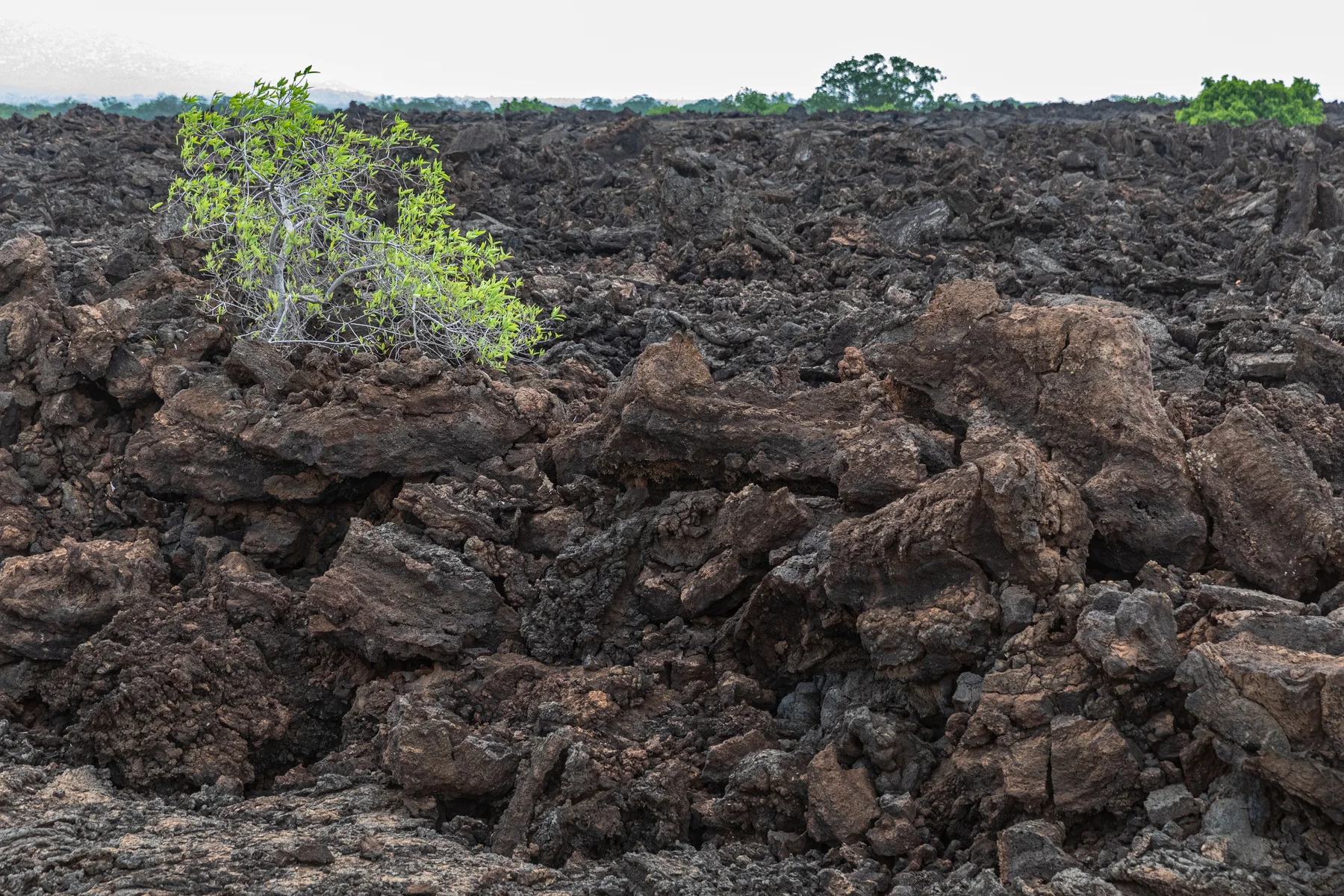
Shetani is a broad black lava field created by a relatively recent eruption in geological terms. Its jagged surface still looks fresh, with plants slowly colonising cracks and edges.
The name is often translated as “devil”, reflecting how local observers understood the frightening flow. Treat that explanation as cultural history, not a theatrical licence to invent myths.
Walking on the lava
Sharp, unstable rock can cut shoes and skin. Walk only where KWS permits and only with appropriate guidance. Closed shoes, water and sun protection are essential.
Do not enter caves or climb rough lava because another visitor posted a photograph. Current ranger direction controls access.
Shetani Cave
KWS lists cave exploration among park attractions. Cave access can depend on safety, wildlife and current management decisions. Bats, loose rock, darkness and poor footing require more than a phone torch.
Confirm whether the planned visit includes an authorised guide and suitable equipment.
Chaimu Hill
Chaimu is a volcanic cone with a dark, steep surface and wide views. Hiking conditions can be hot and exposed, and footing is loose in places. The name is associated with the local idea of a devil or spirit, again reflecting the dramatic volcanic terrain.
Ask KWS or the lodge whether climbing is currently permitted, whether a ranger is required and how the activity fits the group's mobility.
Roaring Rocks
Roaring Rocks is a viewpoint over the surrounding plains and hills. Wind and raptors add to its atmosphere, while the height can reveal how vegetation, water and ridges organise the park.
It is valuable even without wildlife below. Bring binoculars and avoid leaning beyond barriers for a photograph.
Poacher’s Lookout
Poacher's Lookout offers another broad perspective and, in clear conditions, distant views toward Kilimanjaro. The name recalls a period when high points helped watchers scan the landscape.
Cloud commonly hides the mountain. Treat it as a bonus, not the page's promise.
Five Sisters hills
The Five Sisters are a group of volcanic hills that create a distinctive backdrop. Their value is visual and geological rather than a single major activity.
Ask a guide to identify them and explain how volcanic features connect to the Chyulu landscape.
Lake Jipe
Lake Jipe lies on the Kenya and Tanzania border and supports waterbirds, fish and wetland life. It is remote from the park's central lodge circuit, so a visit needs deliberate route planning.
Do not add Lake Jipe to a short Mzima-based stay simply because both appear on the same park map.
Ngulia Rhino Sanctuary
The Ngulia Rhino Sanctuary protects black rhinos within a managed area of Tsavo West. Its conservation role is significant, but thick vegetation makes sightings difficult. Entering the area does not guarantee seeing a rhino.
Security and management rules can change. Follow KWS guidance and avoid publishing sensitive current animal locations.
Black rhinos
Black rhinos browse shrubs and often remain concealed in dense bush. Their pointed upper lip, higher head carriage and solitary behaviour distinguish them from southern white rhinos.
For a safari built around more dependable rhino observation, compare Ol Pejeta and Solio. Tsavo West offers rhino conservation context within a much larger landscape.
Rhino viewing without false promises
A guide can search tracks, dung and browse, but no ethical operator controls the animal. A long quiet drive through Ngulia is not a failed activity.
The honest phrase is “chance of black rhino”, never “rhino guaranteed”.
Elephants
Elephants move between water, woodland and open areas. Family groups may gather at lodge waterholes or cross roads in single file. Their skin can carry red or pale dust depending on soil and recent bathing.
Give them at least the KWS minimum viewing distance and more when calves are present.
Lions
Lions occur throughout suitable habitat, but hills and bush can hide them. Early drives, fresh tracks and the attention of prey species help. Male Tsavo lions may have reduced manes, though individuals vary.
The man-eaters history belongs to the 1898 railway corridor. It should be explained accurately, not used to portray modern lions as unusually aggressive.
Leopards
Tsavo West's rocky ground, trees and dense cover suit leopards, but those same features make them hard to see. A leopard may watch the vehicle while remaining invisible.
Private vehicles help because guests can wait with alarm calls instead of leaving for another group's schedule.
Cheetahs
Cheetahs prefer more open areas where they can see and run. They occur but should not anchor an itinerary. Dense sectors near Mzima are not the easiest cheetah country.
Celebrate a sighting without presenting it as typical.
Buffalo
Buffalo use waterholes, open grass and thick shade. Solitary bulls may rest near a track. Their dark bodies can disappear surprisingly well under trees.
Remain in the vehicle outside designated areas and let the guide assess every walking stop.
Giraffes, zebras and antelope
Masai giraffes, plains zebras, impalas, waterbuck, kudu, oryx and other antelope use different habitats. Lesser kudu are especially easy to miss in bush, while giraffes can reveal their presence above the canopy.
Ask how geology affects vegetation and why that changes the species seen in each sector.
Hippos beyond Mzima
Hippos are associated with Mzima and other suitable water, but they move and may remain submerged. The absence of a visible hippo does not mean the water is empty.
Listen for breathing, grunts and splashes while staying on the designated path.
Birds
KWS records more than 600 bird species for Tsavo West. Springs, Lake Jipe, woodland, open plains, cliffs and lava create very different birding habitats.
Raptors around viewpoints, waterbirds at Mzima and Jipe, hornbills, rollers, starlings and migrants can fill a day even when large mammals remain hidden.
Wildlife visibility
Thicker vegetation makes animals harder to see than on Tsavo East's broad plains. This is the park's central trade-off. The reward is a more layered landscape and encounters that feel discovered.
One traveller described “more dramatic hills, thicker vegetation”. Pack patience as deliberately as binoculars.
How many nights do you need?
Two nights are a workable minimum for one full day. Three nights suit most first visits because Mzima, volcanic features and wildlife do not fit comfortably into one circuit. Four nights work well for photography, rhino searching, Lake Jipe or slow travel.
| Time | Realistic experience | Verdict |
|---|---|---|
| Day trip | One gate sector and heavy transfer pressure | Too narrow for most |
| 1 night | Arrival and departure drives | A glimpse |
| 2 nights | One complete day | Useful minimum |
| 3 nights | Mzima, lava, viewpoints and flexible drives | Best first visit |
| 4 nights | Slow wildlife, rhino search or remote sector | Excellent |
| 5 nights or more | Specialist photography, birds or Lake Jipe | For enthusiasts |
A balanced three-night rhythm
Use the arrival drive near the chosen lodge. Spend one full day around Mzima, Shetani and a nearby viewpoint without forcing every attraction. Use the second full day for wildlife, Ngulia or another sector based on current conditions.
Departure morning should remain close enough to the gate to absorb an elephant delay or slow road.
Best time to visit
Tsavo West is open year-round. Dry periods can concentrate wildlife at water and simplify roads. Green periods bring strong colour, birds, dramatic skies and renewed vegetation but can make animals harder to spot.
| Period | Strength | Trade-off |
|---|---|---|
| January to February | Dry roads, warm light and waterhole activity | Hot afternoons |
| March to May | Green hills and dramatic weather | Roads and trails may be difficult |
| June to October | Cooler mornings and popular safari conditions | Dust and higher demand |
| November to December | Short-rain colour and birds | Local access can change after storms |
Dry-season planning
Animals may concentrate near reliable water, including lodge waterholes and springs. Dust enters vehicles and equipment, while exposed lava and hills become hot.
Start early, rest at midday and carry a reusable water bottle.
Green-season planning
Rain makes the hills glow and softens the contrast between black lava and vegetation. Migrant birds and young animals add interest. Wildlife disperses as seasonal water becomes available.
A driver should change the plan when a road is unsafe. No viewpoint is worth getting stranded.
Heat and elevation
Lower areas can be hot, while early mornings at higher or exposed locations may feel cool. Layer clothing rather than assuming one temperature across the park.
Hikes on black volcanic ground heat quickly. Begin early and carry more water than a short map distance suggests.
Gates
KWS lists Mtito Andei as the main corridor gate and Chyulu Gate for the Amboseli direction. Other access gates include Tsavo River, Lake Jipe, Maktau and Ziwani. The correct choice depends on lodge position and the previous or next destination.
| Gate | Often useful for | Essential planning question |
|---|---|---|
| Mtito Andei | Nairobi, Mombasa highway and SGR | Is the lodge transfer timed before closing? |
| Chyulu | Amboseli and Chyulu direction | What is the current road condition? |
| Tsavo River | Corridor and local sector access | Does it match the booked camp? |
| Maktau | Southern approaches and neighbouring lands | Which fees and boundaries apply? |
| Ziwani | Western or sanctuary combinations | Is the camp inside or outside KWS land? |
| Lake Jipe | Remote lake sector | Are fuel, road and timing sufficient? |
Gate hours and speed
KWS currently states that gates open at 06:00 and close at 18:00 unless visitors are staying overnight. The park speed limit is 40 km/h, and off-road driving is prohibited.
An overnight booking does not create permission for an unauthorised night drive. Follow the lodge and KWS activity rules.
Getting there from Nairobi
Mtito Andei lies on the Nairobi to Mombasa corridor. KWS gives an approximate road distance of 240 kilometres from Nairobi to the gate, but traffic, roadworks and stops affect time.
Avoid scheduling a distant afternoon attraction after a late Nairobi departure.
Getting there from Mombasa
KWS gives approximately 250 kilometres from Mombasa to Mtito Andei Gate. Tsavo West is therefore reachable from the coast, but it is not as close as the nearest Tsavo East approach.
Leave early and consider Tsavo East first if the route will include both parks.
Getting there from Diani
Diani adds coastal traffic and the crossing toward Mombasa or an alternative pre-arranged route. A single-night Tsavo West trip can become mostly road.
Choose at least two nights and confirm the exact pickup, gate, meal stop and vehicle.
Getting there from Amboseli
The Chyulu route links Amboseli National Park with Tsavo West. It is a strong combination because the landscapes differ sharply.
Current road condition, gate hours and lodge location determine the realistic drive, not a generic distance table.
Arriving by SGR
KWS lists the Standard Gauge Railway to Mtito Andei station from Nairobi or Mombasa. The station is outside the park. A vehicle must meet the train and carry guests through the correct gate.
Confirm luggage, train timing, transfer cost, waiting policy and what happens if the service arrives after the planned entry window.
Flying in
KWS lists Kilaguni and Finch Hattons as main airstrips, with alternatives including Kamboyo, Ziwani, Tsavo River, Lake Jipe, Maktau and Kasigau. A named strip does not mean a daily scheduled flight.
The aircraft, route, baggage limit, runway and lodge transfer must all be confirmed together.
Safari vehicle choice
A private 4×4 supports long wildlife searches, landscape stops and personal pacing. High clearance matters on rough roads, while good shade matters in heat.
| Vehicle detail | Why it matters here |
|---|---|
| Private or shared | Mzima, rhino and viewpoints require different pacing |
| High clearance | Lava-country and seasonal roads can be rough |
| Roof height | Standing comfort matters on long drives |
| Window seat | Dense cover rewards constant scanning |
| Charging | Photography and navigation drain batteries |
| Water and cooler | Heat and remote sectors demand hydration |
Self-drive
Self-drive is possible on authorised roads for prepared travellers. Carry offline maps, fuel, water, spare tyres, recovery equipment and KWS contacts. Do not rely on mobile signal.
The park's winding terrain makes orientation harder than an open grid. A guide adds current road knowledge and wildlife interpretation.
Where to stay
Tsavo West accommodation ranges from established waterhole lodges to open tented camps and luxury spring settings. Position matters more than a broad star category. A beautiful camp near one gate may be wrong for a Mzima-focused one-night stay.
| Property | Position and style | Usually suits | Confirm before booking |
|---|---|---|---|
| Kilaguni Serena | Inside park by a waterhole beneath Chyulu Hills | Families, first visits and waterhole viewing | Room view and vehicle basis |
| Severin Safari Camp | Inside park in Kitani wildlife area, open camp | Couples and travellers wanting tented atmosphere | Escort, child and rail transfer rules |
| Finch Hattons | Inside park around natural springs | Luxury, wellness and longer stays | Included activities and airstrip transfer |
| Ngulia Safari Lodge | Inside park near escarpment and rhino sector | Rhino context and migration-season birds | Current room condition and exact drive plan |
| Kamboyo Guest House | KWS-managed self-catering style | Independent groups | Availability, supplies and staffing |
| Ziwani camp area | Near western edge, position varies by property | Amboseli links and water activities | Whether it is inside KWS park boundaries |
Kilaguni Serena Safari Lodge
Kilaguni is an inside-park stone lodge with a waterhole and views toward the Chyulu Hills. Its advantage is the wildlife that may come to guests between drives, not merely room count or brand.
Confirm whether the chosen room faces the waterhole, which drives are included and how far the planned day extends toward Mzima or Ngulia.
Severin Safari Camp
Severin is an open tented camp in the Kitani wildlife area. Its official information describes Kilaguni and Finch Hattons airstrips as roughly 30 minutes away and offers pre-arranged Mtito Andei rail pickup.
Open camp means wildlife can move through. Follow escort rules after dark and confirm the child policy before booking.
Finch Hattons
Finch Hattons is a luxury tented camp set around natural springs inside Tsavo West. It suits travellers who want a slower stay, wellness and significant time in camp as well as game drives.
Compare the exact suite, private vehicle terms, included experiences, spa access and air transfer rather than assuming every luxury rate includes everything.
Ngulia Safari Lodge
Ngulia occupies an elevated position near the escarpment and rhino sanctuary area. It is also associated with bird migration research and large seasonal movements of Palearctic birds.
Ask about current room renovation, cooling, waterhole view and the practical chance of visiting the sanctuary during the stay.
Kamboyo Guest House
KWS lists Kamboyo Guest House among park accommodation. It can suit an independent group prepared for a self-catering or less serviced stay, depending on current arrangements.
Confirm availability, bedrooms, kitchen equipment, power, water, staff, food supply and key collection in writing.
Camping
KWS currently lists public campsites at Kamboyo, Chyulu and Lake Jipe, plus special campsites including Kudu, Little Royal, Simba, Palm Tree, Maji ya Chumvi, Kichwa Tembo and Pipeline.
Names alone do not prove current availability or facilities. Confirm reservation, ranger, water, toilet, fire, food storage and emergency procedures.
Salt Lick is not inside Tsavo West
Salt Lick Safari Lodge sits in Taita Hills Wildlife Sanctuary, a separate private sanctuary. It is often marketed within a broad “Tsavo” trip, which causes confusion.
The sanctuary has its own entry, activities and rules. A Salt Lick night is not automatically a Tsavo West park night.
Lumo is not Tsavo West
Lumo Community Wildlife Sanctuary is another separate conservation area south of the park. It can combine well with Tsavo West and may permit activities unavailable in the national park, subject to its rules.
Show its fee and accommodation separately instead of hiding it under a Tsavo label.
Voyager Ziwani and boundary language
Voyager Ziwani lies near the western park edge, but online descriptions can make the boundary unclear. One reviewer noted that reaching Mzima and Shetani required “a full game drive”.
Ask for the exact map pin, gate and fee treatment. “Near Tsavo West” is not the same as “central inside-park base”.
Tsavo West for families
Mzima's guided walk, fish, lava and waterholes give children variety beyond sitting in a vehicle. The challenge is heat, long transfers and open-camp rules.
Confirm family rooms, pool supervision, meal flexibility, child seats, escort policy and the maximum length of each drive. The Kenya safari with children guide helps match days to age.
Tsavo West for a honeymoon
The park works beautifully for couples who value scenery, privacy and a tented camp. Choose a private vehicle, three nights and one property where spending an afternoon in camp feels worthwhile.
Confirm private dining and sundowners as legal, pre-arranged activities. Do not expect an improvised night drive inside a national park.
Accessible Tsavo West
Vehicle steps, long transfers, uneven viewpoint paths and Mzima walking surfaces need exact measurements. Ask for room-to-dining gradients, bathroom photographs, grab rails, door widths and step-free alternatives.
Use the accessible Kenya safari guide to prepare a written mobility brief.
Photography
Wide lenses matter in Tsavo West. Lava, hills, springs and elephants within terrain tell the park's story better than isolated portraits. A long lens remains useful for leopards, birds and distant rhinos.
Carry rain protection, dust tools and a beanbag. Do not climb unstable rock for a lower angle.
Photographing Mzima
Reflections, green shade and dark water challenge exposure. Protect bright highlights and wait for ripples to settle. A polarising filter can help, but it may remove reflections that give the scene depth.
Respect the ranger's pace and never separate from the group for a photograph.
Photographing lava
Black lava can become a featureless mass if exposure is too dark. Side light reveals texture, while a green shrub or person at a safe distance provides scale.
Stay on permitted ground. Fragile colonising plants matter more than a cleaner composition.
What real travellers remember
One visitor called Mzima “a tranquil and special place”. Another called it “worth the quick visit”.
The useful lesson is that Mzima adds a distinct pause to a vehicle-based safari. Its value is atmosphere and ecology, not a guaranteed animal checklist.
The almost prehistoric feeling
A recent traveller said the volcanic areas felt “almost prehistoric”. That phrase fits the sudden transition from fresh black rock to old green hills.
Use the geology to connect the attractions instead of treating each as an isolated photo stop.
A slower pace
Travellers describe “long, peaceful hours” on drives without rushing between sightings. That pace is especially valuable in dense cover.
Turn off the engine at waterholes, scan edges and let alarm calls develop.
Tsavo West versus Tsavo East
West is greener, hillier and more volcanic. East is redder, more open and usually easier for distant wildlife viewing. West offers Mzima, lava and viewpoints. East offers broad plains, Aruba Dam, Mudanda Rock and the Galana system.
| Question | Tsavo West | Tsavo East |
|---|---|---|
| Signature landscape | Springs, hills and lava | Red plains and immense sky |
| Wildlife visibility | Harder in thicker cover | Often easier in open country |
| Main water story | Mzima Springs | Galana River and dams |
| Rhino context | Ngulia sanctuary, no guarantee | Not a normal visitor expectation |
| First-stay length | 2 to 3 nights | 3 nights ideal |
| Best answer | Combine when route allows | Combine when route allows |
Tsavo West versus Amboseli
Amboseli is smaller, flatter and famous for Kilimanjaro and elephants around swamps. Tsavo West is much larger and more varied. It may show Kilimanjaro from viewpoints, but cloud is common.
Choose Amboseli for mountain-and-swamp imagery. Choose West for volcanic exploration and springs. Combine both in at least four or five nights.
Tsavo West versus the Masai Mara
The Masai Mara offers denser big-cat viewing and seasonal migration drama. Tsavo West offers lower traffic, geology and a sense of journey.
They answer different traveller interests. A comprehensive first safari can include both if transfers are not compressed.
Tsavo West and the coast
West combines naturally with Mombasa or Diani after Tsavo East, or directly when time is sufficient. The beach gives a soft landing after dust and early mornings.
Safari first is usually easier. Travellers can then unpack, clean equipment and sleep late at the coast.
Tsavo West, Amboseli and Tsavo East
This classic southern circuit works best in one direction. Nairobi to Amboseli to West to East to the coast is logical, as is the reverse from Mombasa.
The Masai Mara, Amboseli and Tsavo safari adds the Mara only when enough nights protect the road sections.
A two-night itinerary
Enter through the gate closest to the selected lodge, take an afternoon drive, devote the full day to Mzima and one nearby volcanic or wildlife sector, then depart after an early drive.
Do not add Lake Jipe or every viewpoint.
A three-night itinerary
Use day one near the lodge. Use the first full day for Mzima, Shetani and wildlife between them. Use the second for Ngulia, viewpoints or a longer wildlife search based on current sightings and roads.
This is the strongest first visit.
A four-night itinerary
Add a slower waterhole day, birding, Lake Jipe sector or specialist photography. Repeat promising areas at different times instead of collecting attractions once.
A private vehicle becomes especially valuable.
Park fees
KWS currently publishes fee categories for East African citizens, Kenya residents, African citizens and non-residents, with adult and child rates. Prices can change, so the live KWS park page should control the final quote.
Show each park-entry day and traveller category separately.
What a clear quote contains
| Cost line | What should be named |
|---|---|
| Accommodation | Property, room, meal basis and nights |
| Vehicle | Model class, private or shared, start and end |
| Park entry | Category and number of days |
| SGR or air transfer | Station or strip, pickup and luggage |
| Activities | Mzima, hike, sundowner or bush meal |
| Separate sanctuary | Taita Hills or Lumo fee if included |
| Exclusions | Drinks, tips, insurance and optional items |
Use the Kenya safari cost guide to compare the wider budget.
What to pack
Pack neutral layers, a warm early-drive layer, hat, sunscreen, closed walking shoes and a light rain layer. Bring binoculars, reusable water bottle, camera protection, personal medication and travel documents.
The Kenya safari packing guide covers soft bags and flight limits.
Health and insects
Discuss malaria prevention with a qualified clinician. Use repellent and room protection, particularly near water. Heat and dehydration can become urgent during walks.
Keep medication cool, accessible and sealed from dust.
Food and dietary needs
Remote lodges need advance notice for allergies and specialist diets. Confirm whether lunch is served at the lodge or packed on a full-day route.
Carry safe water and never feed monkeys at Mzima or lodges.
Mobile signal and power
Signal varies. Download maps, tickets and emergency contacts before entry. Confirm generator or solar charging hours at camps and carry a compliant power bank.
Tell family that a quiet phone may mean the vehicle is between hills, not that anything is wrong.
Safety at viewpoints and trails
Remain on designated paths, follow rangers and keep children close. Lava, cliffs, heat and wildlife make informal exploration unsafe.
Closed shoes are necessary even for a stop described online as easy.
Responsible wildlife viewing
KWS requires at least 20 metres from wildlife, a 40 km/h maximum speed and established roads. More distance may be needed around elephants, predators, calves and water.
Do not crowd a rhino, block an elephant route or play sounds to attract animals.
Common planning mistakes
The most common mistakes are expecting Tsavo East-style visibility, promising black rhino, choosing a camp without checking the sector, calling Salt Lick part of the national park, and adding Lake Jipe to a one-day circuit.
Another is assuming Mtito Andei station lies inside the gate.
Questions before booking
| Question | Why it matters |
|---|---|
| Which gate will we use? | It tests route logic |
| Where is the lodge on the park map? | It reveals drive time |
| Is the vehicle private? | It controls wildlife and attraction pacing |
| Is Mzima access currently open? | Facilities and ranger arrangements can change |
| Is Ngulia included as a chance or promise? | Rhino is never guaranteed |
| Are Taita Hills fees separate? | It is not Tsavo West |
| Which walks are KWS-authorised? | National park rules apply |
| What changes after rain? | Roads, lava and trails may be unsafe |
Who should choose Tsavo West?
Choose it if landscapes matter as much as animals, if Mzima and volcanic geology sound exciting, or if your route links Amboseli with the coast. It also rewards return visitors seeking a different side of Kenya.
Choose another park first if a dense predator checklist is the only measure of value.
Who should stay longer?
Birders, photographers, families, honeymooners and rhino enthusiasts should consider three or four nights. Extra time lets one quiet drive remain quiet without creating panic.
Lake Jipe and specialist hikes need deliberate additional time.
Final verdict
Tsavo West's greatest strength is not one animal. It is the moment a black lava field ends at green bush, the cool air beside Mzima, elephants beneath hills and the patience required to find wildlife in a complicated landscape.
Use this Tsavo West National Park guide to build around those real qualities. The result feels less like a checklist and more like discovering how water, fire, rock and animals made one park.
Frequently asked questions
These answers cover the decisions most likely to change a Tsavo West itinerary.
How many nights do I need?
Two nights are a workable minimum. Three nights suit most first visits, and four suit photographers or remote sectors.
Are black rhinos guaranteed?
No. The Ngulia sanctuary protects black rhinos, but dense vegetation makes sightings difficult.
Can I see hippos at Mzima Springs?
Possibly, but they may be submerged or out of sight. The springs remain worthwhile for water, fish, birds and vegetation.
Can I walk at Mzima?
Yes on the designated ranger-guided route, subject to current KWS access and individual mobility.
Can I climb Chaimu Hill?
Only when current KWS rules and conditions permit. Confirm ranger requirements and wear suitable shoes.
Is Salt Lick inside Tsavo West?
No. It is in Taita Hills Wildlife Sanctuary under separate management and fees.
Can I arrive by SGR?
Yes, at Mtito Andei station. A pre-arranged vehicle then transfers guests to the gate and lodge.
What time do gates open?
KWS currently states 06:00, with closing at 18:00 unless the visitor is staying overnight.
Can I self-drive?
Yes on authorised roads with suitable preparation, offline navigation, fuel, water and recovery equipment.
Is Tsavo West good for children?
Yes. Mzima, lava and waterholes add variety, but drives and heat must match the child's age.
Is it good for a honeymoon?
Yes. A private vehicle, tented camp and three-night pace create an intimate safari.
Which is better, Tsavo West or East?
West is stronger for springs, hills and lava. East is stronger for open red landscapes and broad wildlife visibility. Combine both when time allows.
Tell us how you want Tsavo West to unfold
Share dates, travellers, mobility, wildlife priorities, coast or Nairobi connection, accommodation level and vehicle preference. We will use current KWS rules and real sector drive times.