
The Truth About Masai Mara Village Visits: How to Make One Meaningful
The most valuable moment may not be the welcome dance or the photograph. It may be a conversation about cattle, school, land or what tourism has changed.

The truth about Masai Mara village visits is that they range from warm, community-led exchanges to rushed stops built around pressure to buy. The difference lies in who hosts, who benefits and how the traveller behaves.
- Why village visits create mixed reactions
- Names, people and place
- Welcome, homes, cattle, fire, craft and conversation
- Entrance fees, tips and who benefits
- Photography, children and personal boundaries
- School visits, gifts and volunteering
- The craft market without pressure
- Questions that can open a real conversation
- How to choose a better experience
- Traveller opinions
- FAQs
Why village visits create mixed reactions
Some travellers remember generosity, humour and a conversation that changed how they understood the Mara. Others describe a short dance, a house tour and a hard sell at the craft market. Both experiences can exist because there is no single product called a Maasai village visit. Communities, hosts, operators and visitor expectations differ.
Tourism happens within a long history of land, conservation, education, cattle, modern employment and outside pressure. Maasai people are not frozen in a historic costume for travellers. A person may herd cattle, use a smartphone, study tourism, work in a conservancy and still hold cultural knowledge. Respect begins by allowing that complexity.
| Meaningful signs | Warning signs |
|---|---|
| Host explains the community and fee clearly | Stop appears without prior discussion or price |
| Photography is discussed before cameras come out | Visitors are encouraged to photograph everyone immediately |
| There is time for questions in both directions | A rigid script ends at the souvenir table |
| Buying crafts is optional | Aggressive pressure or unclear pricing |
| Benefits and local partners can be named | No one can explain where the money goes |
Names, people and place
Maasai is commonly used for the people and culture. Masai appears widely in tourism place names and search phrases, including Masai Mara. Maa is the language. Travellers do not need perfect terminology, but a respectful host will appreciate genuine curiosity and willingness to listen.
The Greater Mara includes towns, manyattas, conservancies, farms, schools, camps and grazing areas. A village near Sekenani may have a different relationship with tourism from a homestead in a conservancy. Ask the name of the community and the person leading the visit. Specificity turns a generic stop into a meeting with a real place.
Welcome, homes, cattle, fire, craft and conversation
A visit may begin with songs or a welcome dance, followed by an explanation of homestead layout, cattle, building methods, family life or rites of passage. A host may demonstrate fire-making or introduce craft work. None of these elements is automatically fake simply because visitors are present. Culture can be shared deliberately and still be real.
The weakness appears when the programme leaves no room for context. Ask how homes are built and repaired, how grazing changes with rain, what young people study, how conservancy leases affect families and what tourism work looks like. Let the host decide which subjects are private. Good conversation is an exchange, not an interrogation.
Listen first
Allow the host to explain the place before turning the visit into a list of questions.
Ask specifically
Questions about land, school, cattle and tourism invite richer answers than stereotypes.
Share too
A conversation becomes more human when visitors answer questions about their own lives.
Entrance fees, tips and who benefits
A fee is not evidence that a visit is inauthentic. Hosting takes time, creates expectations and can support households or community projects. The problem is opacity. The operator should explain whether the fee is per person or per vehicle, who receives it and whether the host expects a separate tip.
Do not ask individual community members to prove how money is distributed during a public visit. Raise that question with the organiser before booking. Community-owned enterprises, conservancy partners and camps with long relationships may offer clearer structures, but labels still need explanation. Transparency should be normal, not treated as an insult.
- Confirm the visit before the safari begins
- Ask the exact fee and payment method
- Ask who operates the experience
- Clarify whether tipping is separate
- Keep craft purchases optional
- Avoid handing out money or sweets impulsively
Photography, children and personal boundaries
Ask before photographing a person, a home or a ceremony. A general welcome from the guide may not equal consent from every individual. Show the image when possible and accept no without disappointment. Avoid long lenses aimed at people who are not participating in the visit.
Be especially careful around children. Do not turn a school into a photo opportunity, share identifiable images thoughtlessly or ask children to perform for gifts. If photography is central to your work, arrange a clear, compensated session through a local partner instead of improvising editorial access during a cultural visit.
| Situation | Respectful approach |
|---|---|
| Portrait | Ask the person directly or through the host |
| Group welcome | Confirm whether photography is welcome before raising the camera |
| Inside a home | Wait for an invitation and ask again |
| Children | Use heightened caution and avoid identifiable sharing |
| Commercial use | Arrange explicit permission and compensation in advance |

School visits, gifts and volunteering
A school should not exist as a safari stop. Unplanned visits interrupt learning and can place children on display. If an established community partner invites visitors, the purpose, timing and safeguarding should be clear. Donations are usually more useful when a school or organisation identifies the need and receives supplies through an accountable channel.
Handing out sweets, pens or cash can create competition and teach children to approach every vehicle. Short-term volunteering with children raises even deeper concerns. Travellers who want to support education can ask for a vetted local initiative, make a private contribution and resist the urge to turn generosity into a photograph.
The craft market without pressure
Beadwork can carry skill, identity and significant labour. Ask who made the piece and how pricing works. Bargaining may be expected in some settings, but it does not need to become a contest over a few dollars. Pay an amount that respects the work and your budget.
You are also allowed to leave without buying. A good host will not hold the rest of the visit hostage to a purchase. If the market feels confusing, ask the operator about women’s groups, fixed-price cooperatives or camp shops that can explain sourcing. Check customs rules for animal materials before buying anything made from horn, bone, skin or feathers.
Questions that can open a real conversation
Ask what the host wishes travellers understood about life around the Mara. Ask how rain affects cattle and school, what young people hope to do, how land leases or conservancy work touch the community, and which changes have made life easier or harder. These questions leave room for a personal answer rather than demanding a textbook about an entire people.
Avoid treating one person as the spokesperson for every Maasai community. Do not ask invasive questions about marriage, money or rites of passage simply because a guidebook mentioned them. If the host introduces a sensitive subject, listen and follow their lead. Curiosity becomes respectful when the other person can decide how far it goes.
After the visit, remember names and the specific community rather than saying only that you saw a village. If you share photographs, caption them accurately and avoid language that turns contemporary people into a timeless spectacle. A thoughtful memory protects dignity long after the vehicle has left.
If the meeting prompts you to support a project, pause long enough to verify the organisation and the community’s role in it. The most photogenic need is not always the highest priority. Water, grazing management, scholarships, health access, women’s enterprises and ranger employment all have different structures. A modest contribution through an accountable local channel is more useful than a dramatic promise made in the emotion of an afternoon. Follow-up should respect the channel the community chooses, without creating a private obligation for the host.
| Instead of asking | Try asking |
|---|---|
| Do all Maasai live like this? | What is changing in this community? |
| Why do you still wear this? | What does this clothing mean on this occasion? |
| Can I photograph the children? | Is photography welcome here, and by whom? |
| Where should I donate? | What local initiative does the community prioritise? |
How to choose a better experience
Ask the operator for the community name, host, duration, fee, group size and normal programme. Ask how photography is handled, whether crafts are optional and how the partnership began. Listen to the quality of the answer. A thoughtful organiser can speak about people and relationships, not only the dance and house tour.
Then decide whether you can give the visit enough attention. On a three-day road safari, the single full wildlife day is precious. The visit may fit on the arrival afternoon, departure morning or within a longer four-night stay. Do not squeeze it between game drives simply to claim that culture was included. Arrive with time to meet someone.
What travellers say after the trip
These are exact words from public reviews and discussions. Each person had their own route, budget and expectations, so the value is in the detail rather than treating one experience as a promise.
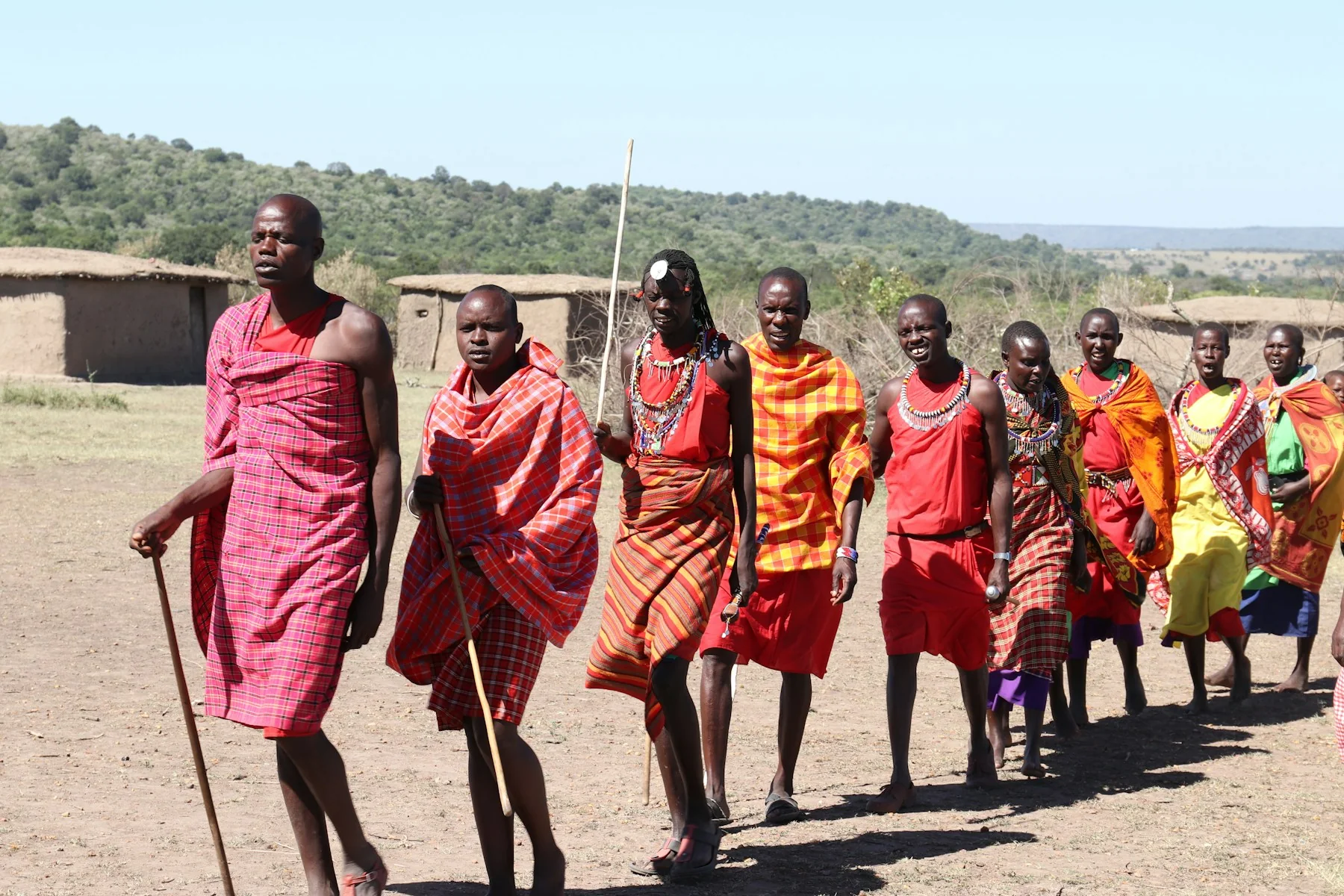
A glimpse of how a Masai village looks like
The photographer’s own caption for a public Unsplash image made near the Masai Mara.
Having lions serenade me every night was an experience I will never forget.
A traveller describing a Mara North conservancy stay, a reminder that community land, camps and wildlife are part of the same living landscape.
The safaris were amazing and what we loved about the Masai Mara is that we saw all of the big five animals but the highlight was seeing the migration of wildebeests.
A traveller describing the wildlife side of a Mara visit. Cultural experiences deserve the same specificity instead of being treated as a generic add-on.
Masai Mara village visit questions
What is the short answer about Masai Mara village visits?
A good visit is community-led, transparent about fees, respectful about photography and long enough for real conversation. A poor one feels rushed, compulsory and built around pressure to buy.
How many safari nights should I allow?
The visit normally takes a few hours within a longer Mara stay. Do not remove the only full wildlife day from a two-night safari unless culture is a central priority.
Will I see the Big Five?
A community visit is not a wildlife activity and should never be framed as another attraction on a checklist.
Is the Great Migration guaranteed?
No. The migration is a continuous natural movement shaped by rain and grazing. River crossings are unpredictable events, not appointments.
Is a private vehicle worth the cost?
It is valuable for photographers, families and travellers who want control over pace. Shared drives cost less and can be sociable, but the group agrees on timing and sighting length.
Can I travel in the rainy season?
Yes. Expect greener landscapes, fewer vehicles and the chance of muddy tracks. A capable vehicle and flexible itinerary matter.
Should I fly or drive?
Visits are normally arranged from a nearby camp or as part of a private road itinerary. The host and community should be agreed before arrival.
Can children enjoy this trip?
Yes, when drive length, room layout, meal times, pool safety and toilet breaks are planned around their ages.
How far ahead should I book?
Migration months, festive periods and small camps fill first. For flexible green-season dates, there is often more room to compare.
How can NLS Safaris help?
We can design the Kenya part of the journey around your dates, preferred Mara area, accommodation style, vehicle choice and onward beach or regional travel.
Sources and further reading
Official park, heritage, tourism, aviation and regulatory sources support the practical details in this guide.
Include a community visit with care
Tell us what you hope to learn and how much time you want to give it. We can place the experience thoughtfully within the safari.
Plan a more meaningful Mara journey
Share your dates, safari area and interest in culture, conservation or community-led experiences.