
Private Conservancy vs National Reserve in the Masai Mara
A lion can cross from reserve to conservancy without pausing. Your vehicle cannot. Where you sleep shapes the activities, vehicle density and rhythm of every day.
The private conservancy vs national reserve choice is one of the most important and least understood parts of a Mara safari. It affects much more than the camp address.
- Reserve, Triangle and conservancy are not interchangeable
- Game-drive rules and activities
- Vehicle density and sightings
- Will you see more wildlife in one or the other?
- Camps and lodges in each setting
- Fees, land leases and the local economy
- When a split stay works
- How season influences reserve and conservancy choice
- Who should choose what
- Traveller opinions
- FAQs
Reserve, Triangle and conservancy are not interchangeable
The Masai Mara National Reserve is the public protected area administered by Narok County. The Mara Triangle is the western portion of that reserve, managed by the Mara Conservancy. It is still part of the national reserve, not a private conservancy. Gates, fee systems and management may differ across these areas.
Private and community conservancies surround parts of the reserve and form a wider wildlife landscape. Mara North, Naboisho, Olare Orok, Ol Kinyei, Lemek and Siana are among the names travellers encounter. Land is commonly leased from Maasai landowners, tourism beds are controlled and member camps operate under conservancy agreements. Each conservancy has its own structure and camp partners.
| Area type | What it is | Common misunderstanding |
|---|---|---|
| National Reserve | Public protected area with several gates and broad tourism access | It is not one small zone around Sekenani |
| Mara Triangle | Western part of the national reserve under distinct management | It is not a private conservancy |
| Private or community conservancy | Wildlife land outside the reserve under local agreements | It is not simply a private section of the reserve |
Game-drive rules and activities
Inside the reserve and Triangle, visitors follow public protected-area rules. Standard activities centre on daytime game drives. Driving off designated tracks, approaching animals, vehicle numbers and opening hours are governed by local rules and enforcement. A responsible guide protects both wildlife and the traveller’s experience.
Conservancies may offer night drives, guided walks, sundowners and bush meals because they operate under different land-use rules. Off-road access may be permitted in controlled circumstances, but it should never become permission to harass animals. The exact activity menu belongs to the conservancy and camp, so confirm what is genuinely included rather than assuming every conservancy does everything.
| Activity | Reserve or Triangle | Conservancy |
|---|---|---|
| Day game drive | Core activity | Core activity |
| Night drive | Generally not part of standard reserve use | Often offered under conservancy rules |
| Guided walk | Restricted and location-dependent | Common at selected camps |
| Off-road approach | Restricted by park rules | May be controlled and permitted |
| Bush meal or sundowner | Possible only in approved settings | Often easier to arrange |
Vehicle density and sightings
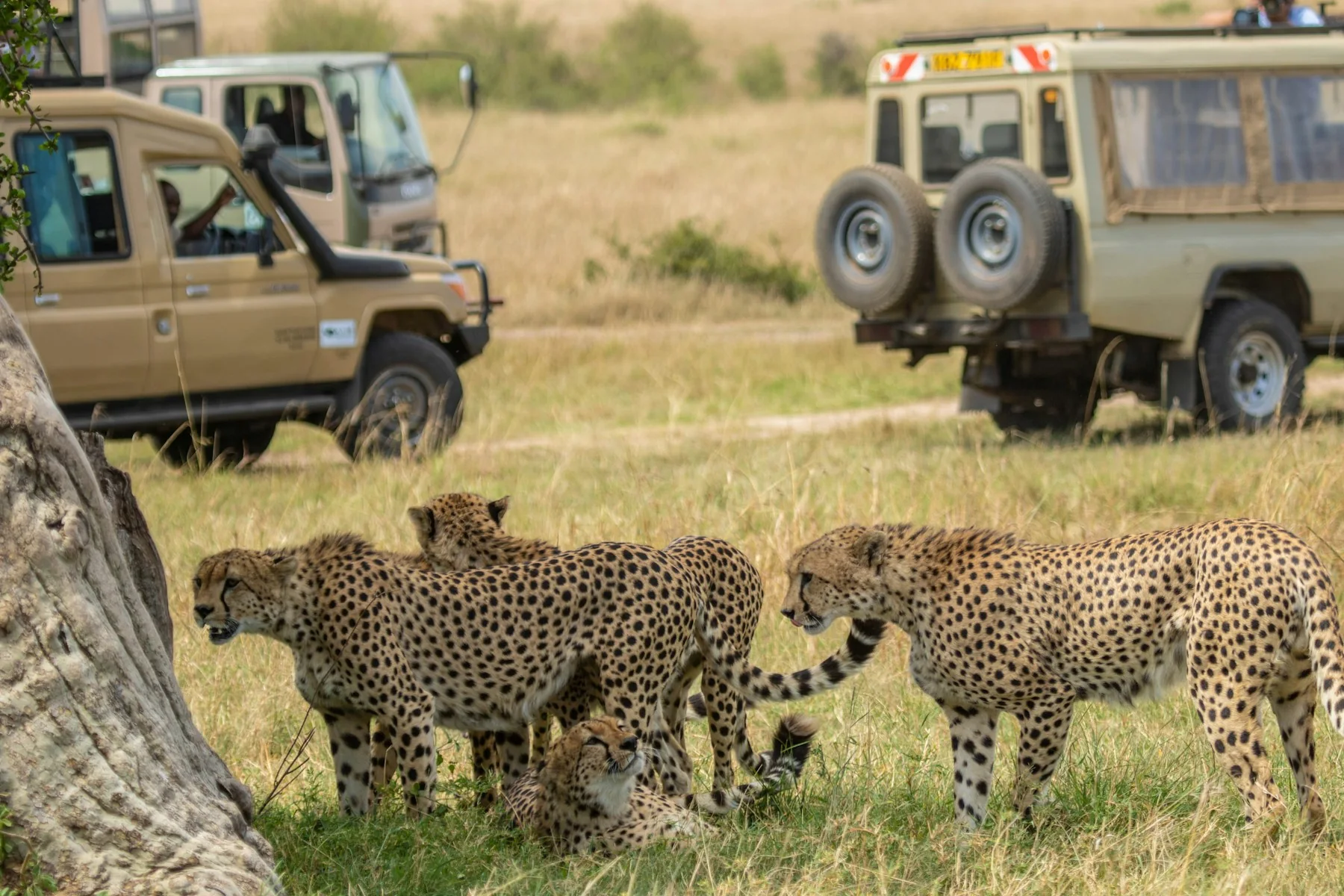
The reserve is open to many camps and day visitors. During migration months or at a famous cat sighting, vehicles can gather quickly. The sight can still be remarkable, but it may not feel private. The Triangle has a reputation for firm management, although popular river areas also attract attention.
Conservancies limit tourism through camp beds and operating agreements. That often produces fewer vehicles and clearer sighting etiquette. It does not mean animals appear on request. Some quiet hours are simply quiet. For many travellers, that space is the point: time to follow tracks, listen and wait without a queue forming behind the vehicle.
Reserve strength
Large public landscape and direct access to classic Mara sectors and migration routes.
Conservancy strength
Controlled tourism and room for slower, more private observations.
Guide strength
A thoughtful guide can create a respectful day in either setting.
Will you see more wildlife in one or the other?
Wildlife distribution changes with grass, water, breeding, predator territories and the migration. A conservancy can be extraordinary for lions, cheetahs and resident plains game, then feel quieter when herds move. The reserve may hold huge seasonal concentrations, but individual sectors can still have slow mornings.
Do not buy a conservancy stay because someone promised more animals, or a reserve stay because a map shows the Mara River. Buy the location for the season, the activities and the type of day you want. A camp with excellent local guides and honest recent information is more useful than a famous label by itself.
Camps and lodges in each setting
Inside the Mara Triangle, Mara Serena Safari Lodge and Little Governors’ Camp are the only accommodations, according to the Mara Conservancy. Other camps outside the Triangle drive into it after the relevant arrangements. Elsewhere in the reserve, travellers find properties such as Keekorok, Ashnil Mara, Entim, Rekero and Governors’ in very different settings.
Conservancy examples include Elephant Pepper in Mara North, Encounter Mara in Naboisho, Porini Lion in Olare Motorogi and Porini Mara in Ol Kinyei, among many others. Camp membership and operating status can change, so the important question is not a memorised list. Confirm the exact conservancy, the fee included, the number of beds and how reserve days are handled.
| Stay choice | What to confirm | Why it matters |
|---|---|---|
| Inside reserve | Exact sector and gate access | Determines daily reach and transfer time |
| Inside Mara Triangle | Property is genuinely inside the Triangle | Only two accommodations hold that position |
| Conservancy camp | Membership, included activities and reserve days | Defines access, fees and game-drive rules |
| Outside-gate camp | Drive time to gate and community-land activities | Low room price can add daily travel |

Fees, land leases and the local economy
Reserve fees support public protected-area management. Conservancy fees contribute to the land-leasing and conservation model under which landowners receive income and wildlife habitat remains open. A stay that includes both settings may therefore carry conservancy fees plus reserve entry on selected days.
Ask the quotation to state every fee day clearly. A conservancy camp rate may include its local conservation fee but exclude the reserve. Another package may include one full reserve day. Children, residents and non-residents can be charged differently. The cheapest line is not always the best value if it removes the very access or activity you expected.
- Conservancy fee per night or day
- Reserve entry days
- Mara Triangle access if relevant
- Child and resident categories
- Private vehicle or shared drives
- Transfers between camp, gate and airstrip
When a split stay works
With five or six nights, two camps can create a satisfying contrast. Begin with a conservancy for walks, night drives and quiet local tracking, then move into the reserve or Triangle for broad daytime exploration. The reverse also works, ending with a smaller camp and slower rhythm.
The transfer should connect neighbouring areas or become a game drive, not consume an entire day on corrugated roads. Two nights in each camp is the minimum that feels settled, and three plus three is better. On a three-night safari, one strong base nearly always beats two hurried check-ins.
How season influences reserve and conservancy choice
During the main migration period, a reserve or Triangle base may reduce the distance to major herd and river areas. A conservancy can still be excellent for resident predators, quiet mornings and a break from peak traffic, with selected reserve days added. The right conservancy depends on current herd direction and the gate used for reserve access.
In greener months, conservancies can be especially beautiful. Lower vehicle density, fresh grass and dramatic skies suit travellers who enjoy tracking rather than chasing a famous event. Some camps close for part of the long rains, roads can become difficult and seasonal streams may change routes. Confirm the exact operating dates and transfer plan.
For photographers, the decision is not simply animals versus no animals. Reserve river country, open conservancy plains, marshes and wooded sectors create different backgrounds and light. A private vehicle in a busy public area may be more useful than a shared vehicle in a quiet conservancy, so vehicle arrangement belongs beside location.
Birders and returning safari travellers may prefer a conservancy outside peak migration weeks because walking, habitat detail and quiet observation become part of the day. Travellers with limited mobility should ask whether a walk is optional, how far the tent lies from the main area and whether the airstrip transfer uses the same accessible vehicle. The land category does not answer those practical questions. The exact camp does.
| Priority | Likely fit | Reason |
|---|---|---|
| Migration and river access | Reserve or Triangle base | Less daily transfer to classic herd sectors |
| Night drives and walks | Conservancy | Activities operate under conservancy rules |
| Peak-season quiet | Conservancy with reserve days | Controlled bed density plus wider access |
| One short first stay | One well-positioned base | Avoids losing time to a camp move |
Who should choose what
First-time travellers with three nights and a migration focus may choose a well-located reserve or Triangle base. Honeymooners, photographers and repeat visitors often love the privacy and activities of a conservancy. Families can enjoy either, but should compare drive sharing, age limits for walks, pool design and room layout.
If the decision still feels abstract, describe the morning you want. Do you want to follow fresh tracks before breakfast, take a walk after lunch and return on a night drive? A conservancy speaks to that picture. Do you want to range through the national reserve and spend a long day near river country? Choose the reserve side, or give yourself enough nights to do both.
What travellers say after the trip
These are exact words from public reviews and discussions. Each person had their own route, budget and expectations, so the value is in the detail rather than treating one experience as a promise.
Having lions serenade me every night was an experience I will never forget.
A traveller recommending a stay in Mara North Conservancy and remembering the wildlife around camp.
The first time I stayed in Mara North Conservancy, the second time in the Mara Triangle.
A repeat Mara visitor describing five-night stays in two different parts of the ecosystem.
Wildlife was spectacular in both areas and of course in the Mara itself.
The same traveller reflecting on Mara North and the Mara Triangle rather than naming one universal winner.
Conservancy and reserve questions
What is the short answer about private conservancy vs national reserve?
Choose the reserve for direct access to its broad public landscape. Choose a conservancy for controlled bed density and activities such as night drives or walks where offered. Combine them when time allows.
How many safari nights should I allow?
Three nights can work in one base. With five or six nights, a reserve and conservancy split becomes much more comfortable.
Will I see the Big Five?
No ethical safari can guarantee particular animals. A skilled guide, a good location and enough time improve the chance while keeping the experience honest.
Is the Great Migration guaranteed?
No. The migration is a continuous natural movement shaped by rain and grazing. River crossings are unpredictable events, not appointments.
Is a private vehicle worth the cost?
It is valuable for photographers, families and travellers who want control over pace. Shared drives cost less and can be sociable, but the group agrees on timing and sighting length.
Can I travel in the rainy season?
Yes. Expect greener landscapes, fewer vehicles and the chance of muddy tracks. A capable vehicle and flexible itinerary matter.
Should I fly or drive?
Both can be reached by road or flight, but the correct gate or airstrip depends on the exact camp.
Can children enjoy this trip?
Yes, when drive length, room layout, meal times, pool safety and toilet breaks are planned around their ages.
How far ahead should I book?
Migration months, festive periods and small camps fill first. For flexible green-season dates, there is often more room to compare.
How can NLS Safaris help?
We can design the Kenya part of the journey around your dates, preferred Mara area, accommodation style, vehicle choice and onward beach or regional travel.
Sources and further reading
Official park, heritage, tourism, aviation and regulatory sources support the practical details in this guide.
Choose the Mara base that matches your days
Tell us whether quiet drives, migration access, walking, night drives, photography or a specific camp matters most.
Plan a reserve, conservancy or split stay
Share your dates and number of nights. We will compare the areas and show how each choice changes the itinerary.