
Amboseli Fly-In Safari
A small aircraft can save a long road approach, but the trip is not just a plane ticket. Choose the right airstrip, camp, guide and park access so that the time saved turns into wildlife time on the ground.
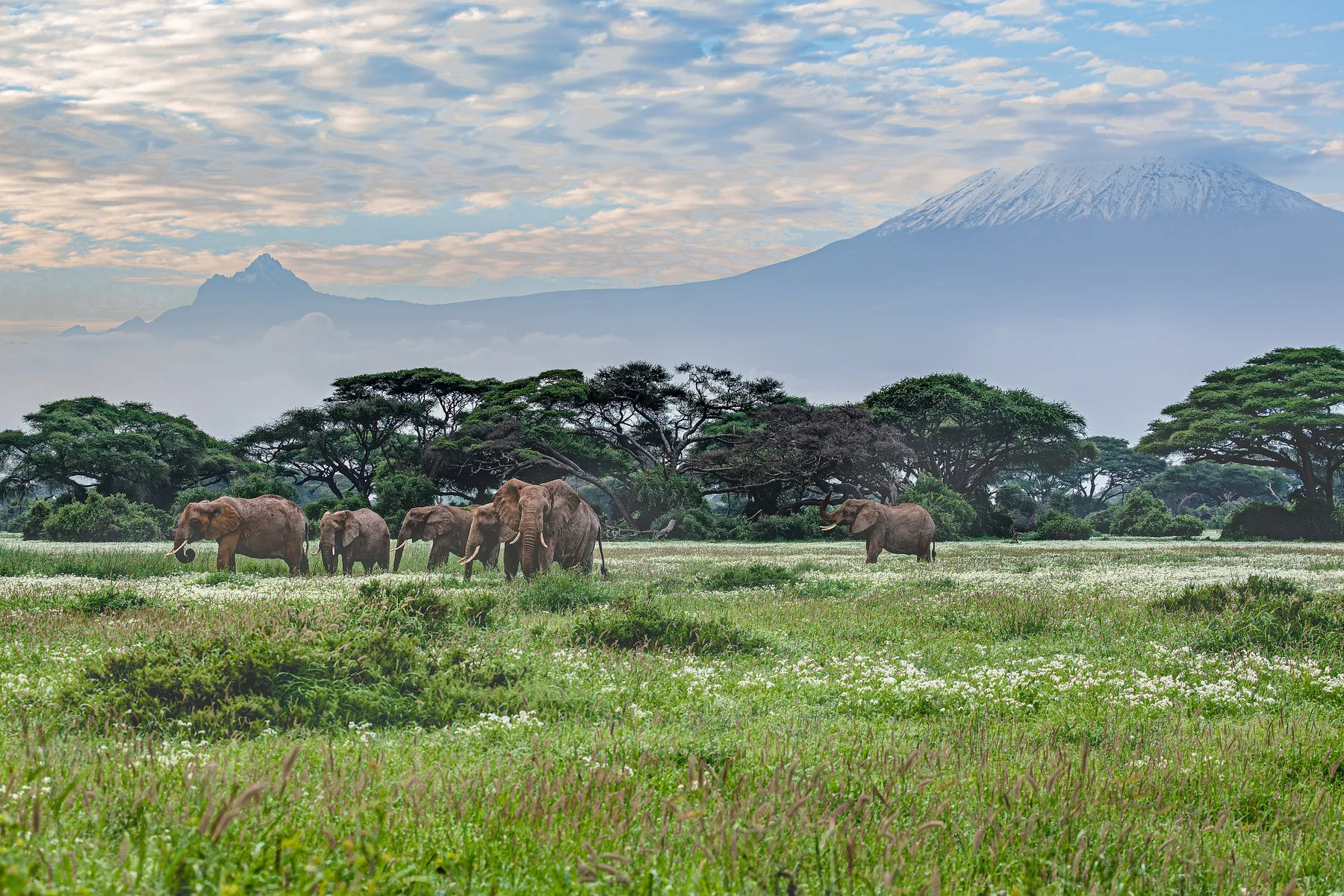
The plane banks over the plain, and Amboseli begins to take shape below. That is the appealing part of a fly-in safari. The useful question comes next: where does it land, who meets you, how far is the camp, and how many of the hours you saved will be spent inside the park rather than in another vehicle transfer?
A fly-in Amboseli safari can be an excellent choice for travellers with limited time, guests who find a long road day tiring, or someone pairing Amboseli with another distant safari area. It is not automatically a luxury safari. You can choose a comfortable lodge and shared camp vehicle or a more private, higher-cost arrangement. The quality comes from fit: a flight that works with your international arrival, a lodge in the right position and guiding that gives the group the wildlife time it came for.
When flying to Amboseli is worth it
By road, Nairobi to Amboseli is a substantial journey whose timing varies with route, traffic and conditions. A bush flight can protect energy and possibly part of an afternoon. It is particularly valuable when a three- or four-night Amboseli stay would otherwise lose too much of day one and the return day to driving. However, a scheduled flight is not door-to-door. There is a transfer to Nairobi’s Wilson Airport, check-in, possible aircraft stops and a drive after landing.
Guests carrying large hard suitcases, heavy camera kits or a lot of child equipment may find the baggage rules inconvenient. A family with a nervous flyer may prefer to keep one road leg. A photographer who wants the same private guide and vehicle throughout may also prefer a road safari. The right comparison is the full journey and total cost, not the word “fly-in” against “road”. Our road versus fly-in safari guide explores the wider decision.
| Traveller | Why flying may help | What to check first |
|---|---|---|
| Short-stay couple | Less road fatigue and more energy for the first drive. | Arrival time at the airstrip and camp transfer. |
| Family with children | Potentially easier than a long road day. | Carrier age and baggage rules, child seats at the destination, camp policy. |
| Photographer | More time in changing morning and evening light. | Camera-bag weight, private vehicle and exact drive area. |
| Multi-park safari guest | A flight can relieve a cross-country connection. | Actual routing, possible Wilson change and both ground transfers. |
From Nairobi’s Wilson Airport to the correct Amboseli camp
Small safari services generally use Wilson Airport in Nairobi, not Jomo Kenyatta International Airport where many international flights land. A same-day international arrival and Amboseli departure needs enough time for immigration, bags, cross-city traffic and the carrier’s check-in deadline. If the international aircraft is late, separate domestic tickets may not protect the connection. An easy Nairobi night before the bush flight is often sensible.
AirKenya lists Amboseli among its Wilson Airport safari destinations. Safarilink’s published FAQs specify a Wilson check-in deadline and baggage rules. Flight schedules and actual stops change, so the final proposal should state the booked carrier, flight, departure point and landing strip, not just “domestic flight included”.
Kenya Wildlife Service describes a light-aircraft airstrip at Amboseli and identifies other strips in the wider area in its park information. Some lodges use a private strip for charter arrivals. The strip on your ticket determines the road transfer, and the camp’s location determines when you can begin a game drive. A flight to one part of the ecosystem does not place you instantly at a lodge on the other side.
Ask who will meet you, whether the collection is private or shared, how bags travel, and whether the trip from strip to camp is a transfer or an actual guided drive. If the lodge is outside the national park, clarify gate time and park-entry basis. An afternoon listed as a game drive should still be plausible after landing, luggage and lunch.
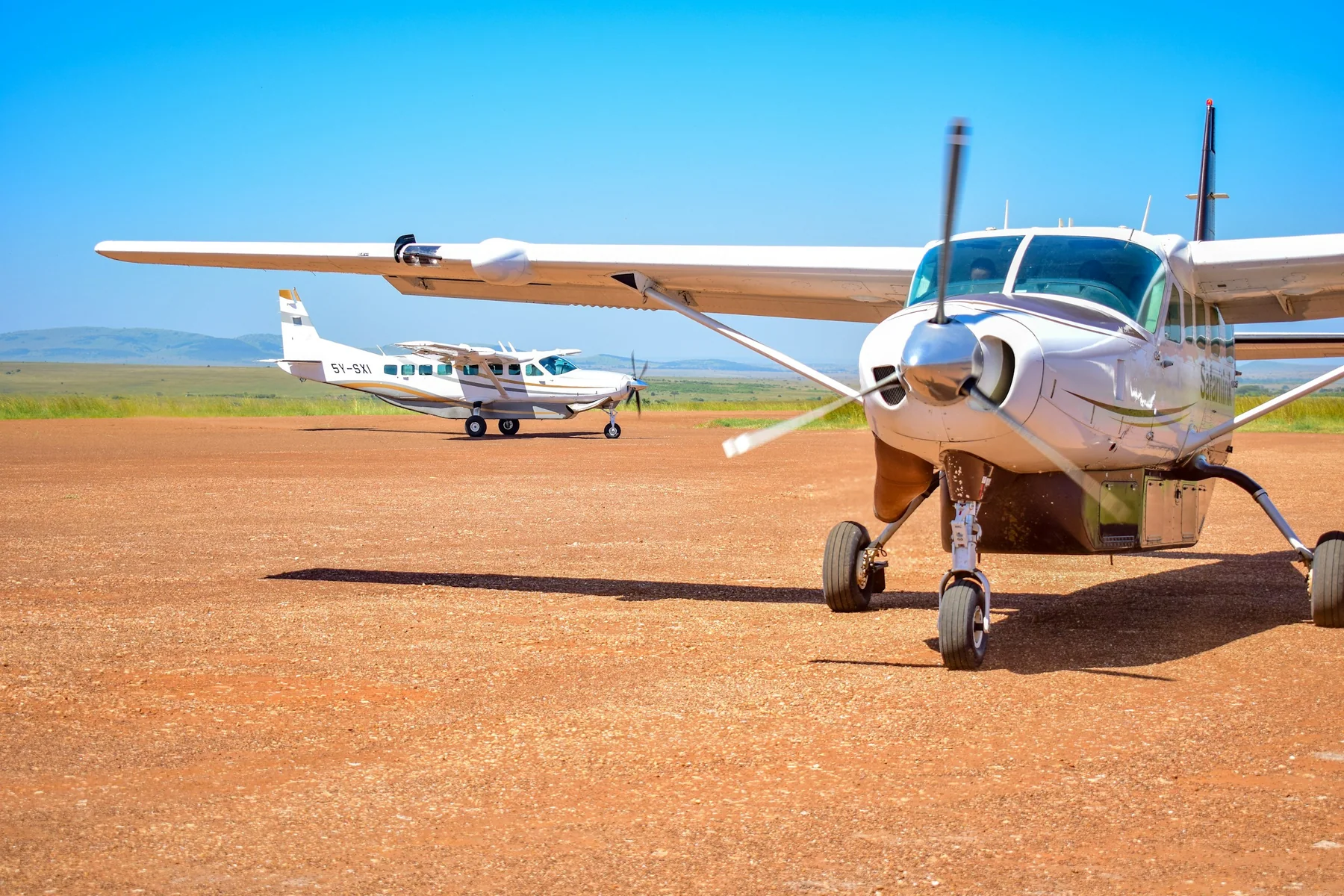
A four-day, three-night Amboseli fly-in example
Three nights give two complete wildlife days after the flight arrival. This sample assumes a Nairobi Wilson departure and a suitable return flight. It is a planning pattern, not an exact timetable or a room reservation.
Day 1, arrive in Amboseli: Leave your Nairobi hotel for Wilson with enough time to check in. Fly to the confirmed airstrip. Meet the camp vehicle and transfer to the chosen property. After settling in, take an afternoon drive if landing time and park entry permit. If the arrival is later, make the first evening a gentle one and start early tomorrow.
Day 2, elephants and wetlands: Begin in the cool morning, when the light may also make Kilimanjaro visible if clouds allow. Focus on elephant behaviour, wetland birds and the changing terrain rather than asking a guide to race between distant sighting reports. Rest around midday, then make another drive with a different focus. A full day is more than the sum of animal names on a list.
Day 3, follow the conditions: Use the second full day for a route that responds to weather and wildlife. Perhaps spend longer near a wetland, watch a family of elephants, photograph the dry lakebed or choose an appropriate hosted community activity outside park boundaries. Any walking, night drive or village visit depends on its location, permissions and separate terms. Do not assume it is included because a lodge calls itself an Amboseli property.
Day 4, return: Take a morning drive only if the flight time truly allows it. Transfer to the correct strip, fly to Wilson and leave enough time for the international connection. If you have a separate long-haul ticket, a Nairobi buffer night may be wiser. A flight home in the morning does not combine well with a last Amboseli sunrise.
Two nights can work for travellers with a tight schedule, but leave one complete park day. Four nights suit birders, elephant enthusiasts and families who want slower afternoons. A fly-in trip is most satisfying when the flight saves time for something you actually want to do, rather than enabling more transfers on the same holiday.
What the days in Amboseli can give you
Amboseli is famous for elephants and the mountain backdrop, but the park is not one flat photograph. Wetlands, open plain, woodland and the lake basin change what you see and how long you spend in an area. Birders have much to enjoy. Buffalo, zebra, antelope and predators may be seen, but sightings are not a menu from which to order. Give the guide room to use the conditions of the day.
Mount Kilimanjaro is across the border in Tanzania and its visibility depends on cloud, time of day and season. A fly-in safari increases your time on the ground, not your control over the sky. If a clear mountain photograph is the only reason for the trip, you risk missing the elephants and wetlands in front of you. Our Amboseli safari guide looks more closely at park geography and wildlife.
Visitors sometimes want a Maasai community visit. The best version is hosted and welcomed by the community, with a clear fee and respectful expectations. It should not be an unannounced detour or a performance promised as a free park feature. If this matters to you, say so before the itinerary is finalised and choose a suitable host and time.


Where you sleep determines how the fly-in works
Do not choose an Amboseli camp solely by a mountain-facing photograph. Ask how far it is from the landing strip and which park gate or conservancy area it serves. An inside-park stay may simplify a particular drive pattern. An outside-park or conservancy property may offer more room, walks or different evenings, but national-park entry and gate journeys must be accounted for.
Amboseli Serena Safari Lodge is an established park lodge with a more traditional hotel rhythm. Tortilis Camp says the Amboseli airstrip is about a 45-minute drive from camp, a useful reminder that a short flight does not end the transfer. Tawi Lodge describes its private conservancy near Kimana Gate and its cottage configuration. They are examples of different positions and styles, not a claim that all three have the same room availability or inclusions.
| Camp decision | What to ask | Why it matters for a fly-in guest |
|---|---|---|
| Airstrip collection | Which strip, who meets the plane and how long is the transfer? | The saved road hours can disappear in an unexpected ground leg. |
| Park versus outside location | Which drives use the KWS gate, and which activities happen outside? | Entry fees, daylight and drive timing change with the location. |
| Vehicle and guide | Shared camp vehicle or private vehicle, and for how many days? | A private itinerary and a fly-in room package are not necessarily the same purchase. |
| Room configuration | Exact category, beds, accessibility and child policy. | One camp’s attractive room photograph may not be the category quoted. |
A good camp proposal tells you the room category, meals, airstrip transfer, park-entry basis and guiding arrangement together. If the property changes after the flights are chosen, check whether the new airstrip and ground transfer still make sense. We can customise the package beyond the stays displayed on the website.
Small-aircraft baggage is a real planning constraint
Safarilink’s published questions say its standard 15 kg allowance includes hand luggage and explain why soft bags fit smaller aircraft better. Another carrier, route or charter can use different limits. Check the ticket rather than assume that a 20 kg international airline allowance continues onto the bush plane. Hard-sided cases can be a particular problem because the luggage compartment may have an irregular shape.
Camera bodies, lenses, medication and children’s supplies all count toward what the aircraft can carry. Do not leave this until the Wilson check-in counter. Tell us about unusually heavy bags before choosing the flight. Options may include a different aircraft, a booked extra seat where offered, or storing an unneeded suitcase in Nairobi. The Kenya safari flight baggage guide goes into the detail.
Flight times and stops also matter. A scheduled service can visit another strip before yours. Weather or operational changes can affect a departure. Build a connection margin before an international flight, especially when the two tickets are separate. A private charter may offer more flexibility but is a very different cost basis; it should not be implied by the words “fly-in”.
What belongs in the full fly-in price
The flight is only one line. A complete price should name the camp, room and meal basis, the booked flights and baggage allowance, Wilson Airport transfer if included, Amboseli airstrip collection, vehicle and guide, KWS park entries, any separate conservancy fee, activities and the return transfer. A lodge outside the park can be a wonderful choice, but ask whether daily park entries are part of the quote. The Kenya safari cost guide explains broader season and group-size effects.
| Cost line | Clarify before comparing proposals |
|---|---|
| Air transport | Carrier or charter, route, stops, luggage and applicable changes or cancellation terms. |
| Ground transport | Home hotel to Wilson, destination strip to camp, and reverse transfers. |
| Guiding | Private or shared game drives and the vehicle available on each day. |
| Wildlife access | Amboseli National Park entry days and any separate conservancy access. |
| Accommodation | Exact property, room category, nights and meals. |
| Optional extras | Any hosted community visit, walk or specialist activity separately agreed. |
A cheaper fly-in quotation may simply omit private guiding or fees that another includes. Compare the full total on the same dates and traveller basis. The best value is the arrangement that delivers the days you imagined, with no surprise transfer or gate bill at the end.
Fly both ways, fly one way or drive?
Flying in and out can be the easiest rhythm for a short stay, provided the connections work. Flying in and driving out lets you arrive fresh for the first park day and see the southbound landscape on the return; it also requires a vehicle and guide handover that must be priced. Driving both ways may suit larger groups, heavy baggage and travellers who enjoy the road with one guide. None is automatically the premium choice.
If Amboseli is part of a longer Kenya trip, the onward destination changes the best plan. Tsavo West forms a logical road continuation toward the coast. The Mara lies on the other side of Nairobi and may call for an air connection or a deliberately long road day. A map line between two parks is not a flight schedule. We can compare the actual route after dates and rooms are known.
Amboseli fly-in safari questions
Where do Amboseli fly-in safaris usually depart from Nairobi?
Scheduled bush flights commonly depart from Wilson Airport, not Jomo Kenyatta International Airport. The cross-city transfer from an international arrival must be allowed for.
Is there an airstrip at Amboseli?
Kenya Wildlife Service lists Kimana airstrip for light aircraft at Amboseli, and lodges may use other appropriate strips or a charter. Confirm the exact landing strip for the booked service and camp.
How much baggage can I take on a bush flight?
It depends on the booked carrier and aircraft. Safarilink’s published standard safari allowance is 15 kg including hand luggage and it asks for a soft bag; check current rules on the actual ticket.
Does flying mean I can skip all road travel?
No. You still travel to Wilson Airport, check in and transfer from the Amboseli airstrip to the chosen camp. The camp’s position can make this ground leg substantial.
Can I fly into Amboseli and drive back to Nairobi?
Yes. A fly-in, road-out route is a possible way to balance time and cost, provided the vehicle and guide handover are specified.
How many nights should I spend in Amboseli?
Three nights give two full wildlife days after arrival and flexibility around weather. Two can work for a shorter visit; one is mostly an arrival and departure experience.
Will I see Mount Kilimanjaro from Amboseli?
The mountain is weather-dependent. A fly-in safari gives more time on the ground, but no flight or lodge can guarantee a clear view on a chosen morning.
Is the safari vehicle private after landing?
Not automatically. Some camp packages use shared vehicles. Request a private vehicle and guide explicitly if that is important to the group.
Are park fees included with a lodge outside Amboseli National Park?
Do not assume so. Park entry and conservancy access are separate considerations. The final itinerary should state which fees and entry days are included.
Can I connect from Amboseli to the Masai Mara by air?
Potentially, but routings may go through Nairobi and vary by date. Check flight times, baggage and both camp transfers before promising a same-day game drive.
Is a fly-in safari suitable for young children?
It can be, but aircraft age and baggage rules, camp policies, child restraints in the game vehicle and the child’s comfort with small aircraft should be considered.
What should an Amboseli fly-in safari quote include?
Name the flight and baggage basis, Wilson and destination transfers, camp and room, meals, private or shared guiding, park and conservancy fees, optional activities and return journey.
Plan the whole journey
Tell us how you arrive and what matters most
Share dates, number of travellers, baggage, camp preference and onward plans. We can fit airstrip, room, guide and park access together.