
Masai Mara, Samburu and Ol Pejeta Safari: Kenya From Rhino Country to the Northern Drylands
Travel across three different wildlife stories, then protect enough time for conservation, northern species and patient Mara viewing.
- Why combine these three places?
- The best route usually begins in Ol Pejeta
- A nine-night itinerary that gives every stop a full chapter
- The strongest eight-night version
- Ol Pejeta is more than the final two northern white rhinos
- Samburu is not a smaller Mara
- The Mara provides the broad wildlife finish
- Wildlife contrast without a guaranteed checklist
- Road, fly-in or hybrid comparison
- Where to stay at Ol Pejeta
- Where to stay in Samburu
- What travellers say about the north and the Mara
- When should you travel?
- Families, couples and photographers
- Responsible conservation and community visits
- What changes the price?
- What should the proposal include?
- Booking checklist
- Frequently asked questions
- Let the landscape change the wildlife story
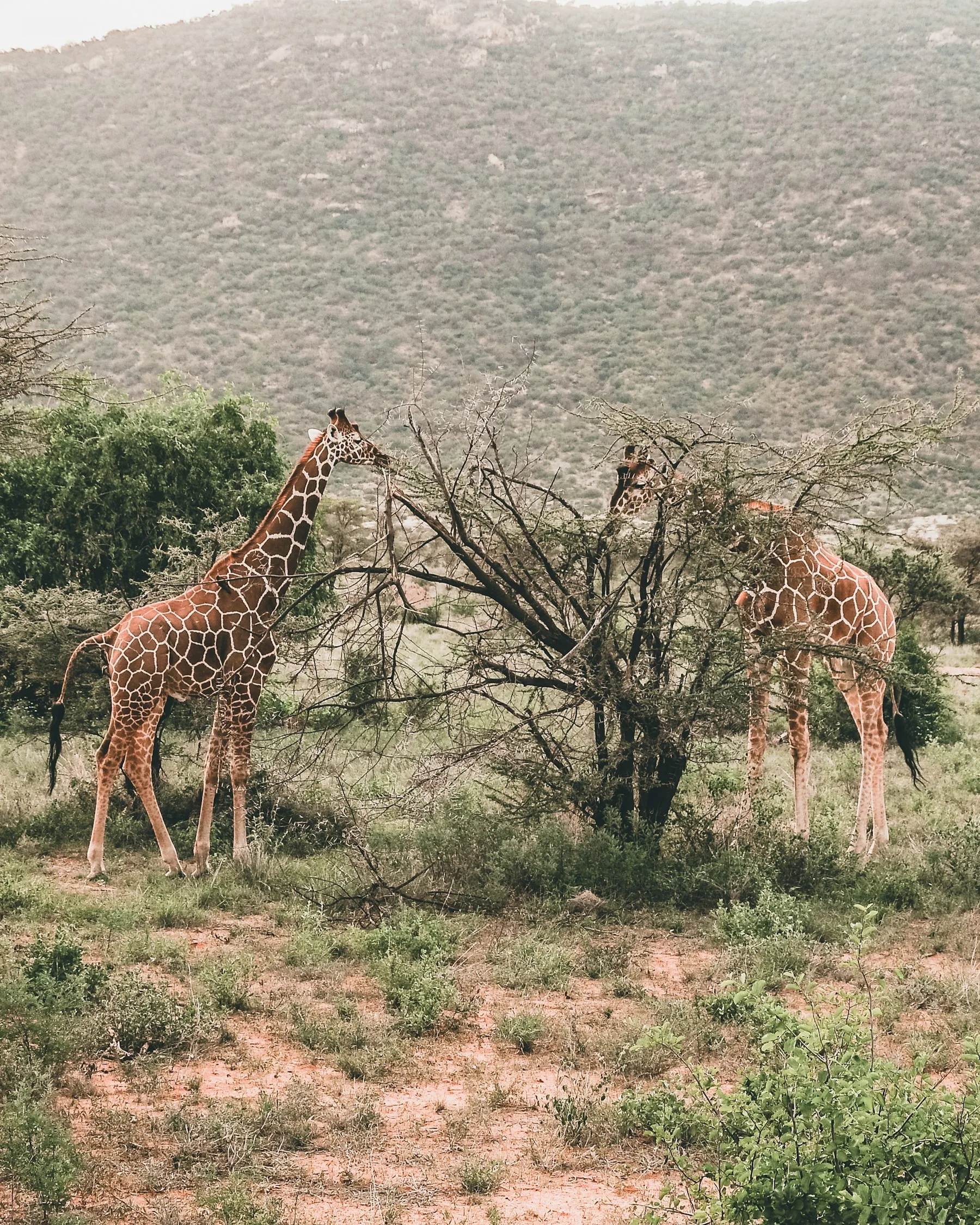
The first rhino appears against the green shoulder of Mount Kenya country. A few days later, a gerenuk stretches upright beneath an acacia near the Ewaso Ng'iro. Then the aircraft drops over the Mara and the land seems to widen all at once.
A Masai Mara, Samburu and Ol Pejeta safari works because each destination changes the story. Ol Pejeta puts conservation decisions at the centre. Samburu introduces an arid river ecosystem and animals adapted to northern Kenya. The Mara finishes with open grassland, predators and time to watch behaviour. This is not a route for collecting three versions of the same game drive.
Why combine these three places?
The route connects three of Kenya's clearest wildlife identities. Ol Pejeta is a working conservancy where rhino protection, livestock, research and tourism share one landscape. Samburu is river country set inside a dry northern environment. The Mara is a large grassland ecosystem whose resident wildlife remains important beyond the migration months.
| Destination | Landscape and wildlife identity | Strong stay | The question it answers |
|---|---|---|---|
| Ol Pejeta Conservancy | Laikipia grassland, rhinos, conservation activities, Mount Kenya views | 2 to 3 nights | How does intensive conservation work on the ground? |
| Samburu ecosystem | Dry bush, riverine woodland, northern species, elephants | 3 nights | How different can Kenya feel north of Mount Kenya? |
| Masai Mara | Open plains, rivers, predators, seasonal herds, resident wildlife | 3 to 5 nights | What happens when wildlife has time to unfold? |
The combination suits travellers who want more than the standard first-safari route. It is especially strong for repeat visitors, conservation-minded families, photographers, birders and anyone interested in the difference between a private conservancy and county-managed national reserves.
It is less suitable for a six-night holiday. In that window, choose the Mara plus Ol Pejeta or Samburu plus Ol Pejeta. Three one-night or two-night stops would create more transfers than experience.
The best route usually begins in Ol Pejeta
Drive from Nairobi toward Nanyuki and Ol Pejeta after a protected arrival night. This first sector introduces the central highlands without committing the travellers to the longest transfer on day one. Two or three nights then give time for both ordinary wildlife viewing and the activities that distinguish the conservancy.
Ol Pejeta to Samburu is a logical road connection. The landscape dries as the route moves north and the sense of ecological change becomes part of the safari. Three Samburu nights give two complete days across river, open bush and neighbouring reserves or conservancies where access allows.
The difficult connection is Samburu to the Mara. Driving it in one day is too ambitious for most travellers and can require an overnight break. A bush flight, often with routing or stops dictated by the day's schedule, protects energy. The final Mara to Nairobi flight or road transfer then completes the route.
| Route plan | Strength | Main trade-off | Best for |
|---|---|---|---|
| Nairobi, Ol Pejeta, Samburu, fly to Mara | Builds north by road and removes the hardest cross-country transfer | Air schedules and baggage limits | Most eight or nine-night trips |
| Fly to Samburu, road to Ol Pejeta, fly or road via Nairobi to Mara | Fast start in the north | More handovers and possible Nairobi connection | Premium trips with fixed air access |
| Mara first, fly north, Samburu, Ol Pejeta, Nairobi | Short final road sector | Wildlife scale may feel strongest at the beginning | Fixed Mara dates or flights |
| Entirely by road | One vehicle and guide can remain with the group | Long Samburu-Mara connection needs a stop | Ten nights or more and travellers who enjoy road journeys |
A nine-night itinerary that gives every stop a full chapter
Three nights in each destination is easy to remember, but the real advantage is two full days in every landscape.
Day 1: Nairobi to Ol Pejeta
Leave after breakfast and cross the central highlands. Traffic, town stops and road conditions shape the arrival. Check in, have lunch when timing allows and use the afternoon for a first conservancy game drive. Do not reserve a time-sensitive conservation activity on the arrival afternoon unless the road plan has a generous margin.
Days 2 and 3: Ol Pejeta wildlife and conservation
Use one day for a broad game drive through open plains, water points and wooded areas. Rhinos are central, but elephants, giraffes, buffalo, antelope, predators and birds can turn an unplanned section into the day's best encounter.
Use the second day for one pre-booked conservation experience, then leave space around it. Sweetwaters Chimpanzee Sanctuary explains the lives of rescued chimpanzees, which are not native to Kenya. A northern white rhino or other specialist experience may be controlled, timed and subject to animal welfare. Availability should never be treated as a permanent inclusion.
Day 4: Ol Pejeta to Samburu
Travel north with a proper lunch and photo stops that do not turn the road into a race. The change from higher, cooler Laikipia to drier Samburu country is part of the journey. Arrive for an afternoon drive only when the road and lodge position allow it.
Days 5 and 6: Samburu and the Ewaso Ng’iro
Start at the river, where elephants and other wildlife may move through the woodland. Then explore drier habitats for Grevy's zebra, reticulated giraffe, gerenuk, beisa oryx and Somali ostrich. These are often marketed as the Samburu Special Five, but no guide can guarantee all five.
A second full day protects the trip from the idea that every northern species waits near the first road. It also allows time for birds, predators, elephant behaviour and the changing light on the hills.
Day 7: Fly or begin the connection to the Mara
The cleanest version uses a light aircraft from a Samburu-area airstrip to the Mara when the route operates for the travel date. Some services may include stops or a connection. The airstrip must be matched to the lodge at both ends.
If travelling by road, break the journey. A night near Mount Kenya, Naivasha or Nairobi can make logistical sense, but it turns the trip into ten nights or more. Do not call the transit night a wildlife destination unless it includes enough usable time.
Days 8 and 9: Two full Mara days
Give the first full day to the area around the chosen camp. The second can extend toward another habitat or a river system when distance and season justify it. A conservancy stay and reserve visit require a different plan from a lodge inside the main reserve.
During migration interest, herd position may support a full-day drive. Outside that period, resident lions, cheetahs, elephants, giraffes, hyenas and plains game keep the ecosystem compelling. The Masai Mara safari guide explains the sectors and seasons in more detail.
Day 10: Return to Nairobi
Choose road or flight around the international departure. A bush flight preserves time but needs a city transfer and a realistic connection buffer. The road uses much of the day and may be more comfortable for travellers with larger luggage or photography equipment.
The strongest eight-night version
Use two nights at Ol Pejeta, three in Samburu and three in the Mara. The Ol Pejeta stay then gives one full day plus partial drives. Choose the most meaningful conservation experience in advance and avoid stacking several timed activities into that day.
Do not take the third Samburu night to create three Ol Pejeta nights unless conservation activities are the main purpose of the trip. Samburu's wildlife is more dispersed and the road to reach it is longer, so two nights can feel particularly thin.
The Mara should retain three nights. Two nights create only one full day, and the route has already invested heavily in getting there.

Ol Pejeta is more than the final two northern white rhinos
Najin and Fatu, the last two northern white rhinos, live at Ol Pejeta. Their story is important, but it should not reduce the conservancy to one encounter. Ol Pejeta also protects a major eastern black rhino population, supports other wildlife, works with cattle and hosts research, veterinary and anti-poaching programmes.
Visitor activities can include standard game drives, scheduled conservation experiences, the Sweetwaters Chimpanzee Sanctuary, walking, night activities or specialist sessions, depending on the property, current tariff and operational conditions. The official tariff guide states that activities may change for the health and welfare of animals. That is a sign of responsible management, not a service failure.
| Ol Pejeta interest | What the traveller gains | What to confirm before booking |
|---|---|---|
| Rhino-focused game viewing | Context for black and white rhino conservation | Guide, vehicle, timing and whether a specialist activity is included |
| Northern white rhino story | Understanding of a subspecies at the edge of extinction | Current access, advance booking, age limits and welfare conditions |
| Chimpanzee sanctuary | A rescue and welfare story separate from native Kenya wildlife | Opening times, transfer and how the visit fits the game drive |
| Night activity | A chance to look for nocturnal behaviour | Property permission, vehicle, start time and minimum age |
| Walking or conservation session | Ground-level learning and ranger interpretation | Fitness, age, equipment, private or shared format and availability |
Chimpanzees are not native to Kenya. The sanctuary exists because rescued animals needed long-term care. Presenting it honestly makes the visit more meaningful than describing it as a chance to tick a Kenyan species.
Use the predetermined Ol Pejeta Conservancy guide for the full activity and accommodation comparison, and the Laikipia safari guide to understand the wider region.
Samburu is not a smaller Mara
Samburu's identity comes from dry country and the Ewaso Ng'iro river. Riverine woodland can concentrate activity while the surrounding bush rewards slower searching. Elephants move through the ecosystem, big cats occur, and northern-adapted species shift the wildlife list.
The Samburu Special Five label is a useful introduction, not a promise. Grevy's zebra can be distinguished from plains zebra by narrower stripes, a white belly and large rounded ears. Reticulated giraffe carry a clean geometric pattern. Gerenuk feed upright. Beisa oryx and Somali ostrich add their own dryland adaptations.
Samburu National Reserve sits beside Buffalo Springs, with Shaba nearby. They have different access arrangements, road networks and lodge positions. A package should state which reserve fees and drives are included. A lodge marketed broadly as “Samburu” may actually be in Shaba, Buffalo Springs, community land or across the river.
| Northern base | Position and style | Planning question |
|---|---|---|
| Samburu Intrepids or Elephant Bedroom | Inside Samburu National Reserve near river habitat | How much of the day stays near the river and how are vehicles shared? |
| Ashnil Samburu | Buffalo Springs side of the ecosystem | Are drives in Samburu Reserve included and how is the river crossing handled? |
| Sarova Shaba | Shaba National Reserve | Does the itinerary deliberately explore Shaba or spend long transfers reaching Samburu? |
| Sasaab and selected community stays | Private or community land outside the main reserves | Which reserve visits, walks and cultural activities are included? |
| Small specialist camps | Varies across reserves and conservancies | Exact location, season, power, pool, family policy and vehicle arrangement |
The Samburu National Reserve guide will map these distinctions in destination-level detail.

The Mara provides the broad wildlife finish
After rhino conservation and northern species, the Mara adds open plains and a different predator ecology. Lions, cheetahs, hyenas and leopards are possible, but no sighting belongs to the itinerary in advance. Resident wildebeest, zebra, topi, gazelles, elephants, giraffes and buffalo give the ecosystem depth throughout the year.
Three nights provide two full days. Four nights suit travellers who want both a reserve and conservancy experience or specialist photography. Five can work during migration interest when patience matters more than adding another destination.
Choose the area before the room. Talek, the Mara Triangle, central reserve and private conservancies create different access, crowding and activity rules. Read the where to stay in the Masai Mara guide before accepting a generic “Mara camp” line.
Wildlife contrast without a guaranteed checklist
The route can offer extraordinary variety, but its success should not depend on seeing every flagship species. Ol Pejeta may deliver the clearest rhino chapter, Samburu the northern specialists and the Mara the strongest predator density. Weather, vegetation, water and animal movement still control each day.
| Wildlife interest | Strongest chapter | Honest expectation |
|---|---|---|
| Black and white rhinos | Ol Pejeta | Strong conservation setting, no individual sighting guaranteed |
| Grevy's zebra and reticulated giraffe | Samburu ecosystem | Northern range improves the chance, but animals move widely |
| Lions and cheetahs | Mara, with possibilities elsewhere | The Mara is the broadest predator chapter, not a scheduled hunt |
| Elephants | All three, in different settings | Compare grassland, river and conservancy behaviour |
| Chimpanzee welfare story | Ol Pejeta sanctuary | Rescued animals in care, not native wild chimpanzees |
| Seasonal migration herds | Mara | Timing and crossings remain unpredictable |
Ask the guide to explain adaptation and habitat rather than rushing to the next name. A gerenuk feeding posture, a rhino choosing cover or elephants digging near a dry river can become the story that makes the route coherent.
Road, fly-in or hybrid comparison
Road works best between Nairobi, Ol Pejeta and Samburu. It keeps one driver-guide with the group, allows more luggage and makes the changing landscape visible. A flight becomes most valuable across the Samburu-Mara divide.
| Transport choice | Benefit | Cost or constraint | Best traveller |
|---|---|---|---|
| Private road north, flight to Mara | Best balance of landscape and saved time | Air baggage limit and possible stops | Most eight or nine-night routes |
| Flights throughout | More usable wildlife time | Higher cost and more transfers between airstrips and camps | Luxury and short trips |
| Road throughout with transit night | One vehicle, flexible luggage and guide continuity | Needs ten or more nights | Slow travellers and photographers with equipment |
| Shared road safari | Lower vehicle cost | Fixed departures, stops and group pace | Budget-conscious social travellers |
Light-aircraft flights commonly require soft bags and limit total baggage. Camera equipment, mobility aids and children's equipment must be declared before ticketing. A separate seat for equipment or a road transfer may be needed.
Flight schedules can change by season, day and demand. The proposal should show the actual routing, expected stops, baggage rule and airstrip transfers for the travel date.
Where to stay at Ol Pejeta
Sweetwaters Serena is a larger tented property inside the conservancy with a waterhole setting and broad facilities. Porini Rhino Camp offers a smaller camp style. Kicheche Laikipia is another intimate option within the wider Ol Pejeta landscape. Private houses and nearby Nanyuki properties create alternatives for families and groups, but outside accommodation adds gate and transfer time.
Compare more than category. Ask about the distance to the chimpanzee sanctuary and booked activities, private or shared vehicle policy, night-drive permissions, room layout, family age rules, power, pool and meal flexibility. A lower room rate outside the conservancy can cost the first light of the day.
Where to stay in Samburu
Reserve position matters because the ecosystem includes Samburu, Buffalo Springs, Shaba and community lands. An attractive Shaba lodge is not wrong, but it should not be sold as if every Samburu circuit begins outside the room.
Inside-reserve camps protect early and late drives. Community and private-land properties may add walks, cultural experiences, night activities or greater privacy, subject to their rules. Ask which reserve the daily game drives enter and whether the entry fee is already included.
Heat is part of the accommodation decision. A pool, shaded deck, fan, airflow and sensible midday schedule can matter more than an ornamental room feature. Families should ask about fencing, river access, escorts after dark and children's activities.
What travellers say about the north and the Mara
These exact excerpts come from public discussions. Each reflects one trip, not a promise, but the details explain why travellers value the route.
“Yes, the Mara was spectacular but we loved our time in Ol Pejeta for the rhinos, elephants, zebras, birds.”
The same traveller added, “It also felt that 90% of the time, we were the only ones around.” Their four-night stay created time for surprises rather than a single scheduled encounter. Read the original discussion.
“Ol Pejeta was a pleasant surprise.”
Another traveller continued, “We loved the landscape and mt kenya in the background.” The comment is a reminder that Ol Pejeta is a landscape, not only a conservation appointment. Read the conservancy discussion.
“When you start far north and head south, you really get to see Kenya.”
That traveller used northern stays, Ol Pejeta and the Mara, and valued the progression through the country. Read the route discussion.
These comments support the route when there is enough time. They do not justify compressing it into six nights.
When should you travel?
The route is possible year-round. Drier periods often make wildlife easier to find near water and keep many tracks straightforward, while the landscape can be dusty and demand is higher. Wetter periods bring colour, migrant birds, young animals and dramatic skies, with slower roads and more dispersed wildlife.
Samburu's river conditions matter greatly. A dry river and a flowing river create different wildlife patterns. Ol Pejeta's higher elevation can feel cooler than Samburu. The Mara's migration interest peaks seasonally, but resident wildlife makes it a full-year destination.
| Conditions | Ol Pejeta | Samburu | Mara | Planning response |
|---|---|---|---|---|
| Dry spell | Open viewing and cooler mornings | Wildlife may focus near dependable water | Dust, open plains and active water points | Carry layers, dust protection and water |
| Green season | Lush Laikipia and birds | Striking colour with possible road challenges | Green plains, resident wildlife and storms | Keep transfer timing flexible |
| Peak Mara demand | Often calmer first chapter | Distinct northern alternative | Higher rates and vehicle pressure in famous sectors | Book exact locations early |
| Hot northern days | Comfortable dawn and evening | Midday heat can be intense | Variable by season | Use shade, pool and split-drive rhythm |
Families, couples and photographers
Families benefit from three-night bases and a private vehicle. Ol Pejeta adds structured learning, Samburu adds easily recognised northern adaptations and the Mara supplies open-plains drama. Confirm minimum ages for specialist activities, air baggage, pool supervision and child meal times.
Couples can use small camps, private dining and one fly-in sector to protect time. Romance comes from privacy and pace, not adding another champagne stop. Avoid one-night hotel changes.
Photographers should confirm a private vehicle, seating, roof style, beanbag support, charging and baggage before selecting lodges. Samburu and Ol Pejeta can reward patient lower-traffic sessions, while the Mara may require careful guiding around popular sightings.
Travellers with limited mobility should check step height, tent paths, bathroom layout, airstrip boarding and the exact physical demands of conservation activities. Use the accessible Kenya safaris guide as a starting point.
Responsible conservation and community visits
At Ol Pejeta, respect controlled access and never request sensitive rhino location information. Specialist encounters exist to support learning and conservation, not to create unrestricted contact. Accept changes made for animal welfare.
In Samburu, a community visit should have a clear host, agreed payment, consent for photography and time for genuine conversation. Ask how the fee is distributed and whether the experience belongs to the community rather than being staged at the roadside.
In the Mara, follow reserve or conservancy vehicle rules, do not pressure a guide to crowd predators and choose cultural visits with the same standards. Conservation language should be tied to land, jobs, revenue and wildlife outcomes rather than used as decoration.
What changes the price?
The largest drivers are accommodation category, private or shared vehicle, bush flights, conservancy and reserve fees, specialist activities and season. A route using road travel north and one strategic flight to the Mara often balances cost and time.
Do not compare two proposals until every property and transfer is named. A cheaper Samburu line may sit in Shaba or outside the reserve. A cheaper Ol Pejeta stay may sit outside the conservancy. A cheaper Mara camp may require longer drives to the intended area.
Use the Kenya safari cost guide for the full cost structure and the Kenya safari packing list for heat, cool mornings, dust and light-aircraft baggage.
What should the proposal include?
| Proposal line | Details that belong in writing |
|---|---|
| Accommodation | Exact property, reserve or conservancy, room, occupancy and meal plan |
| Vehicle | Private or shared use, seat plan, guide continuity and luggage space |
| Ol Pejeta | Entry days, conservation activities, booking times, age limits and current access |
| Samburu | Reserve or conservancy fees, drive areas and cross-reserve access |
| Mara | Reserve or conservancy access, entry days, airstrip and vehicle sharing |
| Flights | Actual routing, possible stops, baggage rule, taxes and transfers |
| Exclusions | Drinks, tips, optional activities, insurance and personal purchases |
Booking checklist
- Give the full safari at least eight nights.
- Protect three nights in Samburu and three in the Mara.
- Choose two or three nights at Ol Pejeta according to activity interest.
- Decide whether the route runs north to south or south to north.
- Confirm the Samburu-Mara flight for the actual date before fixing rooms.
- Name every reserve, conservancy, property and airstrip.
- Book limited conservation activities in advance.
- Confirm that activity changes for animal welfare are acceptable.
- Decide private or shared vehicle use at each destination.
- Confirm baggage, charging and camera arrangements.
- Protect the international arrival and departure buffers.
- Put inclusions, exclusions and cancellation terms in writing.
Frequently asked questions
How many days do I need?
Use at least eight safari nights: two at Ol Pejeta, three in Samburu and three in the Mara. Nine nights with three in each is stronger.
Should I visit Samburu before or after the Mara?
Starting in Ol Pejeta and Samburu before flying south creates a strong ecological progression. The reverse can work when flight schedules or fixed rooms demand it.
Can I drive the whole route?
Yes with ten or more nights and a transit stop between Samburu and the Mara. Most shorter trips benefit from one flight.
Will I see the Samburu Special Five?
The northern ecosystem offers a good chance to search for Grevy's zebra, reticulated giraffe, gerenuk, beisa oryx and Somali ostrich. All five cannot be guaranteed.
Can I see the last northern white rhinos?
Najin and Fatu live at Ol Pejeta. Visitor access is controlled, timed and subject to current availability and animal welfare.
Are chimpanzees native to Kenya?
No. Sweetwaters Chimpanzee Sanctuary provides long-term care for rescued chimpanzees that cannot return to the wild.
Is Ol Pejeta only about rhinos?
No. It is a wider wildlife and working-conservancy landscape with elephants, predators, plains game, birds, cattle and conservation programmes.
Is three nights too long in Samburu?
No. Three nights provide two full days and give dispersed wildlife, river conditions and heat less power over the experience.
Is the route suitable for children?
Yes when private vehicle control, activity age limits, pool time, heat, flights and room arrangements are designed around them.
Can NLS customise the route?
Yes. The order, nights, properties, road and air sectors, conservation activities, vehicle and guide arrangements can all be changed.
Let the landscape change the wildlife story
Ol Pejeta asks travellers to look at the work behind a rhino sighting. Samburu reveals how animals and people live around a dry northern river. The Mara gives predators and plains wildlife the scale and time for longer observation.
Keep all three only when the itinerary gives them real days. With eight or nine nights and one strategic flight, the route feels like a journey across Kenya. With six nights, it feels like luggage moving between names.
Tell us which wildlife stories matter
Share the dates, travellers, conservation interests, camera needs, room style and preferred pace. We will connect the north and the Mara without wasting days.