
Maasai Culture and Traditions: A Living Culture, Not a Safari Performance
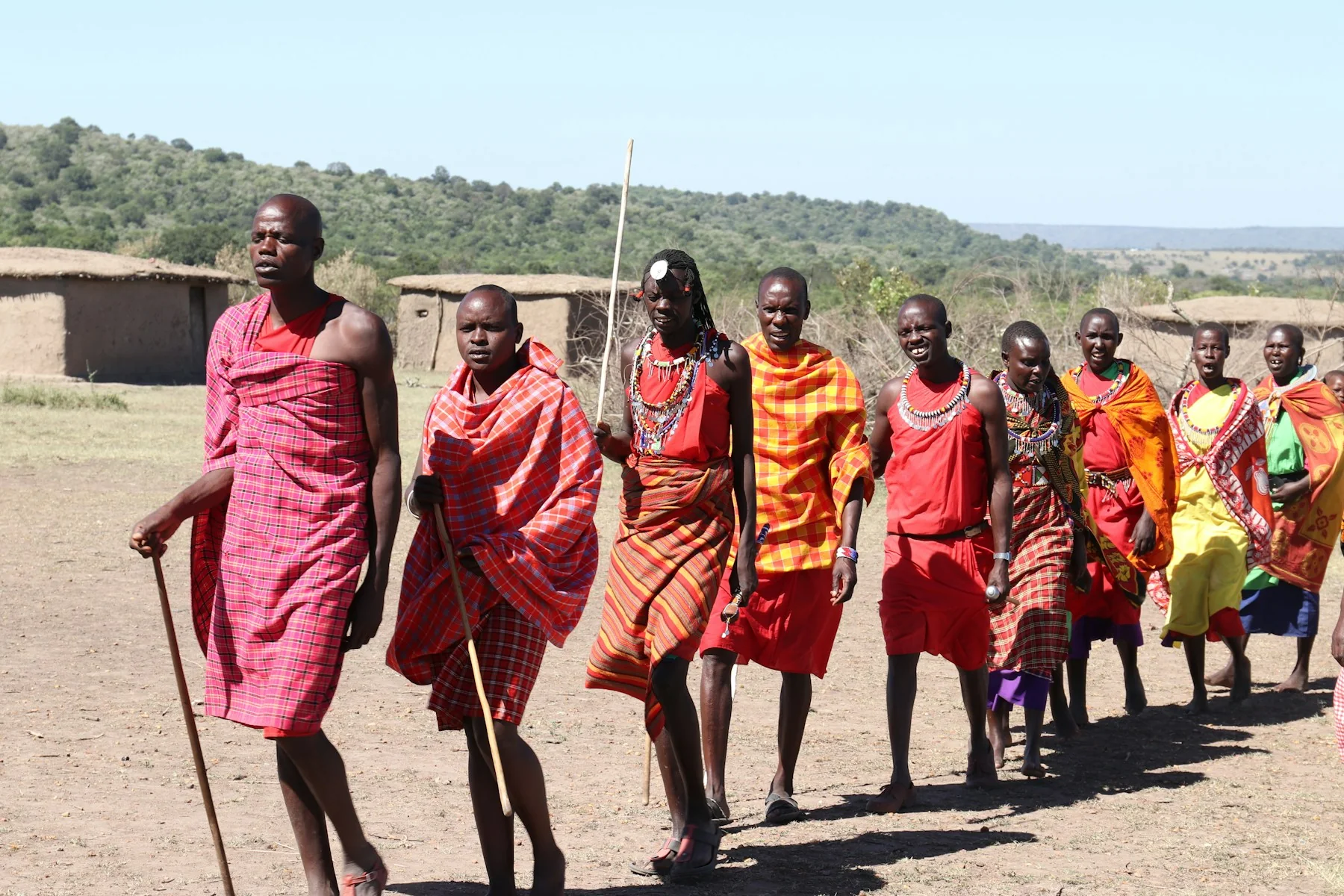
The red shuka is visible from a safari road. What it cannot show is a family’s education choices, grazing agreements, faith, work, language, land pressures and ideas about the future.

Maasai culture and traditions belong to living communities across Kenya and Tanzania. They are diverse, changing and contemporary. A thoughtful visit begins by meeting people as hosts and individuals rather than expecting one village to perform a timeless version of Maasai life.
- Who are the Maasai today?
- Maa language, names and conversation
- Why cattle matter, and why that story is changing
- Age sets, elders and rites of passage
- Shukas, beadwork and adornment
- Homes, settlements and privacy
- Song, dance and the famous jumping image
- What makes a village visit respectful
- Tourism, conservancies and community benefit
- A conversation guide for spending time with Maasai hosts
- Traveller opinions
- FAQs
Who are the Maasai today?
The Maasai are a Nilotic people with communities in Kenya and Tanzania, connected through Maa language, kinship, history and cultural practices. Those connections do not make every family identical. Geography, education, faith, occupation, wealth, age and personal choice shape daily life. Some households move livestock; others combine pastoralism with salaried work, enterprise, farming, tourism or conservation.
A visitor sees only a small part of one host’s life. Red clothing, beadwork and dance may be meaningful, but they are not a complete biography. Contemporary Maasai people use smartphones, attend universities, debate land policy, run businesses and choose how traditions continue. Respect begins by allowing complexity.
Maa language, names and conversation
Maa is an Eastern Nilotic language with regional varieties. Many Maasai people also speak Swahili and English, especially through school, work and national life. A host may translate cultural concepts into English, but not every idea has an exact one-word equivalent. Ask questions without demanding a simplified rule for everyone.
Learn a greeting from the person hosting you and let them correct pronunciation. Do not rename people for convenience or use the word tribe as if it removes nationality and profession. A guide can introduce the community and explain which terms are appropriate in that place.
Why cattle matter, and why that story is changing
Cattle have long been central to food, wealth, exchange, social relationships and identity. Sheep and goats also matter. Pastoral knowledge includes pasture, water, animal health and movement across variable landscapes. This is not aimless wandering. It is a skilled response to rainfall and grazing.
Land subdivision, fencing, agriculture, wildlife areas, climate stress and growing towns affect where herds can move. Families make different choices about schooling, herd size and other income. Conservancy leases can pay landowners for wildlife habitat, but agreements also create debates about access, benefit and governance.
| Topic | Avoid assuming | Better question |
|---|---|---|
| Livestock | Every family keeps the same herd | How does this household use livestock today? |
| Movement | Pastoralism has no plan | How do rain and grazing guide decisions? |
| Conservancies | Every landowner benefits equally | How are leases and decisions organised here? |
| Education | School replaces culture | How do young people combine both? |
Age sets, elders and rites of passage
Age-set systems have organised responsibility, leadership and transitions through life. Terms such as moran are often flattened into the tourist word warrior, which can hide a wider social role and historical context. Elders hold knowledge and authority, while women have their own networks, labour, artistry and influence that a short male-led performance may barely reveal.
UNESCO recognises Maasai male rites of passage including Enkipaata, Eunoto and Olng’esherr as intangible cultural heritage needing safeguarding. Practices change through law, education, conservation and community decision. A ceremony is not automatically public. Visitors should never seek access without invitation and community control.
Shukas, beadwork and adornment
Shukas, beadwork, earrings and hairstyles can express identity, age, gender, fashion, occasion and personal taste. Red is strongly associated with Maasai visual identity, yet there is no simple colour dictionary that applies to every necklace and person. Tourism has also influenced styles and the demand for recognisable designs.
Beadwork is skilled labour and an important source of income for many women. Ask who made an item and whether payment goes directly to the artisan or group. Bargaining can be part of a market, but pressure in either direction damages the exchange. Photograph the maker only with permission.

Homes, settlements and privacy
Traditional homes have used locally available materials and household labour, with settlement forms shaped by livestock protection and family life. Construction and housing now vary widely. Some tourism villages maintain a form specifically for visitors; others are ordinary homes; many families live in more permanent buildings. Ask which setting you are entering.
A doorway invitation does not create permission to photograph every person or object. Avoid touching belongings, entering sleeping spaces without a clear invitation or treating children as part of the attraction. A good host explains the visit and a good operator keeps the group small enough for consent to be real.
Song, dance and the famous jumping image
Adumu is widely known through images of young men jumping, but performance belongs within a broader world of song, age, ceremony and community. A tourist welcome may adapt elements for visitors. That can still be enjoyable and paid work when it is presented honestly. The problem begins when a staged welcome is sold as access to every private tradition.
Ask the host what the song or movement means in that moment and whether guests are invited to join. Participation should be optional on both sides. Listen to women’s songs and explanations too. Culture is not only the most photogenic action in the parking area.
What makes a village visit respectful
A strong visit states the entrance contribution, duration, host, group size and topics in advance. It leaves time for conversation and makes craft purchases optional. It explains photography and ensures children are not pulled from school or private life to entertain an unexpected group. Community members should control what is shown and what remains private.
Longer experiences may explore livestock, beadwork, land management, cooking, school, conservation or contemporary livelihoods. Not every topic suits every host. A short visit can still be respectful when expectations are clear. What matters is consent, transparency and the ability of both host and guest to say no.
| Before visiting | Confirm |
|---|---|
| Price | Entrance, host share and optional purchases |
| Time | Duration and whether conversation is possible |
| Photography | Who and what may be photographed |
| Children | No obligation to perform or pose |
| Crafts | Voluntary buying and maker identity |
| Content | Topics the hosts choose to share |
Tourism, conservancies and community benefit
Tourism can support jobs, guiding, craft income, school funds and lease payments for wildlife habitat. It can also concentrate profit away from the people being photographed. Ask how the activity is owned, who receives the entrance fee and whether the guide is speaking for the community or merely delivering visitors to a sales stop.
Conservancies are built on agreements with landowners and tourism partners, and each has its own governance. Staying in a conservancy can contribute through fees and leases, but it does not remove the need to understand benefit and access. Respectful travel listens to local debate rather than turning one model into a simple moral label.
A conversation guide for spending time with Maasai hosts
Begin by asking the host what they would like visitors to understand about the community today. That question leaves room for land, livestock, education, conservation, work, religion, family or something unexpected. Avoid starting with a demand to see warriors, huts or fire making. Those images may appear, but the host should decide the order and context.
Ask how grazing changes through the year and how wildlife affects livestock decisions. In a conservancy area, ask how land leases work from that person’s perspective and what benefits or difficulties they see. Do not assume the guide can speak for every landowner. A woman artisan, teacher, herder, elder and young guide may describe the same agreement differently.
Education is not the opposite of culture. Ask how Maa, Swahili and English are used, how school schedules fit family life and what young people hope to do. Avoid photographing classrooms or children without school and guardian consent. Gifts to individual children can create tension. When support is appropriate, use a transparent community or school process chosen by local leadership.
For beadwork, ask who designed and made the piece, how long it took and how payment is shared. Agree on a price without turning the interaction into a test of who can win. Buying is optional, and declining should remain respectful. If a sales circle feels pressured, step away and tell the operator later. Pressure often signals that the visit design needs improvement, not that an entire culture should be judged.
At the end, thank the hosts and ask whether any photograph should remain private. Do not post a child’s name, exact home location or a ceremony online without permission. A good visit leaves the community with control over its story and leaves the traveller with questions that cannot be reduced to a souvenir or a jumping photograph.
Carry this respect into the rest of the safari. Use the names people give you, pay agreed contributions through the stated channel and avoid turning every guide into a cultural spokesman. If an experience feels exploitative, describe the specific pricing, pressure or consent problem rather than dismissing Maasai culture itself. Thoughtful feedback can help an operator change the design, while a stereotype only repeats the harm the visitor hoped to avoid.
| Ask about | Useful question | Avoid |
|---|---|---|
| Daily life | What would you like us to understand today? | Demanding a fixed performance |
| Land | How does this agreement work for your family? | Assuming one view for everyone |
| Education | How are language and school combined? | Treating school as loss of culture |
| Crafts | Who made this and how is payment shared? | Pressured buying or extreme bargaining |
| Photography | May I take and share this image? | Photographing first and asking later |
What travellers say after the trip
These are exact words from public reviews and discussions. Each person had their own route, budget and expectations, so the value is in the detail rather than treating one experience as a promise.
I love that this tour was NOT invasive or disrespectful to the Maasai family.
A visitor describing a longer hosted experience that included conversation, practical activities and clear respect.
The visit felt far more like an aggressive sales pitch than a genuine cultural exchange.
A different visitor explaining why unclear pricing and pressure undermined a short village stop.
We fully understand and support the importance of contributing to local communities, but would have appreciated a more respectful, transparent, and less pressured experience.
The same review identifying transparency and respect as the missing pieces.
Maasai culture questions
Where do Maasai people live?
Maasai communities live across parts of Kenya and northern Tanzania, including towns, rural areas and the Greater Mara ecosystem.
What language do Maasai people speak?
Maa is central to identity, and many people also speak Swahili and English or other languages.
Why are cattle important?
Cattle have long carried economic, social and cultural importance, though livelihoods today are diverse.
Is every Maasai person a pastoralist?
No. People work in education, tourism, conservation, business, government and many other fields alongside or instead of pastoralism.
What is a manyatta?
The word is often used for a settlement, but context and local language matter. Visitors should not assume every tourism village is an ordinary family home.
Can visitors take photographs?
Only with clear consent. Ask before photographing people, children, homes, ceremonies or personal objects.
Should I buy beadwork?
Buying directly can support artisans when price and maker are transparent. A purchase should remain voluntary.
How much should a village visit cost?
There is no single price. Confirm entrance, host payment, activities and optional purchases before arrival.
Are traditions changing?
Yes. Living cultures adapt through education, religion, law, technology, land pressure and decisions made within communities.
Can NLS arrange a respectful visit?
Yes. The request should state the learning interest, time available, photography expectations and need for transparent community benefit.
Sources and further reading
Official park, heritage, tourism, aviation and regulatory sources support the practical details in this guide.
Meet hosts, not a stereotype
Tell us what you genuinely want to understand. We will look for a visit with clear consent, time for conversation and transparent community benefit.
Plan a respectful cultural visit
Share the topic, time and kind of conversation that would make the visit meaningful.