
Kenya Safaris with Teenagers: Adventure, Freedom and Family Time
Build wildlife, freedom, active experiences and downtime around the teenagers who are actually travelling.

- Ask the teenager before choosing the parks
- A private vehicle changes the family dynamic
- How long should a game drive be?
- Phones, Wi-Fi and photographing wildlife
- Independence in a wildlife setting
- A safari day a teenager can help design
- School, learning and conservation without homework
- Ethical social media and consent
- Teenagers who are already experienced travellers
- Packing with teenagers
- Common mistakes on Kenya safaris with teenagers
- Rooming with teenagers
- Masai Mara with teenagers
- Amboseli with teenagers
- Laikipia and Samburu for active families
- Tsavo and Diani for safari plus movement
- Activities teenagers may genuinely enjoy
- Cultural visits without making people an attraction
- Food, snacks and growing appetites
- Health, sleep and travel preparation
- Mental health, sensory needs and privacy
- Families with more than one teenager
- Sample Kenya safaris with teenagers
- What affects the family price?
- The teenager-inclusive booking brief
- Frequently asked questions
A teenager can be the most enthusiastic person in the vehicle and the least impressed person at breakfast. They may stay completely silent, then remember the exact moment a cheetah began to run. They may care more about a guide's conservation story than the parents expect, and less about another early alarm than the itinerary assumes.
This guide covers families travelling with young teens through older adolescents. Activity limits, room policies and health needs must be checked for the actual age and traveller.
Ask the teenager before choosing the parks
Give each teen a short brief:
- three animals or experiences they care about;
- ideal daily start time;
- maximum comfortable vehicle stretch;
- interest in photography, birds, conservation, culture or sport;
- one activity they would try;
- food they can reliably eat;
- room and privacy preference;
- screen and Wi-Fi needs;
- anything that would make the trip embarrassing or stressful.
Parents may discover that the teen wants exactly the dawn safari they thought would be unpopular. Or that wildlife is secondary to a beach, horse ride, photography lesson or conservation visit.
| Teen interest | Safari response |
|---|---|
| Big cats | Longer Mara stay and behaviour-focused guide |
| Photography or video | Private vehicle, window position and charging |
| Birds and science | Bird-aware guide, wetlands and field notes |
| Conservation | Credible conservancy or education programme |
| Sport and movement | Walking, cycling, riding or beach activity where approved |
| Food and culture | Nairobi, coast and host-led local experiences |
| Quiet and reading | Lodge deck, waterhole and fewer transfers |
| Social media | Charging, agreed posting rules and consent awareness |
Build our teenager-friendly safari
Share each teenager’s interests, pace, room, food, Wi-Fi and activity needs. We will build safe choices and real free time into the route.
A private vehicle changes the family dynamic
A shared game drive requires the family to fit the camp schedule and other guests. A private vehicle gives the teenager a voice.
The family can leave later after one intense day, stop for a bird or photograph, take a bathroom break, return for lunch or stay with animal behaviour. Seating can rotate without negotiation with strangers.
A private Kenya safari Land Cruiser also gives room for camera bags, water, snacks and layers. Confirm the number of proper forward-facing seats rather than relying on maximum passenger capacity.
The teen still needs to follow the guide. Doors stay closed near wildlife, bodies stay inside, noise remains controlled and nobody climbs out for a better photograph.
How long should a game drive be?
There is no teenage limit. One teen can watch elephants for hours. Another loses interest after ninety minutes.
Start with two- to three-hour sessions, then adapt. A full-day drive should have a clear reason: reaching a distant part of the Mara, avoiding a long return or following a seasonal wildlife pattern. Explain picnic food and toilet limitations before departure.
A useful rhythm is:
- early drive on the first full day;
- midday rest, pool or room time;
- shorter afternoon drive;
- later start after every two early mornings;
- one active or beach day between intensive safari days.
Teenagers often tolerate long days better when they understand the plan and can choose part of it.
Phones, Wi-Fi and photographing wildlife
Banning every screen can turn the holiday into a power struggle. Unlimited phone use can remove the teen from the shared experience.
Agree before travel:
- phones away during the first part of a sighting;
- headphones only when they do not block guide instructions;
- no loud audio in the park;
- charging happens at stated times;
- no geotagging rhinos, nests or dens;
- ask before posting another person;
- never lean out, leave the vehicle or approach wildlife for content;
- school and friend contact has a realistic schedule.
Remote camps may have slow Wi-Fi, limited coverage or connection only in common areas. Treat this as a known feature, not a surprise punishment.
Photography gives teenagers a role. A phone, compact camera or shared camera can become a wildlife diary. Let the guide teach behaviour and fieldcraft rather than turning the drive into a competition for likes.
Independence in a wildlife setting
Teenagers may be used to walking to a shop, meeting friends or staying in a hotel room alone. Safari camps apply different rules because wildlife can move between tents, paths and communal areas.
The family should understand:
- whether guests need an escort after dark;
- which areas are out of bounds;
- whether the room has a phone, radio or emergency signal;
- who holds the key;
- whether a teen may walk to the pool alone by day;
- what happens if the family uses separate rooms;
- whether balconies, rivers or unfenced waterholes create additional risk;
- where the family meets if separated.
The rules should be explained respectfully. “You are old enough at home” does not change the wildlife or the property's responsibility.
At the coast, independence brings different questions: swimming supervision, currents, vendors, transport, nightlife and water-sport rules. Agree boundaries before arrival rather than negotiating them on the beach.
A safari day a teenager can help design
The teen chooses the first priority: big cats in the early light. The vehicle leaves before breakfast, but the guide explains the route and gives the teen the front checklist of tracks and calls.
After two hours, the family stops for a picnic. The teen photographs a jackal, asks why vultures circle and records a short voice note instead of staring at a long species list.
The vehicle returns before lunch. The afternoon stays open for the pool, sleep and Wi-Fi. At four, the teen decides to join a shorter drive because the guide has suggested a waterhole.
Dinner includes a normal conversation that is not a quiz about whether the teen is grateful.
Participation can be small. Choosing one drive, one photograph or one question gives the teenager ownership.
School, learning and conservation without homework
A safari naturally touches biology, geography, climate, history, language, economics and conservation. It does not need a worksheet every day.
A teen may enjoy:
- mapping the route and comparing habitats;
- photographing one behaviour rather than every species;
- learning how a conservancy is governed;
- recording bird calls without playing them back;
- asking a guide about training and career paths;
- comparing rainfall, grass and wildlife movement;
- keeping a private journal;
- editing a short film after the trip;
- reading a Kenya author before travel.
If schoolwork must continue, confirm Wi-Fi, power, time zone and a quiet table. Do not assume a remote camp can support live classes. Download materials before travel and keep school time short enough that the family still shares the trip.
Ethical social media and consent
Teenagers often understand online culture better than adults, but travel creates unfamiliar consent and location risks.
Before posting:
- ask people clearly, without the camera already recording;
- avoid captions that stereotype communities;
- do not publish a child's face because a parent in the tour group allowed a general photo;
- remove exact locations for rhinos, nests and dens;
- avoid live posting that reveals the family's room or movements;
- respect lodge requests around staff and other guests;
- never stage feeding, touching or crowding wildlife;
- credit photographers and sources properly.
Parents should follow the same rules. Do not post a teen's embarrassing or vulnerable travel moment without their consent.
Teenagers who are already experienced travellers
An older teen who has travelled widely may want depth rather than constant novelty.
Consider a photography-focused Mara stay, birding in a forest, rhino conservation in Laikipia, a walking component with a qualified guide, or marine science at the coast. Let the teen research one option and discuss it directly with the planner.
Older adolescents may also want career information. Guides, rangers, pilots, lodge managers, chefs, researchers and conservation staff can make the tourism ecosystem visible. Any meeting should be part of a legitimate programme, not an expectation that working staff provide informal mentoring on demand.
Packing with teenagers
Let each teen carry a small day bag with appropriate responsibility.
- reusable water bottle;
- warm layer for dawn;
- hat, sunglasses and sun protection;
- comfortable closed shoes;
- personal medication in the family medical plan;
- camera or phone with safe strap;
- power bank allowed by the airline;
- headphones for transfers, not active wildlife viewing;
- book, journal or offline entertainment;
- swimwear for the coast or pool;
- one change of clothes in hand luggage;
- copies of important contact details.
Parents should still control passports, insurance and prescription documentation where legally appropriate. Agree responsibility for chargers before leaving each lodge.
Common mistakes on Kenya safaris with teenagers
- Building the entire route without asking the teenager.
- Scheduling an early start every day.
- Treating all screen use as disrespect.
- Promising reliable high-speed Wi-Fi in remote camps.
- Booking a triple room without checking the third bed.
- Placing teens in a separate distant tent.
- Assuming athletic ability equals safari-activity safety.
- Adding cultural visits with no host ownership or consent rules.
- Turning every sighting into a lesson.
- Comparing siblings' enthusiasm.
- Forgetting snacks, bathroom stops and sleep.
- Posting the teenager online without permission.
- Leaving the beach as a rushed three-night afterthought.
Kenya safaris with teenagers are not successful because a teen smiles in every family photograph. They are successful when the teenager has real choices, safe boundaries and moments they will remember in their own way.
Review our teen safari plan
Share each teenager’s interests, pace, room, food, Wi-Fi and activity needs. We will build safe choices and real free time into the route.
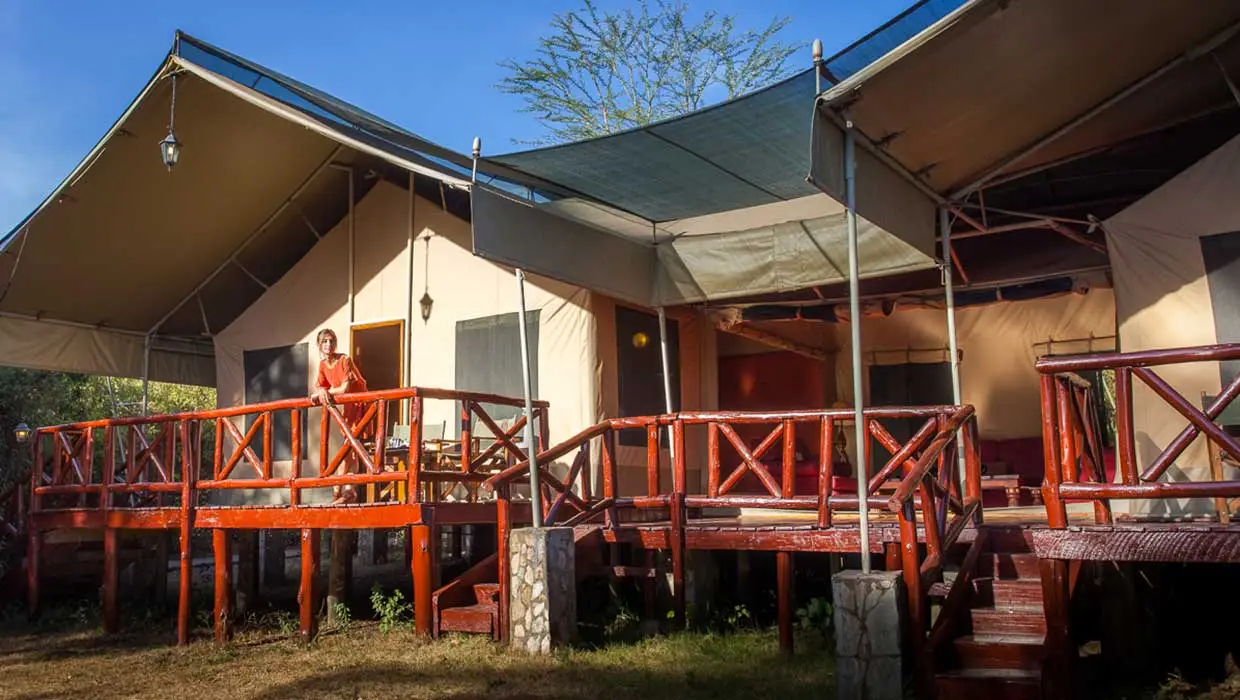
Rooming with teenagers
Family rooms vary enormously.
“Triple” may mean a temporary bed in the parents' room. “Family tent” may contain two bedrooms and one bathroom. Interconnecting rooms may be in the same building but not guaranteed until assigned.
Confirm:
- number of fixed beds;
- bed sizes;
- separate bedrooms or one room;
- bathroom count and privacy;
- interior connecting door;
- distance between separate rooms;
- lodge minimum age for a room without an adult;
- night escort policy;
- balcony, deck or pool safety;
- Wi-Fi and power location;
- laundry and luggage space.
Do not place a teenager alone in a distant tent because the property calls it adjacent. Wildlife moves through camps and guests may need an escort after dark.
Masai Mara with teenagers
The Masai Mara offers big cats, herds, open views and camps at many comfort levels. The wildlife is easy to understand even for a first safari, while a good guide can go deep into behaviour and ecology.
Three or four nights works well. A conservancy may add walking and night drives under its rules. A balloon flight has age, height, health and safety conditions set by the operator, so it must be checked for the individual teen.
Amboseli with teenagers
Amboseli combines elephants, swamps, birds and the possible Kilimanjaro backdrop. Observation Hill and lodge settings can break up vehicle time where access and park conditions permit.
Amboseli pairs naturally with Tsavo on a road route. A private vehicle keeps long transfer days flexible.
Laikipia and Samburu for active families
Laikipia can offer walking, hides, riding, conservation activities and night experiences, depending on the property. Samburu adds northern wildlife, doum palms, river landscapes and a stronger sense of geographic change.
Each activity applies its own age, height, maturity, health and experience requirements. Riding is not suitable because a teen has ridden once. Walking is not safe because the teen plays sport. Give the operator accurate information and accept its decision.

Tsavo and Diani for safari plus movement
Tsavo offers elephants, red earth and a natural route towards the Kenya coast. After several vehicle days, Diani Beach gives swimming, water sports, space and a different daily rhythm.
Choose water activities through qualified operators. Wind, sea state, swimming ability, certification and insurance matter. Teen independence at home does not automatically transfer to an unfamiliar ocean or boat.
Combine wildlife and the Kenya coast
Share each teenager’s interests, pace, room, food, Wi-Fi and activity needs. We will build safe choices and real free time into the route.
Activities teenagers may genuinely enjoy
A family traveller’s view: One safari parent recommended, plan at least one day of doing nothing but hanging around the camp/lodge.
Read the independent safari-with-teens discussion for views on early starts, pools and downtime.
| Activity | Why it can work | What must be checked |
|---|---|---|
| Guided nature walk | Movement, tracks and smaller ecology | Age, terrain, duration, heat and ranger rules |
| Photography session | Creative purpose on game drives | Equipment, vehicle position and consent |
| Bird challenge | Competition and observation | Guide skill and no harmful playback |
| Conservation talk | Connects sightings to real work | Credible host and age-appropriate detail |
| Cultural visit | Conversation, craft and daily life | Host ownership, consent and photography rules |
| Boat trip | Birds, scenery and change of pace | Lifejacket, boarding, weather and operator |
| Horse or camel activity | Active landscape experience | Riding ability, age, safety and insurance |
| Cycling | Independence and movement | Route, traffic, wildlife and protective equipment |
| Beach sport | Social and active coast time | Instruction, sea state, supervision and coverage |
The activity should not be added merely to keep a teen busy. It should make sense in the location.
Cultural visits without making people an attraction
Teenagers often ask direct questions, which can create an honest exchange when the visit is hosted well.
Use a community-led programme with a clear fee, purpose and photography policy. Let the hosts decide what to share. Do not ask children to perform, enter homes without invitation or hand out sweets and money.
Encourage the teen to ask about school, land, livestock, conservation, work, music or technology, but remind the whole family that hosts do not represent every Maasai or Kenyan experience.
Our guide to respectful Maasai village visits is planned at its permanent internal slug.
Food, snacks and growing appetites
Full board covers meals, not necessarily snacks and favourite drinks. Teens may eat earlier or need more between activities.
Share allergies, dietary requirements and reliable foods before travel. Ask about packed breakfast, picnic lunch, early dinner and snacks on transfer days. Keep safe water in the vehicle.
Do not use food restrictions as a surprise lesson in resilience. A teenager can try Kenyan dishes while still having something familiar available.
Health, sleep and travel preparation
CDC recommends discussing international travel with a young person's clinician or travel-health specialist in advance. Take the real itinerary and planned activities. Vaccines, medication, malaria prevention and personal medical decisions belong with qualified health professionals.
Plan for jet lag, sleep, heat, sun, insects, motion sickness and long sitting days. Carry prescribed medication in hand luggage with documentation and a delay supply agreed with the clinician.
Comprehensive insurance should cover the teenager, declared conditions, cancellation, medical care, evacuation and every activity. Check whether riding, diving, kiteboarding, ballooning or other adventure activities need additional coverage.
Mental health, sensory needs and privacy
Travel changes sleep, food, routine, personal space and access to friends. A teen with anxiety, sensory sensitivity, ADHD, autism, depression or another condition should be involved in preparation appropriate to them.
Share only necessary information with suppliers and respect the teen's dignity. Useful adjustments may include a clear daily schedule, quiet room, predictable meals, fewer transfers, private vehicle, headphones when safe, and a plan for overload.
A bad day does not mean the safari is failing. Leave room to skip an activity without turning it into family conflict.
Build around our teenager’s real needs
Share each teenager’s interests, pace, room, food, Wi-Fi and activity needs. We will build safe choices and real free time into the route.
Families with more than one teenager
Siblings may want different rooms, seats and activities. Rotate vehicle rows and camera equipment fairly. Let each teen choose one priority session.
Two rooms or a true two-bedroom family unit can prevent conflict on a longer trip. The price may be higher, but sleep and privacy can improve the entire family experience.
If ages differ widely, two vehicles or one separate activity may be necessary. One guide cannot lead a walking activity and stay with a younger sibling at the lodge.
Sample Kenya safaris with teenagers
Six nights: Amboseli and Tsavo
- Nairobi arrival night;
- two nights Amboseli;
- two nights Tsavo West;
- two nights Tsavo East;
- continue to coast or return by road or rail.
Eight nights: Naivasha and Mara
- Nairobi arrival;
- two nights Naivasha;
- four nights Masai Mara;
- one flexible Nairobi or travel night;
- private road vehicle.
Ten nights: Samburu and Laikipia
- three nights Samburu;
- three nights Laikipia;
- one active experience confirmed by age and ability;
- central Kenya and Nairobi transition nights.
Twelve nights: Mara and Diani
- four nights Masai Mara;
- six nights Diani;
- domestic flight and transfer;
- alternate beach activity and rest days.
What affects the family price?
| Cost driver | Teen-specific issue |
|---|---|
| Age | Child and adult rate boundaries vary by supplier and fee authority |
| Room setup | Extra bed, family room, connecting rooms or two rooms price differently |
| Private vehicle | Gives family control and spreads cost across more travellers |
| Flights | Fares and baggage are usually per passenger |
| Activities | Teen may pay child or adult rate and face separate age rules |
| Beach meal plan | Snacks and drinks can change real spending |
| Two vehicles | May be required for divided interests or group size |
Use the teenager's age at travel, not age when the quote is requested.
The teenager-inclusive booking brief
Ask each teen for priorities, pace, activities, food, room, Wi-Fi and privacy. Add the parents' safety, budget and logistics requirements. Share exact ages, medical or access needs, luggage and insurance limits.
The final proposal should name room configuration, vehicle, flight baggage, activity eligibility, meals, transfers and free time.
Request our family safari proposal
Share each teenager’s interests, pace, room, food, Wi-Fi and activity needs. We will build safe choices and real free time into the route.
Frequently asked questions
Is Kenya a good safari destination for teenagers?
Yes. Wildlife, photography, conservation, active experiences and the coast create enough variety for many interests.
Will teenagers get bored on game drives?
They may if every drive is long and passive. A private vehicle, clear purpose and varied rhythm help.
Can a teenager stay in a separate room?
It depends on the property, age and room location. Confirm the policy and safety arrangement.
Can teenagers go on walking safaris?
Some can where the operator permits. Age, maturity, terrain and safety rules vary.
Can teens take a hot-air balloon flight?
The operator sets age, height, health and safety conditions. Check before booking.
Is Wi-Fi available in safari camps?
Often, but speed, coverage, hours and location vary. Some remote camps have limited service.
Should we book a private vehicle?
It is highly useful for family pace, seating, stops and different interests.
Can we add Diani Beach?
Yes. It provides movement and rest after safari, with activities matched to sea conditions and ability.
How many nights in the Mara?
Three to four nights works well for many families, with enough time for wildlife and a slower afternoon.
Do teenagers need travel insurance?
Yes. The policy should cover medical care, evacuation, cancellation and planned activities.
Start planning a Kenya safari with teenagers
Share each teenager’s interests, pace, room, food, Wi-Fi and activity needs. We will build safe choices and real free time into the route.
Tell us what will make the trip theirs
Share ages, interests, room, food, screen, activity and health needs. We will build safe freedom and family time into one route.