
Kenya Northern Circuit Safari: Ol Pejeta, Lewa, Samburu and Meru
Build the north around rhino conservation, arid-country wildlife and the real access rules of each reserve and conservancy.

- What does Kenya’s northern circuit include?
- Who should choose the north?
- The strongest first northern route
- An eight-night road itinerary
- Ol Pejeta: more than a rhino stop
- Lewa and Borana: conservation access with a lodge-led rhythm
- Samburu National Reserve and the wider ecosystem
- Buffalo Springs or Shaba?
- Community conservancies and Reteti
- Meru: the northern circuit’s spacious final chapter
- Where does Solio fit?
- Road safari or fly-in?
- Accommodation should determine access, not just comfort
- The guide and vehicle can change between areas
- Walking, birding and time outside the vehicle
- Food, heat and the daily rhythm
- Wildlife expectations and ethical viewing
- When should you travel north?
- Families, photographers and slower travellers
- What should the quote include?
- What changes the cost?
- Booking checklist
- Frequently asked questions
- The north should feel like its own Kenya
The road north changes Kenya by degrees. Coffee country gives way to the high, cool shoulder of Mount Kenya. Nanyuki brings the equator and Laikipia's broad ranch-conservancy landscape. Beyond Isiolo, the horizon hardens into dry hills, doum palms line the Ewaso Nyiro and the giraffes wear a tighter, net-like pattern.
This is not a quieter copy of the Masai Mara. A Kenya northern circuit safari is a different story about altitude, arid-country wildlife, rhino conservation, working rangelands and community-owned land. It can be a comfortable six-night road journey or a slower, high-end fly-in route. It can include Meru, but only when the route gives that vast park enough time.
Build my northern Kenya route
Share your dates, travellers, wildlife interests, conservation priorities and road tolerance. We will give Ol Pejeta, Lewa, Samburu or Meru the nights they deserve.
What does Kenya’s northern circuit include?
There is no single gate marked “northern circuit.” The phrase describes routes north and northeast of Nairobi through Mount Kenya country, Laikipia, Isiolo, Samburu and, in longer versions, Meru or the community conservancies beyond the reserves.
The main building blocks are different kinds of protected and working landscapes:
| Area | Land and management model | Strongest reason to include it | Minimum useful stay |
|---|---|---|---|
| Ol Pejeta Conservancy | Private conservancy and working cattle ranch in Laikipia | Rhinos, conservation interpretation, varied activities | 2 nights |
| Lewa Wildlife Conservancy and Borana landscape | Private conservancy landscape | Rhino conservation, lower vehicle density, lodge-led access | 3 nights |
| Samburu National Reserve | County-managed national reserve | Ewaso Nyiro river, arid scenery and northern species | 3 nights |
| Buffalo Springs and Shaba | County-managed reserves south and east of Samburu | Different sectors, springs, lava and open country | 3 nights in the wider ecosystem |
| Community conservancies | Community-owned or managed conservation landscapes | Host-led culture, walking and remote settings where offered | 3 nights |
| Meru National Park | Kenya Wildlife Service national park | Large, varied wilderness, rhino sanctuary and Born Free history | 3 nights |
| Solio Ranch conservancy | Private rhino-focused conservancy near Nyeri | Concentrated rhino interest and a route near the Aberdares | 2 nights or planned stop |
The names cannot be swapped without changing the trip. A national park, county reserve and private conservancy have different rules, fee structures, vehicle access and activities. “Samburu area” on a proposal is not enough. The lodge may sit inside Samburu National Reserve, across the river near Buffalo Springs, or far outside both in a community conservancy.
Who should choose the north?
Choose this route when rhinos, conservation stories, dry-country species, walking, varied activities or quieter vehicle patterns matter more than a migration calendar. It suits repeat safari travellers, but it is also strong for first-timers who do not need the Mara name on the itinerary.
Birders gain a sharp habitat transition from highland grassland to riverine woodland and arid bush. Photographers gain reticulated giraffes, Grevy's zebras, oryx, gerenuk and dramatic terrain. Families can combine wildlife with structured conservation visits, although road days and age limits need attention.
Do not choose the north because someone promised empty parks. Vehicle density varies by reserve, season, sighting and lodge. Do not choose it for a guaranteed checklist either. The north rewards travellers who enjoy landscape and behaviour even when predators are not visible.
The strongest first northern route
For six or seven safari nights, pair Laikipia with the Samburu ecosystem.
| Route | Nights | Pace | Best for |
|---|---|---|---|
| Ol Pejeta plus Samburu | 2 + 3, with Nairobi buffers | Compact | First northern introduction |
| Ol Pejeta plus Samburu | 3 + 3 | Balanced | Wildlife, rhinos and two full areas |
| Lewa or Borana plus Samburu | 3 + 3 | Premium and focused | Private-conservancy activities and arid-country contrast |
| Ol Pejeta, Lewa and Samburu | 2 + 2 + 3 | Active | Travellers who understand that Laikipia stops overlap |
| Meru plus Samburu | 3 + 3 | Remote and wildlife-led | Repeat visitors and birders |
| Ol Pejeta, Samburu and Meru | 2 + 3 + 3 | Full northern circuit | Nine safari nights plus buffers |
Ol Pejeta and Lewa are not identical, but putting one night in each weakens both. Choose one for depth unless there is a specific lodge, conservation programme or activity in each that justifies the extra move.
An eight-night road itinerary
This route begins with a separate Nairobi arrival night and ends with another Nairobi night or a carefully buffered onward flight.
| Day | Route | Main purpose | Overnight |
|---|---|---|---|
| 1 | Nairobi to Ol Pejeta | Highland drive, check-in and afternoon wildlife time | Ol Pejeta area |
| 2 | Ol Pejeta | Full conservancy day and one prebooked conservation visit | Ol Pejeta area |
| 3 | Ol Pejeta to Samburu ecosystem | Cross the Mount Kenya and Isiolo corridor, afternoon drive if practical | Samburu area |
| 4 | Samburu ecosystem | Full day around river and dry-country habitats | Samburu area |
| 5 | Samburu ecosystem | Explore a different reserve sector or lodge activity | Samburu area |
| 6 | Samburu to Meru | Transfer southeast with real road buffer | Meru area |
| 7 | Meru | Full park day, rhino sanctuary or broader habitat drive | Meru area |
| 8 | Meru | Second full day for a different park sector | Meru area |
| 9 | Meru to Nairobi or flight | Final drive only if the onward plan allows it | Nairobi or departure |
Removing Meru creates a clean six-night version. Adding Lewa requires more nights rather than borrowing them from Samburu.
Ol Pejeta: more than a rhino stop
Ol Pejeta sits on the Laikipia plateau near Nanyuki. It combines wildlife conservation with a working cattle ranch and programmes intended to benefit surrounding communities. The landscape includes open grassland, bush, river corridors and views toward Mount Kenya when weather allows.
Rhinos are central to its identity. The conservancy protects black rhinos and is home to the last two northern white rhinos, Najin and Fatu. Their presence is not a casual drive-by attraction. A dedicated visit must be available and booked, and the story is about the extinction crisis and assisted reproduction, not simply touching a rare animal.
The Sweetwaters Chimpanzee Sanctuary provides lifelong refuge for rescued chimpanzees. Chimpanzees are not native to Kenya, so the sanctuary should never be described as wild chimp tracking. Opening, viewing and programme availability must be reconfirmed.
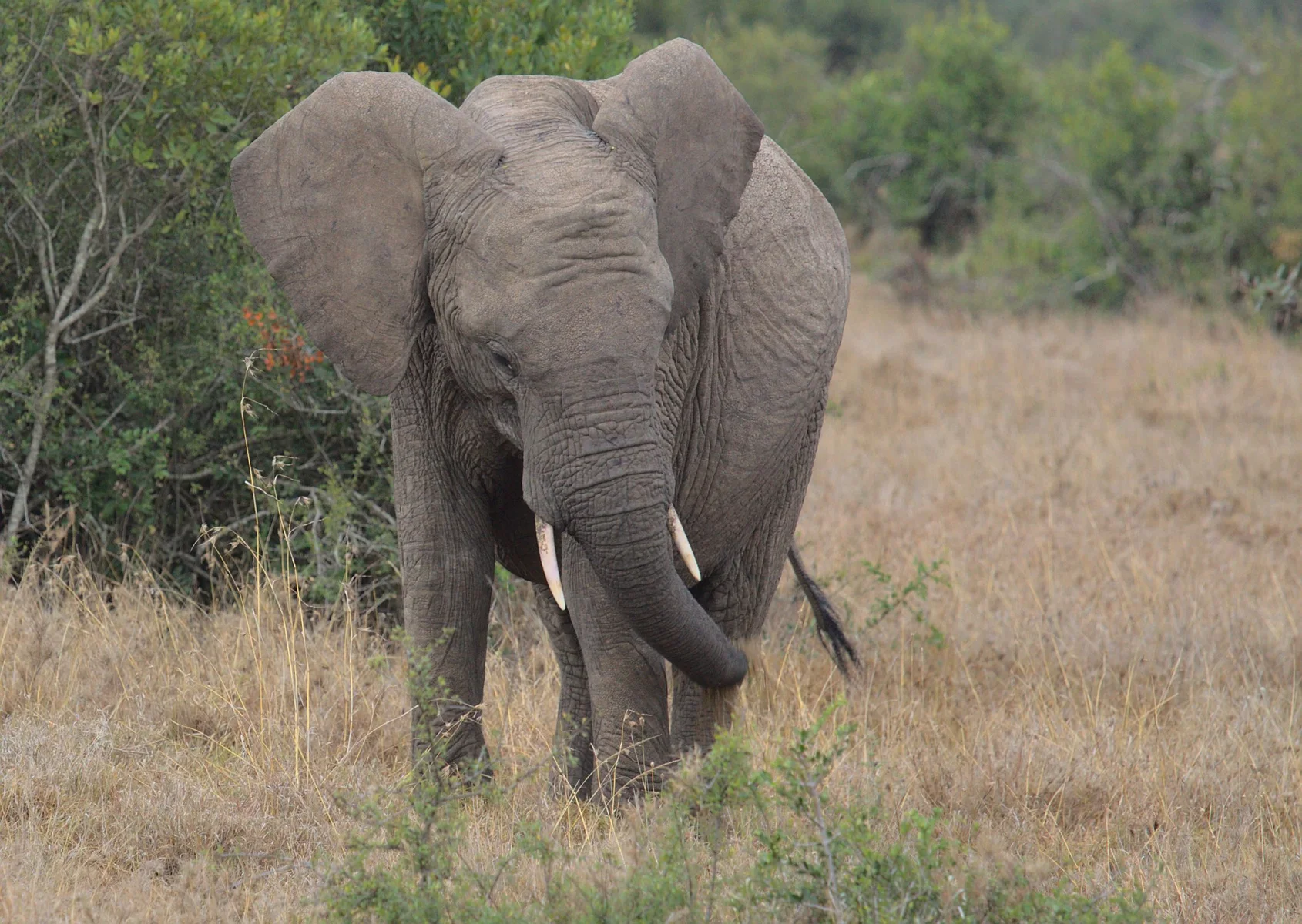
Game drives can also reveal elephants, buffaloes, giraffes, zebras, antelope, lions, cheetahs, leopards and abundant birds. None is guaranteed. Night drives, walking, dog-unit visits, lion tracking and other activities may be offered under specific arrangements, ages and availability.
One traveller who spent only one night wrote that it “felt very rushed and I could've easily spent another night.” That is exactly why two nights are the minimum. A scheduled conservation visit can consume the same hour when wildlife becomes active, so three nights work better for travellers who want both interpretation and unhurried drives.
Read the planned Ol Pejeta Conservancy guide for the lodge zones, gates and activities.
Lewa and Borana: conservation access with a lodge-led rhythm
Lewa lies north of Mount Kenya and connects with the larger northern conservation landscape. Its model ties wildlife protection to community health, education and livelihoods. Lewa's official visitor information also makes an important practical point: not every outside vehicle can enter, and the accommodation may need to collect guests at a gate or airstrip.
That changes the safari. The lodge guide and vehicle often control the day. Conservation experiences, such as tracker-dog, operations-room, school or programme visits, must be available and generally arranged through the lodge. They are working programmes, not performances that run on demand.
Lewa and neighbouring Borana are widely associated with black and white rhinos, Grevy's zebras and a broad range of northern wildlife. Vehicle levels can feel low, but sightings still depend on animal movement, terrain and luck.
An independent traveller described Lewa as “many hours out there without seeing another vehicle.” That was one trip, not a guarantee. The useful lesson is that travellers paying the premium should ask about vehicle sharing, guide continuity, conservancy access and included activities, not only the room.
The planned Lewa Wildlife Conservancy guide will compare the stay styles and conservation programmes in depth.
Compare Ol Pejeta, Lewa and Solio
Share your dates, travellers, wildlife interests, conservation priorities and road tolerance. We will give Ol Pejeta, Lewa, Samburu or Meru the nights they deserve.
Samburu National Reserve and the wider ecosystem
Samburu National Reserve lies on the north bank of the Ewaso Nyiro River. Buffalo Springs lies to the south, while Shaba extends eastward. Together with community lands and conservancies, they form a much larger wildlife landscape than the word Samburu suggests.
The river is the organising feature. Doum palms and riverine woodland create shade and food in an otherwise dry country. Elephants dig and drink along sandy channels. Predators, grazers and browsers move between water, bush, rocky slopes and open plains.
The reserves are not one interchangeable ticket. A lodge's location determines which gate, bridge and reserve drive is practical. River conditions and infrastructure affect crossings. A camp outside the reserves may offer walking, night drives or host-led experiences under a different set of rules.
The Samburu Special Five
The tourism phrase usually refers to Grevy's zebra, reticulated giraffe, beisa oryx, gerenuk and Somali ostrich. They are useful symbols of the northern habitat, but the label should not turn into a guarantee.
| Species | What to notice | Planning caution |
|---|---|---|
| Grevy's zebra | Narrow stripes, white belly and large rounded ears | Distinguish it carefully from plains zebra |
| Reticulated giraffe | Large polygonal patches separated by bright lines | Range extends beyond the reserves; no single lodge owns the sighting |
| Beisa oryx | Long straight horns and arid-country build | Both sexes carry horns; distance affects identification |
| Gerenuk | Long neck and browsing posture, sometimes standing upright | Often seen in bush, not posed on open ground |
| Somali ostrich | Blue-grey neck on the male in breeding condition | Plumage and visibility vary |
The north also supports elephants, lions, leopards, cheetahs, wild dogs in the wider landscape, Grant's gazelles, dik-diks, kudu and rich birdlife. Ask the guide to explain habitat rather than racing between radio calls.
The Samburu National Reserve guide and planned Samburu Special Five guide will carry the destination and species detail.
Buffalo Springs or Shaba?
Buffalo Springs sits south of the river and can add open plains, springs and a different viewing angle. It can be combined naturally when the lodge, gate and crossings support it.
Shaba lies farther east and is often associated with broader, drier scenery and volcanic features. It should receive time as a destination, not be squeezed into a quick detour because the name appears on a map.
Before booking, ask:
- Which reserve contains the lodge?
- Which reserve entries are included?
- Can the vehicle cross between sectors during the planned season?
- How much drive time is needed before reaching the preferred habitat?
- Are any activities outside reserve boundaries?
Community conservancies and Reteti
Northern Kenya's community conservancies are not add-on scenery around the famous reserves. They are lived landscapes where grazing, wildlife, water, security and tourism meet. Lodges may support employment, land leases, community programmes and wildlife protection, but the exact model differs.
Reteti Elephant Sanctuary lies in Namunyak Conservancy and is community-owned. A visit involves a major route and timing commitment from many Samburu lodges. Availability, road conditions, contribution and age suitability must be checked before the itinerary promises it.
Do not schedule a village visit described only as “authentic.” Ask who hosts it, whether photography is welcome, how payment is shared and what guests will actually do. The best encounter can be a conversation with a guide, craft group, conservancy team or family who has chosen to host, not a staged line of people waiting for vehicles.
The planned Reteti Elephant Sanctuary guide will explain the journey and visitor ethics.
Meru: the northern circuit’s spacious final chapter
Meru National Park lies east of Mount Kenya and south of the core Samburu landscape. It is a large Kenya Wildlife Service park with rivers, wooded grassland, palms, open plains, birdlife and a rhino sanctuary. It also carries the conservation history of George and Joy Adamson and Elsa the lioness.
Meru is not a convenient one-night stop. Distances inside the park, vegetation and lower vehicle density mean wildlife may require patient searching. Two full days allow different sectors and reduce the pressure to find everything on arrival.
Choose Meru for wilderness scale, birding, history and a safari that is not organised around a famous crowd. Do not choose it expecting the concentrated sightings of a fenced private sanctuary. Rain can change tracks, and lodge position strongly affects access to each area.
The Meru National Park guide will map gates, airstrips, habitats and lodge positions.
Where does Solio fit?
Solio Ranch lies near Nyeri, southwest of Nanyuki. It is a private conservancy with a strong rhino reputation and can fit before Ol Pejeta, Lewa or the Aberdares. It does not fit naturally between Samburu and Meru merely because all are north of Nairobi.
Use Solio when rhino viewing is a central priority or when the accommodation and Aberdare foothill setting are part of the journey. Give it a night or a carefully planned day from a nearby base. Combining Solio and Ol Pejeta creates two rhino-focused stops, which can be wonderful for a specialist and repetitive for someone seeking maximum habitat contrast.
The planned Solio Ranch safari guide will explain access and stay options.

Road safari or fly-in?
Road travel reveals the ecological transition. It also keeps one vehicle and guide with the group, simplifies luggage and can connect Ol Pejeta with Samburu efficiently.
Flying protects time and reduces some long transfers. It can require Wilson Airport, fixed schedules, soft-bag limits, lodge transfers and shared open vehicles. Direct links between northern airstrips are not permanent assumptions. Schedules and routings must be checked for the dates.
A traveller who used Kenyan safari flights said, “I'm glad we flew the sections we did, it added to the experience but also saved us time and energy.” The same report warned that baggage size, not only weight, caused complications.
| Transport | Strength | Trade-off | Best use |
|---|---|---|---|
| Private road safari | Guide continuity, flexible stops, simple luggage | Transfer hours and road fatigue | Ol Pejeta to Samburu core route |
| Scheduled fly-in | Protects field time and creates an aerial view | Baggage, fixed time and lodge vehicle sharing | Premium shorter journey |
| Hybrid | Use the road for the logical northbound story and fly back | More transfer components | Samburu or Meru finish |
| Private charter | Direct routing where feasible | High cost and aircraft constraints | Small private group with limited time |
Compare road, fly-in and hybrid routes
Share your dates, travellers, wildlife interests, conservation priorities and road tolerance. We will give Ol Pejeta, Lewa, Samburu or Meru the nights they deserve.
Accommodation should determine access, not just comfort
A lodge can sit inside a reserve, on private conservancy land, in a community conservancy or outside the main wildlife area. The name “Samburu lodge” does not reveal which entry fee, bridge or vehicle rule applies.
For each property, map:
- gate or airstrip transfer;
- wildlife area available on ordinary drives;
- whether the lodge supplies the vehicle and guide;
- shared-vehicle seating policy;
- walking and night-drive rules;
- included conservation activities;
- electricity, charging and connectivity;
- room steps, distance and heat management.
The where to stay on a Kenya safari guide explains lodge, tented-camp and bush-house trade-offs.
The guide and vehicle can change between areas
A private road safari can keep one driver-guide from Nairobi through Ol Pejeta and Samburu. That continuity matters. The guide learns who wants birds, who needs frequent stops, which child becomes tired at noon and how long the photographers will wait for a head turn.
The arrangement may change inside a private conservancy. Lewa, Borana and some community-conservancy lodges use resident guides and their own open vehicles. An outside road vehicle may wait at the gate or remain parked during the stay. This can improve local knowledge, but it may also place guests in a shared vehicle with a fixed schedule.
Ask how many guests share each row, whether children can join a shared drive, how the middle seat is used and whether a private vehicle is available. “Game drives included” does not answer any of those questions.
Guide qualifications and language should be confirmed. A specialist birder or photographic guide may need advance booking. A community host who knows plants, grazing and local history offers a different skill from a driver-guide navigating several counties. The best route can use both without pretending they are interchangeable.
Vehicle condition matters on long northern roads. Check seat belts, opening roof or side access, charging, drinking water, tyre condition and recovery equipment. Air conditioning may work on the highway but not with the roof open in a reserve. An open camp vehicle gives excellent visibility but exposes travellers to sun, dust, rain and cold dawn air.
Walking, birding and time outside the vehicle
One reason to choose northern conservancies is the possibility of leaving the vehicle where rules, wildlife conditions and trained guides allow it. A walk is not a guaranteed close approach to large animals. It is a chance to notice tracks, dung, insects, plants, wind and the scale of the land.
Walking policies differ by property. Age, fitness, weather and armed-ranger requirements may apply. Ask how long the walk lasts, whether it begins from camp, what footwear is needed and whether a vehicle follows. Travellers with mobility limits may prefer a short interpretive walk near camp or a seated conservation talk.
Birding rewards the whole route. Laikipia's grassland and woodland lead into Samburu's riverine and arid species, while Meru adds wetter habitat and a different mix. Tell the guide if birds are a priority before departure. A group that stops for every raptor and hornbill moves differently from a group focused only on cats.
Do not fill every afternoon with an activity. A hide, waterhole, veranda or quiet river view can provide the best observation of the trip. The Kenya birding safaris and Kenya walking safaris pages explain how to build specialist time without weakening the route.
Food, heat and the daily rhythm
Samburu heat can make the middle of the day feel very different from a cool Laikipia morning. Split drives allow lunch, shade, a shower and rest. A full-day drive explores farther but needs enough water, a sensible lunch stop and protection from sun and dust.
Remote lodges can handle many dietary requirements when told early. Confirm allergies before the property is selected, not at check-in. Packed meals may be used on transfer or full-drive days, so travellers who need hot food, medicine refrigeration or strict meal times should say so.
Drink more water than thirst suggests, use a hat and reapply sunscreen. Heat can affect children, older travellers and anyone taking certain medicine. The best guide will shorten a drive when the group needs rest, but only a private vehicle guarantees that control.
Wildlife expectations and ethical viewing
Northern species create excitement, but habitat is more important than a branded checklist. Let the guide stop for dik-diks, hornbills, tracks, elephants at the river and giraffes browsing in silence.
Keep distance from elephants in riverbeds and narrow tracks. Do not block an animal's route to water. Never pressure a guide to leave the road where off-road driving is prohibited. In a conservancy where limited off-road access is allowed, restraint still matters.
Rhino locations can be sensitive. Avoid publishing precise live positions. Conservation dogs, operations rooms, veterinary work and tracking activities are real work. If access is offered, follow every instruction and accept cancellation when operations take priority.
When should you travel north?
The northern route crosses altitude and rainfall zones. Nanyuki and Laikipia can feel cool at dawn. Samburu can be intensely hot by midday. Meru may be greener and wetter than the arid reserve image in a brochure.
Dry periods can draw animals toward water and thin vegetation, while rain greens the landscape and changes dispersal. The Ewaso Nyiro is a seasonal river system whose flow varies. Do not market the river as permanently full.
| Period | Possible strength | Planning caution |
|---|---|---|
| January to February | Warm, often drier viewing in Samburu; clear highland mornings possible | Heat, dust and local water conditions |
| March to May | Green landscapes, birding and dramatic skies | Long-rain road conditions and possible property closures |
| June to October | Cool highland dawns and often dry northern viewing | Popular dates, strong midday heat in arid areas |
| November to December | Short-rain colour and bird movement | Local storms, changing tracks and festive demand |
Ask what recent rainfall has done to the exact road, river and wildlife area. A national season label cannot answer that.
Families, photographers and slower travellers
Families benefit from two or three bases, a private road vehicle and activities chosen by age. Conservation visits can make the trip intellectually rich, but a full morning talk after a dawn drive may exhaust younger children.
Photographers should reserve a private vehicle, confirm openings, row allocation, beanbag support and charging. A light aircraft may impose both weight and dimension limits. Dust protection matters in Samburu, while rain protection matters in Laikipia and Meru.
Older travellers and anyone with limited mobility should check vehicle steps, open-vehicle access, tent distance, heat, walking surfaces, aircraft steps and night-time paths. A remote camp can be comfortable, but the logistics must be specific.
The Kenya photography safaris and accessible Kenya safaris guide provide the specialist questions.
What should the quote include?
The proposal should state:
- Nairobi pickup and final return or flight;
- every road, airstrip and lodge transfer;
- named properties and room categories;
- private or shared vehicle for each area;
- park, reserve and conservancy entries;
- included game drives and activities;
- required prebooked conservation visits;
- meals, drinks, water and taxes;
- baggage limits for every aircraft;
- age, health and mobility restrictions;
- emergency contact and medical-evacuation basis;
- exclusions, substitutions and cancellation terms.
Ask whether conservation fees are included in the room, listed separately or paid at entry. Ask whether crossing into Buffalo Springs or Shaba changes the fee. Ask which activities are merely “available” and which are actually reserved.
What changes the cost?
Private conservancy accommodation, exclusive vehicles, flights, specialist guides and conservation experiences create the largest variation. Road transport has a fixed vehicle and guide cost that becomes more efficient as a private group grows. Fly-in pricing is usually per seat, while camp vehicles may still be shared.
Lewa and some remote community-conservancy stays may carry a premium because of low room counts, access model and conservation funding. That premium should purchase more than decor. Compare guide quality, vehicle occupancy, activities, land access and the number of usable wildlife hours.
Booking checklist
Before paying, confirm:
- The exact northern areas and why each is included.
- Two or three nights per main wildlife area.
- Real transfer time and route direction.
- County reserve, national park or conservancy status.
- Property location, gate and airstrip.
- Private or shared vehicle in every area.
- Which reserve entries are included.
- Conservation activities already reserved.
- Cultural host, consent and fee model.
- Aircraft weight and bag dimensions.
- Seasonal road and river conditions.
- Nairobi and international flight buffers.
Frequently asked questions
How many days do I need for a Kenya northern circuit safari?
Use at least six safari nights for Laikipia and Samburu. Add three more for Meru.
Is Samburu better than the Masai Mara?
It is different. Samburu offers arid scenery, northern species and river-centred viewing. The Mara offers a larger grassland ecosystem and migration interest.
Should I choose Ol Pejeta or Lewa?
Choose Ol Pejeta for varied conservation visits and a flexible Laikipia route. Choose Lewa for a lodge-led private-conservancy stay where access and budget fit.
Can I visit both Lewa and Ol Pejeta?
Yes, but give each at least two nights and identify the distinct reason for both. Otherwise choose one for three nights.
Will I see the Samburu Special Five?
They occur in the wider northern landscape, but no itinerary can guarantee all five.
Is Meru worth adding?
Yes for travellers who value spacious wilderness, birding, rhinos and conservation history. Give it three nights.
Can I see the last northern white rhinos?
Ol Pejeta is home to Najin and Fatu. Visitor access is controlled, timed and subject to availability, so it must be confirmed.
Are chimpanzees native to Kenya?
No. The chimpanzees at Sweetwaters live in a sanctuary after rescue and cannot be released to the wild.
Is road travel too long?
The Ol Pejeta to Samburu direction is logical by road. Meru and remote conservancies need more careful timing. A hybrid route can protect time.
Can NLS customise the route?
Yes. We can change the nights, conservancies, road and flight sectors, vehicle, lodge and activities around the travellers.
The north should feel like its own Kenya
A Kenya northern circuit safari is at its best when the group stops comparing every landscape with the Mara. The river, dry hills, rhino programmes, working rangelands and community conservancies have their own pace.
Tell us the dates, number of travellers, wildlife interests, conservation priorities, comfort level, road tolerance and preferred activities. We will recommend the northern route that gives each landscape enough time to become more than a name.
Plan my Kenya northern circuit safari
Share your dates, travellers, wildlife interests, conservation priorities and road tolerance. We will give Ol Pejeta, Lewa, Samburu or Meru the nights they deserve.
Tell us which stories matter
Share the dates, travellers, wildlife interests, conservation priorities, budget, road tolerance and preferred activities. We will shape the route around them.