
Common Swahili and Maa Phrases for a Kenya Safari
A few careful words can soften the first moment. Listening well carries the conversation further.
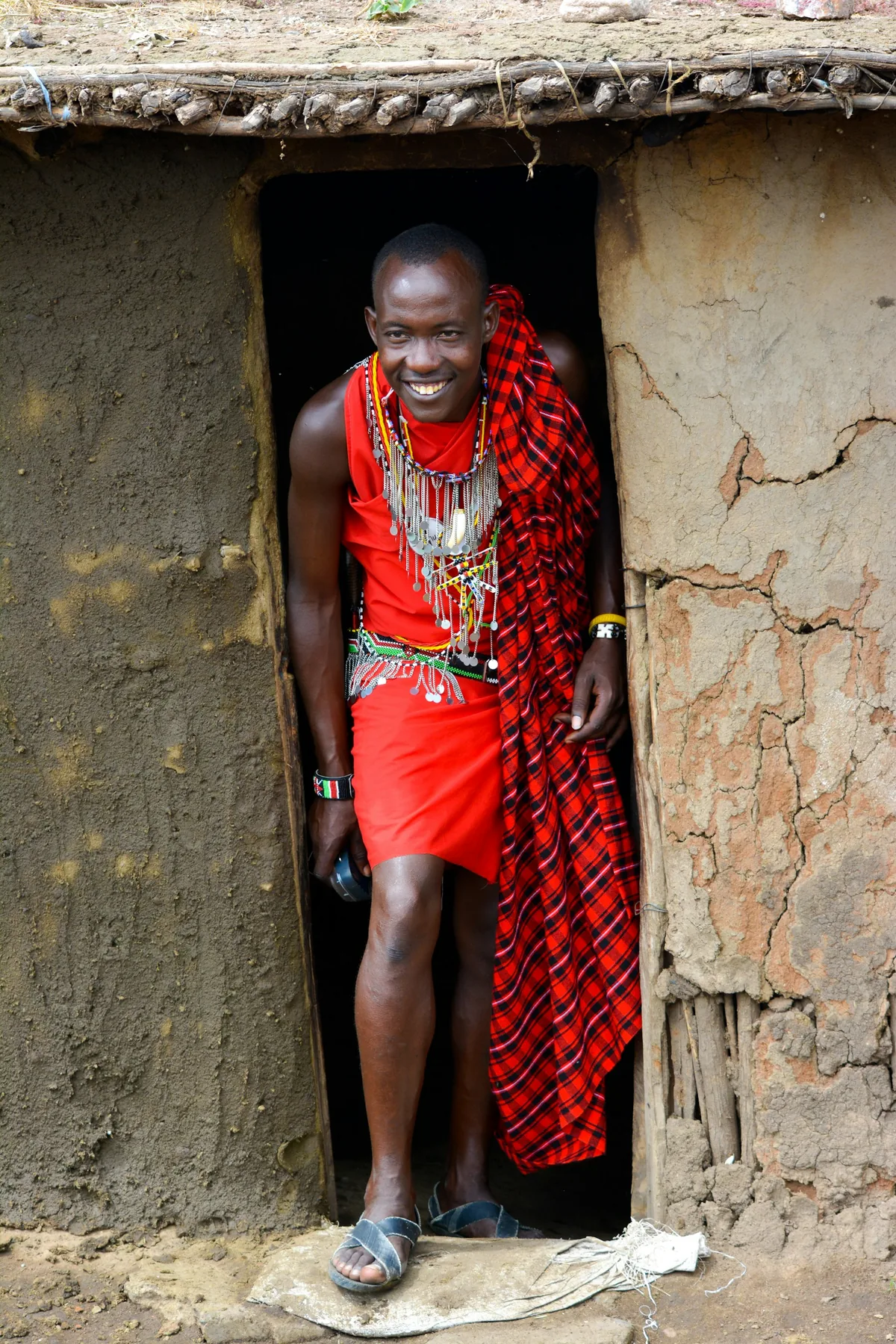
These common Swahili and Maa phrases are a small travel companion, not a claim to fluency. Swahili is widely used across Kenya, alongside English and many Kenyan languages. Maa is spoken in Maasai communities and varies by speaker and place, so learn pronunciation from the person in front of you.
- Common Swahili and Maa phrases at a glance
- Everyday Swahili greetings
- Please, thank you and excuse me
- Food, water and simple requests
- Swahili numbers and money
- Safari words you may hear
- Time and direction words
- Approaching Maa with care
- Names, spirituality and context
- Language during a Maasai village visit
- Portraits, video and social media
- Pronunciation and correction
- Helping children use local phrases
- Crafts, bargaining and contributions
- A one-minute language card
- A respectful exchange from greeting to goodbye
- Traveller opinions
- FAQs
Common Swahili and Maa phrases at a glance
Swahili carries conversations across much of Kenya. English is also widely used in tourism, and the country holds a rich map of languages including Kikuyu, Dholuo, Kamba, Kalenjin, Luhya, Somali, Maa and many more. The language heard at a gate may differ from the language used around a family table.
A short phrase list should help a traveller enter politely, ask permission and say thanks. It should never encourage imitation, jokes about accents or the assumption that every Kenyan wants to teach.
| Phrase | Meaning | Natural use | Sound cue |
|---|---|---|---|
| Habari? | How are things? | General greeting | ha-BAH-ree |
| Nzuri | Good or fine | Reply to habari | n-ZOO-ree |
| Asante | Thank you | After help or service | a-SAN-teh |
| Asante sana | Thank you very much | Warm thanks | a-SAN-teh SAH-na |
| Karibu | Welcome or you are welcome | Invitation or reply | ka-REE-boo |
| Tafadhali | Please | Polite request | ta-fa-DHA-lee |
Everyday Swahili greetings
“Habari?” asks how things are. Replies include “nzuri” for good. “Habari za asubuhi?” asks about the morning, while “habari za jioni?” suits evening. Speakers use many variations, and no visitor needs to force a long exchange.
“Jambo” is widely understood and often offered to tourists. It is not wrong, but it can sound like a tourism greeting rather than ordinary conversation. Follow the speaker’s lead. If the guide says “habari yako?”, reply simply and ask how they are too.
Please, thank you and excuse me
“Asante” means thank you and “asante sana” adds warmth. “Tafadhali” means please. “Samahani” can mean excuse me or sorry, useful when seeking attention or moving through a space. “Pole” expresses sympathy for difficulty, while “pole pole” means slowly.
Tone matters. Repeating “pole pole” at a worker who is already helping can sound patronising. Use the phrase for your own pace on a walk or as shared humour when invited. Courtesy is a relationship, not a set of magic words.
Food, water and simple requests
“Maji” is water, “chakula” is food and “chai” is tea. “Bila” means without, while “na” means with. For allergies or medical diets, do not rely on a phrase list. Give the operator written details in English, confirm them with the property and carry a translation card prepared by a reliable speaker.
“Naomba” introduces a polite request, roughly “I ask for” or “may I have.” A visitor can still use English for accuracy. Pointing, patience and a smile are helpful, but never assume a nod means a serious dietary restriction was understood.
Swahili numbers and money
One to ten are moja, mbili, tatu, nne, tano, sita, saba, nane, tisa and kumi. Numbers help with room keys, meeting times and small purchases, though Kenyan English is often easier for precise transactions.
Agree the amount and currency before paying. “Bei gani?” asks what price, but a market conversation contains more than vocabulary. Ask whether prices are fixed and negotiate only where invited. The Kenya currency guide covers cards, cash and M-PESA.
Safari words you may hear
“Simba” is lion, “tembo” is elephant, “twiga” is giraffe, “kifaru” is rhinoceros, “nyati” is buffalo and “chui” is leopard. These words have travelled widely through popular culture, yet the guide may use English, Swahili, Maa or a local nickname depending on the group.
Do not shout an animal name or stand suddenly when it appears. A quiet question such as “ni nini?” means “what is it?” The guide’s full explanation of behaviour, habitat and conservation matters more than collecting vocabulary.
| Swahili word | English | Listening note |
|---|---|---|
| Simba | Lion | Also appears in names and stories |
| Tembo | Elephant | Ndovu is also used in some contexts |
| Twiga | Giraffe | Easy to hear on drives |
| Kifaru | Rhinoceros | Sensitive locations should remain private |
| Nyati | Buffalo | Do not confuse with domestic cattle |
| Chui | Leopard | Often spoken quietly at a sighting |
Time and direction words
“Sasa” means now, “baadaye” means later, “leo” is today and “kesho” is tomorrow. “Kushoto” is left, “kulia” is right and “hapa” is here. These can be fun on a drive, but safety instructions should be confirmed in the clearest shared language.
Safari time is often expressed directly in English. Repeat the departure time and meeting place, especially after a long flight. If someone says “saa moja” in the Swahili clock system, ask for the conventional clock equivalent rather than guessing.
Approaching Maa with care
Maa is distinct from Swahili and includes regional and community variation. Internet phrase lists often disagree because spelling systems, dialects and context differ. For that reason, this guide does not pretend a handful of typed Maa words can replace the host’s voice.
That does not mean Maa should remain a blank space. The University of Wisconsin’s introductory lesson gives different greetings according to the person being addressed, which immediately shows why a single tourist version of “hello” is misleading. Listen first, then let a host correct the sound and context.
| Maa form | Use in the lesson | Response | What a visitor should remember |
|---|---|---|---|
| Supai | Formal greeting to a man | Epa | The greeting and response are a pair |
| Takwenya | Formal greeting to a woman | Iko | Address and relationship matter |
| Yeyo / Noyeyo | Respectful address for a woman / women not personally known | Eyo | Singular and plural forms differ |
| Papa / Loo Papa | Respectful address for a man / men not personally known | Oi / Oo | Do not use the plural by guesswork |
| Keyaa toi ikanaabo | Informal greeting to a peer | Sidai | Informal language depends on age and familiarity |
Spellings on signs, lesson pages and phones may vary. Maa is tonal, and an English-looking spelling cannot carry every sound. Ask a Maasai host or guide how they greet in that place and repeat only if invited. A phrase learned in person carries the name and voice of the teacher, which is more meaningful than arriving with a theatrical speech.
Listen to Maa greetings in a real lesson
Kevin and Rarin’s Maa Language Journey demonstrates greetings aloud and explains who uses them. It is a better starting point than trying to force English sound cues onto a tonal language.

Names, spirituality and context
Visitors may hear “Enkai” or “Engai” in discussion of God, rain, sky or spirituality, depending on speaker and translation. Do not reduce a complex belief system to a caption. Ask open questions only where the conversation welcomes them.
The same care applies to age sets, ceremonies, cattle and family life. A community visit should be hosted and interpreted by people with authority to share. Some knowledge is public, some personal and some not for visitors.
Language during a Maasai village visit
Before arrival, know who invited the group, how the fee is distributed, what the visit includes and whether crafts are offered. A good introduction explains photography, movement and questions. Do not wander into homes or photograph children because one adult agreed to a general visit.
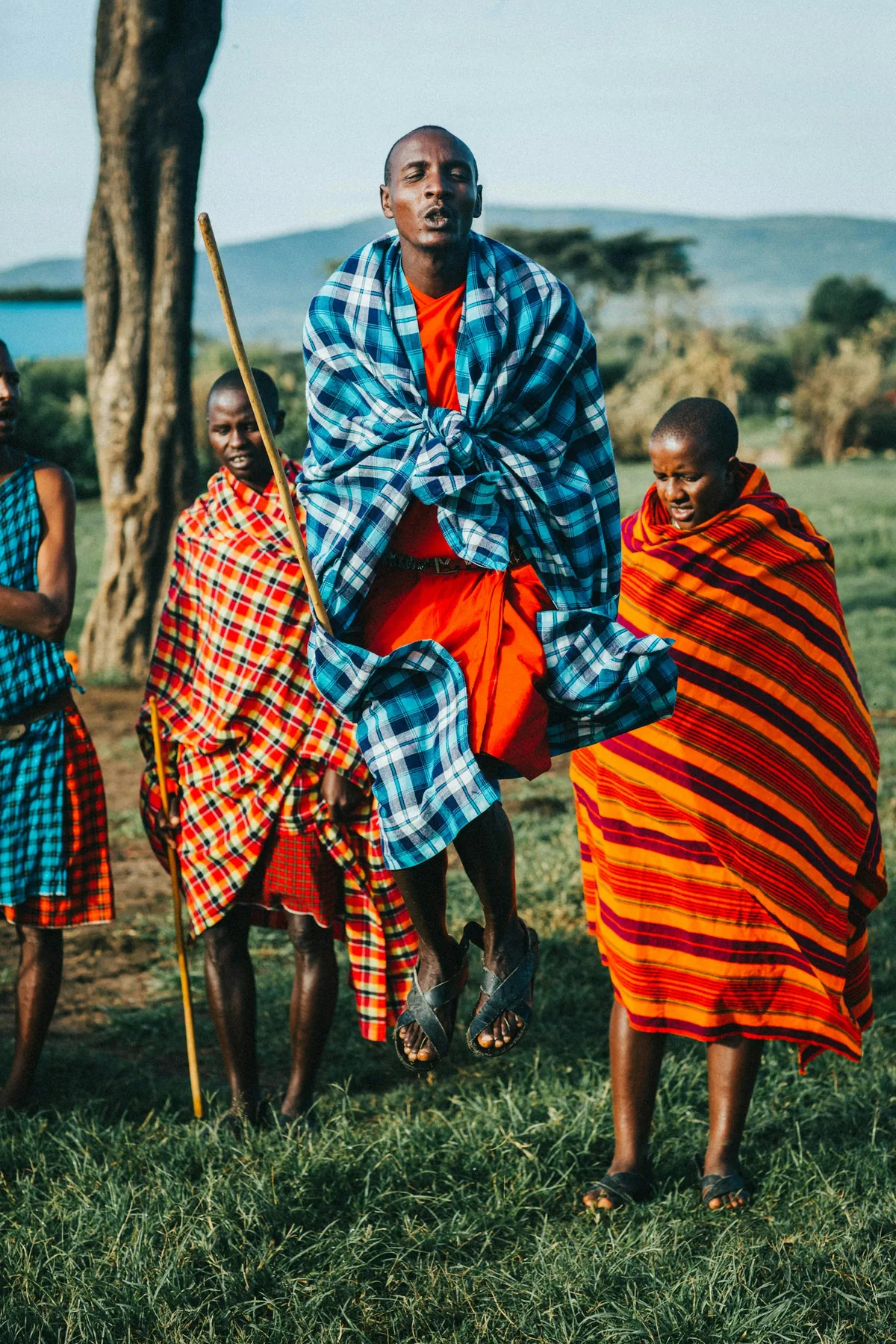
Learn names and use them. Ask what people would like visitors to understand rather than beginning with a list of stereotypes. Singing, jumping demonstrations or dress may be part of some tourism programmes, but they are not the whole of Maasai life.
Portraits, video and social media
Ask before raising the camera, even after paying a visit fee. Consent to a group photograph does not automatically include a close portrait, drone footage or commercial social media use. Show the image when appropriate and respect a refusal without debate.
Creators should explain where material may appear and avoid geotagging sensitive homes or cultural sites. Photographing a person as scenery strips away the relationship that the greeting was meant to begin.
Pronunciation and correction
Kenyan listeners are often generous with a visitor’s mistakes. Try slowly, watch the response and accept correction. Do not exaggerate an accent for laughs or keep repeating a phrase when the conversation has moved to English.
Some words change meaning with stress, vowel length or context. Written sound cues are approximate. The goal is recognisable courtesy, not performing fluency. If a phrase concerns health, consent, money or safety, use the clearest language available.
Helping children use local phrases
Teach children “asante,” “tafadhali” and how to ask before a photograph. Explain that other children are not attractions and do not owe them play, a song or a picture. A school or village visit needs prior arrangement, not an unexpected arrival with gifts.
Let local children lead a language game if the host approves. Avoid distributing sweets, pens or cash directly to a crowd. Support the community’s agreed system and keep the exchange calm.
Crafts, bargaining and contributions
Craft purchases can create a direct connection to makers. Ask who made the item, what materials were used and whether the price is fixed. Bargaining that removes a tiny amount from skilled work may not be the memory either person wants.
Community fees, school donations, guide tips and craft payments serve different purposes. Keep them distinct. If travellers want to contribute, ask the host organisation what is useful and how it is managed.
A one-minute language card
Write “habari,” “nzuri,” “tafadhali,” “asante,” “samahani” and “kwa heri” on a small card. Add the name of the guide and first camp. Practise the vowels, then stop. The conversation will supply the rest.
For Maa, leave a blank line on the card. Ask a host to add the greeting they actually use and note who taught it. That one living exchange is more respectful than a page copied without context.
A respectful exchange from greeting to goodbye
Imagine arriving at a community-run visit. The host says “karibu,” and the group replies with a simple “asante.” That is enough to begin. The next step is listening to the introduction, learning the host’s name and hearing how the visit is organised. A greeting does not entitle anyone to enter a home, touch clothing or begin filming.
When the conversation turns to language, ask which language people use with family, at school, in business and with visitors. Kenya’s multilingual life is more interesting than the idea that one phrase belongs everywhere. A person may move between Maa, Swahili and English within minutes, choosing each for a different relationship or subject.
If the host teaches a Maa greeting, repeat it once or twice and accept laughter kindly. Ask what it means in that exact context and whether the spelling varies. Write down the speaker’s name only with permission. The lesson now has a source and a memory rather than floating as a claim copied from the internet.
At the end, “asante sana” and “kwa heri” can close the exchange. Buy crafts because the work has value, not because a guide pressures the group. Leave photographs, donations and promises within the agreements made. Language has done its best work when both sides were treated as people rather than performer and audience.
What travellers say after the trip
These are exact words from public reviews and discussions. Each person had their own route, budget and expectations, so the value is in the detail rather than treating one experience as a promise.
Bonus points if you have Swahili as a language you can speak two three sentences.
A Kenyan responding to a visitor who wanted to avoid behaving like an obnoxious tourist.
Most important is “Karibu” (Welcome), and “Karibuni” for two people.
A Swahili speaker advising someone who wanted to welcome campers respectfully.
I guess the big difference is that there is a lot of politeness built into everyday speech in Swahili
A language discussion explaining why meaning depends on social use, not only dictionary translation.
Mombasa swahili is not the same as Nairobi swahili
A Kenyan speaker reminding learners that place and community shape everyday language.
Samahani is quite formal, it’s not really used in everyday language for majority of the country.
A useful distinction between correct textbook Swahili and what a visitor may hear in casual conversation.
And even then, “hujambo” is still not a common Kenyan greeting. “Habari” is more appropriate.
A Kenyan response that explains why this guide leads with habari instead of a stagey jambo.
Swahili and Maa language questions
Is Swahili spoken throughout Kenya?
Swahili and English are official languages, while many other Kenyan languages are used at home and locally. Fluency and preference vary.
Is “jambo” a normal greeting?
It is understood and often used with visitors. “Habari?” or a time-specific greeting may sound more conversational, depending on context.
What does “asante” mean?
It means thank you. “Asante sana” means thank you very much.
What does “karibu” mean?
It can mean welcome, come in or you are welcome, depending on the exchange. “Karibuni” addresses more than one person.
Is Maa the same as Swahili?
No. Maa is a distinct language associated with Maasai and related communities. Swahili is a regional lingua franca.
How do I pronounce Maa phrases?
Ask the host or guide to model them slowly. Written approximations cannot represent every sound or dialect accurately.
Should I say “Masai” or “Maasai”?
Maasai is commonly used for the people and language context, while Masai appears in many established place and tourism names.
Can I photograph people during a village visit?
Only with clear permission and within the host community’s arrangements. Consent for a visit is not automatic consent for every portrait.
Should I bargain for crafts?
Ask whether prices are fixed. If bargaining is invited, keep it friendly and remember the value of skilled work.
Can NLS arrange a Maasai community visit?
NLS can discuss community-led options, fees, timing and expectations within a suitable itinerary.
Sources and further reading
These language lessons and public discussions support the words while preserving the differences between textbook phrases, local habits and Maa greeting contexts.
Let conversation be part of the journey
Tell us what you hope to learn. We can plan time with local hosts in a way that respects people, place and pace.
Plan a respectful Kenya journey
Share dates, travellers, interests and whether a community-led cultural visit belongs in the route.