Camping in Amboseli: Public Campsites, Special Sites and Tented Camps
A zebra calls beyond camp, wind works at the guy lines and somebody discovers that the torch is at the bottom of the bag. Camping can be the most intimate way to stay near Amboseli, but the word covers everything from a self-sufficient pitch to a permanent en-suite tent with dinner waiting.
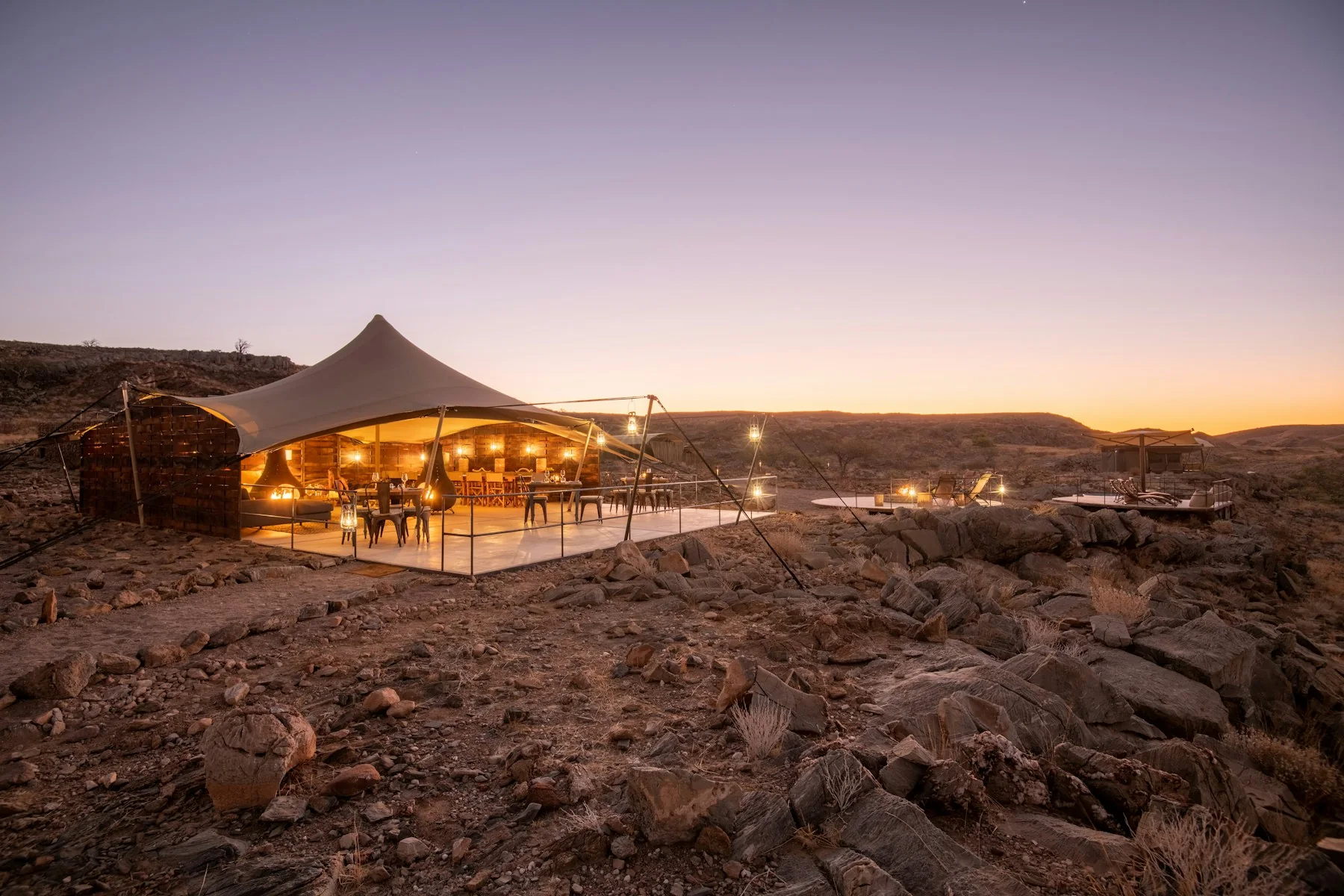
Camping in Amboseli can mean a basic KWS public campsite, an exclusive special campsite, a community campsite outside the park or a fully serviced tented camp. The right choice depends on equipment, wildlife experience, water, toilets, meals, security, gate access and how much work you want to do after the game drive.
- Camping in Amboseli: know the difference
- KWS public campsites
- Special campsites and exclusive mobile camps
- Permanent tented camps near Amboseli
- Camping fees, park access and hidden equipment costs
- Wildlife safety and camp discipline
- Heat, cold, dust, rain and tent choice
- Food, drinking water and cooking
- Toilets, showers, power and connectivity
- Amboseli camping checklist
- Camping with children and first-time campers
- What campers notice after the trip
- Public campsite, special site or tented camp?
- Traveller opinions
- FAQs
Camping in Amboseli: know the difference
A KWS public campsite is the most recognisable do-it-yourself option. A special campsite offers exclusivity but expects greater self-sufficiency. Community campsites outside the park vary from a patch for a tent to organised grounds with bathrooms and meals. Permanent tented camps are accommodation businesses where canvas replaces masonry but beds and service may resemble a lodge.
Prices and expectations become confusing when these are compared as if they are the same product. A USD 30 campsite charge does not include the tent, vehicle and cook. A permanent camp rate may include meals and a private bathroom but not park entry or game drives.
| Stay style | Facilities | Service | Best for |
|---|---|---|---|
| KWS public campsite | Basic and shared | Self-arranged | Experienced budget campers |
| KWS special campsite | Minimal and exclusive | Fully self-sufficient | Private mobile groups |
| Outside-park campsite | Varies widely | Self-catered or staffed | Gate access and value |
| Permanent tented camp | Bed, bathroom or shared block | Meals and staff | Comfort with canvas atmosphere |
KWS public campsites
KWS describes public campsites as budget-conscious options with basic essential facilities, including toilets and water points where provided. Its Amboseli park page lists one public campsite simply as “Amboseli”. The generic name makes the booking details important: ask for the reservation name, coordinates, nearest gate, road condition and facilities before setting out. The campsite is not reserved for one party, so neighbours, noise and shared facilities are part of the arrangement.
Bring everything not explicitly listed. Water at a site may not be suitable for drinking, and a toilet does not imply a hot shower. Ask about fire rules, waste, cooking area, ranger contact and whether staff remain nearby after gate hours.
Special campsites and exclusive mobile camps
KWS special campsites are booked for exclusive group use. That privacy is appealing for photographers, families and small expeditions, but it is not a serviced hotel reservation. KWS advises visitors to be fully self-sufficient with shelter, food, cooking equipment and supplies.
A professionally supported mobile camp may add crew, cook, dining shelter, toilet and washing arrangements. Ask how water and waste are managed, where staff sleep, what wildlife briefing is given and whether the site requires a ranger or other security provision.
The KWS eCitizen page separates a special-campsite payment from the reservation itself by labelling the option “with existing reservation”. In practical terms, an empty-looking site is not an invitation to pitch. Secure the site allocation first, then carry the confirmation and park contact details offline.
| Confirm in writing | Why it matters |
|---|---|
| Exact site and coordinates | Prevents arrival at the wrong gate |
| Reservation and camping fees | They may be separate from park entry |
| Water and sanitation | Special sites may have no facilities |
| Staff and ranger arrangement | Defines night safety and support |
| Waste and fire plan | Protects a fragile dry ecosystem |
| Weather contingency | Wind and rain affect mobile setups |
Permanent tented camps near Amboseli
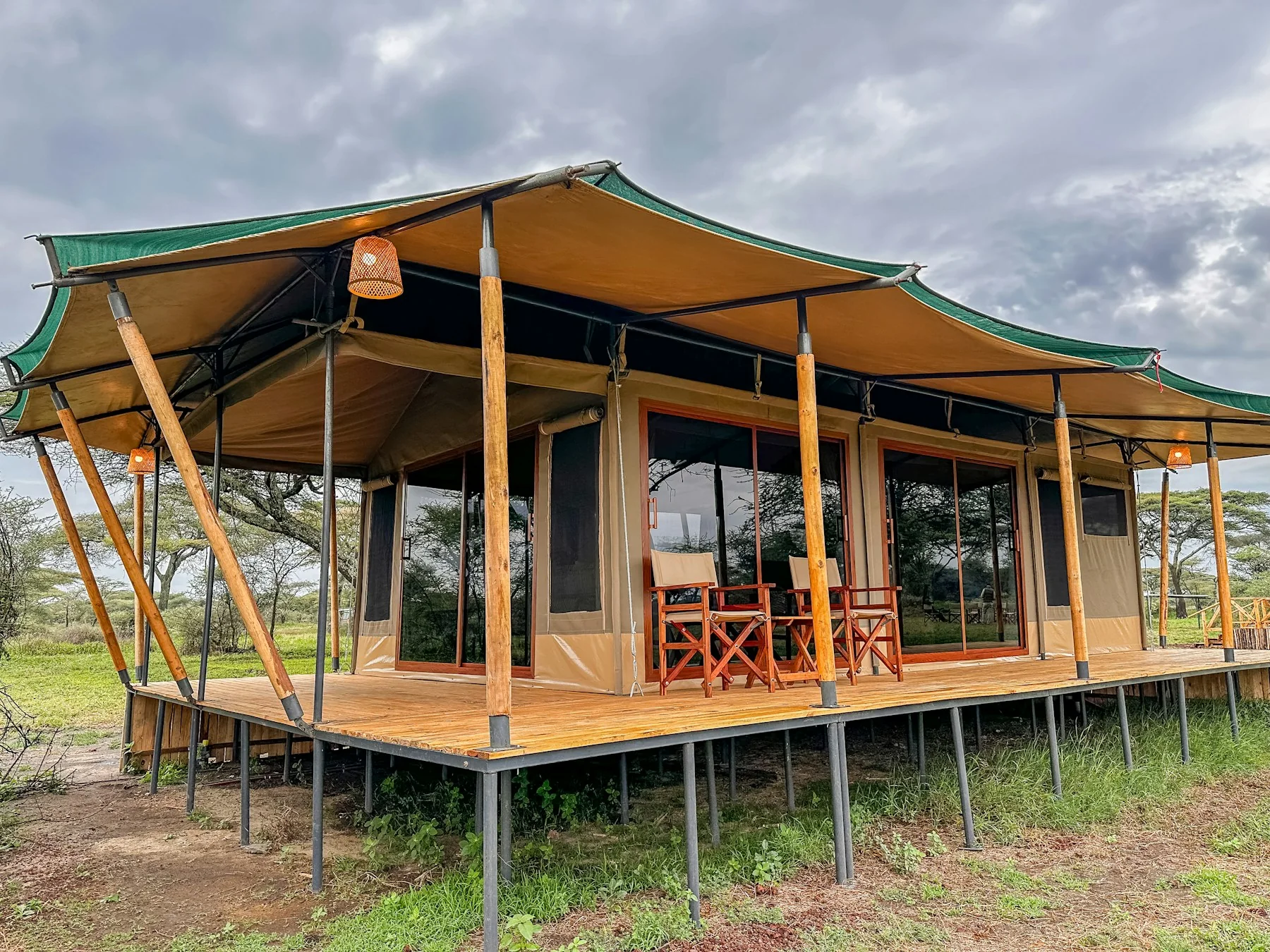
A permanent tent may stand on a platform with real bed, linen, electricity, private bathroom and veranda. Other camps use shared ablutions, bucket showers or limited power. Read the room description instead of assuming that camp means budget or luxury.
Names worth comparing include Kibo Safari Camp, Kilima Safari Camp, Sentrim Amboseli, Tulia Amboseli Safari Camp, Tortilis Camp, Tawi Lodge and Elerai Camp. They do not sit in one interchangeable row. Some are convenient to Kimana Gate, while others trade quick park entry for private-land activities, seclusion or a different view of Kilimanjaro. Our Amboseli lodges and camps guide compares the broader locations and styles.
Camping fees, park access and hidden equipment costs
The KWS conservation-fee schedule lists different public and special campsite rates by visitor category, with a separate reservation charge for a special site. Park conservation access and vehicle charges remain separate. One night can cross fee periods depending on entry, exit and validity rules.
Add tent hire, bedding, chairs, lighting, water, food, cook, guide, fuel, vehicle, staff, firewood where permitted, transfers and tips. Basic camping can save on the room, but a fully supported private camp may cost more than a permanent mid-range property because the entire operation moves for one group.
| Published KWS camping line for premium parks | Non-resident adult | Non-resident child or student | What remains separate |
|---|---|---|---|
| Public campsite | USD 30 | USD 25 | Park entry, vehicle, tent, bedding, food and support |
| Special campsite | USD 50 | USD 25 | Park entry, vehicle and a full self-sufficient camp operation |
| Special-site reservation | KSh 10,000 per week, listed as non-refundable | Camping fees still apply per person | |
Use these figures to understand the structure, then confirm the applicable category and total before payment. The Amboseli entry-fee guide explains the park-access side, and the Amboseli safari cost guide brings the vehicle, guide and accommodation lines together.
Wildlife safety and camp discipline
Never assume a campsite is fenced. Keep food sealed in the vehicle or approved storage, clean cooking areas, remove waste and follow staff instructions about lights and movement. Do not leave a tent after dark without the agreed escort system. Shoes, torch and whistle should remain reachable.
KWS prohibits feeding wildlife and unattended campfires. Baboons and vervet monkeys can learn quickly around food, while elephants, hyenas and other animals may pass nearby. A photograph from outside the tent is never worth ignoring a guide. Read the Amboseli safety guide before choosing an unsupported site.
Heat, cold, dust, rain and tent choice
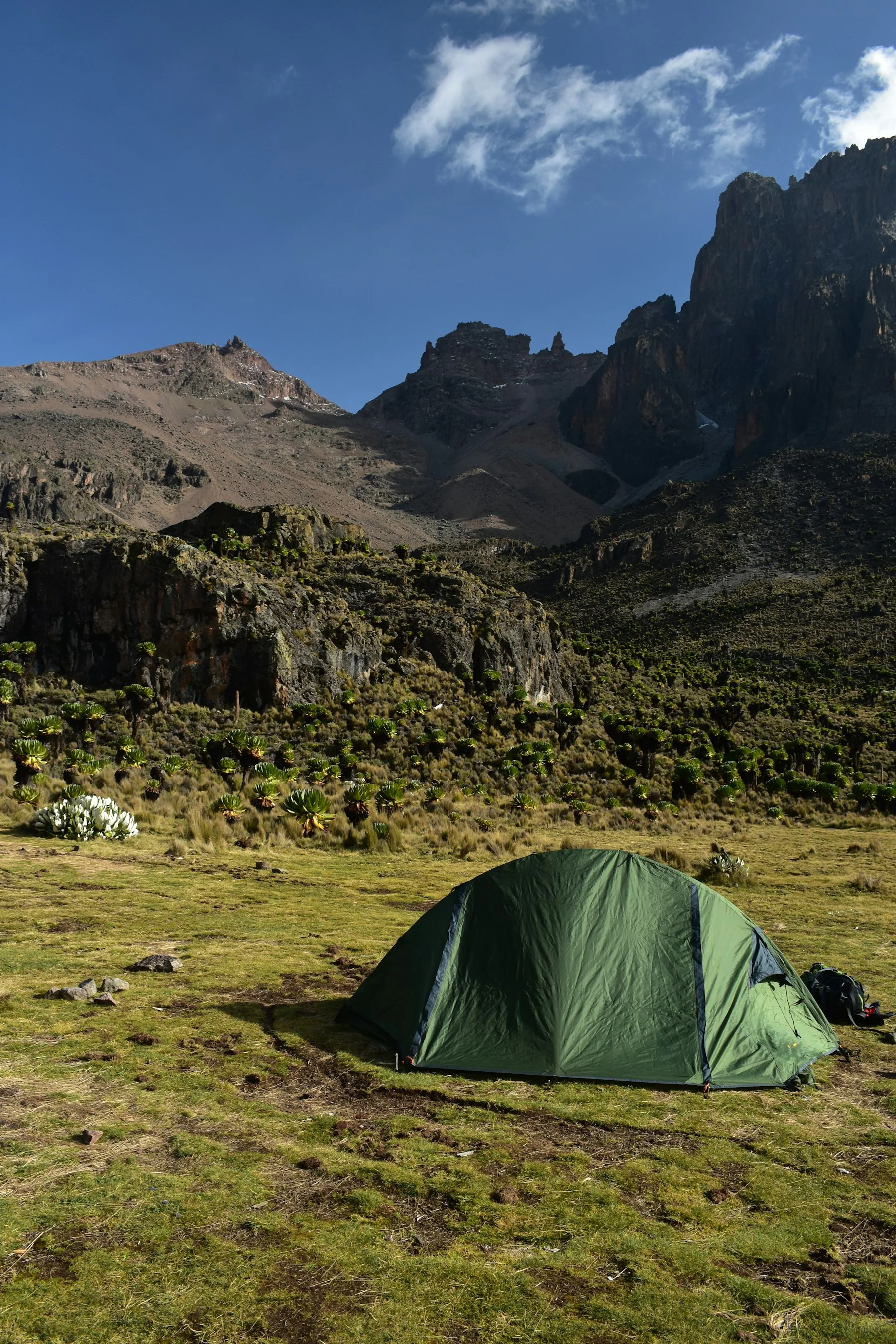
Amboseli days can be hot while dawn and night feel cool. Dry periods bring fine dust and strong sun. Wind tests pegs, canvas and sleep. Rain can cool the basin, soften roads and reveal weaknesses in groundsheet placement or drainage.
Use a tent suited to wind and the number of occupants, with a sound flysheet, groundsheet and ventilation. Keep bedding off the wall, electronics sealed from dust and one warm layer dry. Check the seasonal guide rather than packing from an annual average.
Food, drinking water and cooking
Carry reliable drinking water and more than the optimistic daily estimate. Cooking requires fuel permitted for the site, stable equipment, handwashing and a plan for raw food in heat. Never wash or tip food scraps near a tent.
A staffed camp should state which meals, drinks and dietary needs it can manage. Self-campers need a menu that survives transport and limited refrigeration. Keep all food inside secure storage after use, including snacks in daypacks.
Toilets, showers, power and connectivity
Ask whether the toilet is flush, pit, portable or shared and whether paper and handwashing are supplied. Ask if shower water is hot, limited or unavailable. A water point may be seasonal or intended for camp use rather than drinking.
Solar lighting and charging vary. Bring a power bank and headlamp even at a permanent tented camp. Mobile signal is unreliable enough that offline contact details, maps and insurance information remain sensible.
Amboseli camping checklist
Self-campers need tent, pegs, mallet, groundsheet, sleeping system, chairs, cooking kit, fuel, food, safe water, cool storage, washing setup, rubbish containers, lighting and first aid. Every item must fit the safari vehicle with passengers and camera gear.
All campers benefit from closed shoes, sandals for facilities, warm fleece, breathable layers, hat, sunscreen, repellent, reusable bottle, eye drops, dust cover and personal medicine. Single-use plastic is prohibited in KWS parks.
| Sleep | Kitchen | Safety and comfort |
|---|---|---|
| Tent and groundsheet | Drinking water | Headlamp and spare batteries |
| Sleeping mat or bed | Food and cool storage | First aid and medicine |
| Warm bedding | Stove and permitted fuel | Repellent and sunscreen |
| Repair kit and pegs | Wash kit and rubbish storage | Closed shoes and layers |
Camping with children and first-time campers
Children can love canvas sounds, stars and camp routines, but the site must match their age. Establish a no-running boundary, keep them within reach around fires and wildlife, and use a private vehicle so tired mornings do not control another group.
For a first family safari, a permanent tented camp or fully staffed mobile setup usually preserves the adventure while providing sanitation, meals and escorts. Test sleeping bags and headlamps at home before discovering a fear of zips in the dark. Our Amboseli with kids guide covers transfer length, pool safety, dust and the pacing of game drives.
What campers notice after the trip
Traveller reviews praise quiet, nature and Kilimanjaro, then mention the details that determine comfort: no hot water, limited electricity, strong wind, staff warmth and other campers’ noise. Those are not contradictions. They show why the exact property and date matter.
Read positive and critical reviews together. A guest who loves basic camping may call limited power peaceful. Another may call it inconvenient. Translate every opinion into a facility question rather than copying the star rating.
Public campsite, special site or tented camp?
Choose a public campsite when budget, self-reliance and an inside-park night matter. Choose a special site when privacy is worth a supported mobile operation. Choose an outside campsite for value and easier logistics, provided gate time is accepted. Choose a permanent tented camp when guests want canvas atmosphere without building and striking camp.
The best camping in Amboseli is not the roughest. It is the arrangement whose work, comfort and wildlife responsibility match the travellers. Make every inclusion visible before the deposit, then let the night sound wild.
What travellers say after the trip
These are exact words from public reviews and discussions. Each person had their own route, budget and expectations, so the value is in the detail rather than treating one experience as a promise.
Highly recommended if you like camping and appreciate being close to nature.
A 2025 traveller describing a simple small-scale campsite in the Amboseli ecosystem, including limited electricity and no hot water.
The campsite was peaceful and quiet, but close to Amboseli National park.
A September 2025 guest describing a modest permanent-camp stay with wind, shared areas and Kilimanjaro views.
The campsites were mostly quiet, except in Amboseli where we were woken by a car honking frantically in the middle of the night
A camping-trip reviewer reminding readers that other campers can influence even a wild setting.
Camping in Amboseli questions
Can you camp inside Amboseli National Park?
Yes. KWS lists public and special campsite arrangements. Availability, site designation and booking procedure should be confirmed directly for the travel dates.
What is a public campsite?
It is a shared KWS campsite with basic facilities such as toilets and a water point where provided. Other groups may use it at the same time.
What is a special campsite?
It is reserved exclusively for one group and usually requires full self-sufficiency plus advance reservation and applicable reservation fees.
How much does camping cost?
KWS camping charges depend on campsite type and visitor category and sit above applicable park access. Equipment, food, guide and vehicle are separate unless a package includes them.
Are campsites fenced?
Do not assume they are. Ask about the exact site, ranger or guard arrangement and wildlife protocol before arrival.
Is camping safe around wildlife?
It can be managed with an experienced team, strict food storage, lighting, escorts and park rules. Guests must never approach animals or walk away from camp after dark.
Do public campsites have showers?
Facilities vary and may be basic. Confirm water, toilet and shower availability for the named site rather than relying on a general description.
Can families camp in Amboseli?
Yes, when the site, supervision, sanitation and equipment suit the children. Permanent tented camps are easier for many first family safaris.
What is the difference between camping and a tented camp?
Camping usually means pitching or using a basic mobile tent. A permanent tented camp may provide a bed, bathroom, restaurant, staff, power and lodge-style service.
What should I pack?
Bring layers, dust protection, closed shoes, headlamp, insect repellent, sunscreen and personal medicine. Self-campers also need a complete shelter, food, water, cooking and safety system.
Sources and further reading
Official park, heritage, tourism, aviation and regulatory sources support the practical details in this guide.
Sleep close to the wild at the right comfort level
Tell us whether you picture a sleeping bag, a staffed mobile camp or an en-suite canvas room. We will match the site, equipment, food, guide and park access to the experience you actually want.
Plan an Amboseli camping safari
Share dates, group, equipment, camping experience, preferred facilities and whether the route begins in Nairobi or continues to Tsavo.