
Kilima Safari Camp: Rooms, Wildlife and an Honest Amboseli Stay
Kilima Safari Camp gives you a pool, a lookout tower and a choice of tents and rooms near Amboseli’s Kimana side. The mountain can be magnificent, but the exact room category and your game-drive arrangements matter just as much as the view.

There are mornings in Amboseli when Kilimanjaro appears so suddenly that everyone at breakfast turns to look. On others, the summit hides behind cloud while elephants, waterbirds and the broad swamp country make their own show. Kilima Safari Camp is designed for both kinds of day. It is a fairly large Amboseli base, with a swimming pool and observation tower, rather than a tiny private bush camp. Whether that is exactly right for you depends on which room you book and how you want to spend the hours inside the park.
The name needs careful handling. This is Kilima Safari Camp, operated by Mada Hotels, on the Amboseli side near Kimana. Kilima Camp Masai Mara is another property entirely, high on the Oloololo Escarpment. A honeymoon photograph of the Mara or a promise of horseback riding at the escarpment property should never be used to sell a stay in Amboseli. Here the attractions are the Kilimanjaro-facing location, wildlife drives, broad accommodation choice and a relaxed pool afternoon.
There is another distinction worth making at the start. The camp’s promotional language sometimes uses “in Amboseli” in the broad destination sense. For a trip plan, its position close to the park entrance is not identical to sleeping within Amboseli National Park. A park game drive uses the gate and the applicable entry arrangements. You may see animals near the camp too, but a warthog by the path is not a substitute for a full morning among the park’s elephant herds.
Which Kilima Safari Camp are you reading about?
Kilima Safari Camp is an Amboseli accommodation choice with three room categories, a central restaurant, a pool and a lookout tower. Mada currently lists 92 accommodation options: 60 Deluxe Tents, 20 Superior Rooms and 12 Standard Rooms. Those numbers describe a sizeable property. If the intimate atmosphere of a six-tent camp is what you have in mind, this will feel different even when the tent itself is lovely. A larger camp can be good for a group with varied room needs and for people who appreciate a full buffet and shared facilities. It can also mean more arrivals, paths and dinner-hour activity.
The operator’s web page contains a paragraph describing river-facing rooms over “Mara plains.” That geography does not belong to this Amboseli property and appears to have been copied from another listing. The room-category descriptions and the rest of the page instead describe Kilimanjaro-facing accommodation. We therefore do not promise a river view or Mara wildlife at Kilima Safari Camp. For the right destination context, begin with our Amboseli and Kilimanjaro guide.
Near the Kimana side, with a gate between camp and game drive
Guests often describe the camp as being near the Kimana approach to Amboseli. That is useful if your route comes from Nairobi via Emali or from the Tsavo side, but it does not mean every drive starts at a sighting. You still need to meet your guide, travel through the entrance and follow the park’s opening hours and fees. An early breakfast or a packed meal can save your best morning light. Our Nairobi to Amboseli route guide helps you choose a realistic arrival day instead of treating the transfer as an invisible line on an itinerary.
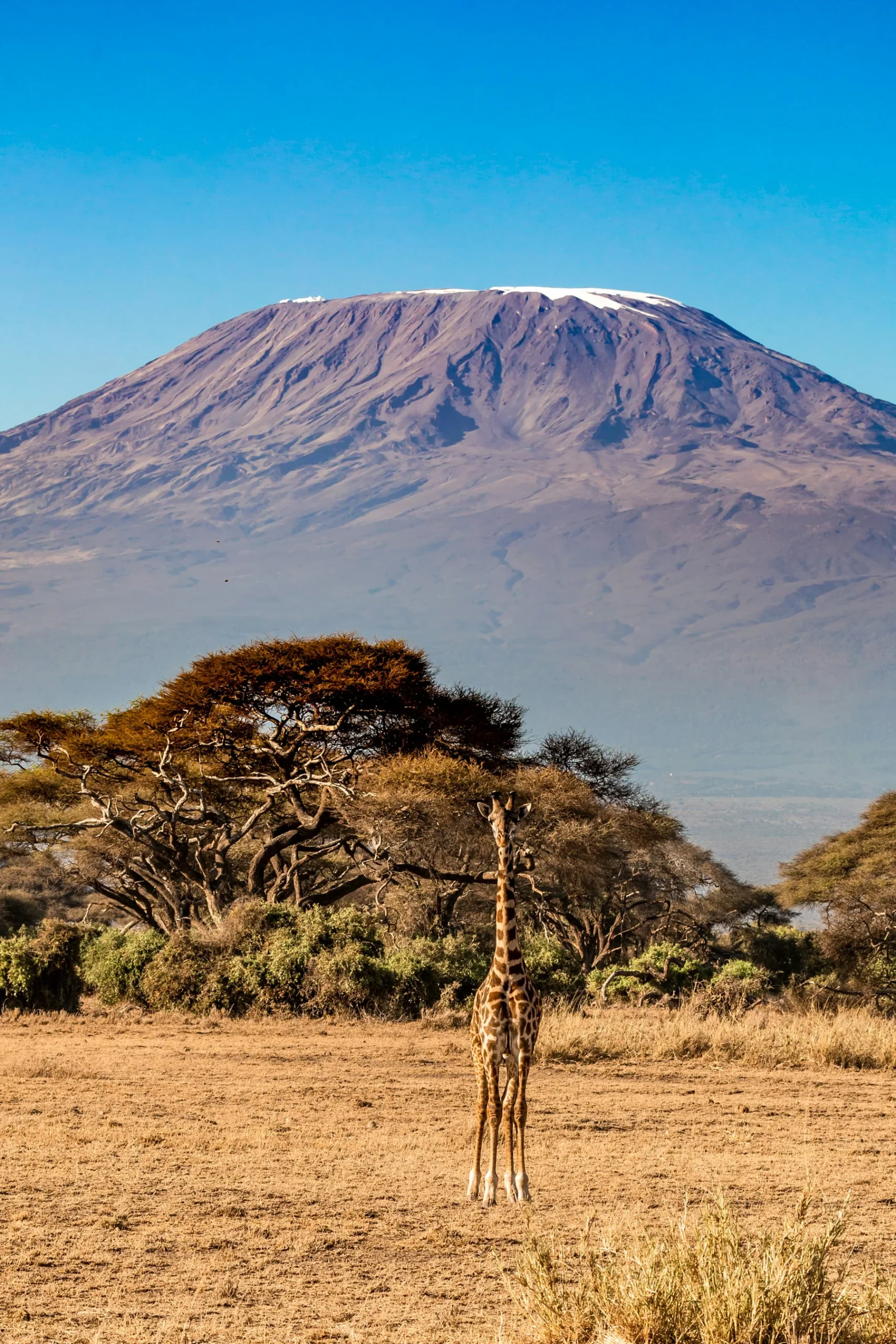
Amboseli’s famous mountain is actually across the border in Tanzania. The view changes by hour and by cloud. A balcony labelled “Kilimanjaro View” points the right way but cannot guarantee an unobstructed peak on your particular morning. Vegetation, the unit’s position and weather all affect what you see. Guests who care deeply about the mountain should make time for more than one dawn and discuss the room category and orientation, not only the camp name.
Staying close to a gate can work beautifully for a two- or three-night safari. You can spend an early drive with elephants, return for lunch and a swim, then go out again when the light softens. If you prefer one long uninterrupted park day, arrange a packed lunch. Your guide’s wildlife plan should decide the pattern. A swimming pool is an excellent bonus after a dusty drive, not a reason to hurry past a memorable elephant encounter.
| Where you spend time | What to expect | Planning implication |
|---|---|---|
| Kilima Safari Camp grounds | Room, pool, meals, lookout tower and occasional passing wildlife. | Follow the camp’s walking and night-time safety guidance. |
| Amboseli National Park | Elephants, swamp habitats, birds, open views and the chance of other predators or grazers. | Use park entry, gate hours and a properly arranged vehicle. |
| Kimana and surrounding community land | Different landscapes and possible walks or cultural experiences where arranged. | Check the land access, guide, host and separate activity cost. |
| A longer Kenya route | Potential connections toward Nairobi, Tsavo or another safari region. | Allow a real transfer day and do not overlap it with a full game-drive promise. |

Deluxe Tents, Superior Rooms and Standard Rooms are not interchangeable
Mada’s current accommodation listing describes 60 Deluxe Tents of about 50 square metres, each with a queen bed, private veranda and safe. The Deluxe category is the one most travellers imagine when they hear “safari camp.” Canvas and space give it a distinctly bush-stay feeling. It is not sensible to book simply “a room at Kilima” if the tent experience is the point of your trip. Specify the category on the itinerary and confirm bedding if you do not want a queen arrangement.
The 20 Superior Rooms have balconies facing toward the mountain and are described as being near wildlife water pools. They are more solid-room in character than the canvas tents. The 12 Standard Rooms also have private balconies and are described as overlooking wildlife areas. Room size, air movement, shade and distance from the common spaces may matter more to your comfort than the label “view.” A guest travelling with an older parent might prefer a more convenient path. A couple wanting a quieter honeymoon might choose a Deluxe Tent away from busy shared areas, subject to availability and its actual position.
Some older descriptions of Kilima list fewer units or different category names. That is why a precise room name is important. Mada’s present total of 92 is a useful guide to property scale, but your confirmation should identify the actual type and bedding. Do not assume every image online shows the unit you will occupy. If you need a fan, air conditioning, a refrigerator, a step-free approach or a particular bathroom layout, ask about that specific room. Guests’ experiences vary by unit, and an attractive tent photo cannot answer those practical questions.
| Current Mada category | Listed number | Character | Decide before booking |
|---|---|---|---|
| Deluxe Tent | 60 | Spacious 50-square-metre tent with queen bed, veranda and safe. | Bed layout, shade, bathroom setup and position. |
| Superior Room | 20 | Room with mountain-facing balcony near wildlife water pools. | Balcony angle, distance to dining and cooling. |
| Standard Room | 12 | Room with private balcony facing the wider wildlife area. | Condition, size and whether it matches the photograph you saw. |
The camp lists Wi-Fi in common areas, not a robust internet connection in every unit. That wording matters if you need to check work messages from bed. A traveller may love a screen-free safari; another may need dependable access for a family call. We would not describe room Wi-Fi as a facility when the operator only promises common-area access and guest reports describe weak service. Mobile coverage can be uneven too. Download the things you need before leaving a stronger connection.
A day here has room for the pool and the observation tower
A well-paced Kilima stay begins before the camp becomes busy. Step outside while the air is cool, look toward Kilimanjaro and decide whether the mountain is showing. Breakfast can follow a short first light or be packed for a longer drive. In the park, the wetlands and elephant country deserve time. Amboseli is often advertised in one photograph of a tusker and the mountain, but its moods are far more varied: birds over the water, dust lifting from a herd, grazers on a broad plain and sudden cloud shadow across the mountain.
Back at camp, lunch and the pool make a real pause. The central lookout tower offers a different perspective from a ground-level path. It does not replace a game drive, but it can make a quiet hour satisfying. The restaurant, bar and coffee lounge suit travellers who like a social common area. Mada also lists a curio shop and conference facilities, clues that this is a full-service, larger property rather than an isolated two-family hideaway.
A second drive can take the softer afternoon light. If the mountain stayed hidden in the morning, you might get a reveal as weather clears, though no one can promise it. Return before the relevant gate closes. At night, animals may move around the grounds. Staff instructions about walking after dark are part of the safari, not an optional formality. Leave enough time to eat, rest and talk through tomorrow’s route instead of packing every hour with an extra activity.
Mada lists full board as a meal plan. It also advertises guided drives, transfers, Maasai-led walks, bush breakfasts and cultural experiences. The existence of an activity on a facilities page does not mean it is included in every room rate. Choose the ones that add something to your trip. A bush meal might be memorable for an anniversary; a family with small children may enjoy a relaxed pool afternoon more than another elaborate setup. The actual proposal should connect each activity with its location, timing and cost.
What the game drives can and cannot promise
Amboseli’s elephant families are the headline. You may spend a long time with them around marshes and open habitat, especially when a patient guide gives animals space to move. Our Amboseli elephants guide goes beyond the familiar mountain portrait to explain why swamp water, seasonal movement and respectful vehicle positioning matter. The park also rewards people interested in birds, buffalo, giraffe, zebra and smaller behaviour. A lion sighting is possible, not part of a room package.
The best wildlife day may not be the day with a perfectly clear summit. Low cloud can make the wetlands especially atmospheric, while a hot clear afternoon can send animals toward water. If photography is important, discuss the vehicle’s window or roof configuration, seats and how many people share it. Our Amboseli photography guide covers light and fieldcraft. A private jeep buys freedom to wait through a scene, but it does not buy a particular animal or weather.
Walks advertised from a camp close to a national park take place only where legally and safely permitted, with the relevant guides. They should not be described as walking freely among Amboseli’s elephants inside the park. A cultural visit can be worthwhile when you know which community is hosting, how long you will spend and where the fee goes. The value is in meeting people with time and respect, not treating a village as a brief staged stop between drives.

Families and couples will use the property differently
For a family, the pool and varied room stock can make Kilima a convenient base. A child can decompress after a drive, and an adult who does not want another outing can stay near the lounge. The trade-off is that a large property may have longer internal walks and more group traffic than a tiny camp. Before confirming, settle the bedding, how far rooms sit from each other, pool supervision, and whether a family can have a private vehicle. Our Amboseli with kids guide helps shape a drive length children can enjoy.
Couples might like a veranda at first light, a quiet swim or a special dinner. But it would be misleading to call Kilima a secluded honeymoon retreat without checking the room position and likely atmosphere. An unhappy April 2026 honeymoon review describes cleanliness concerns, flies and anxiety after dark, even while praising the scenery and meals. A positive trip is possible; the point is to match expectation with a 92-unit safari property. If intimacy and seclusion are non-negotiable, compare a smaller Amboseli-area lodge or a private conservancy camp before deciding.
Travellers with mobility needs should discuss pathways, steps, pool access and room location before choosing the category. A magnificent mountain view does not help if the walk to dinner is uncomfortable. Equally, a traveller sensitive to heat should ask about shade and ventilation in the selected unit. These details are especially important for a multi-night stay when the tent is not just a place to sleep between two drives.
The guest experience is not one simple verdict
The recent independent guest reviews are useful precisely because they disagree. A September 2026 family traveller who eats vegetarian food said, We are vegetarians n was surprised to see quite good spread
. That is encouraging for one specific dietary concern. It is still wise to tell the kitchen about allergies or more restrictive needs in advance.
A couple who visited for their honeymoon praised the food and the landscape, yet wrote, there is no wifi in the rooms
, and criticised hygiene, insects and the feeling of walking after dark. The operator replied publicly, acknowledged that connectivity was limited to common areas and said it would review the other concerns. This is not a claim that every room has the same problems. It is a reason to take recent critical feedback seriously and to choose the actual room category carefully.
Another UK traveller who stayed three nights in February 2026 reported being allocated a room they considered poor despite having booked many months ahead. After complaining, they were moved and wrote, Our tent was lovely
. They still disliked noise from wheeled luggage and large groups. That contrast says more about category and room assignment than a single star rating does. A person who enjoys a busy, social safari base may barely notice the traffic; a light sleeper might.
Some guests praise the pool, staff, buffet and mountain view. Others mention slow Wi-Fi or a hot tent. We do not turn either group into a universal guarantee. The useful questions are concrete: which unit, how far from the central path, what ventilation, what internet access, and what is the plan for escorted movement at night? Reviews become more valuable when they help you ask those questions.
| Guest theme | What it suggests | How to use it |
|---|---|---|
| Food and vegetarian choice | Several guests found the buffet satisfying. | Send specific dietary needs before arrival, rather than relying on a general buffet. |
| Room category variation | A Deluxe Tent can feel very different from an older room. | Name the exact category and important features in the booking. |
| Wi-Fi limitations | Operator lists common-area Wi-Fi; guests report patchy access. | Plan offline time and avoid promising room connectivity. |
| Large-camp bustle | Groups and luggage may be noticeable near paths. | Discuss room position if quiet is important. |
| Wildlife around camp | Some guests see animals on the grounds. | Enjoy the setting while following staff safety guidance. |
How does Kilima compare with another Amboseli base?
The obvious comparison for travellers browsing the Kimana side is Kibo Safari Camp. Both are convenient for the park’s eastern approaches, but they have different layouts, accommodation stock and atmospheres. Kilima’s present 92-unit mix and observation tower make it a more substantial hotel-like base. Kibo’s operator currently distinguishes its main camp from a separate Private Wing. Compare the precise room, not just two attractive photographs of tents under Kilimanjaro.
For a stay inside the park, Amboseli Serena or Ol Tukai offers a different start to the day and a different fee and gate pattern. For a more private feeling on surrounding land, look at smaller lodges and conservancy options. Our Amboseli accommodation directory and where-to-stay guide give those alternatives their own context. There is no one camp that should win every traveller.
A simple decision is this: choose Kilima if the room you want is confirmed, the group-friendly facilities are a benefit and its near-gate location fits your drive plan. Choose a smaller property if personal seclusion matters more. Choose an inside-park base if maximising dawn minutes within the boundary matters more than a pool afternoon. The correct comparison includes the entire two- or three-night experience, not merely the nightly accommodation line.
Full board, drives and park fees belong on separate lines
Mada lists full board, but a full-board room is not automatically an all-inclusive Amboseli safari. The park entry, vehicle, guide, transfer and extras may be priced separately depending on how the trip is built. A private vehicle and a shared drive are different purchases. A bush breakfast, walk or cultural visit can be another item. Our park-fee guide explains why both the number of entry days and the land you use affect the total.
Room category is the other major variable. A Standard Room may make financial sense for a short stay if it genuinely suits you. The Deluxe Tent may be worth more for its space and canvas feel. A quote that leaves out category can hide a mismatch: you imagine one, arrive in another. Ask for the exact category, bed arrangement, meal basis, game-drive schedule, park entry days, arrival transfer and any special dining. These are ordinary parts of a comfortable safari, not fine print to discover after arrival.
If you want to combine Amboseli with Tsavo or the Mara, the transfer day must be priced and timed honestly. Driving long distances and still expecting two full game drives is a recipe for disappointment. Flying can save road time on some routes but adds air tickets, transfer arrangements and baggage limits. Our fly-in versus drive-in guide helps weigh the experience rather than treating the fastest option as automatically best.
Arrive with time for the mountain, not a rushed final drive
A road trip from Nairobi passes through changing country before the Amboseli approach. Traffic leaving the city, weather and the condition of the final roads change the travel time. Our Kenya safari road guide is a more useful starting point than a rigid number of hours. If you land internationally that morning, allow for immigration, luggage, the vehicle journey and a late enough camp arrival. The mountain will still be there for another dawn even if the first day is simply a gentle arrival.
Fly-in travellers need a confirmed airstrip and road transfer linked to their actual flight. Small safari aircraft have baggage restrictions, particularly for hard suitcases. Our safari-airline luggage guide explains why a soft bag may prevent an unpleasant airport surprise. Check the actual operating carrier and allowance before packing. A fly-in plan should also show how you get from the airstrip to Kilima, not just the flight number.
For an onward trip, consider what you want to remember from Amboseli. Two rushed dawns and a midday exit can work, but a third night allows one cloudy morning without feeling that you missed the mountain. Time also lets a guide respond to wildlife rather than race a checklist. If a coastal extension follows, talk through whether the road and rail or an air connection suits your party. The right transport is the one that preserves the experience you came for.
The right traveller for Kilima Safari Camp
Kilima Safari Camp suits a traveller who wants a practical Amboseli base with a broad room choice, a pool, a central restaurant and plenty of space to look toward the mountain. It can work well for friends or families whose members want different things between drives. It can also work for a couple who books the specific tent they prefer and enjoys the bustle of a larger safari property. Its strength is flexibility and location, not the claim that it is an untouched wilderness hideaway.
Pause if you expect high-speed room Wi-Fi, a tiny camp with no groups, or a guaranteed sunrise view of the summit. Read the room categories and recent guest reports carefully if ventilation, cleanliness or quiet is a top concern. Those are fair priorities, and a different Amboseli lodge may fit better. A good safari is one where the choice still feels right when you return dusty from an excellent morning, not one that looked good only in a search result.
Kilima Safari Camp questions
Where is Kilima Safari Camp?
Kilima Safari Camp is an Amboseli-area property near the Kimana approach. A stay here is not the same as sleeping inside Amboseli National Park, and park drives use the applicable gate and entry arrangements.
Is Kilima Safari Camp the same as Kilima Camp Masai Mara?
No. Kilima Safari Camp is near Amboseli. Kilima Camp Masai Mara is a separate escarpment camp in the Greater Mara.
How many rooms does Kilima Safari Camp have?
Mada currently lists 92 accommodation options: 60 Deluxe Tents, 20 Superior Rooms and 12 Standard Rooms. Confirm the particular category on your booking.
What is a Deluxe Tent like?
The current operator listing describes a 50-square-metre tent with a queen bed, veranda and safe. Ask about its precise location, bedding and ventilation.
Can I see Kilimanjaro from every room?
Room categories are marketed with Kilimanjaro-facing views, but the angle, surrounding vegetation and clouds vary. No room can guarantee a clear summit every morning.
Is there a swimming pool?
Yes. The camp lists a swimming pool, along with a lookout tower and central restaurant. Pool use should follow the camp rules and supervision needs.
Is Wi-Fi available in the rooms?
The operator lists Wi-Fi in common areas, not dependable room Wi-Fi. Recent guests have also reported limited connectivity.
Are game drives included in full board?
Not automatically. Full board refers to the meal plan. The vehicle, guide, park fees, transfers and activities need to be shown clearly in your safari arrangement.
Is Kilima Safari Camp good for children?
It can suit families who value a pool and varied room choice. Confirm bedding, room proximity, path access, supervision and a child-friendly game-drive rhythm.
Which Kilima room is best for a couple?
A Deluxe Tent offers the canvas safari feel many couples want, but the best choice depends on quiet, shade, view and budget. Confirm the exact category and position.
Keep exploring Amboseli
Plan Kilima Safari Camp
Tell us your dates, group size, preferred room or tent, and whether you want private drives, an easy family rhythm or time for a special occasion.