
Masai Mara, Lake Nakuru and Lake Naivasha Safari: Three Stops That Should Feel Different
Give Naivasha, Nakuru and the Mara different jobs, then let the journey grow in scale instead of racing between names.

- What does each destination add?
- The best order is usually Naivasha, Nakuru, then the Mara
- A balanced seven-day, six-night itinerary
- The stronger five-night version
- A two-base family version
- Lake Naivasha is the change of rhythm
- Hell’s Gate deserves its own decision
- Lake Nakuru is the compact wildlife chapter
- Give the Masai Mara the largest share
- Road safari, fly-out or hybrid?
- Where should you stay?
- What travellers say after this route
- When should you travel?
- Who should skip Lake Nakuru?
- Who should skip Lake Naivasha?
- Safety and responsible travel
- What should the safari quote include?
- Booking checklist
- Frequently asked questions
- Let the journey grow in scale
A boat moves away from the Naivasha shore while a fish eagle calls above the papyrus. The next morning, the road drops into Lake Nakuru National Park and the search changes to rhinos, woodland and waterbirds. Then the Rift Valley opens toward the Masai Mara, where a single lion sighting can hold the vehicle in one place for an hour.
That contrast is the reason to combine the three. A Masai Mara, Lake Nakuru and Lake Naivasha safari is not a cheaper list of famous names. It is a road journey from a freshwater lake to a compact fenced national park and finally into a much larger grassland ecosystem. Done well, the route grows in scale each day. Done badly, Naivasha becomes a rushed boat ride, Nakuru becomes a lunch stop and the Mara loses the nights it needs.
What does each destination add?
The three names sit on one road circuit, but they solve different travel needs. Naivasha interrupts long game-drive days with water, walking, cycling or simple rest. Lake Nakuru returns the trip to a protected-area game drive and adds one of Kenya's strongest rhino-focused stops. The Mara then supplies the greatest wildlife depth and deserves the largest share of the itinerary.
| Destination | The real reason to include it | Useful stay | What it should not be sold as |
|---|---|---|---|
| Lake Naivasha | Freshwater wetland, boat experience, birding, Hell's Gate, slower pace | 1 to 3 nights | A substitute for a major savanna game-drive destination |
| Lake Nakuru National Park | Black and white rhinos, birds, woodland, lake scenery, compact game drives | 1 night, or a day trip from Naivasha | A guaranteed wall of flamingos |
| Masai Mara | Predators, plains wildlife, seasonal migration interest, long observation | 3 to 5 nights | A two-night box to tick after spending too long on the road |
The route suits first-time visitors who want wildlife variety without flying between every park. It also works for families because Naivasha can create a day outside the vehicle. Birders gain two very different lake environments before the grasslands. Photographers gain rhino and woodland possibilities at Nakuru, then open-plains light in the Mara.
Travellers who care only about predators or migration should consider skipping one lake and giving the Mara more time. A place is not essential merely because the road passes near it.
The best order is usually Naivasha, Nakuru, then the Mara
Starting in Nairobi and driving first to Lake Naivasha creates a gentle opening. The first afternoon can be a boat excursion, a lakeside walk in an appropriate managed area or simply recovery from the international flight. Lake Nakuru follows logically by road. After its game drive, the journey continues toward the Mara rather than turning back on itself.
This order also builds the wildlife experience. Naivasha is about water, birds and movement outside a safari vehicle. Nakuru becomes the first concentrated big-mammal game drive. The Mara then expands the horizon and the time available for animal behaviour.
The reverse order can work when flight schedules or accommodation availability require it. It often feels less satisfying, however, because the trip moves from the broadest wildlife chapter into smaller experiences. If the Mara comes first, protect enough energy for the lake activities and do not present them as a final wildlife climax.
| Route order | Strength | Weakness | Best for |
|---|---|---|---|
| Nairobi, Naivasha, Nakuru, Mara, Nairobi | Logical road progression and a growing sense of scale | Long final return from the Mara | Most first-time road safaris |
| Nairobi, Mara, Nakuru, Naivasha, Nairobi | Easier final road day to Nairobi | The wildlife intensity peaks early | Travellers with a fixed Mara start |
| Nairobi, Naivasha, Nakuru, Mara, fly to Nairobi | Protects the final day and avoids the longest return road | Higher cost and light-aircraft luggage rules | Shorter trips and premium pacing |
| Nairobi, Naivasha base, Nakuru day trip, Mara | Only two safari hotels after Nairobi | Nakuru day becomes longer | Families and travellers who dislike packing |
A balanced seven-day, six-night itinerary
This plan gives Naivasha two nights, Nakuru one night and the Mara three nights. It is not the only version, but it gives each stop a purpose.
Day 1: Nairobi to Lake Naivasha
Leave Nairobi after breakfast or after an unhurried arrival buffer. The road descends into the Rift Valley, with journey time shaped by city traffic, road works and stops. Check in before deciding whether the afternoon should include a boat trip. A late international arrival should lead to a Nairobi night, not a race to the lake in the dark.
On the water, slow down for papyrus, fish eagles, cormorants, pelicans and hippos at a safe distance. The boat is an excursion, not a transfer. Life jackets, weather, the condition of the vessel and the operator's safety practice matter more than getting close to wildlife.
Day 2: Lake Naivasha, Hell’s Gate or a deliberately quiet day
Choose one main activity. Hell's Gate gives the trip a physical chapter through cycling, walking and volcanic scenery. A managed walking experience on private land can offer giraffe, zebra and antelope without pretending the setting is wild predator country. Birders may prefer more time around the lake. Families may choose a shorter morning activity and a pool or garden afternoon.
Do not stack a dawn boat, a full Hell's Gate circuit, a long lunch, another walk and a sunset boat merely because they fit on paper. Naivasha earns two nights by changing the pace.
Day 3: Naivasha to Lake Nakuru National Park
Drive toward Nakuru and enter the park with enough time for a meaningful game drive. The lake, woodland, grassland and rocky viewpoints create a compact but varied circuit. Look for white rhinos in more open ground and black rhinos around denser cover, while accepting that vegetation and wildlife movement determine what is visible.
Stay inside the park or near a gate if the next morning's game drive matters. A city hotel can lower the room cost but adds gate logistics. The exact choice should match whether Nakuru is a full wildlife chapter or a practical bridge to the Mara.
Day 4: Lake Nakuru to the Masai Mara
Use the early morning for one final Nakuru drive only if it does not push the Mara arrival too late. The road crosses changing farmland and towns before the final approach to the reserve or a conservancy. Stop for a proper lunch and allow for rougher sections rather than promising an exact arrival minute.
The first Mara drive depends on the property, gate and arrival. Treat it as a bonus, not one of the two full wildlife days.
Days 5 and 6: Two full days in the Mara
The Mara deserves patient mornings. One day may focus on a river system, another on open plains or predator territories. A reserve and conservancy combination changes the activity rules, vehicle density and access, so the lodge location must shape the plan.
During migration season, a full-day outing may be useful when herd position requires distance. At other times, morning and afternoon drives with a midday rest can create a better rhythm. A balloon safari belongs on one morning only when the cost, wake-up time and landing logistics suit the travellers.
Day 7: Return or fly from the Mara
Road travel to Nairobi uses much of the day. A light-aircraft flight protects time but brings baggage limits, possible stops and an airstrip transfer. International departure timing needs a buffer that recognises both bush-flight and city traffic uncertainty.
The stronger five-night version
When time is tight, use one night at Naivasha, one at Nakuru and three in the Mara. Leave Nairobi early, choose one Naivasha activity, enter Nakuru the next morning, then continue after one night. This version works best with a private vehicle because departure times and stops can be coordinated around the route.
Do not reduce the Mara to two nights merely to protect two nights at each lake. Two Mara nights usually produce one full day, plus partial arrival and departure drives. Three nights create two full days and give weather, animal movement and road conditions less power over the whole experience.
A four-night circuit containing all three destinations is transport disguised as safari. Choose the Mara plus one lake instead.
A two-base family version
Families who dislike packing can stay three nights at Lake Naivasha and three or four in the Mara. Lake Nakuru becomes a private day trip from the Naivasha base. This removes one hotel change and keeps a garden, pool or familiar room available between activities.
The trade-off is a longer Nakuru day. Begin early, carry water and snacks, and agree on a return time before younger travellers are exhausted. A family does not need to complete every road in the park. A focused rhino, bird and viewpoint circuit can be enough.
At Naivasha, check room distances, fencing, hippo procedures, children's meal times and whether wildlife moves through the property. A beautiful lawn beside water is not an invitation to wander after dark. Ask exactly how guests are escorted at night.
In the Mara, a private vehicle allows a family to shorten a drive, return for lunch or spend time with an animal that interests the children. The best family itinerary is not the adult itinerary with smaller portions.
Lake Naivasha is the change of rhythm
Lake Naivasha is a shallow freshwater lake in the Rift Valley, fed by rivers from the Aberdare region and fringed in places by papyrus. Its Ramsar designation recognises a wetland system, not simply a scenic backdrop for hotels. Water levels, invasive plants, farming, fisheries, tourism and settlement all shape the lake.
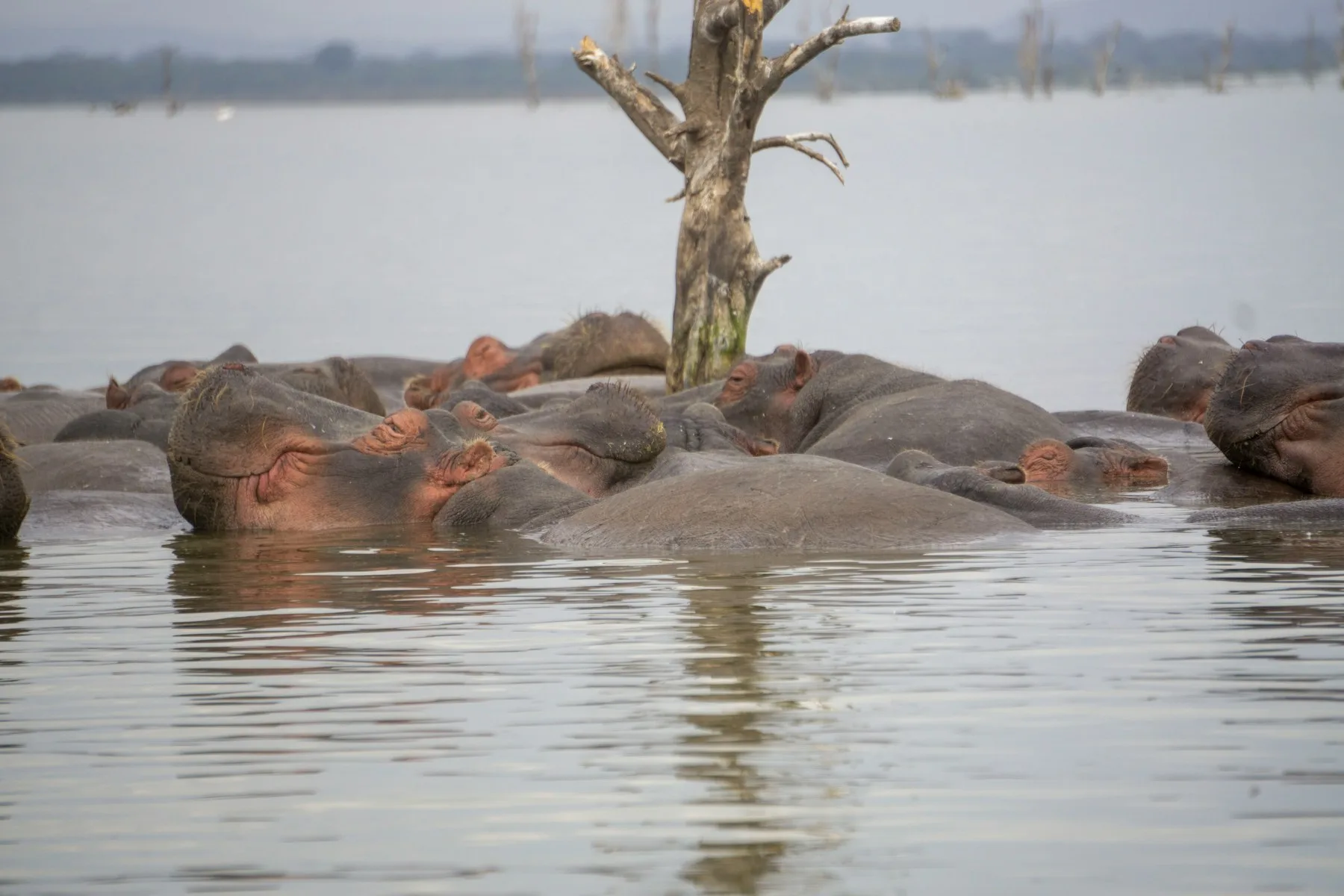
The safari value comes from contrast. A boat changes the viewing angle and soundscape after days on dusty roads. Birdlife can be excellent, with fish eagles often becoming the memory travellers carry home. Hippos are part of the lake, but they are powerful wild animals. A responsible operator does not crowd them or promise a close photograph.
Naivasha also acts as a base for different activities:
| Activity | What it adds | What to confirm |
|---|---|---|
| Boat excursion | Waterbirds, lake perspective, hippos at a safe distance | Life jackets, weather decision, boat condition, duration and operator |
| Hell's Gate cycling or walking | Exercise, cliffs, geothermal landscape and time outside the vehicle | Current trail access, bicycle condition, guide, heat, water and return plan |
| Managed wildlife walk | Ground-level views of herbivores in a controlled setting | Property rules, guide, wildlife present and what the fee includes |
| Birding | Slower observation around different habitats | Specialist guide, binoculars, start time and access permissions |
| Rest afternoon | Recovery before Nakuru and the Mara | Pool, garden, meal times and child supervision |
Accommodation varies from large lakeside resorts to smaller lodges, private houses and farm-style stays. Position matters. A property on Moi South Lake Road may suit Hell's Gate, while another part of the lake may change the driving time. Ask for the exact property rather than accepting “Naivasha lodge” as enough detail.
Hell’s Gate deserves its own decision
Hell's Gate National Park is not a miniature Mara. Its appeal is the freedom to experience dramatic Rift Valley scenery through approved walking and cycling areas. Cliffs, towers, volcanic features and geothermal activity give the day a completely different identity.
KWS lists hiking, cycling and rock climbing among the park's activities and sets general wildlife and road safety rules. Conditions can change, so confirm the route that is open on the day. Heat, wind, rain and geothermal infrastructure affect the experience. Carry water and sun protection, use a well-maintained bicycle, and do not assume every traveller should cycle the full distance.
Children, older travellers and anyone with knee or back concerns can enter by vehicle and choose shorter walks. A support vehicle can preserve the experience without turning it into a test. Wildlife remains wild even in a park known for active exploration, so instructions from rangers and guides take priority.

Lake Nakuru is the compact wildlife chapter
Lake Nakuru National Park protects the lake and a ring of grassland, woodland and rocky terrain. KWS describes it as a sanctuary for both black and white rhinos. That makes it a valuable addition to a first Kenya safari, especially when the Mara route does not include another protected rhino area.
White rhinos are grazers and may be visible on open ground. Black rhinos browse and can disappear into cover. A sighting is never guaranteed, and security may shape how information is shared. Buffalo, giraffe, zebra, antelope, baboons and predators may also appear, while the lake and forest support varied birds.
Flamingos need honest expectations. Lake Nakuru's historic images created the idea of a permanent pink shoreline, but flamingo distribution changes with water levels, chemistry and food across the Rift Valley lakes. KWS continues to monitor those movements. Come for a complete park, not a recreated postcard.
| Nakuru expectation | Honest planning response |
|---|---|
| “We will see thousands of flamingos” | Numbers move. Treat any large congregation as a natural event, not an inclusion. |
| “Rhinos are guaranteed” | The park protects both species, but vegetation and movement still control the sighting. |
| “One hour is enough” | Entry, viewpoints, wildlife searches and road conditions need a real game-drive window. |
| “A city hotel is the same as staying in the park” | It can be good value, but gate time and early access differ. |
| “Nakuru and Naivasha are the same lake experience” | Nakuru is a national-park game drive. Naivasha is an activity and wetland base. |
Give the Masai Mara the largest share
The Mara is where this route slows down again. Three nights provide two full wildlife days. Four nights allow a reserve and conservancy split, specialist photography, a balloon morning or simply more patient observation. Five can suit a migration-focused or slow safari when the budget supports it.
Location controls the experience. A Talek-area camp, western Mara Triangle lodge and private conservancy property do not share the same transfer times or activity rules. The name “Masai Mara” is too broad for a quote. The exact camp, gate, airstrip and planned driving area belong in the itinerary.
Use the Masai Mara safari guide to compare reserve sectors, then read the guide to where to stay in the Masai Mara before choosing a property. The Lake Nakuru National Park guide and Lake Naivasha guide will give the lake chapters the same destination-level depth.
Road safari, fly-out or hybrid?
The lakes make this a natural road itinerary. A private driver-guide can collect the travellers in Nairobi, carry luggage without light-aircraft limits and keep one person responsible for the route through Naivasha, Nakuru and the Mara.
The strongest hybrid uses the road to reach the Mara, then a flight back to Nairobi. It preserves the geographic logic of the lakes and removes the longest final road sector. Flying into the Mara first and driving back through the lakes is possible, but it reverses the build-up.
| Transport plan | Time and comfort | Luggage | Guide continuity | Best use |
|---|---|---|---|---|
| Road throughout | More time in the vehicle, full landscape progression | More flexible | One guide can stay throughout | Value, families, photographers with equipment |
| Road to Mara, fly out | Removes final long return | Light-aircraft limits apply at the end | Road guide may finish at the Mara | Shorter premium route |
| Fly to Mara, road back | Fast start in the Mara | Limits apply at the beginning | New road arrangements may start later | Fixed Mara booking or air connection |
| Shared group road safari | Lower per-person transport cost | Usually manageable | Group schedule controls stops | Sociable, budget-conscious travellers |
Ask whether the vehicle remains private, how many window seats it has, who handles the Naivasha activities, whether the Nakuru park vehicle is the same one, and where the Mara guide handover occurs if a flight is used.
Where should you stay?
At Naivasha, decide between lakeside atmosphere, access to Hell's Gate and a quiet private setting. Large resorts often have pools, broad grounds and family facilities. Smaller properties can feel personal but may have fewer backup services. A room with a lake view does not automatically have safe direct lake access.
At Nakuru, an inside-park lodge protects early game-drive time and reduces gate movement. Gate-area or city accommodation can lower cost and add urban convenience. The trade-off is the drive and entry process. If the group reaches Nakuru late and leaves early, a park stay may be worth more than an extra room feature.
In the Mara, choose the ecosystem position first and room style second. A beautiful tent far from the intended driving area can cost hours each day. Compare reserve properties, private conservancies, family rooms, pools, airstrip transfers, vehicle sharing and whether conservancy or reserve visits are included.
What travellers say after this route
Public trip reports are useful when they describe trade-offs rather than declare one universal winner. These are exact excerpts linked to the original discussions.
“Lake Nakuru has very few flamingos left so if you expect a massive amount, you’ll be disappointed.”
The same traveller still found abundant birdlife and considered one night enough. That is a better expectation than booking for an old postcard. Read the original discussion.
“we enjoyed tremendously our bike ride in Hells Gate National Park nearby.”
Naivasha may earn its place through activity contrast rather than the intensity of its wildlife viewing. Read the original discussion.
“In the Mara, wildlife is so abundant , we did 3 and wished we have more time.”
That is why the lake chapters should not take the third Mara night. Read the original discussion.
Another recent traveller gave the most useful route warning: “You may end up spending a couple of days just transferring from one town to another.” Their conclusion was to add time rather than keep compressing the same list. Read the full trip report.
These opinions differ because people value activities differently. The lesson is not that Naivasha or Nakuru is always worth including. It is that each needs a specific reason and the Mara needs protected time.
When should you travel?
The route operates throughout the year, but conditions change the character of each stop. Drier periods can make some roads easier and concentrate wildlife, while dust increases and popular Mara sectors can be busy. Wetter periods bring greener landscapes, dramatic skies, migrant birds and possible muddy tracks.
Flamingos and other waterbirds respond to lake conditions rather than a tourism calendar. Hell's Gate activity comfort depends on heat, wind and rain. Mara migration movement follows rain and grazing, and river crossings cannot be scheduled.
| Travel condition | Naivasha | Nakuru | Mara | Planning response |
|---|---|---|---|---|
| Dry, sunny spell | Good for boating and cycling, with strong sun | Dust and easier road circuits | Productive water and predator searches | Start early, carry water and use sun protection |
| Green season | Lush wetland and birding | Green woodland and variable lake edge | Calving, resident wildlife and dramatic skies | Keep road timing flexible and pack rain layers |
| Peak migration interest | Calm contrast before the Mara | Useful rhino chapter | Higher demand and possible vehicle pressure | Book early and give the Mara enough nights |
| High lake or shifting bird conditions | Shoreline and boat routes can change | Flamingo numbers may move | Little direct effect | Ask about current conditions without demanding guarantees |
Who should skip Lake Nakuru?
Skip Nakuru when the trip has only four or five nights and predators or migration are the overriding goal. Use Naivasha as one active break and give the saved night to the Mara. Also consider skipping it if another part of the itinerary already includes strong rhino conservation, such as Ol Pejeta or Lewa.
Keep Nakuru when rhinos matter, when the travellers enjoy birds, or when a compact game drive makes the road progression more interesting. It can be especially rewarding for first-time visitors who have never seen a rhino in the wild.
Who should skip Lake Naivasha?
Skip Naivasha when everyone wants conventional vehicle-based wildlife and nobody is interested in boating, cycling, walking, birding or a slower resort day. Driving straight to Nakuru can simplify the route.
Keep it when children need a different rhythm, when the group enjoys active days, when a gentle first stop after flying is valuable, or when three game-drive destinations in succession would feel repetitive. Naivasha succeeds because it is different.
Safety and responsible travel
On Lake Naivasha, use a reputable boat operator, wear the supplied life jacket and accept a cancellation when wind or weather makes the trip unsafe. Keep distance from hippos and follow lodge escort rules after dark. Do not walk along an unfamiliar shore because it looks quiet.
At Hell's Gate, follow KWS instructions, stay on open approved routes and carry enough water. A bicycle should have working brakes and tyres before departure. Respect wildlife distance even where walking or cycling is allowed.
At Nakuru and the Mara, remain in the vehicle except at designated places, keep noise low, follow speed and road rules, and never ask a guide to crowd an animal. A rhino, leopard or riverbank is not improved by one more vehicle pushing closer.
Responsible boat and walking choices also include the people providing them. Ask who receives the activity fee, whether the guide is trained, what happens to waste and how wildlife disturbance is managed.
What should the safari quote include?
A clear quote names every property, room type, meal plan, transport sector, activity, park fee and vehicle arrangement. “Lake Naivasha boat ride” is incomplete without duration, pickup point and whether the boat is private. “Masai Mara game drives” is incomplete without the property location and shared or private vehicle policy.
| Quote line | Details that should appear |
|---|---|
| Accommodation | Exact property, room type, occupancy, child policy and meal plan |
| Road transport | Vehicle type, private or shared use, pickup time and guide continuity |
| Naivasha | Boat duration, life jackets, walking or cycling fee, guide and transfers |
| Lake Nakuru | Park entry days, game-drive windows and overnight location |
| Masai Mara | Reserve or conservancy access, entry days, vehicle sharing and airstrip transfer |
| Flight, if used | Route, likely stops, baggage limit, taxes and city transfer |
| Exclusions | Drinks, tips, optional activities, insurance and personal expenses |
Use the Kenya safari cost guide to understand the main cost drivers and the Kenya safari packing list for clothing, dust protection, binoculars and light-aircraft preparation.
Booking checklist
- Decide whether the trip has five, six or seven safari nights.
- Give the Mara at least three nights.
- Name the reason for Naivasha: boat, Hell's Gate, walking, birds or rest.
- Name the reason for Nakuru: rhinos, birds, scenery or road progression.
- Choose one-night Nakuru or a day trip from a Naivasha base.
- Confirm the exact hotel and its position at every stop.
- Confirm private or shared vehicle use.
- Confirm which guide stays with the travellers throughout the road circuit.
- Check boat safety, bicycle condition and current activity access.
- Decide whether to fly out of the Mara.
- Protect the international departure with a realistic buffer.
- Put all inclusions, exclusions and cancellation terms in writing.
Frequently asked questions
How many days do I need for the three destinations?
Use six safari nights for the strongest first trip: two in Naivasha, one at Nakuru and three in the Mara. Five nights works with one night at each lake and three in the Mara.
Is one night enough at Lake Nakuru?
Yes for most multi-park routes, provided arrival and departure times create a real game-drive window. Birders and photographers may choose two.
Is one night enough at Lake Naivasha?
One night allows one main activity. Two nights are better for Hell's Gate plus a boat excursion or a genuine rest day.
Can Lake Nakuru be a day trip from Naivasha?
Yes. It reduces hotel changes but creates a longer day. A private vehicle and an early start make it more practical.
Will I see flamingos at Lake Nakuru?
Flamingos occur across Rift Valley lakes, but their numbers move with water and food conditions. A large congregation cannot be guaranteed.
Will I see rhinos at Lake Nakuru?
The park protects black and white rhinos and is one of Kenya's important rhino destinations. Any individual sighting still depends on wildlife movement, vegetation and conditions.
Can children cycle in Hell’s Gate?
It depends on age, confidence, heat, route conditions and bicycle availability. A vehicle-supported visit or shorter walk may be safer and more enjoyable.
Should I fly from the Mara to Nairobi?
A flight protects the last day but costs more and brings baggage limits. It is especially useful before a city or international-flight connection.
Is this route good for a honeymoon?
Yes when hotel changes are limited, rooms are chosen carefully and at least one stop includes private time. A fly-out from the Mara can improve the ending.
Can NLS customise the itinerary?
Yes. Nights, hotel categories, private vehicle, Naivasha activities, Nakuru stay and Mara flight can all be adjusted around the travellers.
Let the journey grow in scale
The most satisfying version begins quietly. Naivasha introduces water, birds and movement. Nakuru concentrates the search around rhinos, woodland and the changing lake. The Mara then opens the horizon and gives wildlife enough time to stop being a checklist.
Keep the route only if all three chapters matter. If one exists only because it appeared in a standard itinerary, remove it and deepen the places that remain. A good Kenya safari is measured in usable mornings, unhurried sightings and energy left to care about what happens next.
Tell us what each chapter should do for you
Share the dates, travellers, wildlife priorities, activity interests, room style and preferred transport. We will build the route around your pace.