
Kenya Safari Animals: The Complete Wildlife Guide by Habitat and Park
A safari becomes richer when the first question changes from “What is it?” to “Why is it doing that here?”
Kenya safari animals include the Big Five, famous plains herds, rare northern specialists, primates, hundreds of bird species and marine wildlife. The Mara leads for open-plains predators and migration ecology, Amboseli for elephant families, Tsavo for red elephants and vast habitat, Laikipia for rhinos and northern species, and lakes and forests for entirely different communities.
- Kenya safari animals by habitat
- The Big Five
- Lions in Kenya
- Leopards and where to look
- Cheetahs on open plains
- Elephants in Amboseli and Tsavo
- Black and white rhinos
- African buffalo
- Hyenas, wild dogs, hippos and crocodiles
- Giraffes in Kenya
- Wildebeest, zebra and antelopes
- Samburu and northern species
- Small mammals and nocturnal life
- Kenya’s primates
- Birds and Rift Valley lakes
- Responsible wildlife watching
- How to choose parks for Kenya safari animals
- End with an ecosystem conversation
- Independent wildlife photography video
- Traveller opinions
- FAQs
Kenya safari animals by habitat
Open Mara grassland supports grazers and visible predators. Amboseli wetlands concentrate elephants and birds beneath a dry basin. Tsavo’s red soil, rivers and bush create vast elephant country. Laikipia combines rhino conservation with dry-country specialists, while forests, lakes and coast add communities that plains safaris miss.
Choose habitat first. A leopard may occur in several parks, but woodland, riverine cover and guide knowledge shape the search. A checklist that ignores ecology produces more driving and less understanding.
| Habitat | Characteristic animals | Strong examples |
|---|---|---|
| Open grassland | Lion, cheetah, wildebeest, zebra | Mara ecosystem |
| Wetland and dry basin | Elephant, buffalo, waterbirds | Amboseli |
| Red-soil savanna and bush | Elephant, lion, giraffe | Tsavo |
| Laikipia conservancy | Rhino, wild dog, Grevy’s zebra | Ol Pejeta, Lewa and neighbours |
| Rift lakes | Flamingos, pelicans, hippo | Nakuru, Naivasha, Bogoria |
| Forest | Primates, forest birds, elephant | Aberdares, Kakamega, Mount Kenya |
A quick guide to 25 Kenya safari animals
This is a route-planning reference, not a sightings guarantee. “Often visible” means the habitat and population can make encounters reasonably frequent on a well-paced visit. “Specialist” means the route must deliberately include the right range.
| Animal | Strong route possibilities | What to watch |
|---|---|---|
| Lion | Mara, Tsavo, Amboseli, Nairobi, Meru and Laikipia | Pride greetings, cub care, shade and territorial behaviour |
| Leopard | Mara, Samburu, Laikipia, Tsavo and Meru | Riverine cover, alarm calls and stored prey |
| Cheetah | Mara, Laikipia, Samburu and Amboseli | Open ground, scanning, cub care and hunting preparation |
| African elephant | Amboseli, Tsavo, Samburu, Meru and Laikipia | Family decisions, greetings, feeding and water routes |
| Black rhino | Ol Pejeta, Lewa, Nairobi and Lake Nakuru | Browsing, hooked lip and solitary movement |
| White rhino | Ol Pejeta, Solio and Lake Nakuru | Grazing, square lip and social resting |
| African buffalo | Widespread in major savanna parks | Herd structure, mud, oxpeckers and older bulls |
| Spotted hyena | Mara, Amboseli, Tsavo and many conservancies | Clan communication, cub dens and active hunting |
| African wild dog | Laikipia, Samburu, Meru and parts of Tsavo | Pack greetings and wide daily movement |
| Hippopotamus | Mara rivers, Amboseli wetlands, Mzima Springs and Rift lakes | Water groups by day and grazing routes after dark |
| Nile crocodile | Mara River, Ewaso Ng’iro, Galana and other permanent waters | Basking, current and patient ambush positions |
| Masai giraffe | Mara, Amboseli, Tsavo and Nairobi | Irregular leaf-like pattern and browsing height |
| Reticulated giraffe | Samburu, Buffalo Springs and northern Laikipia | Clean geometric pattern and dry-country feeding |
| Rothschild’s giraffe | Lake Nakuru and managed conservation populations | Pale lower legs and conservation context |
| Plains zebra | Widespread grassland and savanna | Family units, grazing partnerships and migration |
| Grevy’s zebra | Samburu, Buffalo Springs and Laikipia | Narrow stripes, white belly and water dependence |
| Gerenuk | Samburu, Buffalo Springs, Shaba and dry northern parks | Standing browse and long neck |
| Beisa oryx | Samburu, Buffalo Springs, Shaba and northern Kenya | Heat tolerance, horns and sparse-country movement |
| Wildebeest | Mara and parts of Amboseli | Rain-led grazing movement, calves and crossings |
| Topi | Mara ecosystem | Termite-mound sentinels and dark leg markings |
| Eland | Mara, Tsavo, Nairobi and other open habitats | Large size, dewlap and surprising jumping ability |
| Lesser kudu | Tsavo, Meru and northern dry bush | Woodland edges, vertical stripes and shy movement |
| Sable antelope | Shimba Hills | Specialist range and dark adult males |
| Roan antelope | Ruma National Park | Kenya’s only indigenous population and open woodland |
| Mountain bongo | Aberdares and Mount Kenya forests | Extremely rare forest specialist, never a checklist promise |
The Big Five
Lion, leopard, elephant, rhino and buffalo became the Big Five because trophy hunters considered them dangerous to hunt, not because they are objectively Kenya’s five best animals. Safari marketing retained the phrase, while conservation changed the ethical purpose of seeing them.
Use the list as an introduction, not a finish line. A Big Five route may require rhino habitat and enough nights for elusive cats. Never pressure a guide to crowd, off-road illegally or disturb an animal merely to complete the set.
Lions in Kenya
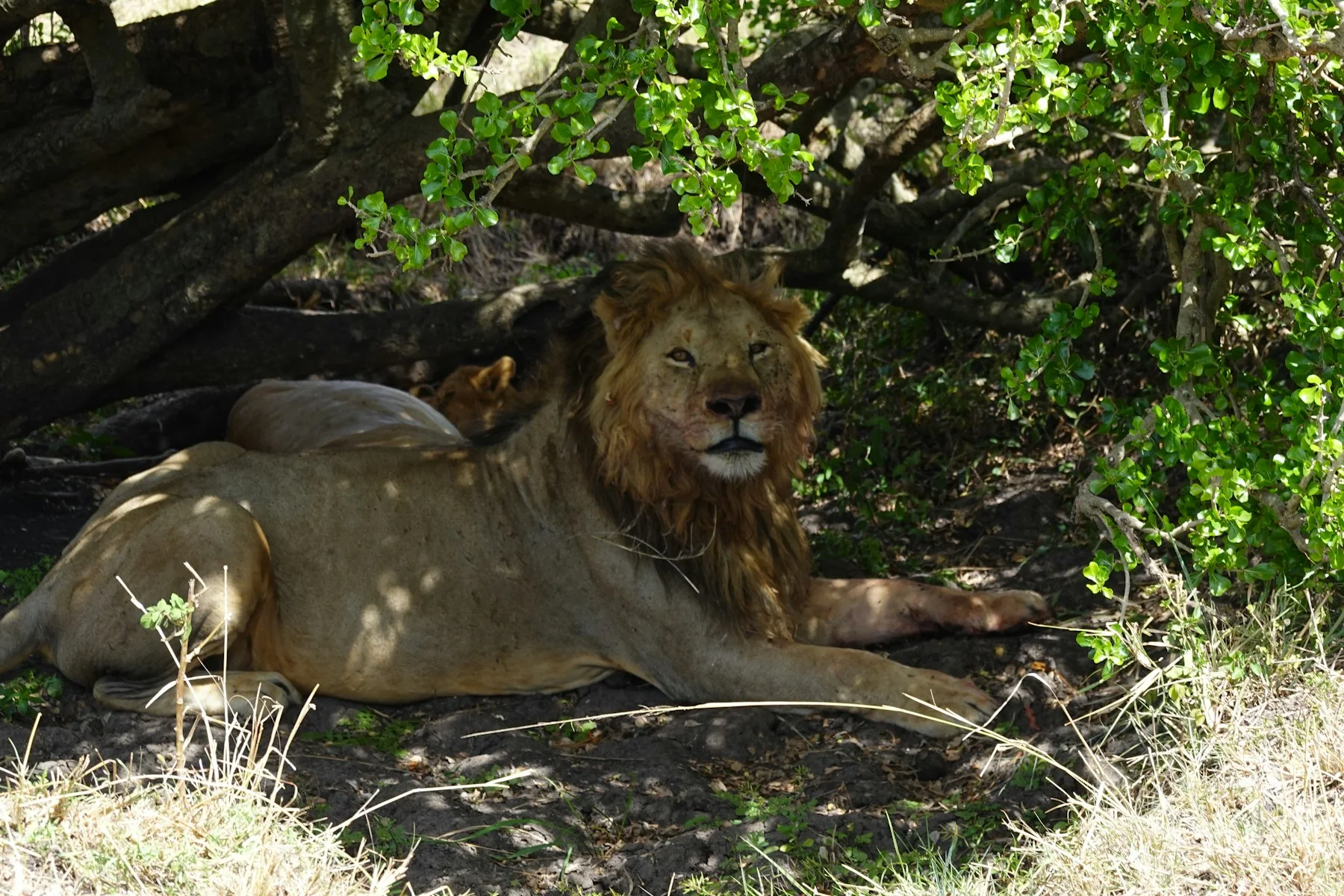
The Mara, Amboseli, Tsavo, Nairobi and Laikipia all hold lions, with density and visibility varying. Watch greeting, grooming, nursing, territorial marking and the way pride members divide shade. Most of a lion’s day can involve resting.
Males may form coalitions, females form the core of prides, and cub survival depends on food and social stability. Do not interpret every yawn as aggression. A guide should explain posture while maintaining distance and an exit route.
Leopards and where to look
Leopards use riverine woodland, rocky country and cover across many Kenyan ecosystems. The Mara, Samburu, Laikipia and Tsavo can produce sightings, but the cat’s camouflage and solitary habits make patience essential.
Look for alarm calls, impala attention, tracks and prey stored in trees. A leopard ringed by vehicles may leave or lose a hunt. Ethical guides take turns, avoid blocking and accept when the cat needs space.
Cheetahs on open plains
Cheetahs favour visibility for hunting and for detecting stronger predators. The Mara and some Laikipia or Amboseli landscapes can suit them. Mothers with cubs balance hunting with the risk of lions, hyenas and eagles.
Do not crowd a cheetah preparing to hunt or use the vehicle as a forced lookout. Roof-climbing behaviour can occur, but guests should follow guide instructions and never lure or position for it. The chase is not a guaranteed performance.

Elephants in Amboseli and Tsavo
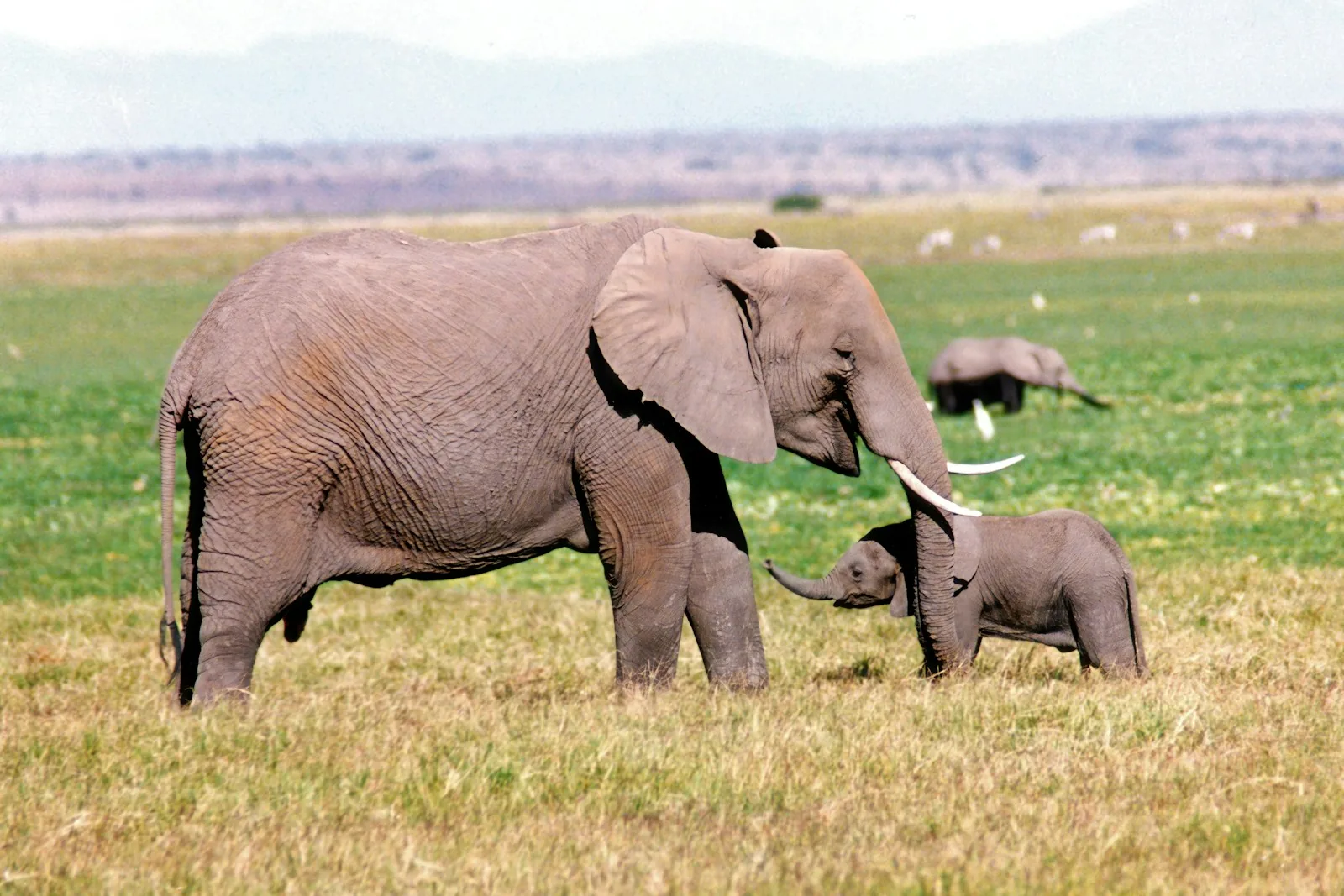
Amboseli is known for well-studied family groups moving between dry ground and wetlands, sometimes beneath Kilimanjaro. Tsavo holds a vast population shaped by red soil, long movement routes and broad ecosystem needs. Samburu and Laikipia add river and dry-country context.
Watch calves, allomothers, greetings, feeding and decisions at water. A herd crossing the road has right of way. Give bulls and families generous space and never allow the vehicle to separate a calf.
Black and white rhinos
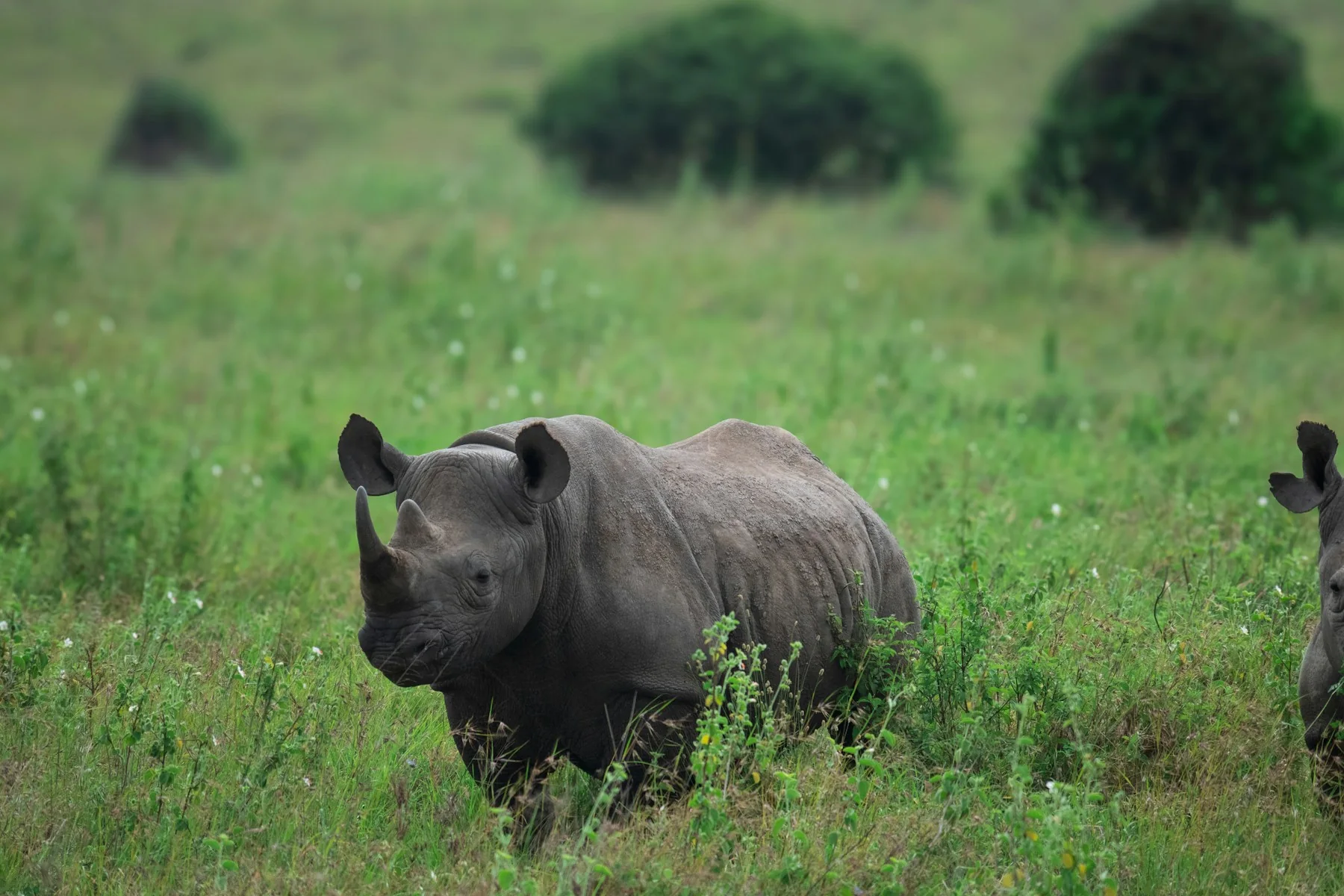
Black rhinos browse and carry a hooked upper lip; white rhinos graze with a broad square lip. Colour is not the reliable distinction. Kenya protects populations in guarded parks and conservancies including Ol Pejeta, Lewa, Nairobi and Lake Nakuru.
Security means current location details may be handled carefully. Do not demand sensitive information or fly drones. A rhino sighting is linked to intensive conservation, habitat, monitoring and difficult protection decisions.
African buffalo
Buffalo occur widely in grassland, woodland and wetland. Large herds can contain females, calves and males, while older bulls may form smaller groups. Oxpeckers, egrets and mud reveal relationships with other species.
Buffalo are powerful and unpredictable at close range. Stay in the vehicle and follow the guide. A resting herd can occupy a road for a long time; patience is safer than pressure.
Hyenas, wild dogs, hippos and crocodiles
Spotted hyenas
Spotted hyenas are skilled hunters with complex female-led clans, not merely scavengers waiting behind lions. Listen for whoops before dawn, watch greeting ceremonies and notice how cubs interact near a den. Mara grasslands often make them visible, but they live across many Kenyan savannas.
African wild dogs
Wild dogs range widely and may disappear from one conservancy for weeks before returning. Laikipia and parts of northern Kenya offer important possibilities, while Meru and Tsavo can also produce rare encounters. A pack greeting or coordinated hunt can be a trip highlight, but no short itinerary should be sold around a guaranteed sighting.
Hippos and Nile crocodiles
Hippos spend hot daylight hours in rivers, springs and lakes, then move onto land to graze after dark. Crocodiles use banks, pools and river current with extraordinary patience. Both deserve distance. Never stand between a hippo and water, and do not approach an unprotected riverbank because no animal appears visible.
Mara River crossings make crocodiles famous, while Mzima Springs gives Tsavo West a very different water story. Amboseli wetlands, the Ewaso Ng’iro and Rift Valley lakes show how permanent water reorganises the entire wildlife community.
Giraffes in Kenya
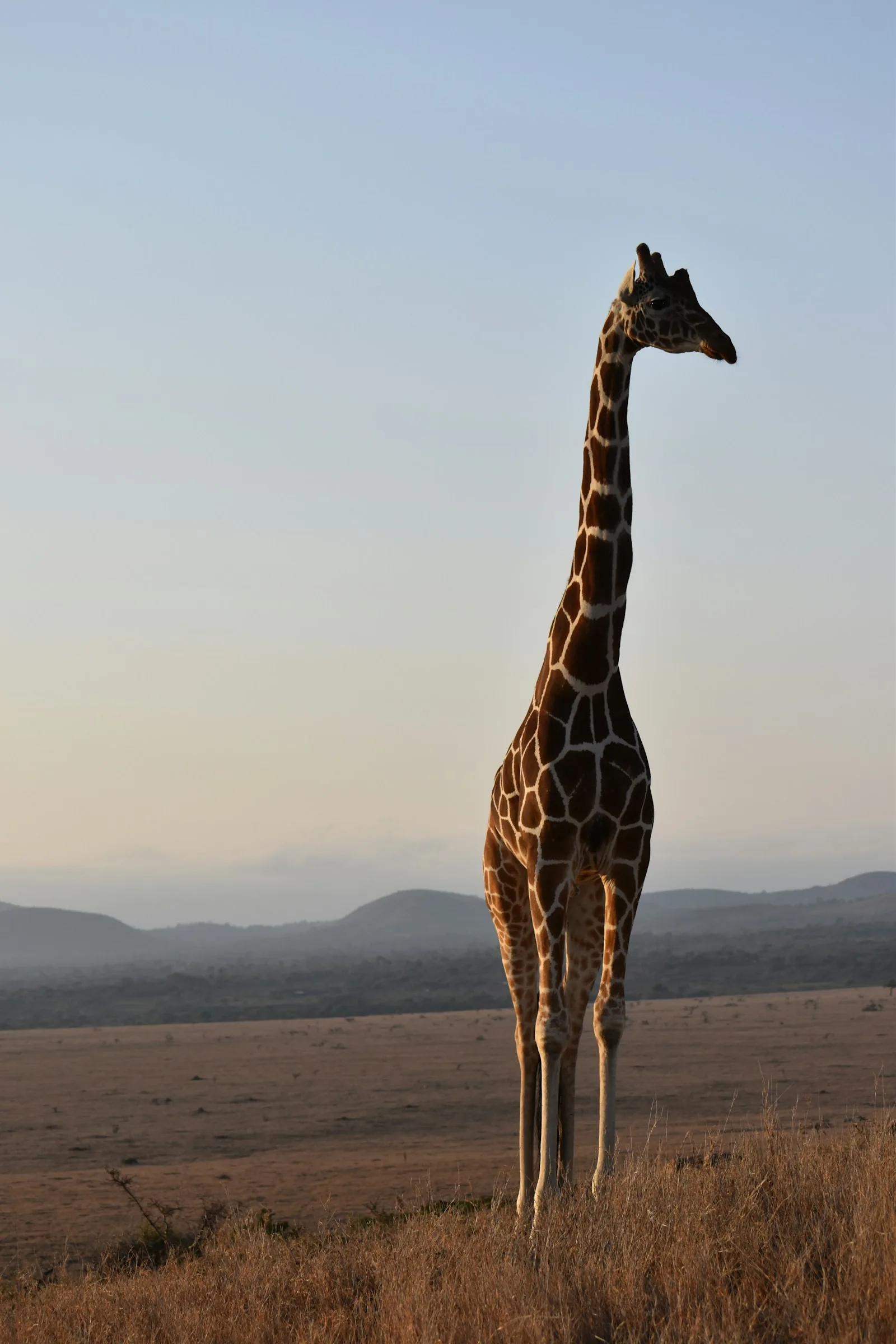
Kenya holds Masai giraffes, reticulated giraffes and Rothschild’s giraffes in different ranges and conservation contexts. Pattern is helpful, but location and expert identification matter. Northern Kenya is especially associated with reticulated giraffe.
Watch browsing height, tongue use, necking and the careful stance used to drink. Giraffes shape vegetation and move seeds. Their visibility should not make them background between cats.
Wildebeest, zebra and antelopes
Wildebeest and zebra move through the Serengeti-Mara ecosystem in response to rain and grazing. River crossings are uncertain episodes, not scheduled events. Resident plains game remains even when the largest herds are elsewhere.
Learn topi, hartebeest, eland, impala, gazelles, waterbuck, oryx and kudu by body shape and habitat. Predator stories depend on these grazers and browsers. The plains are not empty between hunts.
Samburu and northern species
Samburu and northern Kenya introduce Grevy’s zebra, reticulated giraffe, beisa oryx, gerenuk and Somali ostrich, often grouped loosely as northern specials. Riverine habitat along the Ewaso Ng’iro draws elephants and predators through a dry landscape.
Species ranges overlap and shift, so a label is not a fenced collection. Combine Samburu or Laikipia with a southern park to make Kenya’s ecological diversity visible.
Small mammals and nocturnal life
Mongooses, hyraxes, jackals, bat-eared foxes, servals, genets, aardwolves and porcupines can transform a drive. Conservancies permitting night drives may reveal species absent from the daylight checklist.
Night drives require local permission and responsible spotlight use. Never corner or repeatedly illuminate an animal. Ask the guide to include tracks, dung, insects and plants during quiet periods.
Kenya’s primates
Baboons and vervet monkeys occur widely, while colobus, Sykes’ monkeys and other primates depend on forest and coastal habitats. Behaviour can be fascinating until feeding by people creates aggression and dependency.
Never feed primates or leave food accessible. At Diani, road and canopy fragmentation affect colobus. In forests, keep distance and follow local rules rather than pursuing close portraits.
Birds and Rift Valley lakes
Kenya’s bird diversity includes raptors, hornbills, rollers, bee-eaters, bustards, waterbirds and forest specialists. Rift lakes can hold flamingos, pelicans and other congregations whose numbers move with water chemistry and food.
A bird-focused guide can identify calls and habitat before the bird appears. Even non-birders usually remember a lilac-breasted roller, secretarybird or fish eagle. Give binoculars a permanent place beside the camera.
Responsible wildlife watching
Stay on legal roads, respect distance, keep voices low and never feed or call animals. Do not block crossings, dens or hunts. Vehicle numbers can change behaviour even when each driver believes one more car is harmless.
Avoid captive-wildlife handling and claims of guaranteed encounters. Report serious rule-breaking safely. The best sighting leaves the animal able to continue the same choice it was making before the vehicle arrived.
How to choose parks for Kenya safari animals
First-time visitors can pair the Mara with Amboseli or a rhino conservancy. Coast travellers can use Tsavo. Return visitors might choose Samburu, Meru, the Aberdares, Laikipia or a bird-rich lake. Two well-paced habitats usually teach more than four one-night stops.
Name the target as behaviour, not only species: elephants at water, cheetah family life, rhino conservation or northern adaptation. That gives the guide a real story to search for and leaves room for the unplanned animal that becomes the favourite.
Give each base two mornings where possible. Dawn offers cooler activity and fresh tracks, but the second morning matters because wildlife does not repeat. An afternoon arrival and one departure drive should not carry the full expectation for a park.
A private vehicle helps specialist interests. Birders can stop for a small raptor, photographers can wait for clean behaviour and families can return before exhaustion. Shared vehicles suit social travellers who accept a common schedule. The vehicle choice changes wildlife depth as much as the park choice.
Keep a field notebook with date, habitat, species, age, behaviour and guide explanation. At the end, the notes reveal an ecosystem: who ate grass, who followed water, who sounded an alarm and who benefited. The safari becomes more than a gallery of names.
| Wildlife priority | Strong route idea |
|---|---|
| Open-plains predators | Mara with enough mornings |
| Elephant behaviour | Amboseli plus Tsavo contrast |
| Rhino conservation | Laikipia or Nakuru addition |
| Northern specialists | Samburu and Laikipia |
| Birds and wetlands | Rift lakes plus Amboseli |
| Forest wildlife | Aberdares, Mount Kenya or Kakamega |
End with an ecosystem conversation
Discuss the wildlife list with the guide on the final evening. Ask which sighting changed with season, which animal was unusual for that habitat and which behaviour you misunderstood at first. This conversation often becomes the trip’s best lesson and gives future photographs and memories accurate context.
Compare the first day’s target list with the final favourite moment. Many travellers discover that a jackal interaction, elephant greeting, hornbill call or patient hour at water mattered more than completing the Big Five. That change is evidence of a deeper safari.
An independent Masai Mara wildlife photography journey
Watch Wild and Free Victoria’s independent Masai Mara wildlife photography video on YouTube. The value is not a count of animals. It shows equipment, time in the vehicle and the rhythm of watching wildlife through a photographer’s eyes. Use it for atmosphere, not as a guarantee of the same sightings.
What travellers say after the trip
These are exact words from public reviews and discussions. Each person had their own route, budget and expectations, so the value is in the detail rather than treating one experience as a promise.
Seeing wildlife like that in person is absolutely breathtaking.
A traveller reflecting on parks across Kenya rather than one famous reserve.
I saw herds of elephants in Tsavo East & really enjoyed Mzima Springs in Tsavo West.
A traveller recalling how animals and landscape created different Tsavo memories.
The animal viewing was splendid, and it wasn’t as expensive as I’d feared.
A Kenya traveller describing the wildlife experience after a completed trip.
they were all incredible!
A traveller looking back on the Masai Mara, Nairobi National Park and Samburu as three distinct wildlife experiences.
its not fair or ethical to promise a certain number or guarantee certain animal sightings.
A recent Kenya safari traveller putting uncertainty at the centre of responsible expectations.
I can get locked in on an animal and be perfectly content spending an hour or more with that animal
A traveller explaining why time with one behaviour can matter more than racing toward another sighting.
Kenya wildlife questions
What animals can I see in Kenya?
Lions, elephants, buffalo, leopards, rhinos, cheetahs, giraffes, zebras, antelopes, hippos, primates, birds and marine life are among the possibilities.
Where can I see the Big Five?
The Mara and several conservancies offer possibilities, while rhino areas such as Ol Pejeta and Lewa strengthen a wider route. None is guaranteed.
Which park has the most animals?
That depends on season, habitat and definition. The Mara often delivers high plains density, while other parks offer distinctive species and behaviours.
Where are elephants best?
Amboseli is famous for visible family groups and research; Tsavo for vast red-soil elephant country.
Where can I see rhinos?
Ol Pejeta, Lewa, Lake Nakuru, Nairobi and other protected populations are key possibilities, subject to current management.
Can I see leopards?
Yes, but they are elusive. Good habitat, time and patient guiding improve chance without guaranteeing it.
What is the Great Migration?
A year-round movement of wildebeest and zebra through the Serengeti-Mara ecosystem, with Kenyan presence varying by rainfall and movement.
Are night drives available?
Usually in private conservancies rather than national parks or reserves, under local rules.
Can children enjoy animal watching?
Yes when drives are shorter, guides engage their interests and the itinerary includes rest.
Can NLS plan an animal-focused safari?
Yes. NLS can match habitats, seasons, private vehicles and pace to wildlife interests.
Sources and further reading
Official park, heritage, tourism, aviation and regulatory sources support the practical details in this guide.
Choose the story you want to watch unfold
Share the species, behaviours, season and pace that matter. We will build a Kenya route around habitats rather than promises.
Plan a wildlife-focused Kenya safari
Tell us dates, travellers, target species, photography interests, comfort and number of nights.