
Is the Masai Mara Safe?
For most organised safari visitors, yes. The risks that deserve attention are wildlife, road travel, remote medical access, malaria, weather and the handovers before and after the safari.
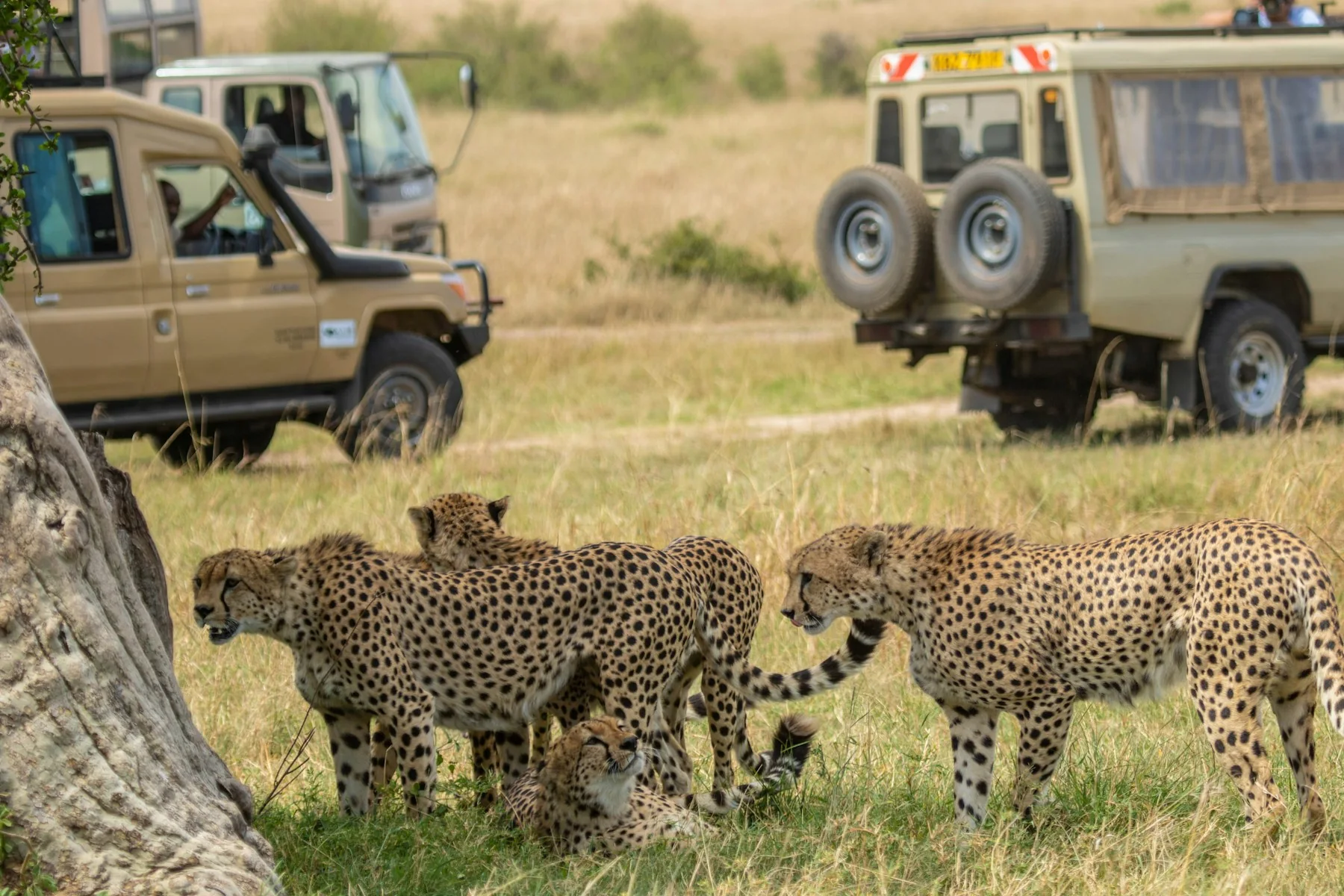
The first night in an unfenced Mara camp can feel wonderfully strange. A hippo grunts beyond the canvas. Something brushes the grass. Then an askari appears with a torch and walks you to dinner. That small ritual explains the answer to is the Masai Mara safe: the wilderness is real, and a good safari wraps it in routines that work when guests follow them.
The Masai Mara is not a zoo and no journey can be promised risk free. Yet an organised visit is highly structured. You travel with a driver-guide, sleep in a managed camp or lodge, remain in the vehicle around wildlife and use an escort after dark. The risks are easier to manage once you stop treating “Kenya” as one undivided place and look at each part of the journey.
- Where the real risks sit
- How to read Kenya travel advice
- Wildlife and game-drive safety
- Safety in unfenced camps
- Road and air travel
- Malaria, food and medical care
- Rain, floods and getting stuck
- Solo women and families
- Bookings, money and valuables
- Emergency plan
- Traveller experiences
- Safety questions
Where Masai Mara safari risks really sit
A traveller who is met at the airport, driven to a Nairobi hotel, collected by a known guide and checked into a recognised Mara camp faces a different risk pattern from someone arranging taxis on arrival, buying a last-minute safari from an unverified seller and attempting unfamiliar roads alone.
Inside the Mara, crime is usually not the question occupying the day. Wildlife, vehicle behaviour, heat, dust, illness and the distance from advanced medical care matter more. In Nairobi and during transfers, ordinary city precautions return. The safest itinerary connects those settings instead of leaving uncertain gaps.
| Part of the trip | Main concern | Practical protection | Confirm before travel |
|---|---|---|---|
| Airport and Nairobi | Unplanned transport, petty theft, protests or traffic disruption | Named pickup, secure hotel, low-key handling of cash and phones | Driver name, number, meeting point and backup contact |
| Nairobi to the Mara | Road collision, fatigue, darkness, rain and rough final roads | Daylight departure, maintained safari vehicle, realistic travel time | Vehicle type, seat belts, route and planned stops |
| Game drives | Wildlife, unsafe distance, standing at the wrong moment | Stay in the vehicle and follow the guide immediately | Licensed operator, trained guide and reserve-compliant vehicle |
| Camp or lodge | Wild animals moving through unfenced grounds | Attend briefing, use an escort after dark, never wander | Escort routine, room phone or radio and assembly point |
| Health event | Remote location and delayed advanced care | Insurance with evacuation, medicines, disclosed medical needs | Nearest clinic, evacuation procedure and insurer contact |
| Heavy rain | Flooded crossings, mud, delays and changed airstrip access | 4×4, guide judgement, itinerary margin and route flexibility | Who decides route changes and how missed services are handled |
This is why the Masai Mara booking guide begins with the operator, vehicle, accommodation and payment record. Safety starts long before the first lion.
How to read Kenya travel advisories without confusing Nairobi, the coast and the Mara
Government advisories often assign one overall caution level to Kenya, then identify higher-risk regions separately. The United States advises increased caution in Kenya and lists risks including crime, terrorism, civil unrest, health and traffic. The United Kingdom identifies specific areas near the Somalia border and parts of the northern coast where stronger advice applies. Australia’s advice also uses an overall caution level with higher levels for named regions.
The Masai Mara is in Narok County in south-western Kenya. It is not on the United Kingdom’s list of Kenya-Somalia border and northern-coast areas covered by its strongest warnings. That does not cancel the national advice, and it does not mean a protest, road disruption, health event or local incident can never affect the route. It means the reader should compare the actual itinerary with the advisory map instead of assuming that every warning applies equally everywhere.
Check the whole route
Include Nairobi, domestic airports, every road sector, the Mara and any coast extension. A safari destination can be calm while a transfer point is disrupted.
Read your own government
Insurance conditions and consular help can depend on the advice issued for your nationality and destination.
Recheck before each flight
Advisories, demonstrations, airport operations and weather can change after the booking was made.
The wording matters. “Exercise increased caution” is not the same instruction as “do not travel.” Read the regional boundaries, reasons, insurance implications and emergency contacts on the official page rather than relying on a social-media screenshot.
Wildlife safety on a Masai Mara game drive
A lion sleeping beside a vehicle may look indifferent. A buffalo may appear to be chewing and doing nothing at all. Their calm is not permission to approach. The official tourism safety guidance for Kenya tells visitors to follow rangers and guides and remain inside designated vehicles during game drives.
Stay seated when the guide asks, keep hands and equipment inside, and never climb out for a lower camera angle. Do not feed an animal, imitate calls or encourage a driver to crowd a sighting. If an elephant changes posture or a predator approaches, let the guide manage the engine, distance and exit. Sudden standing, shouting or leaning across the roof can change how an animal reads the vehicle.
- Leave the vehicle only where the guide says it is permitted.
- Keep children beside an adult and away from open doors.
- Use straps so phones and cameras do not fall outside.
- Do not ask the guide to break distance or track rules.
- Tell the guide before changing seats or standing.
- Never offer food to wildlife, even at a picnic site.
- Keep voices low during close sightings.
- Respect every instruction around elephants, buffalo and hippos.
The Narok County management plan exists to protect visitors, animals and habitat. Driving rules, opening hours and controlled activities are not obstacles to the experience. They are part of what makes close wildlife viewing possible without turning each sighting into a contest.

How safety works in an unfenced tented camp
Many Mara camps are unfenced by design. Zebra may graze between tents, hippos can leave water after dark and elephants may cross the grounds. That does not make a tented camp reckless. It makes the arrival briefing important.
Ask how to request an escort, whether the room has a phone, radio or whistle, where to meet in an emergency and what to do if an animal is outside. After dark, call or signal for an askari and wait. Do not decide that the dining tent is close enough to walk alone. Keep the canvas zipped, do not store food in the room unless the camp instructs you to, and never step outside because you heard an interesting sound.
| Situation | What to do | What not to do |
|---|---|---|
| Walking to dinner after dark | Request the camp escort and walk at the escort’s pace | Use a phone torch and go alone |
| Animal beside the tent | Stay inside, remain quiet and contact camp staff | Open the zip or step onto the deck for a photograph |
| Children in camp | Keep them with an adult and explain the rules in simple language | Let them run between rooms or approach monkeys |
| Food in the room | Follow the property’s storage rules | Leave fruit, snacks or wrappers where animals can smell them |
| Early departure | Arrange the escort and wake-up time the evening before | Walk to reception before staff arrive |
A solid room, raised tent or canvas tent does not remove the need for these rules. Ask about mobility too. Uneven paths, steps, low light and long distances between the room and dining area can matter more than the wall material.
Road safety, bush flights and self-drive decisions
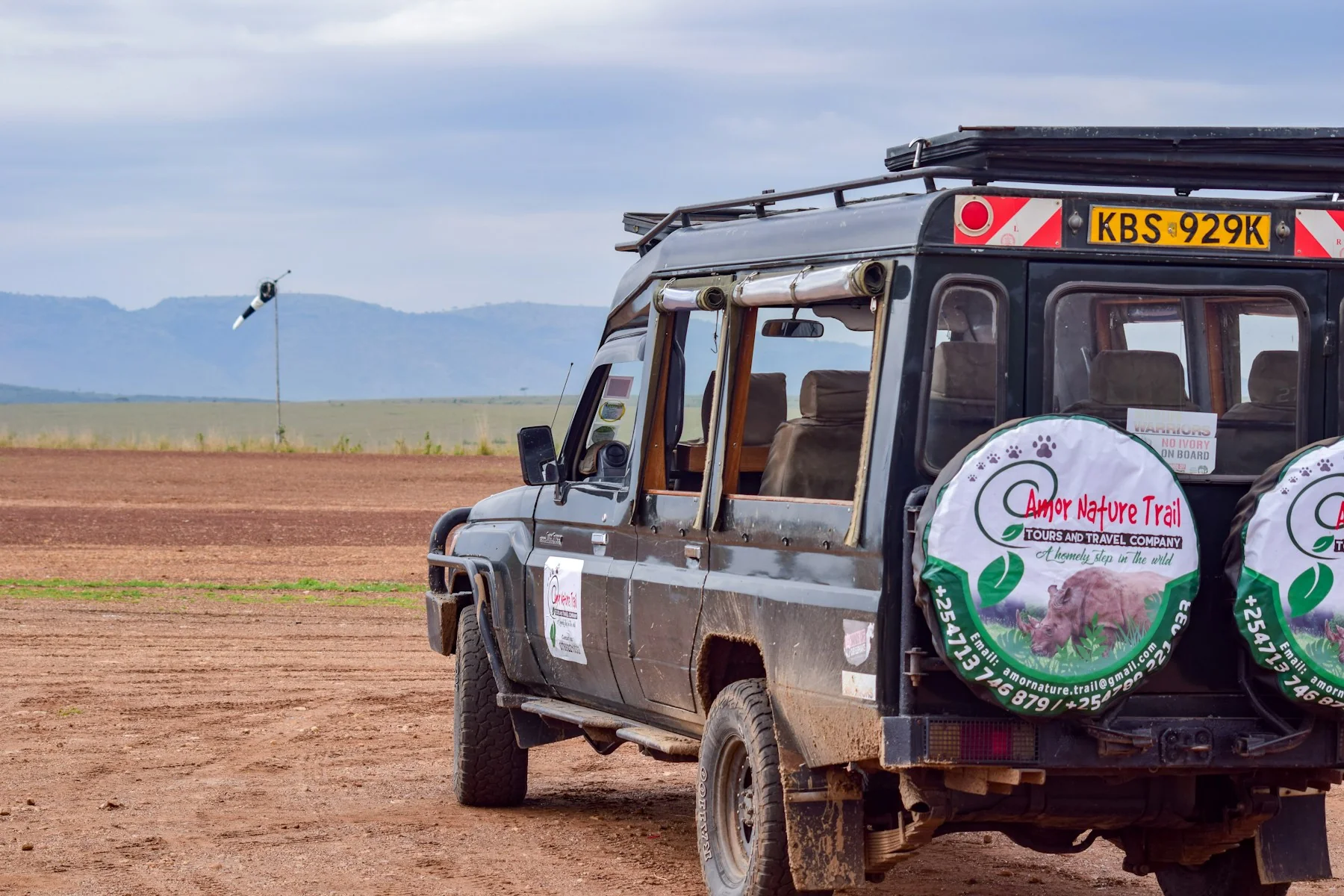
The Nairobi to Mara drive is a real travel day, not a short hotel transfer. It moves through busy highways, towns, escarpment sections and rougher roads near the reserve. Ask for a daylight start, a safari vehicle with working seat belts and a driver whose schedule allows rest. A quote that depends on racing toward the gate before closing time has begun with the wrong promise.
Rain can stretch the day. So can congestion, a puncture or a road closure. Carry water, essential medicine and a charged phone where you can reach them. If motion sickness is a concern, discuss medication with a clinician before the trip and choose a seat with a forward view.
A bush flight reduces road exposure but introduces its own planning. Confirm the airstrip, luggage limit, pickup and what happens if weather changes the schedule. The Nairobi to Masai Mara transport guide compares both choices.
If you do self-drive, verify the reserve’s current vehicle requirements directly, download offline maps, carry recovery equipment, avoid night driving and never rely on a phone signal as the only navigation or emergency plan.
Malaria, food, water and medical access in the Mara
The United States CDC includes Kenyan game parks below 2,500 metres in its malaria guidance and advises travellers to discuss prescription prevention for risk areas. Mosquito numbers can feel low on cool Mara mornings, but comfort is not a medical risk assessment. Take the full route, medical history, pregnancy status and travel dates to a qualified travel-health clinician early enough for any vaccine or medicine schedule.
Use repellent as directed, wear long sleeves and trousers in the evening, sleep under the room’s provided protection and keep taking prescribed medicine for the full instructed period. Fever during travel or after return deserves prompt medical advice with the Kenya travel history stated clearly.
Choose cooked food served hot, wash or sanitise hands and drink treated or sealed water supplied by the property. Tell the operator about allergies and dietary needs in writing, then repeat serious allergies at the camp. Carry essential prescription medicine in hand luggage with enough for delays.
| Before travel | In the Mara | For an emergency |
|---|---|---|
| Travel-health appointment based on the complete route | Take prescribed prevention exactly as directed | Insurance policy and assistance number stored offline |
| Medical conditions and allergies shared privately with the planner | Hydrate, use sun protection and manage dust exposure | Camp manager, driver and operator contacts |
| Enough prescription medicine plus a delay margin | Use safe food, water and mosquito precautions | Evacuation benefit that covers remote safari travel |
| Insurance checked for age, conditions and activities | Report symptoms early instead of waiting for Nairobi | Passport copy, medicine list and emergency contact |
The point of evacuation cover is not drama. The Mara is far from Nairobi’s advanced hospitals. Ask the insurer what “medical evacuation” means, who authorises it, whether air transport is included and whether pre-existing conditions change the cover.
Heavy rain, flooding and vehicle recovery
A dark cloud over the plains can be beautiful. It can also turn a firm track slippery in minutes. In May 2024, severe flooding led to evacuations from some Mara properties. That event is a reminder to treat river position, camp access and evacuation planning as practical questions, especially during wetter periods.
A responsible guide turns back from unsafe water, waits for another vehicle or changes the game-drive plan. Guests should never pressure the driver to cross because another vehicle did. Water depth, current, vehicle weight, the track below and the driver’s knowledge all matter.
Keep travel documents, medicine and electronics in a waterproof inner pouch. Build a sensible margin before an international flight. The Masai Mara weather guide explains rain patterns and what they mean for roads, flights and clothing.
Is the Masai Mara safe for solo women and families?
Solo travellers are common on safari. Once the airport transfer is arranged, much of the trip takes place with guides, camp staff and other guests. The decision is not simply private versus group. It is whether the handovers are clear, the guide and company are verifiable, and the traveller has a way to speak up if something feels wrong.
A solo woman can request a female guide where available, join shared game drives, choose communal dining and ask the planner to avoid late-night arrivals. Share the itinerary and live contacts with someone at home. If a guide or staff member crosses a boundary, tell the camp manager and operator rather than treating discomfort as part of travel.
Families need a different conversation. Ask whether the camp accepts the children’s ages, whether rooms connect, how far the room is from the main area and whether children may join every activity. On game drives, an adult should sit with each young child, manage snacks and explain that animals cannot be called, fed or touched. A private vehicle can make toilet stops, shorter drives and tired afternoons much easier.
This independent solo-female travel vlog shows the guided rhythm of a Mara safari and the practical difference between travelling alone and being unsupported.
Bookings, payments, phones and valuables
Verify the operator through Kenya’s Tourism Regulatory Authority system, match the registered company to the invoice and pay the contracted beneficiary. A sudden request to move money to an unrelated personal account deserves a pause and a second verification through a known contact.
Carry less cash than you think you need. Use the room safe where available, keep passport copies separate and avoid displaying expensive jewellery or electronics during city transfers. In camp, camera gear is normal, but it should still be stored responsibly when the room is unattended.
Save the itinerary, payment receipt, insurance policy, emergency numbers and passport copy offline. A screenshot can be more useful than a cloud link when the signal disappears. Our Masai Mara cost guide helps identify the fee, vehicle and accommodation lines that should appear in a clear quotation.
Your Masai Mara emergency plan
In the Mara, the first practical contact is usually the guide or camp manager. They know the location, track conditions, ranger contacts and local medical options. The operator coordinates the wider itinerary. The insurer decides what the policy authorises. Keep all three contacts.
| Keep offline | Why | Useful detail |
|---|---|---|
| Guide and operator contacts | Immediate local coordination | Names, mobile numbers and WhatsApp |
| Camp contact and location | Helps staff or responders identify the property | Camp, conservancy or reserve sector and airstrip |
| Insurance assistance | Authorisation for treatment or evacuation | Policy number, international number and exclusions |
| Kenya emergency services | Police, ambulance or fire | 999 or 112 where available |
| Kenya Tourism Federation safety centre | Tourism advice and incident coordination | Numbers from the official KTF page |
| Embassy or consular contact | Passport loss or serious incident | After-hours number for your nationality |
Kenya’s official tourism portal recommends medical-evacuation cover for remote safari destinations. The Kenya Tourism Federation Safety and Communication Centre operates around the clock and coordinates with tourism operators, police, medical and air-evacuation services. Save its details from the official page rather than copying a number from an old forum post.
Real solo-safari experiences
“I didn’t feel awkward or unsafe at all.”
A solo traveller described five days in the Masai Mara after finding a tented camp and guide that suited the trip.
“I felt safe the entire trip and I attribute that to having everything planned and booked by the travel company”
The same discussion shows how planned transport and staying with the organised group reduced uncertainty between destinations.
“The safari, though, is super safe.”
A traveller contrasted the guided safari environment with the extra awareness she used while moving around Nairobi.
These experiences are personal, not guarantees. What makes them useful is the detail: arranged pickups, reputable companies, guides, group drives and a clear distinction between the safari and independent city movement.
Masai Mara safety questions
Is the Masai Mara safe for tourists?
Most organised visitors experience the Mara safely. Use a licensed operator, planned transfers, a trained guide, recognised accommodation, suitable insurance and the wildlife rules.
Is the Masai Mara safe for a solo woman?
Solo women commonly visit on private or group safaris. Arrange every transfer, verify the company, share the itinerary, request a female guide if preferred and speak up if any interaction feels wrong.
Can animals enter Masai Mara camps?
Yes, many camps are unfenced. Attend the briefing, use an escort after dark, keep the room closed and contact staff rather than stepping outside when an animal is nearby.
Is it safe to leave the safari vehicle?
Only at places and times approved by the guide or ranger. Never leave the vehicle at a wildlife sighting or for a photograph.
Is the road from Nairobi to the Masai Mara safe?
It is a common safari route, but road traffic, fatigue, darkness and rough final sections need respect. Travel in daylight with an experienced driver and a vehicle with working seat belts.
Do I need malaria medicine for the Masai Mara?
CDC guidance includes Kenyan game parks below 2,500 metres in malaria-risk advice. A travel-health clinician should recommend prevention based on the traveller and complete itinerary.
What insurance should cover a Mara safari?
Check medical treatment, evacuation from a remote area, cancellation, baggage and every planned activity. Read how pre-existing conditions and government advisories affect the policy.
Is the Masai Mara safe during heavy rain?
A professional guide may change routes, wait or cancel a crossing. Use a 4×4, keep flight margin and never pressure a driver to enter water or mud that they consider unsafe.
Are children safe on a Masai Mara safari?
Families visit safely when the camp accepts the ages, adults supervise closely, game drives suit the children and everyone follows vehicle and escort rules.
What number should I call in a Kenya emergency?
Kenya emergency services use 999, with 112 also available in many situations. In the Mara, contact the guide or camp manager first when possible because they know the exact location and response route.
Related Masai Mara guides
Official safety and health sources
- Kenya National Tourism Service Portal safety guidance
- Narok County Maasai Mara National Reserve Management Plan
- CDC Kenya traveller health guidance
- United States Kenya travel advisory
- United Kingdom Kenya travel advice and regional map
- Australia Kenya travel advice
- Kenya Tourism Federation Safety and Communication Centre
Build a Masai Mara trip that feels cared for from arrival to departure
Share your flights, travellers, medical or mobility needs and preferred safari style. We will shape the route, vehicle, stay and handovers around the people taking the trip.
Plan your Masai Mara safari
Tell us the dates, travellers, arrival time, comfort needs and the safety questions you want answered before booking.