
Kibo Safari Camp: Tents, Kilimanjaro Views and the Gate-Side Trade-Off
Kibo Safari Camp sits outside Amboseli National Park, about a kilometre from Kimana Gate. It is a large tented camp with family options, a pool and those coveted mountain views. Here is what staying there is actually like, including the time and fees that come with crossing the park boundary each day.

You reach Kibo after a dusty day with elephants, step out of the vehicle and see Kilimanjaro above the camp if the clouds have lifted. There is a proper shower, a pool and dinner under the acacias. That combination explains why many Amboseli travellers love it. The important detail is a little less romantic but just as useful: you will sleep outside the national park and go through Kimana Gate for park drives.
That position is neither a fatal flaw nor a detail to hide. The gate is close, while entering, paying and driving to a sighting still take time. Kibo also feels more like a lively safari resort than a tiny bush camp. Its own website lists 110 self-contained tents, plus a separate Private Wing, so descriptions of 73 tents elsewhere should not be treated as the camp’s present inventory. If you know what kind of evenings and game-drive days you want, it can be an excellent fit. Start with our complete Amboseli accommodation guide if you want to see the alternatives too.
Kibo is outside the park, close to Kimana Gate
The operator places the main camp roughly one kilometre from Kimana Gate, on the eastern side of Amboseli National Park. You do not stay inside the park merely because a booking website places the property under an “Amboseli National Park” heading. At the end of a park drive, your vehicle exits through the gate and returns to camp. The next park visit starts with the gate again. This matters for your schedule, your entry fees and the amount of usable wildlife time on a short stay.
The benefit is a camp setting outside the park boundary with room for tents, a pool and mountain-facing spaces. A sunrise view from camp is possible without first driving into the park. The trade-off is that an inside-park lodge can begin its drive already in the protected area. Whether this makes a meaningful difference depends on the gate process, your route through the park and where the animals are that day. Our Amboseli and Kilimanjaro guide explains why the mountain and wildlife are not always in the same sight line.
A useful comparison is not simply “inside or outside.” Ask where each property sits relative to the habitat you most want to photograph. Amboseli’s marshes attract elephants and other wildlife, and the long open views can change with dust, rain and time of day. A lodge within the park may save a gate stop but still be a long drive from a particular marsh. Kibo’s proximity to Kimana Gate makes it a sensible eastern access point, provided your daily programme leaves enough time inside.
| Base | What your morning begins with | Main trade-off |
|---|---|---|
| Kibo Safari Camp | Breakfast or an early departure, then a short approach to Kimana Gate. | Daily park entry and the drive onward to the wildlife area you choose. |
| Inside-park Amboseli lodge | You begin within the park, with no external gate transfer from your room. | Different room style and price; location inside the boundary does not put every sighting nearby. |
| Private conservancy base | A private-land experience that may allow different activities. | Amboseli park drives and fees can still be separate. |
| Two-base safari | One Amboseli base plus another ecosystem. | More variety, but more transfer time. |
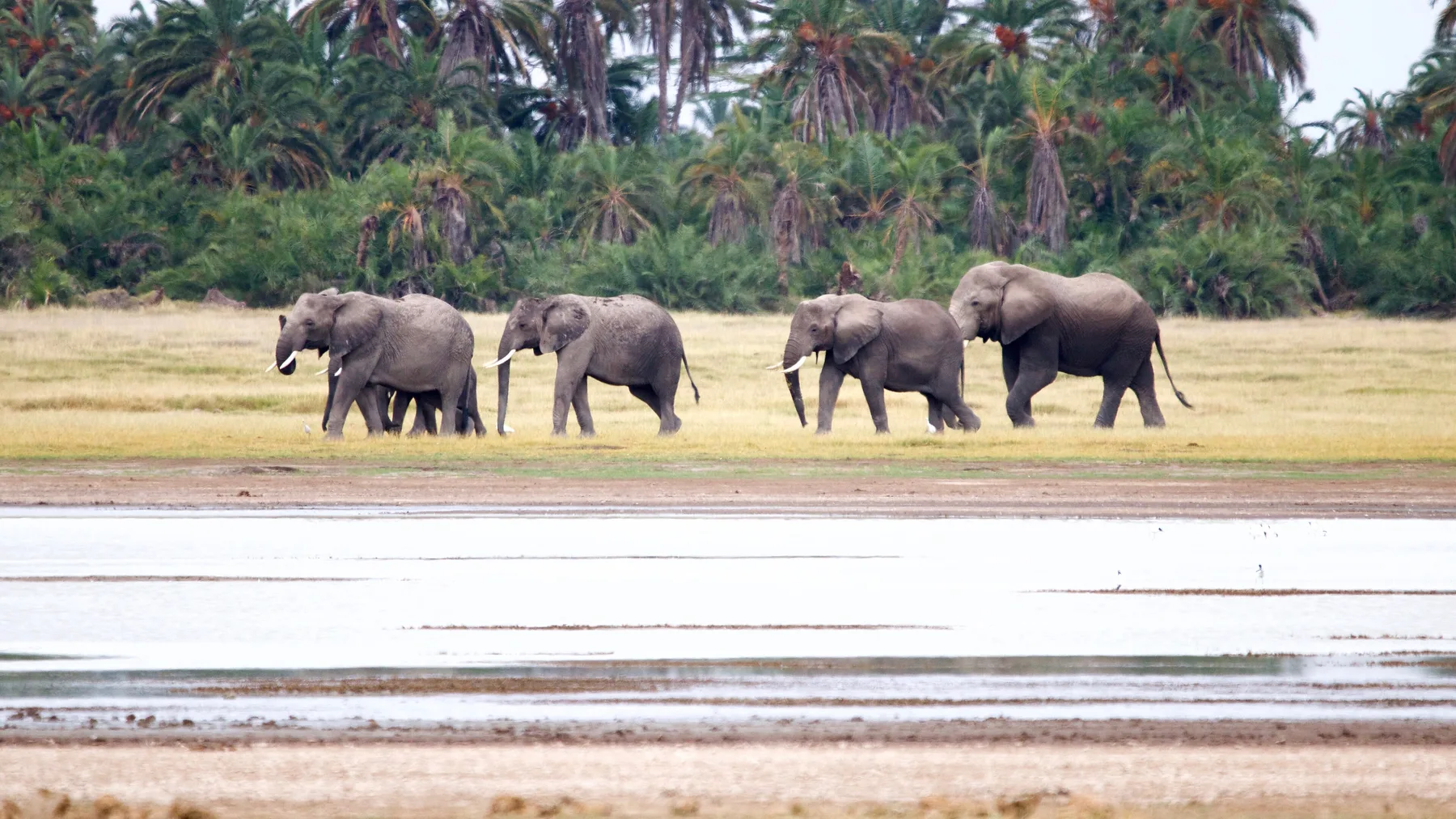
A comfortable tent, in a much larger camp
Kibo’s current accommodation description lists 110 self-contained tents for single, double, triple and family arrangements. The tents have beds, a private bathroom, flush toilet, basin and shower. This is not a mattress in a camping field, but canvas still feels different from a sealed hotel room: you hear the outside and a neighbour may be close enough to hear too. Mosquito nets and a cool evening under canvas are part of the texture of the stay.
The inventory matters more than a marketing label. With more than a hundred tents, a restaurant, pool, bar, spa, gallery and conference space, Kibo can host families and groups in a way a six-tent camp cannot. It can also feel busy around meals. A couple looking for a deeply private bush atmosphere may prefer a smaller property, even if that means giving up the pool or broad buffet. A family with children of different ages may appreciate the opposite trade: meals with choices, space to stretch and somewhere to swim between drives.
Do not assume every tent is identical. A double and a family tent solve different sleeping problems. The description “deluxe” does not itself tell you what you see from the veranda or how close you are to the communal areas. Ask for a room configuration and position that match your priorities. If a mountain view is a major reason for booking, put that preference in the room request rather than relying on a general photograph of camp.
For a family, consider the small practical moments. Can a child reach the bathroom safely at night? Will three people be comfortable sharing one room? Is the walk to the restaurant manageable for an older relative? How close are your two tents if you need more than one? The answer changes the quality of the stay more than an abstract five-star classification. Our Amboseli with children guide goes further into drive lengths and family rhythm.
Can you actually see Kilimanjaro from your tent?
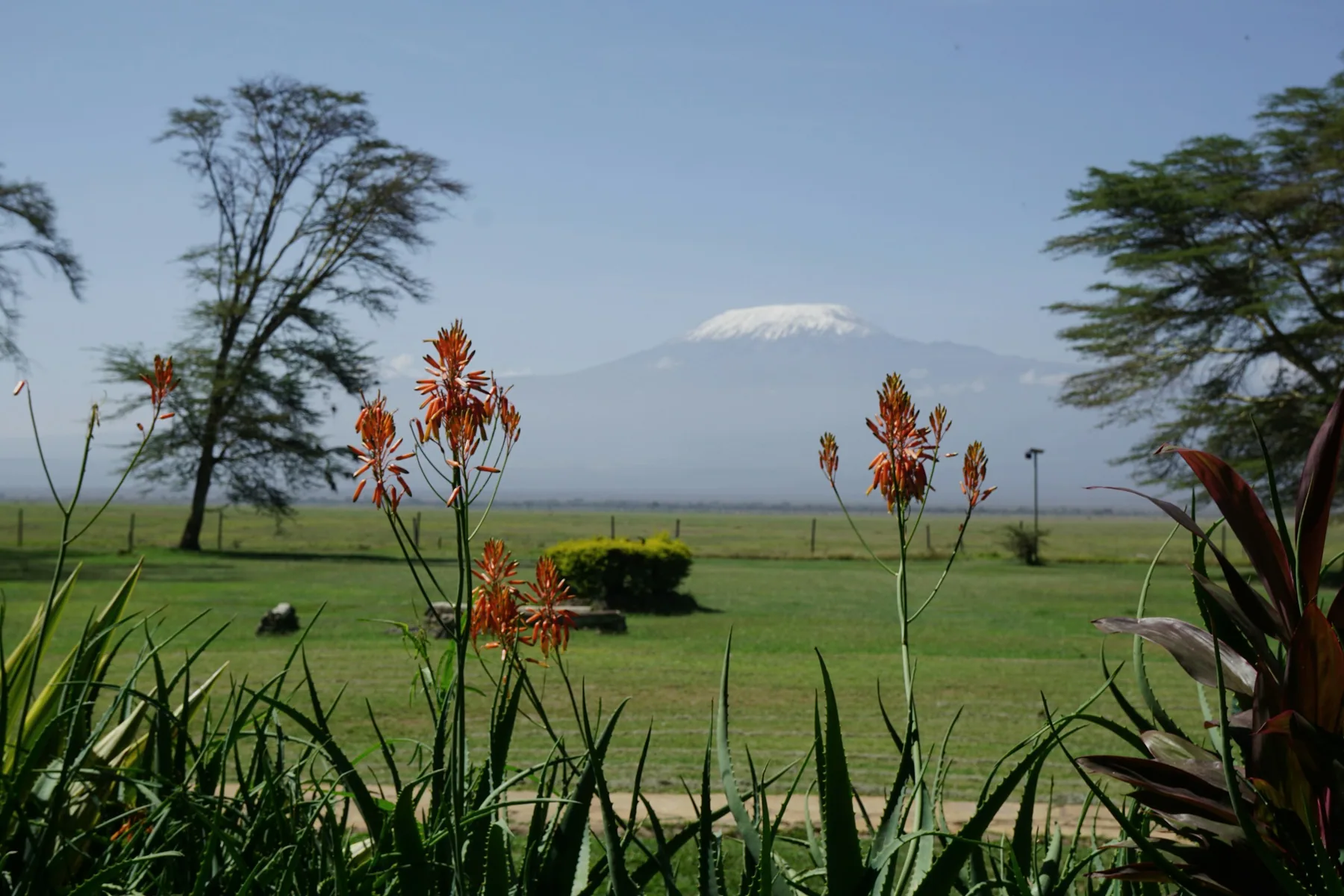
On a clear morning, Kilimanjaro can dominate the horizon. On another morning, its summit is hidden. The mountain is across the border in Tanzania, and cloud cover often decides whether you see the famous snow cap, not the skill of the photographer who made the promotional image. A guest in one tent may have a clean line across the grounds; another may see trees or neighbouring canvas first. Ask for a mountain-facing position if it matters, but keep the weather part of the expectation.
The best way to enjoy the view is to leave space for it. You might wake early, step outside with a cup of tea and wait as the light changes. If the mountain never fully appears, the Amboseli trip has not failed. The park’s elephants, seasonal marshes and big skies are the reason to travel here in the first place. Our Amboseli photography guide discusses the difference between planning for light and demanding a particular cloud-free frame.
What a good game-drive day from Kibo looks like
A comfortable two-night stay might have an afternoon drive after arrival, a full morning in the park on the next day and a final short drive before departure if the route allows it. A three-night stay creates room to spend longer at a marsh, return for an unhurried lunch or make one full day of it. The specific pattern depends on park entry rules, your guide, weather, road condition and what your safari package includes. Kibo’s operator says game drives can be booked separately if they are not already part of the package. Accommodation alone is not a guided safari.
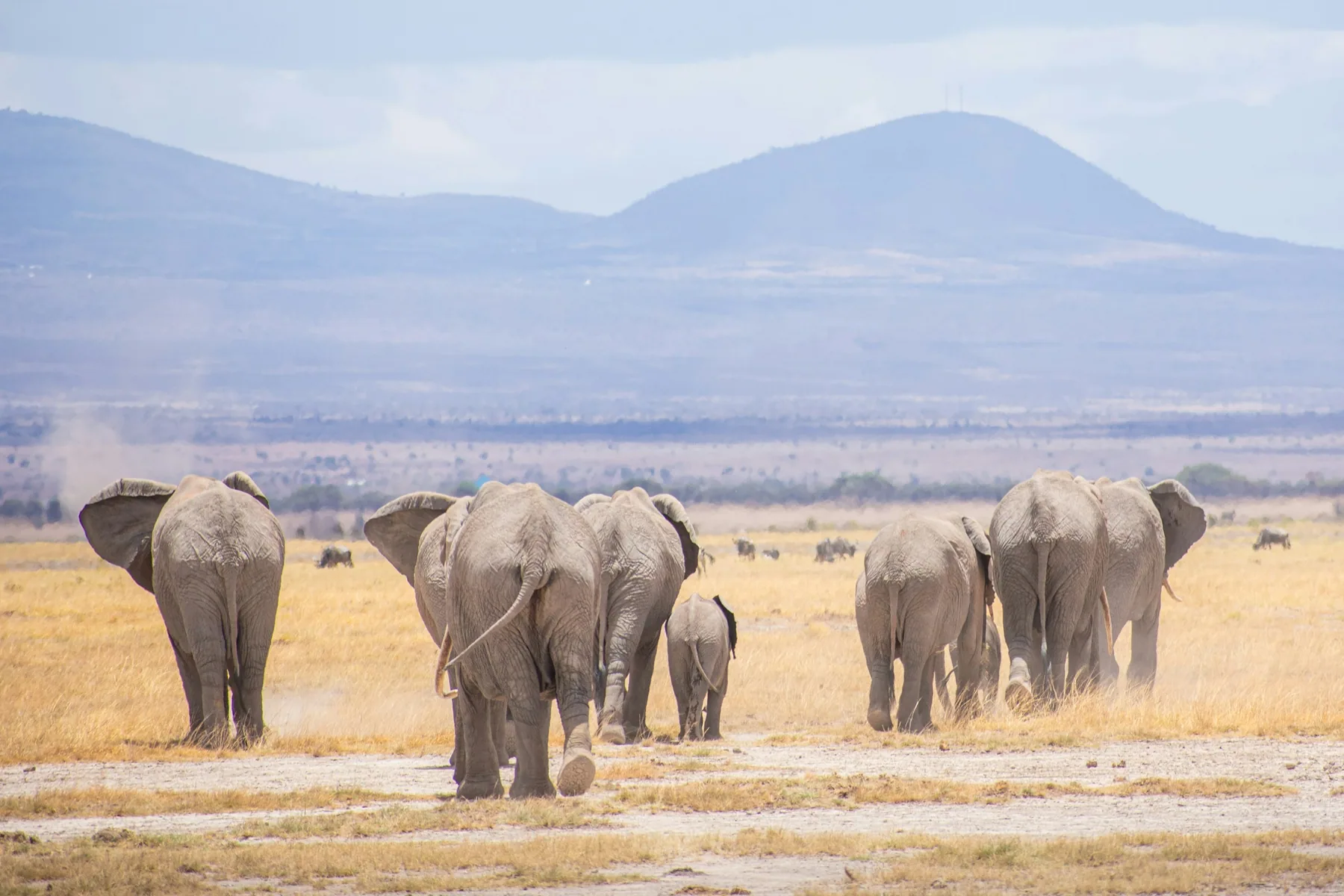
If elephants are your central interest, make time to watch them rather than racing between sightings. A herd may be crossing a plain, bathing or feeding in wetland vegetation. Give the guide time to position respectfully and let the animals move. Avoid any assumption that a tour vehicle can chase a group off-road for a photograph. Our Amboseli elephant guide is a useful companion to the route.
The gate-side location has a particular effect on the first and last hours. You may want to leave camp early to make good use of morning light, but the vehicle still has to enter the park. At the end of the day, the return is timed by park rules, not the sunset seen from your tent. A packed meal can keep you inside longer; lunch at camp lets children swim and everyone rest. Neither is automatically better. Decide which day you want before booking a full-board rate and discovering your meals are at camp while the animals are out in the marsh.
Buffet meals, a pool and an afternoon that can slow down
The open-air dining terrace, bar and pool make Kibo an easy place to spend the hot middle of the day. The operator says ingredients include produce from its own farm and asks guests to notify it about vegetarian or other dietary needs when booking. The camp’s size makes varied buffet service possible, which some families value greatly. It also changes the tone of dinner: expect more fellow guests and a busier room than at a tiny owner-run bush camp.
After a dusty drive, a swim or a long shower can be as welcome as the next wildlife sighting. The spa and massage service are additional ways to pause, but should not be assumed to be included in the room rate. The gallery and shop may fill an hour, and the conference facilities signal that organised groups also use the camp. If quiet dining is important, ask when groups are expected and whether a more secluded table can be arranged.
Evening cultural dances take place at camp. A performance can be enjoyable, but it is not the same as spending thoughtful time in a community. The most honest way to approach it is as a hosted entertainment activity, with respect for the performers. If you want a deeper encounter, arrange one separately, with enough time and an understanding of who receives the fee.
Kibo Private Wing is a separate proposition
The Kibo Private Wing is not simply a more expensive label on a standard tent. The operator describes ten tents in a separate wing with its own reception and lounge, a kitchen for self-catering groups, and full-board as an alternative. A family reunion or group that wants to control meals may find it appealing. The regular main-camp inventory and the ten Private Wing tents should not be casually merged into one room description.
Pool access from the Private Wing is listed as available at a fee, rather than being an automatic free amenity. That detail matters to a family choosing the wing precisely because children want to swim. The operator’s older downloadable brochure includes historical rates; do not use those as the price for a future stay. Ask for the live terms for your dates, including kitchen use, food supplies, staffing, pool access and transfers. Self-catering is only convenient when somebody has planned the provisions and cooking work.
| Question | Main Kibo camp | Kibo Private Wing |
|---|---|---|
| Scale | 110 self-contained tents listed by the operator. | Ten tents in a separate wing. |
| Meals | Camp dining, with board basis set by the booking. | Self-catering kitchen or a full-board arrangement. |
| Pool | Main-camp facility. | Access at the main camp is listed at an additional fee. |
| Best fit | Couples, families and groups who prefer prepared meals and broad facilities. | Groups who want a more separate base and can plan food or full-board terms. |
| Safari vehicle | Depends on the safari package, not the mere choice of tent. | Also needs a separately understood drive and transfer plan. |
A village visit is not just another line on the activity list
Kibo offers a Maasai village visit for an additional fee paid to the Maasai guide before the tour. The basic fact of a paid tour tells you little about the experience. You will learn more by asking how long you will be there, who invites visitors, whether families receive the fee, whether photographs require permission and what people would like you to understand about their life now. Maasai communities are not a backdrop for a safari photograph.
If your main interest is listening to people and sharing time, ask for a slower visit rather than a quick stop between drives. If you simply want to see a dance, the evening camp performance may be enough. Our Maasai village visits guide helps you decide what a respectful experience might look like. Kibo also lists massage and open-air or bush dining. Each can enrich a stay, but none is a substitute for a well-planned park day if Amboseli wildlife brought you here.
Guests praise the comfort, then disagree about the scale
Real guest accounts are especially useful here because they describe the same trade-off in different ways. J MEH, writing after a September 2026 stay, praised the staff, tents and buffet, including vegetarian options, but felt that being outside the park meant the additional driving added roughly 45 minutes each day
. That is one guest’s trip experience, not a fixed transfer time. It is a useful reminder to consider gate and route time when planning a brief Amboseli visit.
Another family reviewer, PhillyBird, described the tents as spacious, clean, and comfortable
and liked the staff, meals and easy park access. Both accounts can be true. Kibo can make a pleasant home after the drive, while an inside-park base may give some travellers more wildlife time. Your ideal choice depends on how much the pool, dining range and accommodation comfort matter relative to that extra movement.
One guest named Marta enjoyed her large tent but said the size of the lodge lost the feeling of being in a ecolodge
. The spelling is hers; the point is clear. You should not buy a hundred-tent camp expecting the hush of a six-tent hideaway. Equally, a larger operation can suit a family that wants a buffet, pool and a room type for each generation. A guest’s opinion is evidence of their experience, not a promise that your room, service or view will be identical.
Some guest comments praise Kilimanjaro views from their rooms; others say their assigned tent faced another tent or that clouds hid the mountain. Look at those together rather than choosing only the most beautiful photograph. Request a mountain-facing tent, discuss the likely room position and arrive with a plan that remains enjoyable if the summit never appears. That leaves room for the memorable part you cannot book in advance: elephants, changing light and the joy of being outdoors.
Why families may like it, and what to ask first
A family room and a pool are real advantages when children have a limited appetite for long drives. Kibo’s single, double, triple and family configurations offer more choice than a small couples-focused camp. A relaxed afternoon can make an early start the next morning much easier. The varied dining options may help a child who will not eat a set safari menu. Those are practical benefits, not decorative amenities.
Ask whether the family tent has the beds and bathroom layout you expect. For two tents, ask how close they are and whether the path is lit or escorted after dark. For toddlers, check pool supervision, steps and the distance from tent to restaurant. For teenagers, agree on the length of the full-day drive and whether a private vehicle is worth the flexibility. A family safari works best when the youngest traveller does not have to live through a grown-up photography schedule every day.
Guests with limited mobility need a similarly specific conversation. The camp has paths, canvas entrances and communal spaces spread across a large site. “Easy access” to Kimana Gate does not answer how far a particular tent is from the restaurant or whether a shower has a step. Describe the actual mobility need before choosing a room. Staff can then explain which tent position and vehicle access would work, or whether another lodge would be more comfortable.
Room price, park fees and vehicle are different things
Kibo offers accommodation and dining arrangements, while a complete safari includes more than a bed. The camp says game drives can be booked when not already included in a package. A quote should therefore make clear whether you have a dedicated guide, a shared or private vehicle, fuel, park entry, meals, drinks and transfers. “Full board” tells you about meals, not automatically about every safari expense. Park fees depend on the traveller’s category and the dates of travel. Our guide to Kenya park fees explains why they are shown separately.
There is no honest universal nightly price to print for every group and season. The same tent can be part of a road circuit with a private jeep, a fly-in visit with local transfers or a room-only arrangement. Those are different trips. A couple might value a private vehicle for photography; a family of six may spread its cost differently. Ask to see the accommodation category, board basis, park entries and vehicle arrangement together so the comparison with an inside-park lodge is fair.
| Line in the safari plan | Why it changes the total | What to decide |
|---|---|---|
| Tent and meals | Room type, occupancy and board basis differ. | Main camp or Private Wing; family or separate tents. |
| Amboseli park entry | Travellers have different fee categories and entry days. | How many park days and who is travelling. |
| Vehicle and guide | Accommodation alone does not always include game drives. | Private versus shared, full days versus shorter outings. |
| Transfers | Road travel and flights create different costs and time patterns. | Where the trip starts and ends. |
| Extras | Village visits, massage and special dining may cost more. | Which activities you will actually use. |
| Private Wing provisions | Self-catering requires food and cooking arrangements. | Who supplies and prepares the meals; whether pool access matters. |
Driving from Nairobi or flying to Amboseli
The camp’s own directions favour the route through Kimana town to Kimana Gate when driving from Nairobi. That is useful because it brings you to the camp without paying to cross through the park just to reach your room. Road conditions and travel time can change, especially in wet weather; treat a timetable as a planning estimate, not a guarantee. Our Nairobi to Amboseli guide explains the road choices.
Flying from Wilson Airport can reduce the road transfer but does not land you at your tent. You still need the airstrip-to-camp journey, and baggage limits on small aircraft may shape what you pack. If a flight arrives late, a leisurely first evening may be wiser than forcing in a short drive. Our fly-in versus drive-in guide and safari-airline bag guide help with the larger route.
Amboseli also links naturally with Tsavo or a return to Nairobi, but not every apparent line on a map is a quick transfer. If the next stop is a beach stay, decide whether the road hours are part of the experience you want or whether a flight is more comfortable. For a single Amboseli night, transfer time can consume too much of the wildlife opportunity. Two or three nights usually give the mountain, marshes and family downtime more breathing room.
The traveller who will enjoy Kibo most
Kibo suits someone who wants a tented Amboseli atmosphere without surrendering easy comforts: an en-suite shower, wide meal choice, pool and a strong chance of a Kilimanjaro view when the sky cooperates. Families, groups and first-time safari travellers may welcome its scale. The camp can also be a practical choice on a road circuit when a room near Kimana Gate makes the itinerary flow.
Choose an inside-park lodge if every early wildlife minute matters more than the camp’s facilities, or a much smaller property if the intimate bush feel is non-negotiable. Consider the Private Wing if your group truly wants a separate base and will use its kitchen or full-board setup. No one property needs to stand for all Amboseli safaris. The most satisfying plan is the one in which the room, vehicle, park days and travellers’ energy all work together.
And if Kilimanjaro is hidden on your first morning, keep the camera ready anyway. The mountain may appear later, or an elephant family may turn an ordinary drive into the story everyone tells when they get home.
Kibo Safari Camp questions
Is Kibo Safari Camp inside Amboseli National Park?
No. The operator places the main camp about one kilometre outside Kimana Gate. Park drives require entering through the gate.
How many tents does Kibo Safari Camp have?
The operator currently lists 110 self-contained tents in its main camp, with single, double, triple and family accommodation. The separate Private Wing lists ten tents.
Can I see Kilimanjaro from my tent?
Some tent positions have mountain views when the weather is clear. The view varies by tent and cloud cover, so request a mountain-facing position without treating the summit as guaranteed.
Are game drives included in the room rate?
Not necessarily. Kibo says drives can be booked when they are not already included in a safari package. Check the vehicle, guide and park-entry terms of the trip you choose.
Does Kibo have family tents?
Yes. The operator lists family as well as single, double and triple accommodation. Ask for the exact beds, bathroom layout and tent location.
Is Kibo Private Wing the same as the main camp?
No. It is a separate ten-tent wing with a self-catering kitchen and a full-board alternative. Main-camp pool access from the wing is listed at a fee.
Does Kibo have a swimming pool?
Yes, the main camp lists a pool. Check the terms if staying in the separate Private Wing.
Can vegetarian guests eat at Kibo?
The operator says it caters to vegetarian and other dietary needs. Tell the camp about specific needs before arrival.
Can I visit a Maasai village from Kibo?
The camp offers a village visit for an additional fee paid to a Maasai guide. Ask who hosts the visit, how long it takes and how the community benefits.
Should I fly or drive from Nairobi?
Either is possible. Road travel may fit a multi-stop circuit, while a flight saves road time but still needs an airstrip transfer and a suitable baggage allowance.
Explore Amboseli further
Plan Kibo Safari Camp
Tell us your dates, group, room preferences and whether you want private drives, an inside-park comparison or the separate Private Wing. We can build the whole Amboseli experience around those choices.