
Cottar’s 1920s Camp: Tents, Olderkesi Wildlife and the Safari Behind the Vintage Style
Cottar’s is a small camp in Olderkesi, not a lodge inside the busy centre of the Masai Mara reserve. Its family tents, honeymoon hideaways and conservation setting can make a remarkable stay, but the right airstrip, reserve-day plan and activities matter as much as the beautiful canvas.

The first thing you notice may be the canvas and antique furniture. The thing you remember may be quite different: a Maasai guide showing you tracks in the dust, an unhurried drive with no other vehicle in sight, or a family lunch that nobody wanted to end. Cottar’s 1920s Camp has a powerful visual identity, but the best reason to stay is what its Olderkesi setting and guiding let you do.
The camp is in Olderkesi Conservancy, one of the areas in our Masai Mara conservancies guide. This private-use land adjoins the southeastern Masai Mara National Reserve and the Serengeti side of the ecosystem. Cottar’s own location page describes 7,608 acres. The main camp is separate from the family’s Bush Villa and Conservation Camp, which offer different levels of privacy and style. A traveller who searches “Cottar’s Safaris” may see photos or reviews of all three, so the first booking question is which property the proposal actually names.
Olderkesi is the story, not just a dot on a Mara map
Cottar’s private-use conservancy is southeast of the main reserve, near the Tanzanian border. That means a quieter environment for many drives, walks and activities, along with the option to enter the national reserve for a different landscape and wildlife day. It is not the same as sleeping inside the reserve or beside a famous Mara River crossing point. This geography is appealing to travellers who want privacy, but it can frustrate someone whose entire plan is to reach a particular crossing quickly every morning.
The advantage is breadth. You can spend time with a guide in Olderkesi, look at smaller signs of wildlife on foot, or make a longer game-drive day into the reserve when the animals and season justify it. The reserve entry carries its own rules and fees; the conservancy permits different activities. Do not compress both into a phrase such as “Masai Mara game drive.” Ask which area each day visits and how much time the transfer consumes. Our Mara accommodation guide compares the reserve, Triangle and conservancy bases.
Some older guest accounts mention excellent sightings only after a longer drive into the reserve. Others found plenty to enjoy closer to camp. Both can be true in different months. Wildlife is not distributed evenly, and a quiet conservancy is not a promise that lions will be beside your veranda. If a short stay is built entirely around a specific species or migration crossing, compare the geography honestly. If you want a broader safari with walking, conservation, culture and time at camp, Olderkesi can be the right location.
| Your priority | What Olderkesi changes | What to check |
|---|---|---|
| Quiet drives | Private-use land gives a very different vehicle atmosphere from the main reserve. | Which drives stay in the conservancy? |
| Big reserve day | The camp can also use the adjoining Masai Mara reserve. | Distance, reserve fee and whether a picnic day makes sense. |
| Walking and night drives | Conservancy rules allow experiences unavailable on a standard reserve drive. | Age limits, availability, guide and inclusion. |
| Migration crossing | Herds can use the wider ecosystem; crossing points are not on a timetable. | How many nights, which likely area and realistic drive time? |
| Community connection | Olderkesi is linked to Maasai landholding and the camp’s conservation work. | Who hosts an experience and how do fees support people and land? |

The current camp has eleven tents, and their differences matter
The property’s current page lists five luxury double tents, four two-bedroom family tents and two honeymoon tents. Older articles and booking pages sometimes describe nine or ten tents. Those numbers reflect earlier configurations; use the current room plan when considering space and availability. The camp’s antique-inspired look is consistent, but a honeymoon tent with an outdoor bath is not interchangeable with a family tent that has two en-suite bedrooms and a shared lounge.
Kiboko and Molo are the named honeymoon tents. Kiboko is described with an outdoor hot tub, indoor and outdoor showers, a dressing area and a large deck. Molo is set apart for privacy and has an outdoor bathtub on its veranda. If that private bathing moment is a reason for booking, request the particular tent and confirm it in the reservation. Not every romantic photograph on the camp’s site illustrates the category that happens to be available. A honeymoon can also work in a luxury double tent, but it is a different room and should be priced as such.
The five luxury doubles are Duma, Swala, Ndovu, Athi and Kudu. They are en-suite canvas rooms with varying layouts and deck positions. Some can accommodate an extra child bed, but a triple setup is not as spacious or private as two bedrooms. Families or friends considering one of the four new family tents should ask for Sand, Tana, Mara or Tiva by name when a specific layout or visual style matters. Each family tent has two en-suite bedrooms, a lounge with wood-burning stove and a generous deck. The camp says this category includes a dedicated guide, private vehicle and complimentary babysitting. Those benefits are notable, but the exact ages, hours and terms should be in your booking confirmation.
The camp also has a main mess tent and bar, Explorers Tent, pool pavilion, spa tent, small gym and organic garden. A poolside afternoon or talk with a conservation ranger may be more rewarding than another drive for a group that has already spent a week on safari. Yet Cottar’s is still a social camp, not a private villa. If you want complete exclusivity for a large family or group, compare the separate Bush Villa rather than assuming you can turn a family tent into a private lodge.
Game drives are only one way to use Olderkesi
A strong day begins with the guide asking what you enjoyed yesterday, not handing you a printed timetable. Cottar’s describes wildlife drives in both Olderkesi and the Masai Mara National Reserve, guided bush walks in the conservancy, conservation-focused visits, cultural activities and time at camp. You may want one full reserve day with a picnic, then a quieter day that includes a walk and a late sundowner. A family might swap a long afternoon drive for pool time or an age-appropriate nature session. The point is to match the activities to the landscape and people travelling.
The camp’s experience catalogue is unusually broad. It includes guided walks, learning with female conservation rangers, a raptor-conservation encounter, beadwork with Mamma Naishuru Batian, garden and foraging experiences, photography sessions, a traditional canvas bath, ballooning and cultural visits. A long catalogue is not a reason to book all of them. Some require advance arrangements and additional charges. Choose two or three that would make this stay personal. A couple might prefer a private bush bath and slower walking day; a curious teenager may remember the raptor story and ranger visit longer than a third routine drive.
Night drives are possible in the conservancy according to independent property information, but availability, route and timing should be confirmed for the visit. They are not permitted simply because the reserve is next door. Walking is similarly location-specific. The guide must judge conditions and age suitability. If you have come mainly for walking, ask how much time a proper walk receives, rather than accepting a few minutes outside the vehicle labelled as a walking safari.
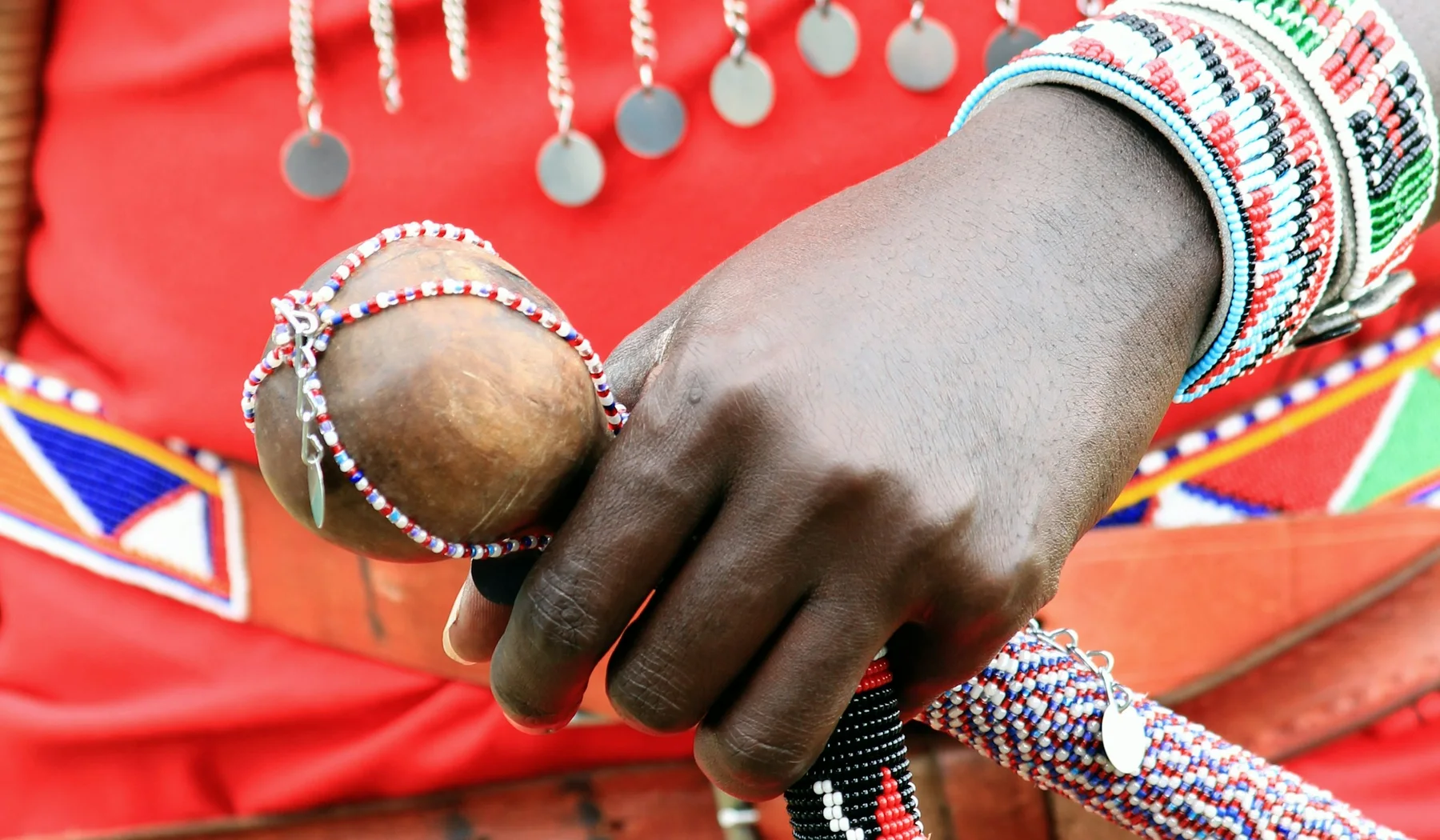
Some cultural experiences need particular care. A beadwork session with a named maker can create a real exchange; the property’s page explains the arrangement and says longer sessions support the maker’s granddaughters. A village visit should similarly be hosted with consent and transparent benefit, not a performance added to fill an itinerary gap. Our ethical Maasai village guide gives the questions worth asking.
The land and conservation story deserves more than a slogan
Cottar’s describes Olderkesi as a private-use conservancy and talks about land protection, Maasai community relationships and a century of family safari history. That history is real, but vintage styling should not obscure whose land makes the experience possible. The landholding and lease model, local guiding, ranger work and conservation fees are part of what a guest is paying for. Ask which charges support the conservancy and how community experiences are arranged. A named project and a hosted visit are more meaningful than a generic eco-luxury label.
The camp offers chances to meet conservation rangers or learn about birds of prey and other wildlife projects. These may be worthwhile if you have genuine interest and enough time to listen. They are not guaranteed every day, and some specialist encounters carry separate donations or fees. Choosing one with care can be more respectful than squeezing several into a single afternoon. A visitor should not feel obliged to turn every conservation issue into a photo opportunity; often the most valuable part is understanding the work and its limits.
Olderkesi also shows why a safari need not be restricted to the best-known reserve roads. Land outside the reserve can hold wildlife movement and provide income for people living beside it. It may also be quieter. That does not mean the conservancy will be equally rich in big-cat sightings on every day. Our Mara conservancies guide goes deeper into location, land use and how it compares with other Mara conservancies.
For families and honeymooners, the detail changes the value
Cottar’s can work beautifully for both groups, but for different reasons. A honeymoon couple may be drawn to Kiboko or Molo, private dining, a canvas bath and the freedom to avoid a rigid vehicle schedule. A family might value the two-bedroom tent, dedicated guide, private vehicle and child-friendly nature activities. Those are not interchangeable “luxury” features. The right booking starts with the exact ages and room arrangement, then considers how much time everyone really wants to spend in a vehicle.
For children, ask which walks and activities are available by age, how babysitting operates and whether the private vehicle benefit is included in the family-tent rate for the entire stay. For a couple, ask whether the outdoor bath or hot tub belongs to the tent reserved and whether an anniversary dinner is included or separately charged. A property with a strong personality can make a trip unforgettable when those details align. Without them, paying for an evocative name alone may be disappointing.
| Traveller | Room or experience to consider | What to confirm |
|---|---|---|
| Honeymoon couple | Kiboko or Molo, a slower private day and perhaps a bush bath. | Named tent, outdoor-bath feature and special-dining cost. |
| Parents with two children | Two-bedroom family tent and flexible guide. | Beds, ages, private vehicle and babysitting terms. |
| Multigenerational group | Nearby tents or separate Bush Villa comparison. | Walking distances, shared/private spaces and vehicle size. |
| Wildlife photographer | Private vehicle and enough nights for a reserve day. | Guide, conservation access and likely drive times. |
| Culture and conservation traveller | Ranger and maker-led experiences. | Host, fee, duration and benefit to participants. |
What visitors loved, and the doubts worth hearing
A recent Tripadvisor honeymoon review calls the camp an incredibly authentic, magical, and deeply special place
. A different guest praised the staff and seclusion but wrote, Not super luxurious but that was anticipated
. These impressions can coexist. One person sees a romantic and characterful canvas camp; another will notice it is not a sleek new hotel, even at a high price.
More critical older traveller comments offer useful perspective. One called the camp too manicured and hotel like
for their taste; another found the wildlife stronger after driving farther into the reserve. Those stays predate the current family-tent configuration and cannot describe every present-day safari, but the underlying questions remain good ones: do you like carefully staged vintage elegance, and how will your guide balance Olderkesi with reserve time?
Other guests remember their guides, staff, meals and cultural encounters as the best part. That is why it is worth explaining your preferences before arrival. If your ideal safari is rustic simplicity and constant big-cat chasing, another camp may fit you better. If you want privacy, thoughtful guiding, a camp with history and time to engage with the people and land, Cottar’s is a serious contender. Our Mara lodging guide offers the wider comparison.
The full trip cost is more than the tent rate
Cottar’s is a premium stay, and the difference between a good quote and a confusing one is the scope. A current proposal should name the tent, number of guests and nights, meals and house drinks, vehicle and guide arrangement, conservancy levy, any Masai Mara reserve entries, airstrip transfer, optional experiences and special celebrations. The family category’s private vehicle benefit is particularly important to price correctly. For couples in a normal double tent, a private vehicle may be additional.
Some third-party descriptions list game drives, walks, meals and local drinks in the stay while excluding park entry, premium drinks, spa treatments and ballooning. The precise current terms can differ by offer and route. A balloon flight or professional photography session should not be treated as a standard camp activity just because it appears on the experiences page. The same applies to a conservation helicopter flight. The Mara safari cost guide shows how accommodation, fees and transport combine.
| Line in your itinerary | Why it needs to be explicit |
|---|---|
| Named tent | Family, honeymoon and double tents offer different space and features. |
| Guide and vehicle | Family tents advertise dedicated arrangements; other bookings may share. |
| Conservancy and reserve | Olderkesi access and a separate reserve day are different costs. |
| Airstrip | Cottar’s private strip has a short included transfer; Keekorok is much farther and may cost more. |
| Special activities | Ballooning, spa and specialist conservation experiences need their own price and timing. |
| Celebration requests | A bath or private dinner should be confirmed for the exact tent and date. |
The airstrip choice can add or remove hours
The easiest air arrival is Cottar’s own private airstrip. The property’s travel guidance puts the onward road transfer at around fifteen to twenty minutes and describes it as complimentary. Not every scheduled Mara flight lands there. If your aircraft uses Keekorok instead, the camp says the road journey is roughly two hours and carries an additional transfer fee. Those are not interchangeable options. Verify the operating flight and landing strip before booking, especially if you have only two nights.
A typical international journey involves landing at Nairobi’s Jomo Kenyatta Airport, moving across town to Wilson Airport and boarding a small aircraft. Build a reasonable connection, particularly after an overnight flight. A charter may be attractive for a group or a multi-camp route but should be compared with scheduled flights and a road itinerary for total cost. Soft-bag and weight limits matter when you fly in a light aircraft; our safari baggage guide covers the basics.
You can also reach the camp by road as part of a longer circuit, subject to route and conditions. Driving all the way from Nairobi for a very short stay may use too much of the trip in transit. The fly-in versus drive-in guide helps you decide by the actual door-to-door journey rather than flight time alone.
Who will be happiest here?
Cottar’s is likely to suit travellers who enjoy a camp with a strong aesthetic, want private conservancy space and intend to use more than standard game drives. It can be particularly good for a multigenerational family that uses a two-bedroom tent and dedicated vehicle, or a couple who wants an intimate honeymoon base with room for walks and conservation encounters. It may be a weaker fit for someone who wants plain, contemporary design, the shortest possible route to a particular Mara River crossing, or the lowest possible nightly price.
Give the trip enough nights to justify its location. Two nights can reveal the atmosphere, but three or four allow a reserve day, an Olderkesi day and an afternoon that is not packed with activities. A more comprehensive Kenya route could pair this camp with Amboseli, Laikipia or the coast. The best itinerary is not one that collects the most famous lodge names. It is the one in which every stop contributes a different experience.
Cottar’s 1920s Camp questions
Is Cottar’s 1920s Camp inside the Masai Mara National Reserve?
No. The camp is in Olderkesi Conservancy, a private-use area adjoining the southeastern reserve and the Serengeti side of the ecosystem. Drives can also enter the reserve under its own rules and fees.
How many tents does the camp have?
The current Cottar’s site lists eleven: five luxury double tents, four two-bedroom family tents and two honeymoon tents. Older listings can show earlier room counts.
Which tents are best for a honeymoon?
Kiboko and Molo are the two named honeymoon tents. Kiboko has an outdoor hot tub; Molo is set apart with an outdoor bathtub on its deck. Confirm the named tent before booking.
Do the family tents include a private vehicle?
The current property page says its four family tents include a dedicated guide, private vehicle and complimentary babysitting. Confirm the exact terms and availability for your party and dates.
Can I take a walking safari at Cottar’s?
Guided bush walks are offered in the private conservancy, subject to guide judgement, weather and age suitability. They are not a standard unguided walk inside the national reserve.
Are night drives possible?
Independent descriptions list night drives in Olderkesi. Confirm the operating schedule, age rules and any fee with the camp for your dates. Do not assume a night drive is permitted inside the national reserve.
Does the camp have a swimming pool?
Yes. The current camp page lists a shared pool and pool pavilion, along with a spa tent, gym and other shared areas.
Which airstrip is closest to Cottar’s?
Cottar’s own private airstrip has an approximately fifteen- to twenty-minute complimentary transfer. Keekorok can mean roughly two hours by road and an extra transfer charge.
Can I see the Great Migration from camp?
Herds may move through the wider ecosystem, but no camp can promise a crossing or particular wildlife event on a booked date. A reserve day and enough nights increase flexibility.
Is Cottar’s Bush Villa the same property?
No. The Bush Villa is a separate private-use stay, while the 1920s Camp has individual tents and shared camp facilities. Verify which one your itinerary names.
Explore the Mara beyond one camp
Plan a Cottar’s safari
Tell us your dates, who is coming and what matters most. We can build a Cottar’s stay or compare another Mara camp, with the tent, vehicle, airstrip and fees made clear.