
How to Choose an Ethical Maasai Village Visit
Use six clear tests to check community control, fees, consent, interpretation, shopping and pace before you agree to a cultural visit.

The best cultural visits begin before anybody reaches for a camera. A host introduces themselves. You learn where you are, who arranged the visit and what the community wants to share. Questions turn into conversation. The hour may include song, beadwork, livestock, a home or a walk, but nobody is reduced to scenery.
The difficult visits feel different. The vehicle stops without much explanation. A performance begins immediately. Guests photograph people whose names they never learn. The entrance fee is vague, and the final craft market feels less like an invitation than a test of how quickly everyone can leave.
Learning how to choose an ethical Maasai village visit does not require a perfect label or a promise of “authenticity.” It requires evidence of community control, clear payment, individual consent, honest interpretation and the freedom for hosts and guests to say no.
Ethical does not mean untouched
Maasai people are contemporary Kenyans. A host may herd cattle, run a beadwork business, work at a conservancy, attend university, use mobile money and take part in customary ceremonies. None of those facts cancels another.
The search for an “untouched tribe” creates bad incentives. It rewards guides who exaggerate, hides modern life and encourages visitors to judge people by how closely they match an imagined past. A worthwhile cultural encounter can include history and tradition without pretending that time stopped.
Use the word authentic carefully. It is more useful to ask whether the people are speaking for themselves, whether the visit happens on terms they helped set, and whether the explanation includes life today.
The six-part ethical visit scorecard
Score each category from zero to two before confirming the visit. The organiser should be able to provide enough information without making you feel unreasonable for asking.
| Test | 0 points | 1 point | 2 points |
|---|---|---|---|
| Community control | Community is unnamed or presented as a stop | A local host is involved but control is unclear | Named community sets the programme and visitor rules |
| Payment | Fee and recipient are vague | Fee is clear but distribution is general | Price, recipient and local benefit are explained |
| Consent | Payment is treated as blanket permission | General rules exist | Individuals can freely accept or refuse photos and access |
| Interpretation | People are described as primitive or unchanged | History is accurate but one-sided | Local voices discuss both tradition and present life |
| Shopping | Purchase pressure is expected | Buying is optional in theory | Prices and bargaining are clear, and no purchase is required |
| Pace and group size | A rushed coach stop | Short visit with some conversation | Group and timing allow names, questions and real exchange |
A score of ten to twelve is a strong sign, although no checklist can see every local relationship. Seven to nine means ask for detail. Six or below means the visit is being sold without enough evidence that the community controls or benefits from it.
The scorecard is not a certification. It is a way to turn the word ethical into questions that can be answered.
Help me arrange a community-led cultural visit
Share your route, dates, group size and what you hope to learn. We will explain the named host, fee, duration, consent rules and shopping expectations before you confirm.
Test one: who controls the visit?
Control shows up in ordinary decisions. Who chooses the days and hours? Who decides which homes may be entered? Can a resident decline to participate? Who sets the maximum group size? Who can change the programme when a ceremony, school day, illness or livestock need takes priority?
An operator or lodge can handle transport and booking well, but the community should not be an unpaid stage. The local host should lead the visit or share visible authority. A vague answer such as “our guide knows a village” is not enough.
Ask for the name of the community, project, women’s group, conservancy or host family. Privacy may limit personal details before arrival, but there should still be a clear identity and relationship.
UN Tourism’s rural tourism criteria look for local participation in tourism planning and evidence that tourism improves residents’ well-being. Those principles are useful here. A village visit should not simply happen to a community because a company can bring guests.
Test two: where does the money go?
There is no universal ethical price. A 45-minute homestead introduction, a private hosted meal, a half-day walk and a beadwork workshop are different products. The important questions are what the fee includes, who receives it and how the amount was agreed.
Payment may go to a host family, a community fund, a women’s collective, a youth group or a conservancy programme. Several models can be fair. Transparency matters more than one preferred structure.
One Magical Kenya listed Mara experience states that half of its community-tour cost goes directly to a host family. A published percentage is not the only acceptable answer, but it shows the level of clarity a planner can provide.
Ask whether the fee covers photography, a guide, refreshments, a school or workshop visit and any demonstration. Carry a separate optional craft budget so the entrance payment and shopping decision do not become confused.
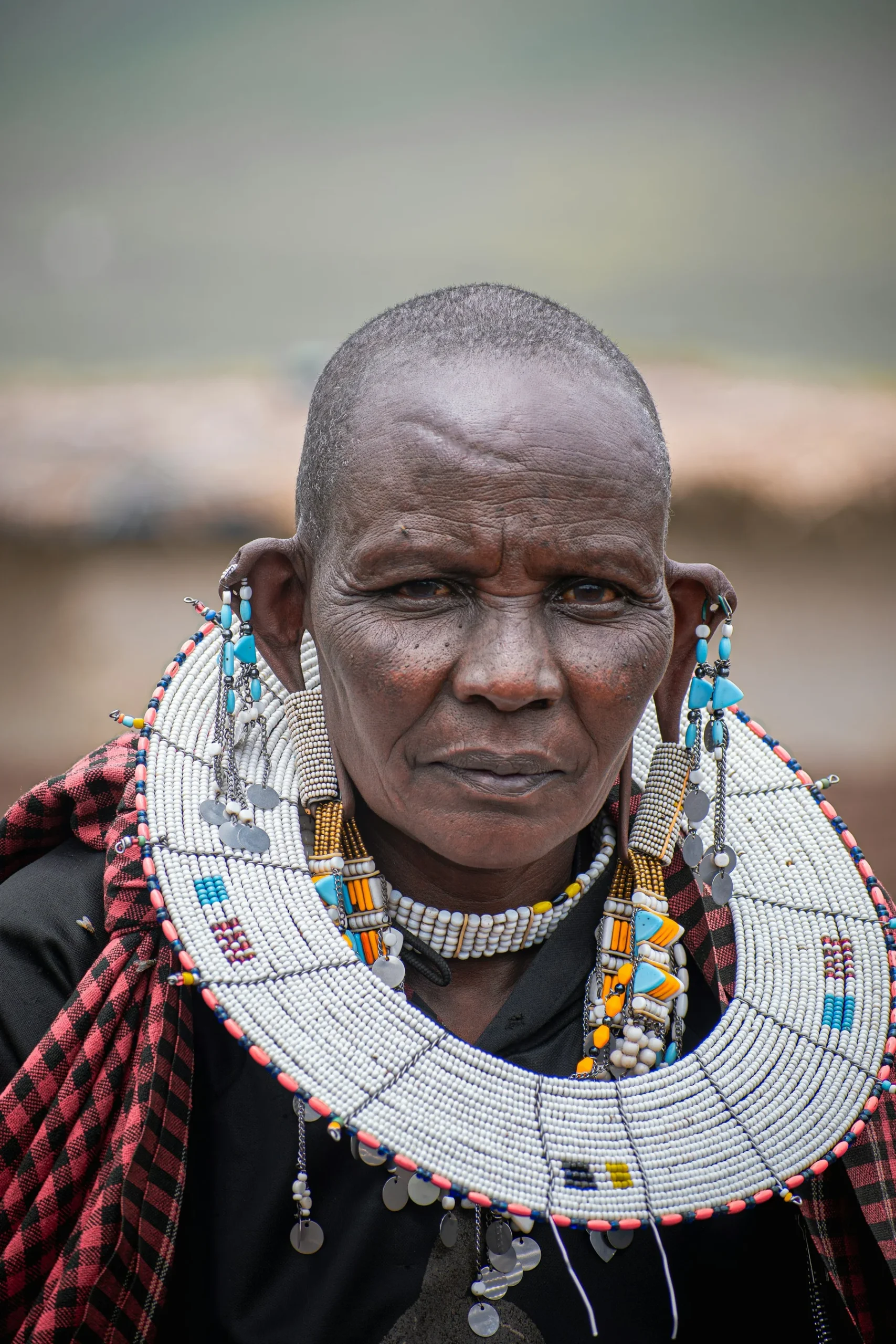
Test three: does consent belong to each person?
A village chairperson, guide or entrance fee cannot give permanent permission to photograph every individual. The person in the frame should be able to understand the request and decline without losing income, politeness or status.
Ask before taking a portrait, entering a home, filming a conversation or photographing a child. For a child, ask the responsible adult and still pay attention to whether the child appears comfortable. Permission for a group dance does not automatically include close portraits afterwards.
Research involving Maasai communities in Kenya recorded concern that tourist photographs could feel exploitative. Participants were taught to seek permission and respect a refusal. That matters because a photograph may travel far beyond the moment in which it was made.
Commercial photography, journalism, a monetised video or a large campaign needs a separate conversation. Ordinary visitor consent is not a professional release.
Test four: who tells the story?
Good interpretation makes room for more than a rehearsed list of customs. It may explain how a homestead is organised, why livestock matter, how land and wildlife interact, where children attend school, how beadwork businesses operate, or how family choices are changing.
The host should be able to say “that is not how our family does it” or “people disagree about this.” Maasai communities are not identical. Practices vary by place, age, family, religion and personal choice.
Be cautious when every explanation sounds designed to shock a visitor. Ask a present-day question: What has changed most in this area? What do young people want visitors to understand? How does tourism affect an ordinary week? A knowledgeable local host can move the discussion beyond stereotypes.
Test five: can you leave without buying anything?
Beadwork can be a valuable source of income, especially for women, and buying directly can be a meaningful part of the visit. Pressure is still pressure. A fair craft session explains who made the pieces, how prices work and whether bargaining is expected. It also allows a guest to admire the work and decline.
One traveller reported: “There was an entry fee of USD 20 per person, followed by stories and then strong encouragement to buy souvenirs.” They also felt that some explanations were exaggerated or outdated. Read the complete independent trip report.
Another reviewer described “a lot of pressure and guilt to buy something,” which made the experience uncomfortable. Read that original review.
Those reactions do not prove that craft sales are wrong. They show why the organiser must explain the sales part honestly. Visitors should also avoid treating every price as a battle. Ask how bargaining works and buy only what you value.
Test six: is there enough time to meet a person?
A short visit is not automatically unethical, but a rushed sequence makes consent and conversation harder. If fifteen vehicles arrive together, people may be asked to repeat the same performance while guests struggle to hear a name.
Ask about normal group size and duration. A small group can listen, wait and change direction. A longer programme might include a guided walk, market, beadwork workshop, livestock discussion or meal. Length has value only when the community wants and manages the activity.
The clearest positive comparison we found came from a traveller who wrote: “I did the more touristy/sales trap one in Tanzania and had a much better experience with one of my guides in Kenya visiting his family.” See the original discussion. Personal invitation is not scalable, but the point is useful: relationship changes the experience.
Eight questions to send before booking
Copy these into an email or WhatsApp message:
- What is the name and location of the community or project?
- Who owns or manages the visitor programme?
- Who will lead us, and are they from that community?
- What is the fee, what does it include and who receives it?
- How are photography and video permission handled?
- Is craft shopping optional, and how are makers paid?
- How long is the visit and how many guests normally attend together?
- Can the programme change if the community has another priority that day?
Specific answers are reassuring. They do not need to reveal private household finances. They should name the arrangement clearly enough that you understand what you are buying and whom it supports.
Check a proposed village visit before I book
Share your route, dates, group size and what you hope to learn. We will explain the named host, fee, duration, consent rules and shopping expectations before you confirm.
Red flags that justify saying no
Decline or change the visit when:
- the community cannot be named
- the organiser does not know who receives the fee
- photography begins before introductions
- children are presented as automatic photo subjects
- guests are encouraged to enter homes without a resident’s permission
- the sales stop is hidden from the itinerary
- refusal to buy is described as disrespectful
- the description relies on words such as primitive, untouched or backward
- the programme claims every Maasai family lives in the same way
- an organiser promises access to a ceremony without explaining community consent
- the visit is attached to a school during lesson time merely to create donation pressure
One red flag may be the result of poor wording rather than a harmful arrangement. Ask once for clarification. If the answer remains vague or defensive, choose another experience.
Green flags worth paying for
A well-run visit often has a named local host, a fee agreed in advance and an itinerary that describes both content and boundaries. Photography rules are explained before the camera comes out. Shopping is named as optional. Guests can ask about modern life as well as customary practices.
Other positive signs include a small group, repeat partnership with a camp or conservancy, direct craft-maker payment, a community bank or mobile-money account, and the ability to explain what tourism income supports without inventing a charity story.
Ethical does not always mean cheaper. A longer, small-group, locally led activity may cost more because it pays for time, knowledge and organisation. The question is whether the value and benefit are visible.
Gifts, donations and school visits
Do not arrive with sweets, pens or cash to distribute at random. Individual gifts can create conflict, bypass community priorities and turn children into a receiving line. Ask the local organiser whether gifts are appropriate and who should accept them.
If a school visit is part of the programme, confirm that the school invited it, lessons will not be disrupted and children are not being displayed to encourage donations. A contribution should go through an accountable school or community channel, ideally with a receipt or stated project.
Buying a craft directly, paying the agreed visit fee or supporting a named community initiative may be more useful than handing out objects selected abroad.
How to behave once you arrive
Introduce yourself and learn the host’s name. Listen to the photography briefing. Keep the camera down during the first conversation. Ask before touching clothing, jewellery, tools, livestock or the structure of a home.
Wear practical, modest safari clothing. Do not put on a shuka merely to perform somebody else’s identity for a photograph. If a host invites you to join a dance, participate with humour and respect, not imitation for a social-media stunt.
Ask open questions without demanding private information. “How is beadwork taught?” is usually more considerate than asking one woman exactly how much money she earns. Let the host decide how personal the conversation becomes.
At the end, thank people directly. If you promised to send a photograph, use a practical channel and follow through.
Photography after the visit
Consent continues to matter when you publish. Avoid captions that invent names, poverty, age, marital status or beliefs. Do not call somebody a warrior, chief or elder unless they identified themselves that way.
A dignified caption names the place or activity accurately and does not turn a person into a symbol of “ancient Africa.” Consider whether a close portrait needs to be public at all. Landscapes, hands at work and wide scenes can tell a story without exposing every face.
If somebody asks you not to post an image, honour the request. If you cannot explain how an image was consented to, keep it private.

A one-minute decision before the vehicle turns in
Sometimes the visit is proposed during the safari rather than booked in advance. Take one minute and ask the guide:
| Question | A useful answer sounds like |
|---|---|
| Who are we visiting? | A named community, group or host |
| What is the fee? | One amount, with inclusions and recipient |
| May we take photos? | Rules will be explained, and individuals may refuse |
| Must we shop? | No, the craft area is optional |
| How long will we stay? | A realistic duration that fits the day |
If the guide cannot answer, skip the unplanned stop and arrange a clearer one later. A safari itinerary should have enough flexibility to say no.
How this guide differs from our Mara village article
This page is the selection test. Use it before agreeing to any cultural visit in Kenya or northern Tanzania. For a detailed account of what commonly happens around the Mara, how entrance fees and craft sales work, and how to prepare for the hour itself, read The Truth About Masai Mara Village Visits.
For a broader view of regional options, our forthcoming Maasai village visits in Kenya guide will compare the Mara, Amboseli, Loita, Kajiado and Laikipia route contexts.
An independent long-form travel video can also help you notice the difference between conversation and performance. Watch this remote Kenya village visit by motorcycle traveller On Her Bike. It is one person’s experience, not a universal model or an endorsement of every choice shown.
Frequently asked questions
Are all Maasai village visits exploitative?
No. A community-led visit can create income, support local enterprises and allow genuine exchange. The ethical question is who controls the experience, how benefit is shared and whether consent is real.
How much should an ethical Maasai village visit cost?
There is no universal price. Agree the fee, duration, inclusions and recipient before arrival. Compare like with like rather than treating the lowest price as the fairest.
Does paying an entrance fee include photography?
Not automatically. Ask about the visit’s general rules, then seek permission from the individual before a portrait or video. Obtain responsible-adult permission before photographing a child.
Is buying beadwork ethical?
It can directly support makers and traders. Ask who made the work, how prices are set and whether payment goes to the maker or group. Buying should remain optional.
Should I visit a school?
Only when the school has invited visitors, learning is not disrupted and photography and donations are controlled by the school. Children should never be used to create pressure.
What if the guide adds a village stop without warning?
Ask the five one-minute questions in this guide. If the fee, host, consent or shopping rules are unclear, decline and arrange a better visit.
Is a staged dance automatically unethical?
No. Performance can be a legitimate cultural and paid activity. The problem is lack of consent, community control or honest description, not the fact that visitors are present.
Can NLS arrange a community-led visit?
Yes. The itinerary can include a named visit with its fee, duration, host relationship and photography and shopping expectations explained before travel.
Sources and photo credits
- Kenya tourism material on community-led experiences
- Research on Maasai photography, consent and community perspectives
- UN Tourism rural tourism participation criteria
- Hero image: Susan Kirsch on Unsplash
- Portrait: Leonid Antsiferov on Unsplash
- Landscape: David Heiling on Unsplash
Plan a respectful cultural experience in Kenya
Share your route, dates, group size and what you hope to learn. We will explain the named host, fee, duration, consent rules and shopping expectations before you confirm.
Arrange a community-led cultural visit
Tell us your route, dates, group size and what you hope to learn. We will explain the host, fee, duration, consent rules and shopping expectations.