
Meru vs Samburu: Which Northern Kenya Safari Should You Choose?
Samburu gathers life around the Ewaso Nyiro. Meru spreads the safari across rivers, palms, woodland and open country. Choose the rhythm that suits you, or connect both with enough time to let each one breathe.

- Meru vs Samburu at a glance
- The landscapes are related, not repeated
- Wildlife density and search style
- Samburu Special Five or Meru’s wider mix?
- Rhinos make Meru different
- Elephants in Meru and Samburu
- Lions, leopards and cheetahs
- Birds and small wildlife
- Visitor numbers and privacy
- Samburu, Buffalo Springs and Shaba are separate choices
- Meru’s scale creates its own location problem
- Accommodation range
- Road access and the northern circuit
- Flying into Meru or Samburu
- Safari costs belong on the same basis
- Three nights in Meru
- Three nights in Samburu
- Four nights favour Meru’s scale
- Families: concentrated wildlife or private space?
- Honeymoons: river drama or wilderness seclusion
- Photographers: visible subjects or layered habitat
- Community-led cultural experiences
- Walking, night drives and conservancy activities
- Dry season and water dependence
- Green season changes both parks
- Ethical wildlife viewing
- What real travellers say about the choice
- Watch the two landscapes before deciding
- A six-night Meru and Samburu itinerary
- If only one park fits a five-night northern safari
- Which park should come first?
- Choose Meru if these sound like you
- Choose Samburu if these sound like you
- Pack for heat, dust, rain and long drives
- Common comparison mistakes
- The final Meru vs Samburu decision
North of Mount Kenya, the road begins to feel different. Acacia country opens, mountains sharpen on the horizon and the air grows drier. Samburu gathers much of its wildlife along the Ewaso Nyiro, a green ribbon beneath doum palms and red hills. Meru spreads the experience across a far larger mosaic of rivers, woodland, palms, grass and red earth.
The two destinations are close enough to belong in one northern circuit, yet different enough that choosing only one deserves real thought. Meru vs Samburu is a decision about wildlife style, habitat, rhinos, northern species, visitor numbers, lodge range and how many nights the route can carry.
Meru vs Samburu at a glance
| Decision | Meru National Park | Samburu region |
|---|---|---|
| Core landscape | Rivers, springs, woodland, doum palms, open grass and kopjes | Dry savannah, rocky outcrops and the Ewaso Nyiro river corridor |
| Official core size | KWS lists 870 sq km | Samburu County lists the National Reserve at 165 sq km |
| Wildlife rhythm | Broad search across varied habitat | Strong concentration around river and dry-country habitat |
| Signature wildlife | Rhinos, elephants, cats, birds and mixed northern species | Grevy's zebra, reticulated giraffe, gerenuk, Beisa oryx, Somali ostrich and elephants |
| Rhinos | Sanctuary is a leading attraction | Not the reserve's defining visitor focus |
| Visitor traffic | Usually very low | More established northern tourism, still quieter than the Mara in many periods |
| Accommodation | Small range from KWS cottages to luxury lodge | Wide regional choice across reserve, Buffalo Springs, Shaba and conservancies |
| Minimum stay | 3 nights, preferably 4 | 3 nights in one well-positioned base |
| Best route role | Slow wilderness chapter | Northern-species and river chapter |
The word “Samburu” can describe the National Reserve, the wider reserve complex or a neighbouring conservancy. The exact room and land unit matter.

The landscapes are related, not repeated
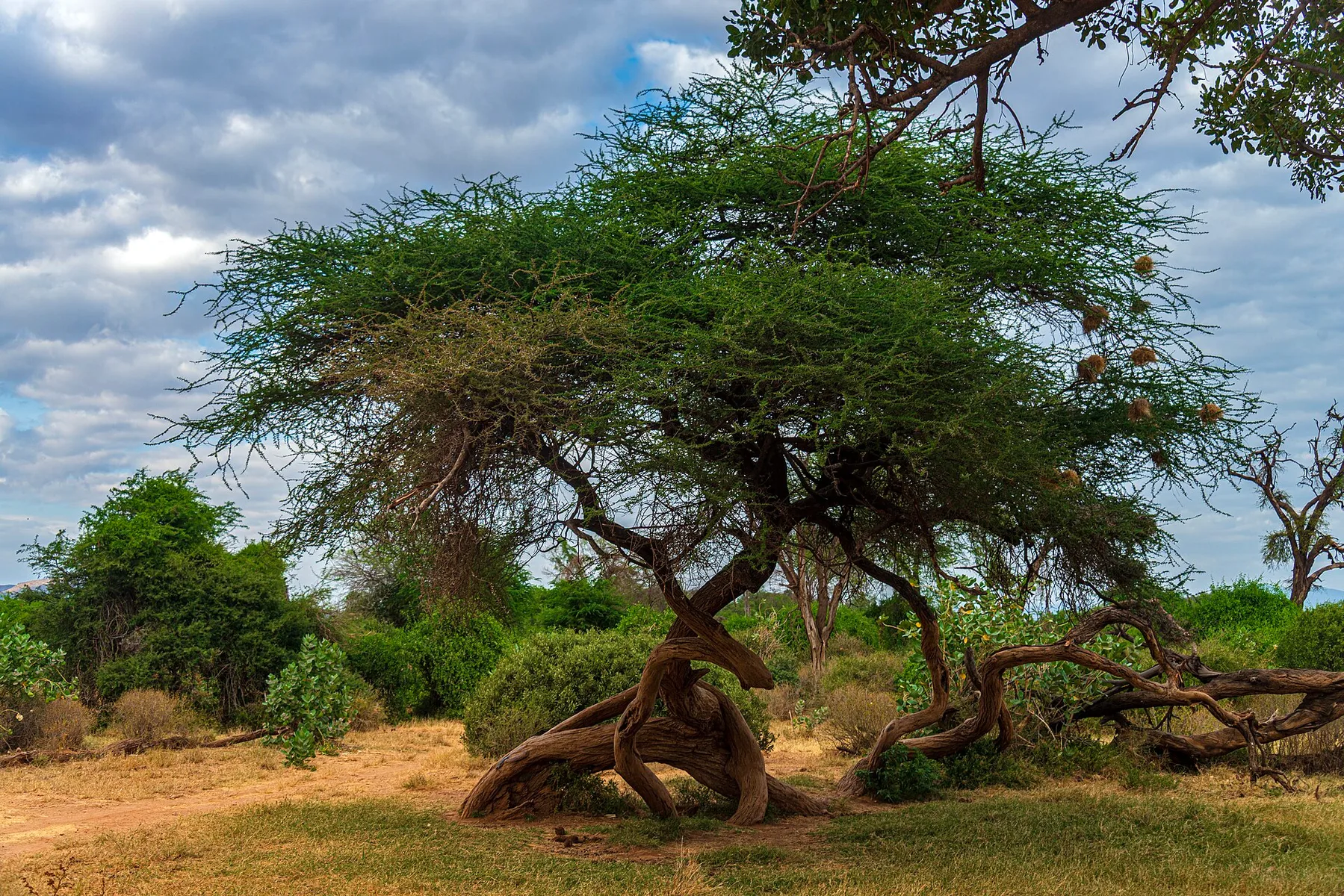
Both places have doum palms, dry-country influence and northern wildlife, but Meru is greener and more varied. Its rivers and springs cross a large park in which woodland can hide an elephant herd until the road turns.
Samburu National Reserve sits on the northern bank of the Ewaso Nyiro. Samburu County describes undulating land, rocky outcrops, grassland savannah, acacias and palm-fringed riverbanks. Buffalo Springs lies across the river, while Shaba extends the dry-country story eastward with its own volcanic and historical character.
| Landscape wish | Better fit |
|---|---|
| Constant dry-country identity | Samburu |
| Several habitats in one long drive | Meru |
| Wildlife gathered along a river corridor | Samburu |
| Rivers plus forest, grass and sanctuary circuits | Meru |
| Red hills and northern drama | Samburu region |
| A broad park that feels difficult to summarise | Meru |
Use the Meru National Park guide and Samburu safari guide to understand each landscape before choosing a lodge.
Wildlife density and search style
Samburu County describes wildlife variety and density among the country's strongest. The reserve's smaller size and river corridor can make a three-night stay feel productive, especially in dry conditions when water shapes movement.
Meru covers more than five times the official core area of Samburu National Reserve. Wildlife can be widely distributed and partly concealed by vegetation. Few vehicles mean less shared information, so the guide relies on habitat, tracks, calls and experience.
| Safari moment | Meru | Samburu |
|---|---|---|
| Long search without another vehicle | Common | Possible, especially away from busy river sightings |
| Several species around water | Strong at rivers and springs | A defining Ewaso Nyiro experience |
| Quick northern-species list | Less predictable | Stronger fit |
| Private-feeling discovery | Major strength | Strong in conservancies and quieter sectors |
| One full day only | Too thin | Still rushed, but wildlife can feel more concentrated |
Neither park guarantees a checklist. Samburu concentrates the search; Meru expands it.

Samburu Special Five or Meru’s wider mix?
The Samburu Special Five are Grevy's zebra, reticulated giraffe, gerenuk, Beisa oryx and Somali ostrich. They are not the only reason to visit, but they give a first northern safari a clear wildlife identity.
Some northern species also occur in Meru, but the park is not the place to promise all five on a fixed schedule. Meru's stronger identity is the complete mix of rhinos, elephants, big cats, plains animals, river wildlife and birds across changing habitat.
| Wildlife goal | Better choice |
|---|---|
| See and learn the Special Five | Samburu |
| Build a broader habitat-led list | Meru |
| Grevy's zebra focus | Samburu and nearby conservancies |
| Reticulated giraffe photography | Samburu |
| Rhino-led northern safari | Meru |
| One park that blends northern and classic species | Meru |
The Samburu Special Five wildlife guide explains identification, habitat and conservation without reducing the reserve to five names.
Rhinos make Meru different
Meru's rhino sanctuary is one of its leading attractions. A good itinerary gives the sanctuary enough driving time and follows current KWS access rules. It still cannot guarantee how close or visible a wild rhino will be.
Samburu is not usually chosen as Kenya's rhino destination. Travellers building a rhino-led route can combine Samburu with Meru, Lewa, Ol Pejeta or Solio.
| Rhino question | Meru | Samburu |
|---|---|---|
| Is rhino central to the park story? | Yes | No |
| Is there a dedicated sanctuary visit? | Yes, under current KWS arrangements | Not the standard reserve experience |
| Can a sighting be guaranteed? | No | No |
| Does the park fit a wider rhino route? | Strongly | Best paired with a specialist rhino area |
Choose Meru if rhinos could decide the trip. Choose Samburu if the Special Five and dry-country wildlife lead.
Elephants in Meru and Samburu
Both landscapes can offer memorable elephant viewing. In Samburu, elephants moving through the Ewaso Nyiro corridor are part of the reserve's visual identity. The river, palms, dust and family herds create strong context.
Meru's elephants appear across a wider range of settings. A herd may emerge from thick green cover, cross open ground or move beside a watercourse with no other vehicle nearby.
| Elephant preference | Better fit |
|---|---|
| River and doum-palm context | Samburu |
| Solitary, quiet sighting | Meru often has the edge |
| Research and conservation stories | Samburu region has strong long-term elephant work |
| Varied background in one park | Meru |
| Maximum predictability in a short dry-season visit | Samburu may concentrate opportunity more clearly |
An ethical guide leaves escape space, never blocks a herd and pays special attention to calves and family movement.
Lions, leopards and cheetahs
Samburu County lists lion, leopard and cheetah among the reserve's larger mammals. Open areas, riverine cover and a strong guide network can create excellent cat sightings, although no species is guaranteed.
Meru also holds all three, but vegetation and low vehicle density can make the search longer. The reward may be a private sighting that develops without other engines arriving.
| Big-cat priority | Better fit |
|---|---|
| Productive three-night search | Samburu |
| Private sighting if found | Meru |
| Leopard around riverine habitat | Both, with patient guides |
| Cheetah in open dry-country scene | Samburu often offers the clearer context |
| Guaranteed cat | Neither |
The guide and number of nights matter more than a marketing claim.
Birds and small wildlife
KWS calls Meru a birdwatchers' paradise, and the park's habitat turnover supports a bird-led itinerary. Samburu's hornbills, vulturine guineafowl, raptors, weavers and dry-country specialists make it equally distinctive for a different list.
| Birding priority | Meru | Samburu |
|---|---|---|
| Maximum habitat variety | Strong advantage | Strong dry-country and river combination |
| Northern dry-country specialities | Present, but less concentrated | Clear advantage |
| Quiet specialist trip | Excellent | Excellent in reserve or conservancy |
| Birding plus rhino sanctuary | Strong | Add another destination for rhino focus |
| Birding plus Special Five | Possible, less reliable | Natural combination |
Do not let a radio call about a lion end every bird stop. A specialist guide should decide with the travellers, not the nearest vehicle.
Visitor numbers and privacy
Meru is one of Kenya's clearest low-traffic park choices. Long stretches without another vehicle are part of the value, not evidence that the guide has taken a wrong road.
Samburu has more established tourism infrastructure and several popular river-area camps. Sightings can draw vehicles, yet the overall rhythm is often calmer than Kenya's most famous reserves. West Gate, Kalama and other conservancy bases can add controlled access and private activities.
| Privacy tool | Meru | Samburu region |
|---|---|---|
| Choose the destination itself | Low traffic is a core strength | Choose sector, camp and season carefully |
| Private vehicle | Valuable for long circuits | Valuable for leaving a crowded river sighting |
| Conservancy stay | Not the national-park model | Major regional option |
| Longer stay | Lets the guide explore distant circuits | Lets the guide leave predictable river loops |
Privacy in Samburu depends on geography. Privacy in Meru begins with the park's visitor volume.
Samburu, Buffalo Springs and Shaba are separate choices
Samburu National Reserve lies north of the Ewaso Nyiro. Buffalo Springs is opposite on the Isiolo side, and Shaba extends farther east. They share a regional wildlife story but differ in scenery, gates, management, fees and lodge positions.
| Area | Distinct planning value |
|---|---|
| Samburu National Reserve | Signature river corridor, broad lodge range and Special Five identity |
| Buffalo Springs | Southern-bank access, springs and lodges positioned for its circuits |
| Shaba | Dramatic scenery, Joy Adamson history and a more remote feel |
| Neighbouring conservancies | Community conservation, privacy and property-specific walks or night drives |
The Samburu, Buffalo Springs and Shaba comparison prevents the phrase “Samburu area” from hiding the actual daily drive plan.
Meru’s scale creates its own location problem
Meru has fewer accommodation choices, but a lodge or cottage position still changes the rhino sanctuary, Elsa's grave, river circuits, gate and airstrip.
| Meru base | Daily consequence |
|---|---|
| Elsa's Kopje area | Inside-park access near Mughwongo Airstrip and Born Free context |
| Rhino River Camp side | Strong sanctuary geography, with exact gate and transfer confirmation |
| iKWETA near Murera Gate | Value and road access, with gate-hour planning |
| Kinna or Murera KWS units | Self-sufficient stay with food, vehicle and facilities planned carefully |
| Special campsite | Maximum immersion, requiring a complete mobile-camp operation |
The where to stay in Meru National Park guide maps the room to the actual safari day.
Accommodation range
Samburu has the broader regional spectrum. Samburu Game Lodge, Samburu Sopa, Samburu Intrepids, Elephant Bedroom and Elephant Watch are among properties Samburu County names in or around the reserve. Buffalo Springs, Shaba and conservancies add more styles.
Meru's smaller set includes Elsa's Kopje, Rhino River Camp, iKWETA, KWS guest houses, cottages and campsites.
| Accommodation wish | Better fit |
|---|---|
| Broad lodge shortlist | Samburu region |
| One leading luxury lodge in a quiet national park | Meru |
| Community conservancy stay | Samburu region |
| KWS self-catering cottage | Meru |
| Private mobile camp | Either, under current rules and strong operations |
| Inside-park simplicity | Meru KWS homes and campsites |
Road access and the northern circuit
Both destinations fit a road route through Mount Kenya or Laikipia. Meru can be approached through Nanyuki and Meru town or through Embu, with the gate matched to the accommodation. Samburu is commonly reached north through Nanyuki and Isiolo toward Archer's Post.
| Route | Natural order |
|---|---|
| Nairobi, Mount Kenya, Samburu, Meru | Dry-country wildlife first, then greener wilderness |
| Nairobi, Meru, Samburu, Laikipia | Broad park first, then river reserve and conservancy finish |
| Nairobi, Ol Pejeta, Samburu | Strong conservation and northern-species route without Meru |
| Nairobi, Meru, Samburu, Mara | Use road for the north and a flight where the cross-country connection is clean |
A private vehicle shared by a couple, family or small group can make the two-park circuit practical and flexible.
Flying into Meru or Samburu
Samburu County says the reserve's central airstrip receives daily services from Nairobi by AirKenya and Safarilink. Lodge and conservancy airstrips add further options, subject to current schedules.
KWS lists Kinna, Mulika and Mughwongo airstrips for Meru. Service frequency and lodge transfer need more careful matching.
| Flight question | Meru | Samburu region |
|---|---|---|
| Scheduled choice | More limited | Broader regional network |
| Airstrip matching | Essential across three named strips | Essential across reserve, Buffalo Springs and conservancies |
| Baggage | Confirm soft-bag allowance | Confirm soft-bag allowance |
| Lodge transfer | Name included strip and vehicle basis | Name included strip and land unit |
| Connecting the two | Road may be more practical | Road sector protects continuous guiding |
Flying both legs can look elegant but add aircraft stops, baggage limits and separate vehicles. Compare door to door.
Safari costs belong on the same basis
Meru uses the KWS visitor categories and current park rules. Samburu National Reserve is managed by Samburu County, while Buffalo Springs and Shaba belong to Isiolo County. Conservancies and lodges can add separate conservation or activity charges.
| Cost line | Meru | Samburu region |
|---|---|---|
| Person entry | KWS category and chargeable visit | Exact reserve or conservancy, visitor category and day |
| Vehicle entry | KWS tariff | County or conservancy basis |
| Road vehicle | Long circuits and northern route continuity | Northern route continuity and reserve sectors |
| Flights | Fewer service options | Broader regional options |
| Accommodation | Small price spectrum | Wide property and conservancy spectrum |
| Activities | Lodge or KWS arrangement | Reserve, lodge and conservancy-specific choices |
Use the Meru safari cost and park fees guide and Samburu safari cost guide with the same dates, group size, room basis and vehicle privacy.
Three nights in Meru
Three nights give two full safari days. One can explore river, woodland and open habitat. The other can focus on the rhino sanctuary and a contrasting sector, with Elsa's history included only when the route remains natural.
| Day | Useful Meru rhythm |
|---|---|
| Arrival | Enter through the gate suited to the lodge, settle in and drive only if light and timing allow |
| Full day 1 | Early habitat-led circuit, midday rest, late drive in a different area |
| Full day 2 | Rhino sanctuary and another sector, with heritage when roads and wildlife timing agree |
| Departure | Final drive or direct road sector to Samburu, Laikipia or Mount Kenya |
Three nights work. Four reveal the park more completely.
Three nights in Samburu
Three Samburu nights can create two strong days along the Ewaso Nyiro and in drier country away from the familiar river loop. The exact base determines whether Buffalo Springs, Shaba or a conservancy belongs in the plan.
| Day | Useful Samburu rhythm |
|---|---|
| Arrival | Reach the correct gate or airstrip, settle in and take a short river drive if time allows |
| Full day 1 | Early river and plains circuit for elephants, cats and Special Five habitat |
| Full day 2 | Explore another sector or conservancy activity rather than repeat the same loop |
| Departure | Final drive or road link to Meru, Laikipia or Mount Kenya |
Do not claim that one drive crosses every reserve. Fees, bridge access, gate hours and road conditions decide.
Four nights favour Meru’s scale
Meru's fourth night provides a third full day. That extra day can absorb a road change, let a guide follow fresh signs, protect birding and keep the rhino sanctuary from dominating the itinerary.
| Fourth-night gain | Meru effect |
|---|---|
| Another morning | Different habitat before heat builds |
| Weather buffer | One shower does not erase a sector |
| Slower wildlife | Time to watch behaviour rather than collect names |
| Heritage | Elsa's story fits without displacing a full drive |
| Fixed transport value | Long access cost is spread across more safari time |
For Samburu, a fourth night is also valuable when the stay includes a conservancy, specialist photography or Buffalo Springs and Shaba. It is less essential for a compact first reserve introduction.
Families: concentrated wildlife or private space?
Samburu's river corridor and distinctive animals can hold children's attention. The larger lodge range creates more family rooms, pools and meal options. Meru's quiet roads and KWS cottages suit self-sufficient resident families and travellers who prefer a slower pace.
| Family need | Better fit |
|---|---|
| First northern safari with limited days | Samburu |
| KWS self-catering cottage | Meru |
| Broad family-room choice | Samburu region |
| Quiet vehicle environment | Meru |
| Special Five learning challenge | Samburu |
| Rhino sanctuary focus | Meru |
Check child ages, open-camp rules, pool supervision, room distance, drive length, activity minimum ages and whether the vehicle can return early.
Honeymoons: river drama or wilderness seclusion
Samburu offers tented camps beside the Ewaso Nyiro, conservancy suites, plunge pools and dramatic dry-country views. Meru offers low traffic, a small luxury portfolio and the emotional thread of Elsa's return to the wild.
| Honeymoon mood | Better fit |
|---|---|
| Dry-country glamour and broad lodge choice | Samburu region |
| Park that feels almost private | Meru |
| Conservancy walks and night drives | Samburu region, property specific |
| Born Free history and slow game drives | Meru |
| Two contrasting northern chapters | Three nights in each |
Romance comes from the daily rhythm and privacy, not a bed decoration. Tell the planner whether the couple wants long drives, late breakfast, private meals or quiet time at the room.
Photographers: visible subjects or layered habitat
Samburu's river, dust, rocky backgrounds and dry-country animals create an instantly recognisable visual language. Meru asks the photographer to work through vegetation, weather and changing habitat.
| Photography priority | Meru | Samburu |
|---|---|---|
| Special Five portrait | Less reliable | Strong advantage |
| Elephants at a river | Possible | Signature opportunity |
| Solitary vehicle | Strong advantage | Strong in quiet sectors or conservancies |
| Layered environmental image | Strong | Strong with dry-country context |
| Maximum subjects in three nights | Lower predictability | Stronger concentration |
A private vehicle, guide who understands light, flexible meals and at least three nights matter in both.
Community-led cultural experiences
Samburu culture should never appear as a generic add-on beside the wildlife. A respectful visit is invited, hosted and shaped by the community. Payment reaches the hosts transparently, photography requires consent and craft purchases remain optional.
Meru and neighbouring Tharaka Nithi communities have their own histories, music, farming, pastoral and conservation contexts. KWS also identifies Mau Mau history and the Born Free story inside the park.
| Cultural question | Why it matters |
|---|---|
| Who owns and hosts the experience? | Establishes consent and control |
| Where does the fee go? | Makes local benefit visible |
| What will visitors actually learn? | Replaces vague entertainment with exchange |
| Can hosts refuse a photograph? | Protects dignity |
| Does the visit displace the best wildlife time? | Keeps the whole itinerary honest |
The Samburu cultural village visits guide sets a practical standard for respectful planning.
Walking, night drives and conservancy activities
Meru's current KWS page mentions guided nature and night wildlife experiences, while lodges publish their own activity menus. The exact authorisation, ranger, age, fitness, timing and fee must be checked.
Samburu National Reserve and neighbouring conservancies operate under different land rules. Walks, night drives, camel experiences and community activities are often conservancy or property specific.
| Activity | Meru | Samburu region |
|---|---|---|
| Day game drive | Core experience | Core experience |
| Guided walk | Confirm current KWS or lodge arrangement | Strong conservancy option, property specific |
| Night drive | Confirm current authorised arrangement | Usually outside ordinary reserve day driving, property specific |
| Camel experience | Not a defining standard activity | Available through selected northern properties |
| Rhino sanctuary | Major park focus | Add Meru, Lewa, Ol Pejeta or Solio for rhino-led planning |
Never treat a conservancy activity as automatically available from every reserve lodge.
Dry season and water dependence
Dry conditions can make Samburu's river corridor especially important. Wildlife may concentrate near reliable water, the landscape becomes dustier and temperatures can shape the daily rhythm.
Meru also responds to dry weather, but its several rivers, springs and broader habitat create a different distribution. Roads may be easier, while vegetation and water availability still vary across sectors.
| Dry-season preference | Better fit |
|---|---|
| Concentrated river life | Samburu |
| Broad circuit with several water systems | Meru |
| Dust and dramatic dry-country colour | Samburu |
| Easier access across a large park | Meru gains from dry roads |
| Heat-sensitive traveller | Choose room cooling, midday rest and vehicle shade carefully in either |
The best month depends on the desired atmosphere, not a universal wildlife guarantee.
Green season changes both parks
Rain can turn Samburu surprisingly green, bring dramatic skies and disperse animals away from the river. Roads and river crossings need current advice. Meru becomes lush and visually layered, with excellent birding and a greater chance that one internal route changes.
| Green-season value | Meru | Samburu |
|---|---|---|
| Dramatic cloud and colour | Excellent | Excellent |
| Low visitor numbers | Extremely strong | Often quieter |
| Birding | Major strength | Major dry-country and migrant interest |
| Road flexibility required | Yes | Yes, especially around river and reserve links |
| Seasonal lodge value | Property specific | Property and conservancy specific |
Use the best time to visit Meru guide and the current road advice for the exact Samburu base.
Ethical wildlife viewing
Low traffic does not remove responsibility in Meru. KWS requires vehicles to remain on established roads, keep at least 20 metres from wildlife, respect a 40 km/h limit and avoid crowding or feeding animals.
Samburu's river corridor can place several vehicles around elephants or cats. A responsible guide leaves movement routes open, gives animals space, avoids surrounding a sighting and departs when behaviour changes.
| Ethical signal | What it protects |
|---|---|
| Distance and quiet | Natural behaviour |
| Open route to water | Herd and predator movement |
| No blocking calves | Elephant family safety |
| No pressure for a photograph | Guide judgement and animal welfare |
| Leaving a crowded sighting | Quality for travellers and wildlife |
Ask how the operator trains and monitors guides, not only what vehicle it owns.
What real travellers say about the choice
In an independent Meru and Samburu discussion, one experienced contributor gave the simplest useful verdict: “Both are excellent.” The complete traveller conversation then explains why Meru's quiet and Samburu's northern species make the decision difficult.
A Samburu visitor called the experience “Worth the cost for the rare wildlife and peaceful environment.” The full Samburu National Reserve review page gives the wider context rather than a slogan.
A Meru guest described “uncrowded, unhurried beauty”. The complete iKWETA review page shows why pace is central to Meru's appeal.
The shared message is not that one park lacks wildlife. It is that Samburu makes northern wildlife easier to read, while Meru gives the search more space.
Watch the two landscapes before deciding
Mekenze Limiri's independent family safari in Meru video shows a local family's pace and the park's varied road environment. The family day trip through Buffalo Springs and Samburu gives another non-operator view of the drier northern setting.
Watch for vegetation, road width, distance between sightings, vehicle concentration and how much of the day follows the river. Edited wildlife sequences are atmosphere, not a promise.
A six-night Meru and Samburu itinerary
| Day | Natural plan |
|---|---|
| 1 | Road or fly to Meru, settle in and take a short drive if timing allows |
| 2 | Full Meru habitat circuit with flexible wildlife focus |
| 3 | Rhino sanctuary and a contrasting sector, heritage if natural |
| 4 | Road from Meru to the exact Samburu, Buffalo Springs or conservancy base |
| 5 | Ewaso Nyiro and Special Five habitat |
| 6 | Another reserve sector or conservancy activity |
| 7 | Final drive, then road or flight onward |
Three nights in each is the clean minimum. Four in Meru and three in Samburu creates a stronger seven-night version.
If only one park fits a five-night northern safari
Five nights are enough for one destination to feel complete, or for one park plus a nearby Mount Kenya or Laikipia stop. Splitting Meru and Samburu into two nights each leaves too much of the holiday on the road.
| Leading priority | Stronger five-night use |
|---|---|
| Special Five and river elephants | Four Samburu nights with a conservancy or Buffalo Springs contrast |
| Rhinos, birds and quiet exploration | Four or five Meru nights |
| Family with self-catering experience | Meru KWS cottage with full vehicle and food plan |
| Broad lodge and activity choice | Samburu region |
| Photography without vehicle pressure | Meru with private vehicle |
| Community conservancy and dry-country wildlife | Samburu and one carefully chosen conservancy base |
One coherent five-night stay usually creates more wildlife time than two impressive names joined by rushed transfers.
Which park should come first?
Starting in Meru lets the trip move from a broad green wilderness toward the compressed dry-country drama of the Ewaso Nyiro. Starting in Samburu gives quick northern-species impact, then lets Meru slow the final days.
| Order | Best for |
|---|---|
| Meru then Samburu | Growing visual contrast and strong final river chapter |
| Samburu then Meru | Immediate wildlife identity followed by quiet exploration |
| Flight decides | Put the fixed service or lodge transfer first |
| Wider route decides | Follow Mount Kenya, Laikipia, Mara or coast connections logically |
The correct order is geographic and emotional, not a permanent rule.
Choose Meru if these sound like you
- Rhinos are a leading priority.
- Long drives without another vehicle sound exciting rather than worrying.
- Birds, rivers, woodland and changing habitat matter as much as a species list.
- Born Free history adds meaning.
- A KWS cottage, campsite or small lodge portfolio feels appealing.
- Four nights in one park fit the schedule.
The Meru safari packages guide turns those preferences into road, fly-in, cottage, family and luxury plans.
Choose Samburu if these sound like you
- The Special Five are a central goal.
- Elephants along a palm-fringed river are the picture in mind.
- A broad lodge or conservancy choice matters.
- Three productive nights fit better than four exploratory ones.
- Community-conservancy activities belong in the trip.
- Dry-country scenery and northern culture are major reasons to travel.
Use the Samburu safari packages guide to choose reserve, Buffalo Springs, Shaba or conservancy access deliberately.
Pack for heat, dust, rain and long drives
The two parks share northern sun, but the daily conditions can diverge. Samburu's dry-country heat and dust make hydration, shade and lens protection especially important. Meru's greener habitats, insects and changing roads reward light rain protection and a complete vehicle kit.
| Item | Why it belongs |
|---|---|
| Refillable water bottle | Both areas can be hot, and single-use plastics are restricted in protected areas |
| Wide-brim hat and sunscreen | Open vehicles and strong equatorial sun |
| Light layer | Early starts can feel cool before the day heats |
| Dust cover or dry bag | Protects cameras and electronics on rough roads |
| Binoculars | Essential for birds, distant cats and animals across the river |
| Insect repellent | Useful around water and greener Meru habitat |
| Small personal medical kit | Remote lodges cannot replace essential medication |
| Soft-sided luggage | Often required on light-aircraft sectors |
Carry only what the vehicle and aircraft can handle, but do not let a minimalist packing list remove medication, sun protection or safe drinking water.
Common comparison mistakes
| Mistake | Better decision |
|---|---|
| Treating Samburu as one land unit | Name reserve, Buffalo Springs, Shaba or conservancy |
| Assuming Meru is empty because wildlife takes longer to find | Value habitat, tracking and low traffic |
| Promising all Special Five in Meru | Choose Samburu when the list leads |
| Promising rhinos in Samburu | Add a rhino-focused destination |
| Comparing room prices | Add entry, vehicle, guide, road or air transfer and activities |
| Spending only two nights in Meru | Protect at least two complete safari days |
| Crossing reserves without checking fees and roads | Name each gate, bridge and payment basis |
The final Meru vs Samburu decision
Choose Samburu when you want a strong northern wildlife identity, the Ewaso Nyiro, the Special Five and a deeper range of camps and conservancies. Choose Meru when you want rhinos, varied habitat, very few vehicles and the pleasure of a large park that does not reveal itself quickly.
For many northern Kenya itineraries, the best answer is both. They share a latitude, not an experience. Three nights in Samburu and three or four in Meru create a journey in which every transfer produces real contrast.
Find your northern Kenya safari fit
Share dates, travellers, wildlife priorities, room style, transport, pace and budget. We will compare Meru and Samburu honestly.