
Safari Vehicles Explained: Land Cruisers, Vans, Roofs and Seats
For several hours each day, the seat, roof, guide and view matter more than the badge on the bonnet.
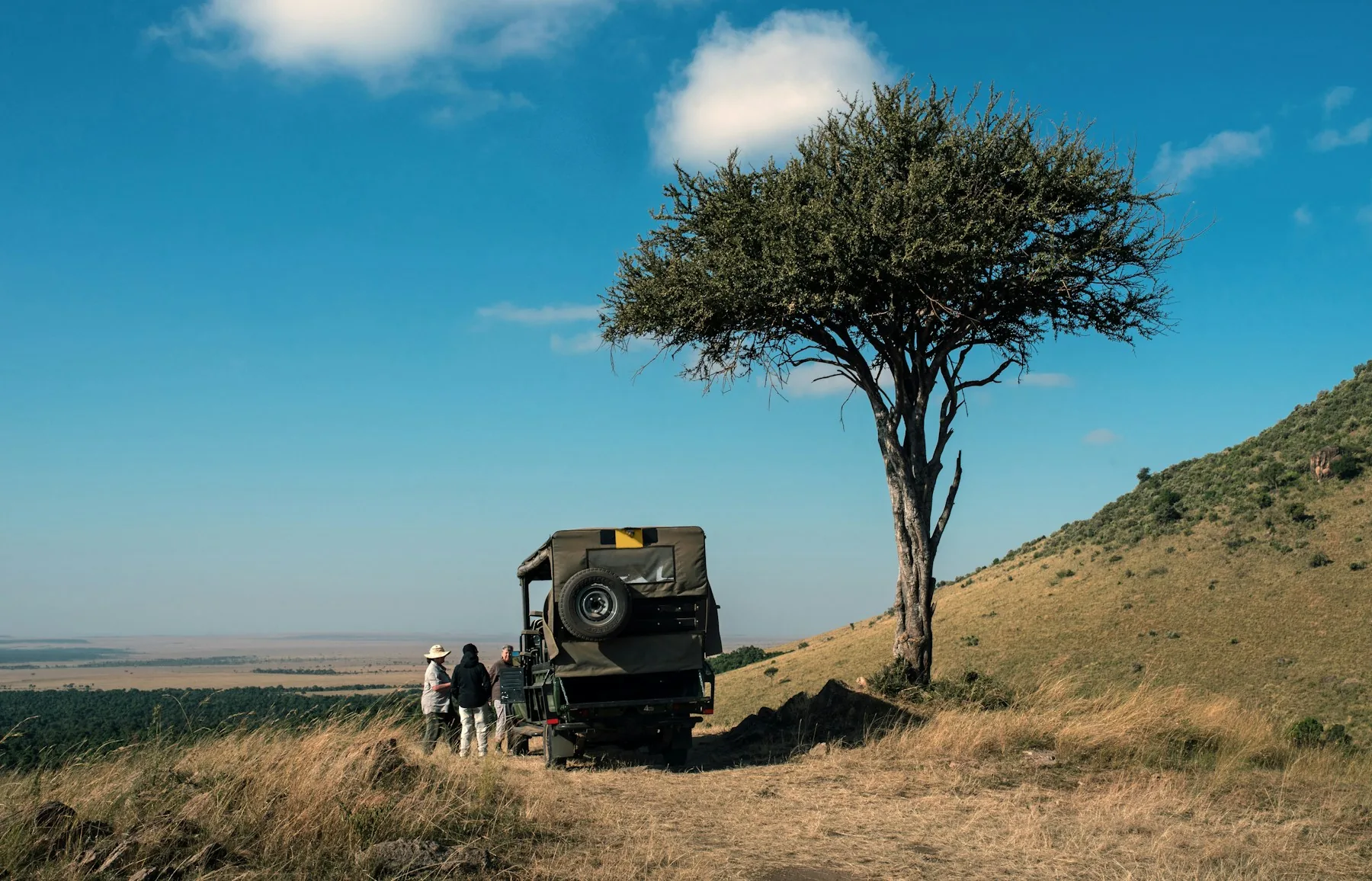
With safari vehicles explained clearly, the choice becomes practical. Kenya road safaris commonly use customised 4×4 Land Cruisers or safari vans with pop-up roofs. Camps may use open-sided vehicles where local rules allow. The best option depends on roads, group size, luggage, photography and whether the vehicle is private.
- Safari vehicles explained at a glance
- Customised 4×4 Land Cruisers
- Safari vans and minibuses
- Open-sided camp vehicles
- Pop-up roofs, hatches and sightlines
- Rows, window seats and capacity
- Private versus shared vehicles
- Guide, communication and ethics
- Transfers, surfaces and fatigue
- Dust, rain, heat and cold
- Camera support and charging
- Bags, roof racks and fly-in limits
- Seat belts and behaviour
- What to check at pickup
- A vehicle brief for NLS
- A worked vehicle choice for three different safaris
- Traveller opinions
- FAQs
Safari vehicles explained at a glance
A seven-day road safari can place guests in the vehicle for transfers, game drives and picnic lunches. Comfort is not a decorative upgrade. Seat width, legroom, suspension, ventilation and how easily each person can reach a window shape the memory of every day.
Vehicle names are not universal standards. Two operators can both promise a 4×4 and deliver very different bodies, seat layouts and maintenance histories. Ask for a current photograph or written configuration for the actual route.
| Vehicle | Strongest fit | Trade-off | Ask about |
|---|---|---|---|
| 4×4 Land Cruiser | Rough roads and long safari routes | Higher operating cost | Rows, age and maintenance |
| Safari van | Value-focused routes with easier approaches | Lower clearance on difficult tracks | 4×4 or 2WD and exact route |
| Open camp vehicle | Immersive local game drives | Weather and limited transfer use | Ponchos, blankets and sharing |
| Minibus or coach | Large transfers | Not a wildlife-viewing substitute | Where the safari vehicle begins |
Customised 4×4 Land Cruisers
Long-wheelbase Land Cruisers are popular because they combine low-range four-wheel drive, clearance, durability and space for several rows. Custom bodies may add pop-up roofs, charging, fridge space and larger windows. The benefit becomes clearest on wet black-cotton soil, rocky northern tracks and long multi-park routes.
The badge does not guarantee comfort. A crowded seven-seat layout can leave the middle passenger leaning for every photograph. Ask whether each guest has a window, how many roof openings exist and whether the rear suspension is suited to the luggage load.
Safari vans and minibuses
A customised safari van can offer a pop-up roof, individual windows and excellent value. It may work well for Nairobi National Park, Amboseli approaches, Nakuru and routes where the roads are predictable. Some are four-wheel drive; many are not.
The weakness appears when marketing treats every road as equal. Lower clearance, wheelbase and traction can matter in deep mud, ruts or remote country. A van is not automatically a poor choice. It is a route-specific choice that should be made honestly.
Open-sided camp vehicles
Open vehicles create an immediate connection to the landscape. There is no glass between the guest and the dawn air, and side visibility can be superb. Camps often use them for local drives rather than highway transfers.
The same openness means dust, cold, rain and less secure storage. Clothing layers and waterproof protection matter. Guests must remain seated when instructed and keep limbs inside. Rules may differ between national parks, reserves and conservancies.
Pop-up roofs, hatches and sightlines
A pop-up roof provides shade while allowing guests to stand within the body. A full-length opening can help several rows, but bodies, support bars and luggage still create blind spots. Short individual hatches may give each row a defined space.
Standing all day is tiring and can block others. A considerate guide rotates angles and positions the vehicle so seated travellers can also see. On transfers, roofs should be closed and passengers belted.

Rows, window seats and capacity
Ask how many guests will occupy the vehicle, not how many seats it contains. Six guests across three rows may work well if every row has broad windows and roof access. Seven or eight can feel crowded with camera bags and winter layers.
Families need age-appropriate belts, supervision and space for comfort breaks. Travellers with long legs, back pain or limited mobility should discuss step height, grab points and the ability to sit near the front. A seat allocation agreed before arrival avoids daily negotiation.
Read the diagram as a question, not a promise. Staggered pairs can give six guests a genuine side window, but conversions vary. A seventh passenger may occupy a centre seat, and a bulky fridge or luggage stack may narrow the aisle. Ask for the occupied-row plan, not a brochure’s maximum capacity.
Private versus shared vehicles
A private vehicle lets one party decide when to leave, how long to wait and which interests deserve attention. Photographers can stay with behaviour, birders can stop for small species and families can return when a child is tired.
Shared drives reduce cost and can be social. They work best when the property limits numbers and guests have similar expectations. Ask about maximum capacity, age rules and whether morning and evening times are fixed.
| Question | Private drive | Shared drive |
|---|---|---|
| Departure time | Usually flexible within rules | Set by camp or group |
| Sighting duration | Your party decides with guide | Compromise among guests |
| Cost | Higher for small parties | Shared across rooms |
| Photography | Best control of angle and pace | Depends on seat and group |
| Family rhythm | Easier to adapt | May be less flexible |
Guide, communication and ethics
A strong guide reads tracks, animal posture, light and other vehicles while driving gently. They explain why a position is chosen and resist crowding or blocking an animal. A powerful vehicle driven badly is still a poor safari.
Share interests early. If the group loves birds, photography, geology or cultural history, say so before the first drive. Agree on radio volume, meal returns and whether silence is welcome. The guide can only balance expectations that have been voiced.

Transfers, surfaces and fatigue
Nairobi to a park may include fast highway, busy town, gravel and corrugation. A short distance can take longer than expected. Build stops into the plan and avoid landing from a night flight straight into the longest transfer if the group needs rest.
Flying can remove road hours but introduces baggage limits and camp vehicles at the destination. Compare door-to-door time, not only flight duration. The fly-in Masai Mara guide explains the trade.
Dust, rain, heat and cold
Dawn in an open or roofed vehicle can be cold, even when the afternoon is hot. Carry an accessible layer, not one buried under luggage. Dust enters through roof openings and windows, so cameras and contact lenses need protection.
Rain changes visibility and track choice. Ponchos, vehicle covers and a dry bag help, but safe driving comes first. Do not pressure a guide to cross flooded ground for a sighting. The best vehicles still have physical limits.
Camera support and charging
Beanbags on a roof rail or window edge are often more useful than a tripod. Ask whether the vehicle supplies them and whether clamps are allowed. Keep lenses and straps within the body so a sudden movement does not send equipment outside.
Charging ports are helpful but should not be the only power plan. Bring charged batteries and secure cables. Serious photographers benefit from a private vehicle, a second empty seat for gear and a guide who understands light and background.
Bags, roof racks and fly-in limits
A road vehicle may carry more than a light aircraft, yet overpacking still affects rear visibility, suspension and access to daily items. Use soft-sided bags and keep a small drive bag for water, layers, medication and camera protection.
If the itinerary combines road and air, the flight allowance should govern the main bag. Do not assume excess luggage will fit or travel on the same aircraft. Ask how hard cases, wheelchairs, child seats and long lenses will be handled.
Seat belts and behaviour
Wear the seat belt on public roads and transfers. Remain inside the vehicle unless the guide confirms a safe, permitted place to leave it. Do not sit on the roof, trail arms outside or ask to drive off-route.
At sightings, speak softly and avoid sudden movement. A cat resting beside a vehicle is not tame. The guide must preserve distance, escape routes and respect for other guests. Report reckless driving or serious wildlife-rule breaches.
What to check at pickup
Look at tyres, seat belts, cleanliness, windows, step height and obvious warning lights. Confirm drinking water, first-aid supplies, communication and the spare tyre. Guests do not need to be mechanics, but a neglected vehicle often shows itself.
Ask who handles a breakdown and whether a replacement can reach remote parts of the route. Mechanical problems can happen to well-maintained vehicles. What matters is prevention, communication and a realistic recovery plan.
| Five-minute check | What you are looking for | Why it matters |
|---|---|---|
| Tyres and spare | Sound tread, no obvious damage, usable spare | Mud, stones and corrugations punish weak tyres |
| Belts and doors | A working belt for every occupied road seat | Transfers are often the fastest part of the trip |
| Roof and windows | Smooth operation, secure locks, no sharp edges | Weather can change quickly and roofs must close for road travel |
| Communication | Guide radio or reliable contact plan | Supports route changes, gates and breakdown recovery |
| Water and first aid | Accessible drinking water and a stocked kit | Remote tracks may be far from shops or clinics |
| Your seat | Legroom, view, step height and room for the day bag | A small discomfort grows during a six-hour drive |
Your safari vehicle brief
Start with the number and ages of travellers, heights or mobility concerns, bag count, camera equipment and whether anyone becomes carsick. Add the non-negotiables: private guiding, guaranteed window seats, child restraints, easy steps, air conditioning or room for a long lens.
Then match the route. A rugged northern circuit, a family Amboseli trip and a fly-in Mara honeymoon may need different vehicles. The right answer is not a universal winner. It is the setup that makes the chosen itinerary comfortable, safe and observant.
A worked vehicle choice for three different safaris
A couple photographing the Mara for four nights may spend more on a private Land Cruiser with only one occupied row behind the guide. The empty space holds beanbags and a second camera body, while the private arrangement gives them time to wait for a leopard to move into better light. Their vehicle choice is buying control of pace and position, not simply a more prestigious badge.
A family of five travelling from Nairobi through Amboseli and Tsavo needs another answer. They may value three usable rows, reliable belts, easy steps, room for soft bags and a guide who plans regular stops. A long-wheelbase Land Cruiser can suit rough sections, but a well-maintained vehicle with thoughtful seating matters more than adding luxury fittings that children will not use.
Two friends on a shorter Nairobi National Park and Naivasha route may decide that a safari van gives them a comfortable window each and keeps the budget available for an extra night. That is not a lesser safari when the roads, weather and vehicle condition fit. The mistake would be accepting a generic promise without confirming the actual machine.
In every case, ask how the vehicle will change if rain damages a road or a breakdown occurs. A capable operator keeps maintenance records, communication and recovery support behind the visible safari. The best choice is the one whose advantages solve the real route and whose compromises the travellers understand before the door closes.
An independent Land Cruiser versus safari van comparison
Chris Chrisman Travel Adventures compares the two after driving through Amboseli, the Masai Mara and Naivasha. The road footage is more useful than a parked-vehicle sales tour because it shows the surface, ride and pop-up roof in context.
What travellers say after the trip
These are exact words from public reviews and discussions. Each person had their own route, budget and expectations, so the value is in the detail rather than treating one experience as a promise.
I would never recommend a shared safari. Ever. Period.
A solo traveller whose one shared drive felt completely different from the private experience they preferred.
Two people sharing a vehicle is the expensive way to do it though, since the Land Cruiser and guide cost the same whether there are two of you or six.
A safari discussion explaining why private space affects the per-person price.
A slightly more expensive itinerary with a great guide often ends up being much better value than the cheapest quote.
Advice from the same planning discussion, placing guide quality above a vehicle label alone.
Land Cruiser with pop up roof is the way to go.
One traveller’s decisive answer after comparing a 4×4 with the cheaper van option.
I don’t see a need in an “open” vehicle
A photographer pushing back on the idea that open sides are automatically better than a well-positioned roof opening.
The pop-tops are nice when you are at sightings, but I much prefer the open sided safari vehicles.
The opposite preference, which is exactly why vehicle choice should follow the route and guest rather than a universal ranking.
Safari vehicle questions
Which vehicle is best for a Kenya safari?
A customised 4×4 Land Cruiser is versatile for rough routes, while a well-maintained safari van can suit paved approaches and tighter budgets. Configuration and guide quality matter.
Is a safari van safe?
A licensed, properly maintained van driven responsibly can be suitable. Ask about seat belts, tyres, maintenance and the intended roads.
What is a pop-up roof?
It is a raised roof section that allows passengers to stand safely inside the vehicle and view wildlife while retaining shade.
Are open vehicles used in Kenya?
Yes, especially by some camps and conservancies. Their use depends on the area, weather, transfers and local rules.
Do safari vehicles have air conditioning?
Some closed vehicles do, but many rely on windows and roof ventilation. Dust and road conditions also affect when air conditioning is useful.
How many people share a vehicle?
It varies. Ask for the maximum passengers, occupied rows and whether the drive is private or shared.
Which vehicle is best for photography?
A private vehicle with an experienced guide, few occupied rows, usable roof space and supports such as beanbags is usually best.
Can children stand through the roof?
Children need direct adult supervision and must follow the guide’s safety instructions. The vehicle should be stationary and the situation judged safe.
Where does luggage go?
It may sit in a rear compartment, roof rack or trailer. Soft bags are often easier, especially when flights are included.
Can NLS arrange a private safari vehicle?
Yes. Private vehicles and suitable seating can be built into the itinerary subject to route and availability.
Sources and further reading
These sources cover park conduct, passenger safety and the first-hand arguments travellers make after comparing vehicles on safari.
Let the vehicle support the safari
Share the group size, route, camera gear and comfort needs. We will match the drive setup to the experience.
Choose your safari vehicle
Tell us who is travelling, the route, luggage, mobility needs and whether photography is a priority.