
Amboseli’s Big Tuskers: Craig, Tim and the Next Generation
Craig once walked out of the woodland with ivory almost brushing the grass. Tim crossed farms and borders and survived wounds that could have ended his life. Their natural deaths closed two famous chapters, but Pascal, Esau, Tee-Jay and younger bulls keep the story moving.
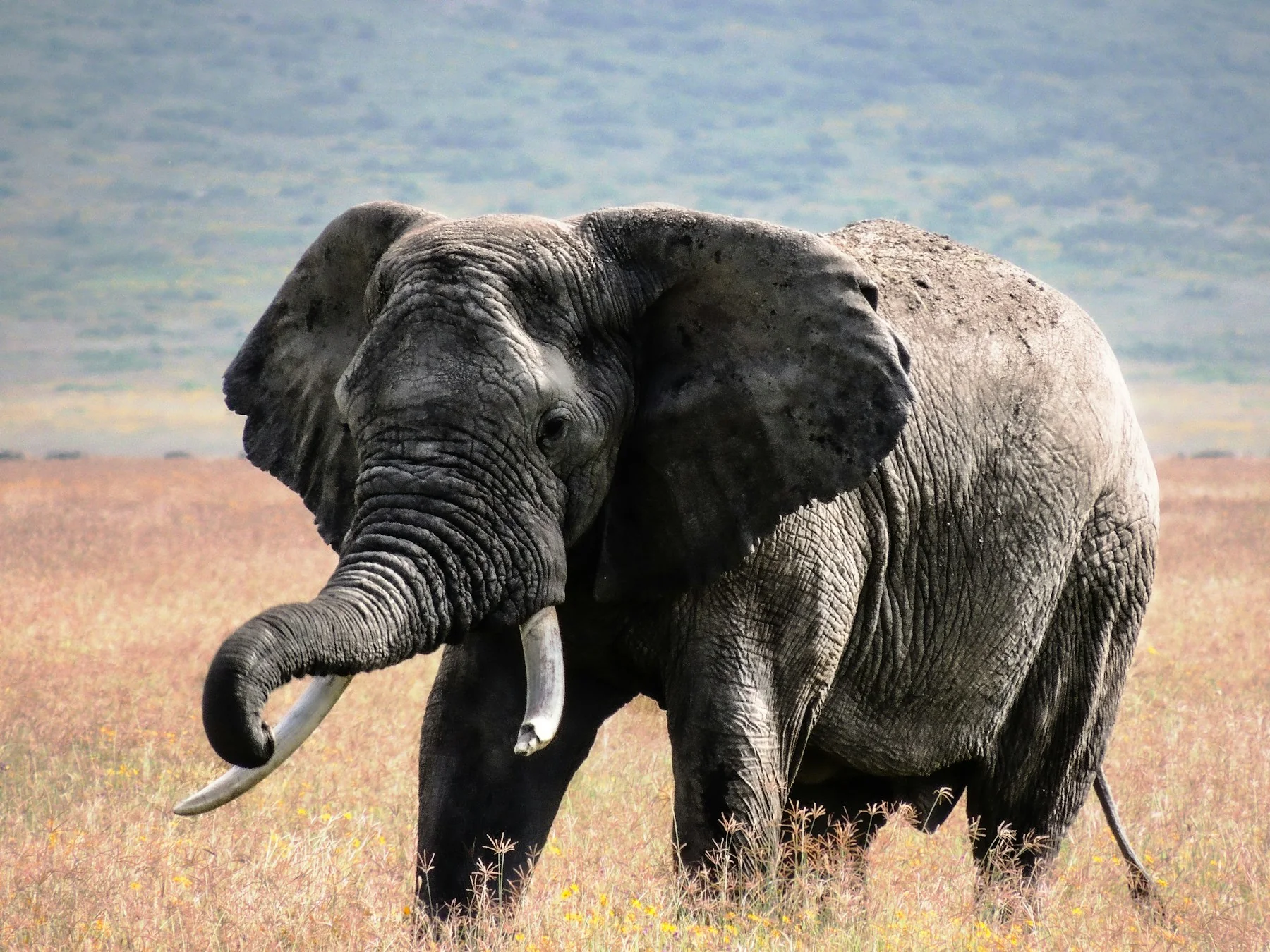
Amboseli’s big tuskers are mature male elephants whose exceptional ivory, age and individual histories have made them symbols of the wider Amboseli ecosystem. Craig died naturally at 54 in January 2026, six years after Tim also reached a natural end. Their lives matter because they show what long protection can make possible.
- What makes an elephant a big tusker?
- Craig’s life and natural death
- Tim, the bull who survived people and drought
- Other recognised and emerging bulls
- Watch the tuskers’ story
- Why some bulls carry extraordinary tusks
- The social importance of mature male elephants
- Where great tuskers move in the Amboseli ecosystem
- Poaching, conflict and shrinking movement routes
- How Amboseli researchers recognise and follow bulls
- When and where might you see a big tusker?
- Ethical viewing around a great tusker
- Photographing tusks, body and landscape
- What travellers remember about the encounter
- Planning an Amboseli big tusker safari
- Traveller opinions
- FAQs
What makes an elephant a big tusker?
Big tusker is a descriptive conservation and safari term, not a formal species category. It refers to an elephant whose tusks are exceptionally long or heavy. The phrase super tusker is often reserved for an elephant carrying tusks near or above one hundred pounds each, though articles and guides do not always apply that threshold consistently.
The distinction matters because a long-looking tusk can be deceptive. Camera angle, body size and broken symmetry change what a visitor sees. Researchers identify the elephant first, then rely on known history and measurements where available. A famous name should never be assigned from one distant photograph.
| Term | Useful meaning | Important caution |
|---|---|---|
| Tusker | An elephant with notable visible tusks | Most adult elephants have some ivory |
| Big tusker | Exceptionally long or heavy tusks | No single universal cutoff |
| Super tusker | Often about 100 pounds per tusk | Popular sources apply it loosely |
| Emerging tusker | Younger bull with unusual potential | Future size and survival are unknown |
Craig’s life and natural death
Craig was born around 1972, the year the Amboseli Elephant Research Project began. He belonged to the well-studied CB family and was recognised by his ears, immense downward-sweeping tusks and unusually calm manner around familiar vehicles. For more than five decades he moved through the national park, community land and conservancies.
Craig died of natural causes on 3 January 2026 at the age of 54. That fact changes the honest safari promise: nobody can book a sighting with Craig now. What remains is his recorded life, the calves he fathered and the proof that sustained protection allowed an elephant carrying valuable ivory to grow old in the wild.
Tim, the bull who survived people and drought
Tim was born in 1969 and became one of Kenya’s most recognisable elephants. His range brought him into farmland, where crop conflict exposed both people and elephant to danger. He survived spear wounds and other incidents with help from conservation and veterinary teams, and images of his huge tusks carried the Amboseli story far beyond Kenya.
He died naturally in February 2020 at about fifty years old. Tim’s body was recovered with the ivory intact, a fact that matters in a continent where many large-tusked elephants were lost to poaching. His legacy is not that a famous animal was invincible. It is that protection required rangers, community cooperation, rapid response and room to move.
Other recognised and emerging bulls
Big Life’s 2026 reporting names Pascal and Esau among the great bulls still being actively protected. Pascal is an older, dominant breeding bull with a damaged right ear. Esau crosses the invisible international border and has been fitted with a protective collar after conservationists responded to the risks beyond Kenya.
Tee-Jay, often written TJ, was 36 in Big Life’s July 2026 profile. He belongs to the T family: Tim was his uncle and Tolstoy his great-uncle. His tusks and lineage make him an important prospect, but survival is not destiny. One Ton, another celebrated bull of the wider Amboseli-Tsavo landscape, died naturally in July 2026 after more than five decades of life.
A lesser-known bull is not a consolation prize. Watch how he selects food, greets another male, tests the air or moves between vehicles. The future of great tuskers depends on younger males surviving long enough to express their genetics, not on keeping the safari spotlight fixed on yesterday’s most famous name.
| Elephant | Place in the story | What is known |
|---|---|---|
| Tim | Historic Amboseli tusker | Born in 1969; died naturally in February 2020 |
| Craig | CB-family super tusker | Died naturally at 54 on 3 January 2026 |
| One Ton | Amboseli-Tsavo landscape bull | Died naturally after more than five decades in July 2026 |
| Pascal and Esau | Current protected super tuskers | Featured in 2026 Big Life and PBS reporting |
| Tee-Jay | Emerging T-family tusker | Age 36 in a July 2026 Big Life profile |
| What to record | Why it helps |
|---|---|
| Both ear profiles | Tears and holes aid identification |
| Tusk shape and broken tips | Separates similar-looking bulls |
| Location and companions | Adds context without chasing |
| Date and behaviour | Makes a useful observation |
| Guide or research source | Prevents invented names |
Watch Craig, Pascal and Esau in the Amboseli landscape
PBS Nature’s Tusker: Brotherhood of Elephants follows Craig, Pascal and Esau through musth, drought, social bonds and the border risks that shape a bull’s life. The film was made before Craig’s death, so watch it as the final recorded chapter of a living elephant, not as a promise that he can still be found.
The programme is a wildlife documentary rather than a competing safari promotion. It gives useful context for Pascal and Esau, two of the bulls discussed here.
Why some bulls carry extraordinary tusks
Tusks are enlarged incisor teeth. Elephants use them for digging, stripping bark, moving objects, fighting and display. Genetics influence potential size, while nutrition, injury, breakage and age shape the result. Bulls continue gaining body mass for decades and can carry much heavier ivory than most females.
Selection by ivory hunting removed many large-tusked elephants before they could reproduce, making the survival of old bulls especially important. A broken tusk does not make an elephant less healthy or significant. It may record years of work, conflict or an ordinary accident hidden from every camera.
The social importance of mature male elephants
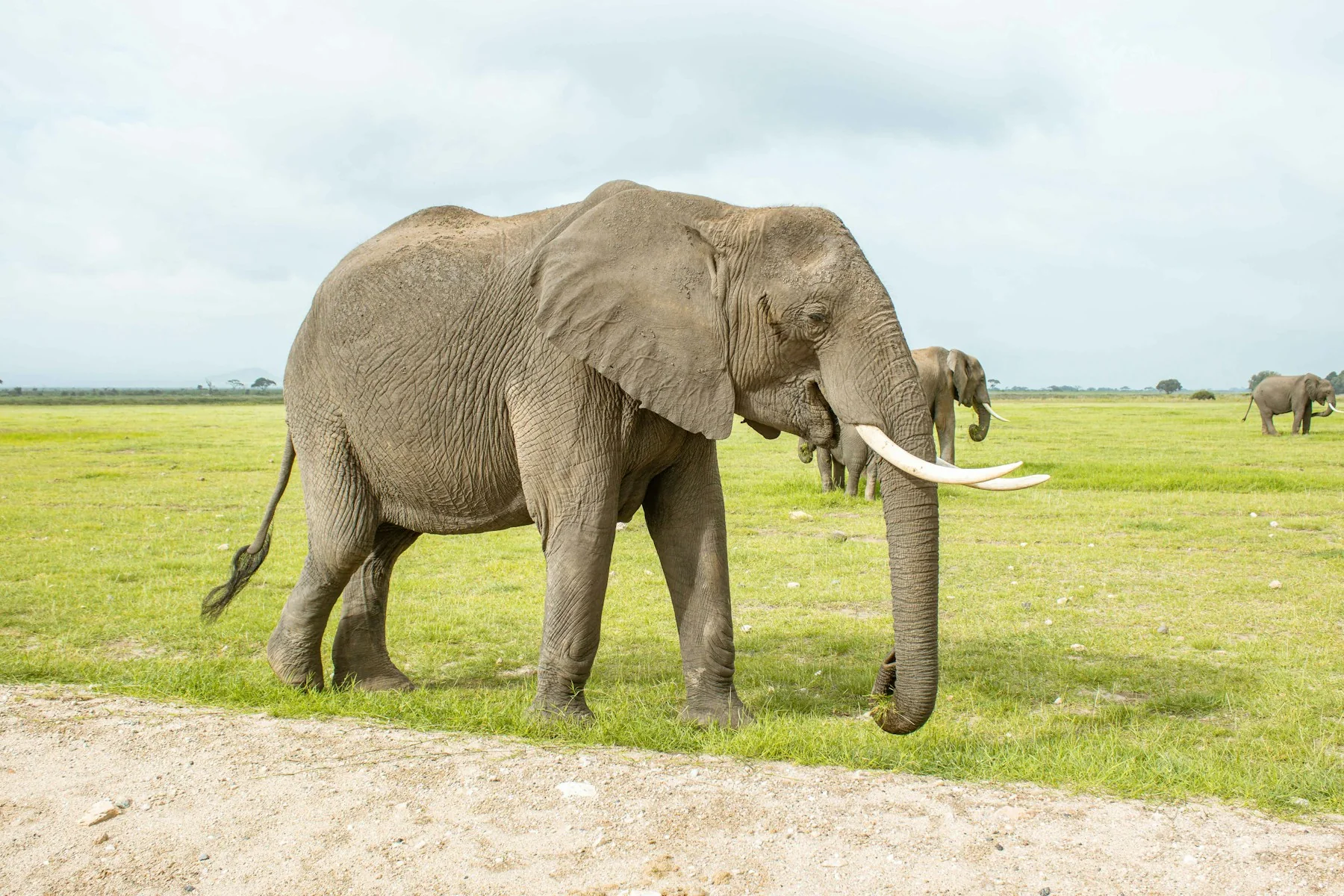
Male elephants gradually leave their natal families, but they do not enter an empty social world. Younger bulls associate with older males, meet at resources and learn through repeated contact. Mature males can influence the timing and behaviour of younger animals, while musth structures competition and breeding.
Seeing an old bull alone does not mean he is lonely. Watch the wider scene for other males, distant families and directional movement. The language of a solitary rogue belongs to old storytelling. Modern elephant research reveals relationships, memory and social learning that continue long after a bull leaves his mother.
Where great tuskers move in the Amboseli ecosystem
Amboseli National Park protects a vital dry-season core of swamps and plains, but the wider ecosystem is far larger. Elephants follow water, forage, rainfall and social opportunity across community rangelands, conservancies and corridors toward Kilimanjaro and the Chyulu landscape. A bull may disappear from familiar circuits because the wet season opened better feeding elsewhere.
This mobility explains why a conservancy sighting can be as authentic as one inside the park. It also exposes elephants to farms, roads, settlement and conflict. Landowners living with elephants carry real costs. Tourism contributes most meaningfully when land access, employment and conservation payments reach the people who keep those routes open.
Poaching, conflict and shrinking movement routes
Ivory poaching is the obvious threat, but it is not the only one. Crop raiding can destroy a household’s food and income in one night. Retaliation, spearing, poisoning, road collision, drought and blocked corridors can end an elephant’s life. A celebrated bull may receive special attention, while unknown elephants face the same landscape.
Protection therefore joins ranger intelligence, veterinary response, community scouts, conflict deterrence, land agreements and reliable local benefit. Big Life Foundation and other ecosystem partners work beyond the park boundary because the bulls do the same. Conservation cannot depend on a guard following one famous elephant forever.
How Amboseli researchers recognise and follow bulls
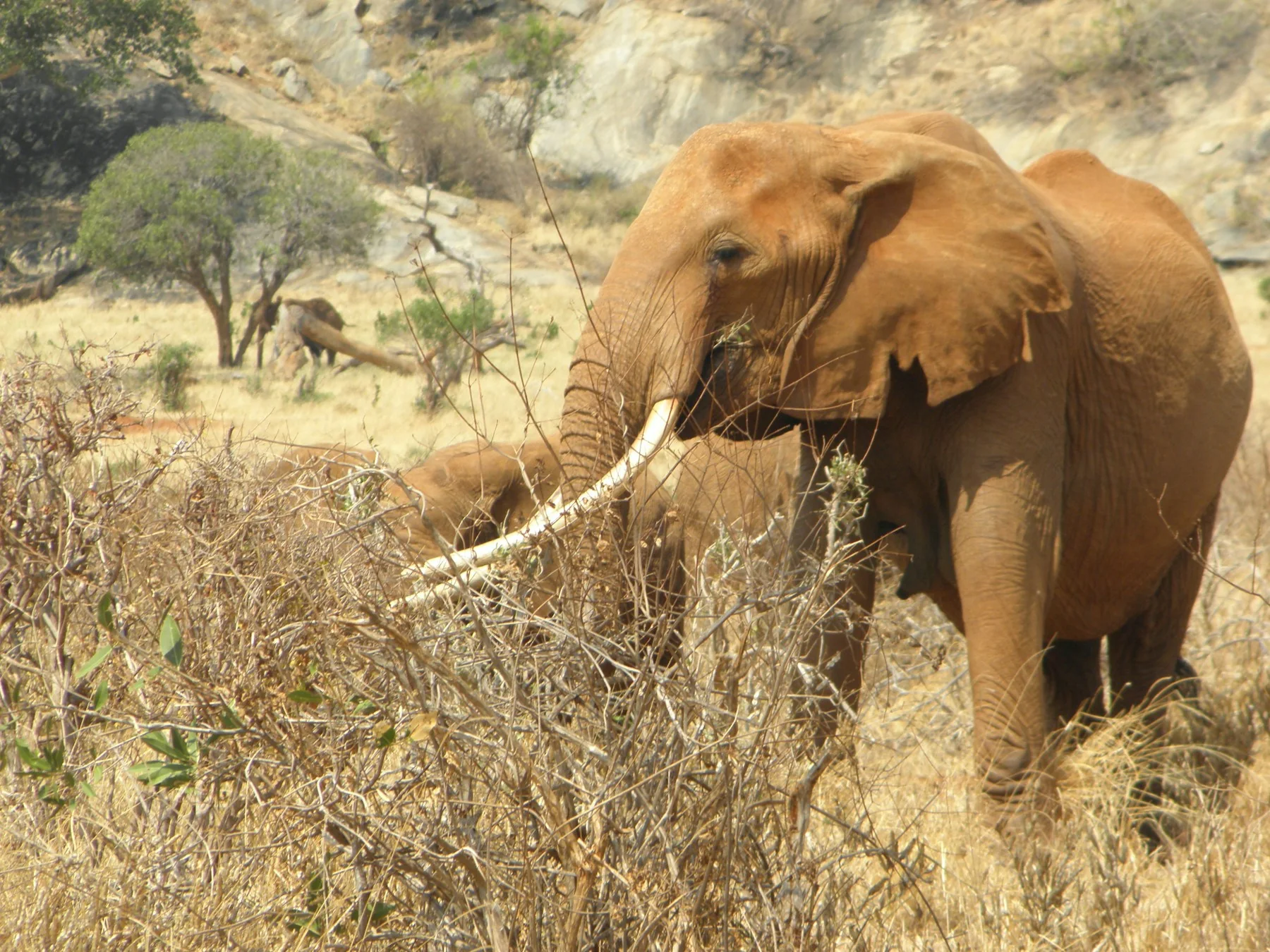
The Amboseli Elephant Research Project began in 1972 and has built one of the world’s longest continuous individual-based elephant records. Ears, tusks, scars, body shape and repeated associations allow researchers to recognise elephants across years. Birth, death, family, movement and behaviour records turn a sighting into a life history.
Tourism photographs can help only when identification, date and location are reliable and sharing does not create pressure on the animal. Never broadcast a sensitive live location to attract vehicles. If a guide believes an observation matters, let established research or conservation contacts decide what information is useful.
When and where might you see a big tusker?
Dry periods can concentrate elephants around reliable water, while early mornings and late afternoons offer cooler movement and gentler light. Mature bulls may use woodland, open plains, community land or conservancies rather than standing beneath Kilimanjaro. Current local knowledge matters more than an online pin from last month.
Choose two or three nights and a private vehicle if the search matters. Tell the guide that a patient bull sighting is more important than the fastest Big Five count. Then release the itinerary from the promise. The best time to visit Amboseli guide explains how water, rain and visibility change the wider elephant scene.
Ethical viewing around a great tusker
KWS asks vehicles to stay on established roads, keep at least twenty metres from wildlife and give animals right of way. Several vehicles converging on a named bull can form a wall even when each driver believes their own position is acceptable. Keep an exit route open and leave before the elephant must push through the crowd.
Do not call, whistle, feed or ask the driver to provoke a head-on pose. A bull in musth needs more space. Follow the guide if he chooses to reverse or abandon the angle. Ethical viewing is not a sacrifice made after the photograph. It is the condition that makes the photograph honest.
Photographing tusks, body and landscape
A telephoto lens lets the photographer work at distance and capture ear detail, eye, trunk and ivory. A wider focal length becomes powerful when the elephant approaches by choice or the composition includes mountain, dust or wetland. Low angles exaggerate tusks, so include full-body and side views if identification matters.
Expose for dark skin against a bright sky, use enough shutter speed for a walking animal and protect equipment from dust. Avoid spending the whole encounter checking the rear screen. The Amboseli photography guide covers vehicle position, mountain light and fieldcraft in more depth.
What travellers remember about the encounter
The independent accounts below share one striking detail. The camera eventually becomes less important. One photographer lowered it simply to watch Craig. Another remembered the improbable scale of the animal. A visitor meeting TJ described the moment without a camera as a core memory.
Those responses explain the appeal better than a list of tusk measurements. A great bull makes time visible. His body carries decades that began before many visitors were born. The right safari does not reduce that life to proof that a bucket-list name was collected.
Planning an Amboseli big tusker safari
Allow two nights at minimum and choose three for a serious elephant or photography focus. Use a private vehicle, ask for an experienced elephant guide and select a lodge whose location works for the national park and any conservancy activity included. Confirm rules and fees for each area rather than assuming one park ticket covers the ecosystem.
Read about Amboseli elephants before travelling, then arrive curious about every family and bull. Pascal, Esau or Tee-Jay may be elsewhere in the wider ecosystem, while another magnificent male may own the morning. The truest success is leaving with more respect for the whole population than for the name that first drew you there.
What travellers say after the trip
These are exact words from public reviews and discussions. Each person had their own route, budget and expectations, so the value is in the detail rather than treating one experience as a promise.
As a wildlife photographer, I expected to spend the whole time looking through my viewfinder. Instead, I found myself lowering my camera.
An independent photographer describing an hour with Craig in a conservancy bordering Amboseli.
It was amazing to be so close to an animal of this size in the wild.
A traveller recalling an unexpected final-drive sighting of Craig with Kilimanjaro behind him.
I had a moment of locking eyes with TJ in front of our car with no camera and it is the most surreal, core memory.
A visitor responding to photographs of another recognised Amboseli tusker.
Amboseli big tusker questions
What is a big tusker?
It is an informal term for an elephant carrying exceptionally large tusks. Super tusker is often used when each tusk is around or above 100 pounds, but popular usage is not always consistent.
Who is Craig the elephant?
Craig was a famous CB-family male known for exceptional, ground-sweeping ivory. He lived in the wider Amboseli ecosystem and died naturally at 54 in January 2026.
Is Craig still alive?
No. Craig died of natural causes on 3 January 2026. His long protected life, research record and descendants remain part of the Amboseli tusker story.
Who was Tim the elephant?
Tim was a celebrated Amboseli ecosystem bull born in 1969. He survived conflict and spearing incidents before dying naturally in February 2020.
Can a safari guarantee a named big tusker?
No. Pascal, Esau, Tee-Jay and other bulls range across a large ecosystem. A promise of any named wild elephant should be treated with caution.
Where are Amboseli big tuskers seen?
They may use the national park, community land and neighbouring conservancies. Their movements follow resources, social conditions and individual choices.
Why do some elephants grow very large tusks?
Genetics, sex, age, nutrition and survival all matter. Males continue growing through much of life, allowing older bulls to carry especially heavy ivory.
What is the best lens for a tusker?
A flexible telephoto such as 100 to 400mm works well from a respectful distance, while a wider lens can include Kilimanjaro and the landscape when the elephant chooses to come closer.
How should vehicles behave around a bull?
Give him an open route, remain quiet, stay inside, avoid surrounding him and follow the guide. A bull in musth needs especially generous space.
How many nights improve the chance of seeing big bulls?
Two nights are a useful minimum and three create more opportunity. Duration improves the search but never creates a guarantee.
Sources and further reading
Official park, heritage, tourism, aviation and regulatory sources support the practical details in this guide.
Come looking for a long life, not only long ivory
Share the dates, number of nights and whether photography or elephant behaviour matters most. We will build a patient Amboseli safari that leaves every bull free to choose the encounter.
Plan an elephant-focused Amboseli safari
Tell us your dates, group, photography equipment, preferred pace and the other Kenya destinations you want to connect.