
Mombasa Diving and Snorkeling Guide: Reefs, Marine Parks, Safety and Seasons
Above water, the coast looks simple. Below it, current, buoyancy, coral and certification decide the experience.

This Mombasa diving and snorkeling guide explains how to explore the north-coast reefs and Mombasa Marine National Park safely. Choose a reputable centre, match the site to swimming or certification level, confirm current and visibility, protect coral, and never let a promised animal sighting override sea conditions.
- Mombasa diving and snorkeling guide at a glance
- Mombasa Marine National Park and Reserve
- Snorkeling for beginners
- Scuba diving for certified and first-time divers
- Choosing a dive or snorkel centre
- Reefs, wrecks and site selection
- Weather, monsoon wind and visibility
- Marine life and realistic expectations
- How to protect the reef
- Medical fitness and flying after diving
- Marine activities with children
- Mombasa vs Diani, Watamu and Malindi
- What to pack for the boat
- How to place diving or snorkeling in the itinerary
- How to record and review a marine experience
- Traveller opinions
- FAQs
Mombasa diving and snorkeling guide at a glance
Mombasa Marine National Park and Reserve protects a coral-reef seascape off the north coast. KWS lists boat access from Serena, Severin, Travellers, Nyali and Voyager beach gates. That means the hotel and launch point can change road time before the boat even moves.
A resort address does not prove that the best site is directly offshore. Operators choose launch, reef and depth based on tide, current, wind and group ability. Build the activity from those facts rather than a generic promise of crystal water.
| Experience | Who it suits | Main check |
|---|---|---|
| Glass-bottom boat | Non-swimmers and families | Visibility and boat capacity |
| Guided snorkeling | Confident beginners upward | Flotation and guide ratio |
| Introductory scuba | First-time diver | Medical form and instructor |
| Certified reef dive | Qualified divers | Depth, current and recent dives |
| Private charter | Families or photographers | Boat, crew and site limits |
Mombasa Marine National Park and Reserve
The park was gazetted in 1986 to protect coral reefs and associated biodiversity. KWS describes a fully protected core and a larger multiple-use reserve. That distinction explains why fees, permitted activities and conservation rules matter even when the beach itself feels open.
Marine life moves. Coral condition, fish abundance and visibility differ among sites and years. An operator should describe the planned habitat without promising a catalogue. The aim is to see what the reef is doing that day.
Snorkeling for beginners
A beginner should be comfortable putting the face in water, clearing a mask and breathing through a snorkel before leaving shallow shelter. A flotation vest can reduce effort. The guide needs to know about anxiety, asthma, mobility or weak swimming before the boat leaves.
Do not let group pressure force a nervous person into open water. A glass-bottom boat may be the better experience. Good guiding keeps people close, explains hand signals and ends the session before cold, sun or fatigue makes the return difficult.
Scuba diving for certified and first-time divers
Certified divers should provide agency, level, logged experience, last dive and medical information. A long gap may require a refresher. Introductory dives follow a different supervised programme and are not a shortcut around training.
The centre chooses a site within depth, current and experience limits. A diver who has only used warm, still water may need a gentler first ocean dive. Honest self-assessment creates more enjoyment than claiming confidence to reach a famous site.
Choosing a dive or snorkel centre
Ask about recognised instruction, guide ratio, oxygen, first aid, emergency communications, boat maintenance, equipment servicing, insurance and cancellation. Inspect the mask, regulator, buoyancy device and cylinder rather than accepting visibly poor gear.
For snorkeling, ask the same serious questions in simpler form: who watches swimmers, what flotation is carried, how the boat recalls the group and what happens if conditions worsen. Cheap water time becomes expensive when safety is treated as an extra.
Reefs, wrecks and site selection
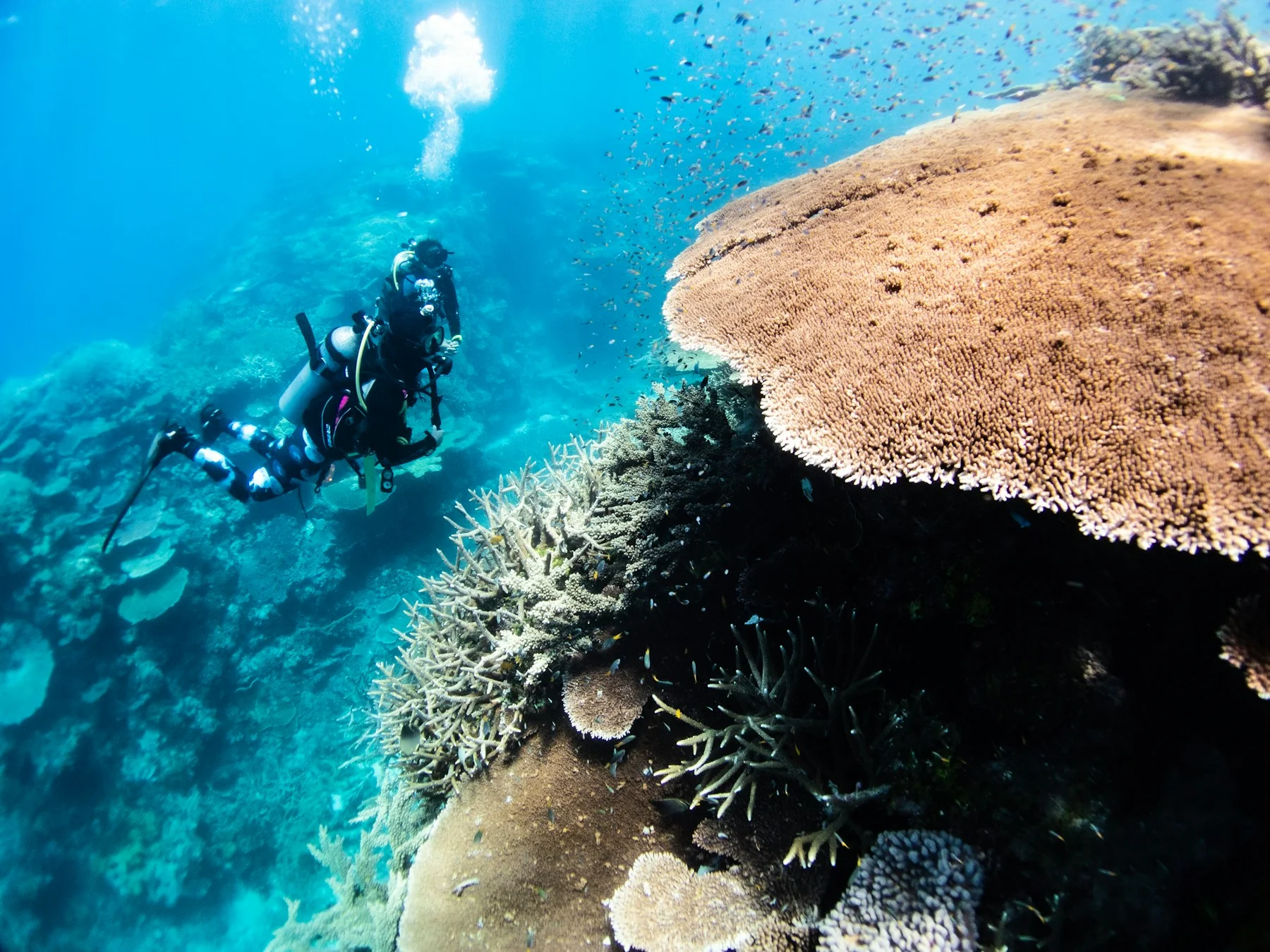
Mombasa’s wider coast offers shallow coral gardens, reef edges, drop-offs and wreck diving. Nyali and Bamburi are the practical shore bases for much of the marine park. Local centres use names such as Coral Garden and Shark Point, but the chosen site must still fit tide, current, visibility and diver experience on the day.
The MV Dania is the best-known wreck. The former cargo vessel was prepared and deliberately sunk in 2002 near Leven Reef as an artificial reef. Sources place it upright in roughly 30 metres of water, with shallower structures accessible above the seabed. Depth alone does not make it a beginner dive, and penetration requires the right training.
| Site type | Likely appeal | Non-negotiable check |
|---|---|---|
| Shallow coral garden | Snorkellers, introductory experiences and relaxed reef observation | Tide, flotation, guide ratio and coral-safe entry |
| Reef edge or drop-off | Certified divers seeking changing depth and larger-water movement | Current, certification and recent experience |
| Shark Point type reef | Experienced divers comfortable with deeper reef conditions | Actual site plan, depth, current and wildlife-free expectations |
| MV Dania exterior | Qualified wreck-interested divers | Depth limit, ascent plan and no untrained penetration |
| Glass-bottom boat route | Families and non-swimmers | Boat capacity, shade, visibility and safe boarding |
Weather, monsoon wind and visibility
January and February are hot and often relatively dry, while July to October are generally cooler and drier. Monsoon winds, rain, tide and swell influence surface comfort and visibility. A broad climate window cannot replace a morning marine forecast.
Use the coast timing guide for seasonal context. Book water days early in the stay so a cancellation has room to move. Respect the skipper or instructor who says no.
Marine life and realistic expectations
Reef fish, corals, invertebrates and occasional larger animals form the experience. Turtles, rays, dolphins or sharks may appear but should not be sold as inclusions. Behaviour and habitat are more reliable subjects than a species checklist.
Ask the guide to identify cleaning stations, feeding shapes, camouflage and coral forms. The diver who sees relationships leaves with more than the person who spent the entire dive hunting for one turtle.

How to protect the reef
Divers should secure gauges, cameras and alternate air sources, maintain distance and avoid kicking coral. Snorkelers should not stand on reef or collect shells. Nobody should feed fish, handle turtles or anchor on living coral.
KWS marine guidance prohibits touching, feeding and removing marine life. Sunscreen, waste and plastic choices also matter. The protected area is not a stage built for visitors; the activity exists because habitat still survives.
Medical fitness and flying after diving
Complete medical forms honestly. Ear, sinus, heart, lung, pregnancy or medication questions may require a doctor familiar with diving medicine. Do not dive with congestion or after heavy alcohol use. Hydration, rest and sun protection affect comfort.
Allow the recommended surface interval before flying or travelling rapidly to altitude. The correct interval depends on the dive profile and current agency guidance. A safari flight or highland drive after the coast must be part of the dive plan, not discovered at check-out.
Marine activities with children
Children vary in age, size, swimming and attention. Confirm minimum ages, child equipment, life jackets, shade, toilet and boat length. One adult may snorkel while another remains with a child on a glass-bottom boat.
Do not use wildlife excitement to override fear. A calm shallow introduction can create a future diver. A long choppy crossing can do the opposite. Private boats help some families, but still require clear safety standards.
Mombasa vs Diani, Watamu and Malindi
Mombasa suits travellers staying on the north coast who also want Fort Jesus, Old Town and easy city access. Diani combines a long resort beach with southern marine options. Watamu and Malindi sit beside protected reef and creek systems with a different town rhythm.
Read the three-way marine comparison before moving hotels for one activity. Sometimes the best choice is a strong local operator near the existing itinerary.
What to pack for the boat
Pack swimwear, cover-up, hat, reusable water bottle, secure footwear, towel if not provided, dry bag and prescribed medication. Certified divers should bring cards, logbook and any personal mask or computer they trust.
Leave jewellery and unnecessary electronics at the hotel. Secure cameras with appropriate straps without dangling over coral. Ask whether reef-conscious sunscreen is available and use physical sun protection where practical.
How to place diving or snorkeling in the itinerary
Avoid diving immediately after a sleepless international arrival. Leave time for orientation and medical questions. Put the activity before the final flight by the required surface interval and keep a weather backup day.
After safari, one quiet coast day before diving can restore hydration and energy. A well-placed half day often feels richer than forcing two rushed dives between airport transfers.
A first dive should reveal how the centre works. Notice whether the briefing covers hand signals, lost-buddy procedure, depth, current, turnaround pressure and environmental care. Check that the guide watches the whole group rather than becoming a wildlife photographer. A calm, conservative first dive builds confidence for a second site.
Snorkel groups need the same clarity. Agree an entry point, exit point, maximum time and recall signal. Partners should remain close enough to help, and the boat must account for every person before moving. The sea can separate swimmers faster than a beach view suggests.
If equipment does not fit, stop. A leaking mask, painful fin, loose buoyancy device or unfamiliar regulator can consume attention needed for breathing and surroundings. Reputable staff solve the problem without making the guest feel difficult. Safety culture is visible in these small moments.
Keep an alternative ready for a cancelled day: Fort Jesus, Old Town, a relaxed resort afternoon or a later date. Cancellation protects the trip when the sea does not cooperate. It should not create pressure to substitute an unsuitable site.
| Before booking | Before entering water | After the activity |
|---|---|---|
| Confirm operator safety and inclusions | Check fit, briefing and sea state | Hydrate and log the experience |
| Share medical and experience history | Use buddy and recall plan | Respect no-fly interval |
| Keep a weather backup | Accept a changed or cancelled site | Report equipment concerns |
How to record and review a marine experience
After the trip, record the actual site, maximum depth, water conditions, equipment and wildlife rather than only posting the most colourful frame. That information helps the next diver judge relevance and helps the centre respond to a precise compliment or concern. A review that names safety conduct is more useful than one that says the water was amazing.
Note the briefing, group size, guide attention, oxygen, equipment fit and conservation conduct. Mention whether a photograph came from Mombasa or merely illustrates reef diving elsewhere. Accurate context builds trust and prevents a beautiful image from becoming a false promise.
An independent Mombasa snorkeling and diving vlog
Watch Nicole Addie’s first-time Mombasa snorkeling and diving vlog on YouTube. It provides a human view of getting into the water from a north-coast resort. Use it for atmosphere and questions to ask, not as proof of the conditions, price or marine life on another day.
What travellers say after the trip
These are exact words from public reviews and discussions. Each person had their own route, budget and expectations, so the value is in the detail rather than treating one experience as a promise.
Snorkeling is available in Shanzu beach (North coast) for most times of the year
A traveller discussing where to place snorkeling in a wider Kenya itinerary.
Malindi marine park was the least crowded of all 3, so if you plan on snorkeling go there.
A comparison reminding travellers that Mombasa is not automatically the best marine base for every priority.
I didn’t find it exciting.
One traveller’s honest reaction to a Wasini snorkeling day, showing why expectations and time allocation matter.
I found diving in Mombasa not that great, visibility is often bad.
A critical opinion that deserves space because the sea does not deliver the same clarity every day or season.
I just finished a week of diving off the Kenyan coast (Mombasa and Diani).
A diver introducing a positive account that contrasts with the visibility complaint.
Do your class at home, this isn’t out of safety concern or doubt in Kenya’s dive shops.
The writer wanted travellers to protect holiday water time rather than spending most of it in a classroom.
Mombasa marine questions
Is Mombasa good for diving?
Yes. North-coast reefs and protected marine habitat offer diving when conditions and operator standards suit the diver.
Can beginners snorkel?
Yes with proper flotation, briefing and supervision at a site matched to confidence and sea state.
Do I need certification to scuba dive?
Certified dives require recognised training. Beginners can consider a supervised introductory programme with a reputable centre where conditions allow.
What can I see?
Coral, reef fish and other marine life are possible, but no species should be guaranteed.
When is visibility best?
Visibility changes with wind, rain, tide and site. Ask the centre close to the activity day.
Are marine park fees included?
Not always. Ask whether KWS conservation fees, boat, equipment and transfers are included.
Can children snorkel?
Age, confidence and operator rules vary. Confirm life jackets, guide ratio and conditions.
Can I fly after diving?
Diving requires a surface interval before flying. Follow current training-agency and medical advice for the dive profile.
How do I protect coral?
Maintain buoyancy, never stand or touch, secure equipment, avoid feeding fish and follow the marine code.
Can NLS arrange a marine day?
NLS can place an appropriate marine experience within a coast and safari itinerary.
Sources and further reading
Official park, heritage, tourism, aviation and regulatory sources support the practical details in this guide.
Explore the reef at the pace safety allows
Share the hotel, dates, certification and swimming confidence. We will build a marine day around the people and the sea.
Plan a Mombasa marine experience
Tell us dates, ages, certification, last dive, swimming confidence, equipment needs and hotel.