
Elerai Conservation Area Guide: A Quieter Side of the Amboseli Ecosystem
Discover what Elerai adds to an Amboseli safari, where the private conservation area fits, and how to balance quiet footslope time with the national park.
- Elerai Conservation Area at a glance
- Start with the map, because four names are easily confused
- What the records say about land and ownership
- Elerai’s conservation value is connection
- The experience is private-land safari, not another park drive
- Walking changes what counts as wildlife
- Night drives reveal a different Amboseli
- Kilimanjaro is a possibility, not part of the room contract
- Wildlife at Elerai follows water, rain and patience
- Elerai cannot replace Amboseli’s swamps
- The road to the park can shape the whole stay
- Staying outside the park changes the daily rhythm
- Elerai Camp is the main visitor base, but the land is the subject
- A two-night itinerary can work if arrival is early
- Three nights reveal why the two landscapes belong together
- Elerai for honeymooners: quiet only matters when the logistics support it
- Families need space, rhythm and honest age limits
- Photographers should protect dawn, dust and vehicle position
- Seasons change the balance between park and private land
- Community visits should be hosted, paid and unforced
- Conservation language belongs in the proposal, not just the brochure
- Accessibility requires a route, not a label
- Price comparisons must include the road and activities
- What travellers praise, and what they warn about
- Elerai, Kimana, Kitirua and Selenkay suit different trips
- Who should choose Elerai
- Who may be happier elsewhere
- The booking brief that prevents surprises
- Frequently asked questions about Elerai
- The Elerai Conservation Area guide conclusion
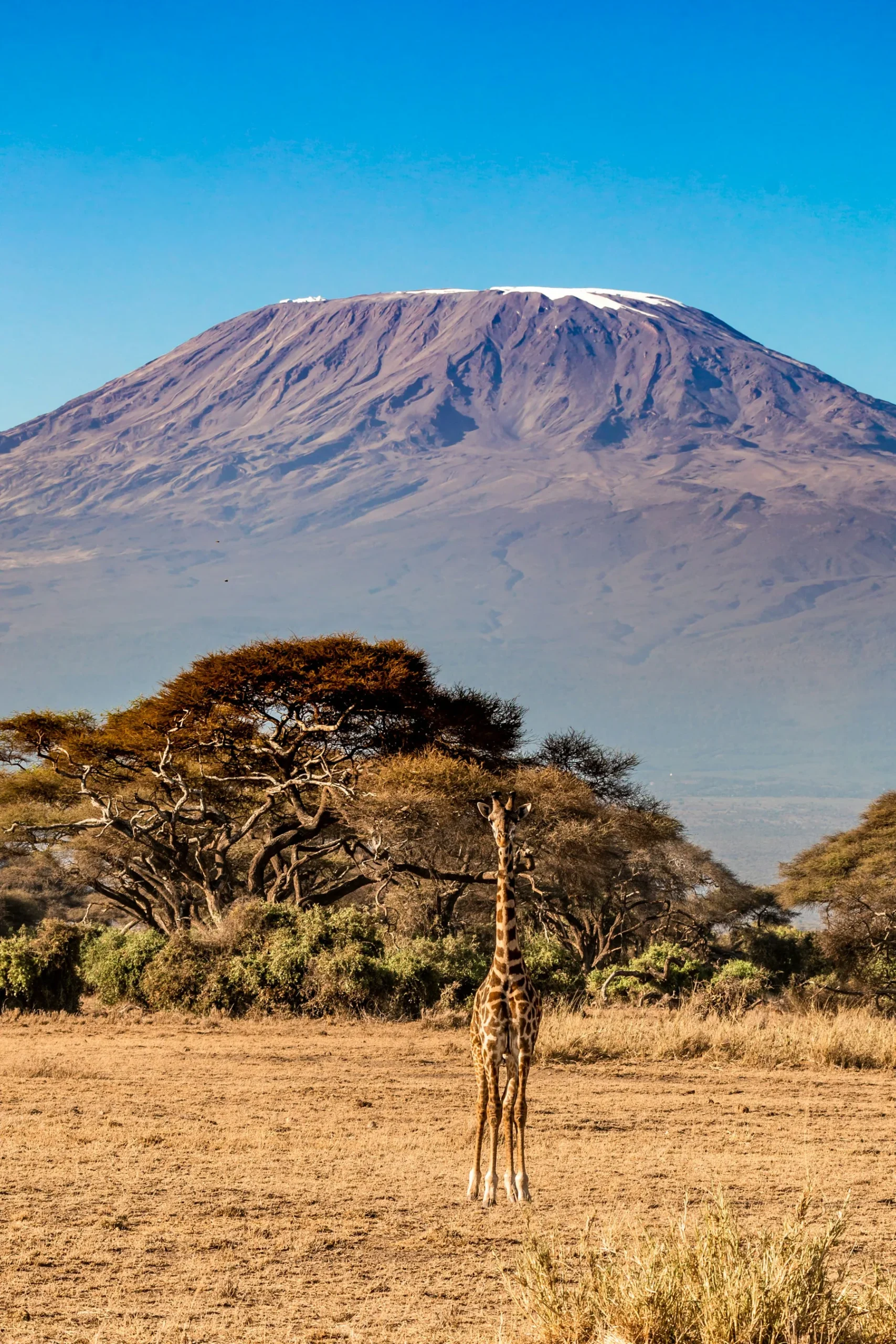
The first surprise at Elerai is often the sound. Amboseli National Park can begin with engines gathering at a gate and vehicles choosing a road toward the swamps. On the lower slopes near Elerai, a morning may begin with wind in dry grass, a bird calling from thorn scrub and Kilimanjaro slowly separating itself from the dawn cloud. A giraffe can cross the view without the scene feeling like a race.
That quiet is valuable, but it can also make Elerai easy to misunderstand. Elerai is not a second national park, and it is not simply another name for the whole Kitenden corridor. It is a privately held conservation area within the wider Amboseli ecosystem, associated most visibly with Elerai Camp and conservation agreements on land at the footslopes of Kilimanjaro. Visitor access, activities and fees are normally arranged through the accommodation rather than a public gate.
An Elerai stay can add guided walking, night wildlife activity, private-land game drives, long views and time outside the busier park circuit. It does not remove the need for Amboseli National Park if elephants in the swamps, Observation Hill and the open lake basin are central to the trip. The strongest itinerary uses each landscape for what it does well.
Elerai Conservation Area at a glance
The Kenya Wildlife Service wildlife-corridor report places a proposed Elerai conservancy on the footslopes of Kilimanjaro in Entonet and labels Elerai CCA on its map. A separate entry covers the Kitirua concession and Kitenden elephant corridor. That distinction matters. Elerai may contribute land to a larger movement landscape without being interchangeable with every neighbouring conservation block.
| Question | Practical answer |
|---|---|
| What is Elerai? | A privately held conservation area in the wider Amboseli ecosystem |
| Is it inside Amboseli National Park? | No |
| Is it the same as Kitenden? | No, though the areas are discussed within the same connected landscape |
| Is there a public visitor gate? | Do not assume one. Access is usually arranged through a camp or safari booking |
| Main accommodation | Elerai Camp is the best-known current base associated with the area |
| Main visitor appeal | Quiet, walking, night activity, views, private-land drives and a waterhole setting |
| National-park access | Requires a road transfer to an Amboseli gate |
| Ideal stay | Usually 2 or 3 nights when combined with national-park time |
| Main planning risk | Booking for Amboseli, then discovering that much of each park day is spent on a rough transfer road |
Start with the map, because four names are easily confused
Amboseli is a living ecosystem, not a neat collection of tourism labels. Wildlife moves across national-park land, group ranches, private holdings, community areas and the Kenya-Tanzania border. Elerai, Kitirua, Kitenden and Amboseli National Park describe different parts of that picture.
Kitenden is generally used for an important movement corridor between the Kilimanjaro landscape and the Amboseli basin. Kitirua is associated with land and conservation activity on the southwestern side of the ecosystem. Elerai is on the Kilimanjaro footslopes in the Entonet area. Amboseli National Park is the gazetted KWS protected area with public gates, park rules and park fees.
| Name | What it refers to | What a traveller should not assume |
|---|---|---|
| Amboseli National Park | KWS-managed national park | That an outside lodge sits within its boundary |
| Wider Amboseli ecosystem | Cross-border ecological and pastoral landscape | That one ticket or operator controls it all |
| Kitenden corridor | Wildlife movement connection toward Kilimanjaro | That every property using the name has identical access |
| Kitirua | Distinct western conservation area or concession context | That it is another name for Elerai |
| Elerai | Private conservation land on Kilimanjaro footslopes | That it is a public conservancy with open day access |
The national park versus wider ecosystem guide provides the larger frame. Our forthcoming Kitirua Conservancy guide will keep the western landscape separate.
What the records say about land and ownership
Land descriptions change as leases, family arrangements and conservation agreements change, so dates belong beside claims. A NEMA strategic environmental assessment from 2014 described Elerai Conservancy as privately owned by eight related families who had set aside land for wildlife conservation. The older KWS Amboseli ecosystem plan includes an Elerai Ranch land-use zoning map and actions concerning scouts, grazing, wildlife monitoring and livestock management.
Elerai Camp describes its own conservation and community trust, lease ambitions and relationship with local Maasai representatives. That account helps explain the operating model, but it is the provider's description. A responsible booking asks what applies now rather than repeating a historical acreage or ownership sentence forever.
| Claim to verify | Best evidence to request |
|---|---|
| Current conservation boundary | Current map or written land description |
| Who owns the land | Current registered or community governance explanation |
| Who receives tourism payments | Named lease, bed-night or conservation mechanism |
| What the camp controls | Written list of access and activities |
| What the community trust funds | Recent project and expenditure summary |
| Whether neighbouring land is included | Named agreement, not a general ecosystem label |
This is not suspicion for its own sake. Clear land and benefit arrangements protect travellers from vague conservation language and reward operations that can explain their work without hiding behind a beautiful view.
Elerai’s conservation value is connection
Elephants do not recognise the park line. Giraffes, predators and plains game also use land according to water, forage, safety, rain and disturbance. The KWS corridor report treats the Kilimanjaro-Amboseli connection as a landscape issue, while its Elerai entry identifies conservation potential on the mountain footslopes.
Private conservation land can keep a piece of that landscape open. Tourism revenue can make wildlife-compatible land use more competitive. Scouts can discourage illegal killing, and controlled grazing can support pastoral livelihoods while protecting key habitat. None of those outcomes follows automatically from calling land a conservancy. They require agreements, enforcement, trust and benefits that people can see.
| Conservation function | Why it matters | Honest limit |
|---|---|---|
| Habitat outside the park | Adds feeding and resting space | Wildlife use changes by season |
| Landscape connection | Supports movement between larger blocks | One property cannot secure the whole corridor |
| Wildlife monitoring | Builds evidence for protection | Data quality and publication vary |
| Community income | Can reward keeping land open | Benefit distribution must be transparent |
| Scout employment | Adds local surveillance and work | Staffing alone does not prove effectiveness |
| Managed grazing | Can balance livestock and habitat | Drought creates difficult trade-offs |
The experience is private-land safari, not another park drive
An Elerai morning should feel different from an Amboseli park morning. Inside the park, the aim may be to reach Enkongo Narok or another swamp edge as elephant families arrive. At Elerai, the reward may be a slower walk, time at a waterhole, tracks in a sandy drainage or a night drive searching for smaller nocturnal animals.
Elerai Camp currently advertises guided walks, day and night drives, community visits, cycling with an escorted route, sundowners and bush meals. Availability can change with weather, wildlife, staffing and safety. Ask which activities are included, which carry a supplement and whether they take place on Elerai land or elsewhere.
| Experience | Elerai strength | Question before booking |
|---|---|---|
| Guided walk | A genuine reason to stay outside the park | Guide qualification, armed escort, duration and age limit |
| Night drive | Private land can allow activity after park hours | Vehicle, departure time and whether it is guaranteed |
| Private-land drive | Quieter pace and different habitat | Size of drive area and vehicle sharing |
| Waterhole watching | Wildlife may come to camp | Seasonality and room or dining-area view |
| Sundowner | Space and mountain atmosphere | Private or shared, location and weather alternative |
| Community visit | Potential for direct local exchange | Host, consent, group size, payment and photography rules |
| Amboseli park drive | Access to the famous swamps and basin | Gate, journey time, park fee and packed meals |

Walking changes what counts as wildlife
A vehicle makes distance disappear. On foot, a morning becomes intimate. Fresh elephant dung reveals direction and age. A giraffe track looks impossibly large. A weaver nest, an antlion trap or a thorn adapted to browsing can hold attention in a way it rarely does from a roof hatch.
Walking is also where confident marketing must give way to safety. The guide chooses the route according to wildlife and wind. A buffalo near a drainage can close a trail. Children may face age restrictions, and mobility needs change the safe pace. Closed shoes, neutral clothing, water and obedience to the guide matter more than a long species list.
| Walking question | Why it changes the experience |
|---|---|
| Is the guide professionally qualified? | Interpretation and risk judgement depend on training |
| Is an armed ranger present? | The operating safety system should be explicit |
| What is the usual group size? | Smaller groups are quieter and easier to manage |
| Is it a nature walk or wildlife-tracking walk? | Difficulty and expectations are different |
| What happens if large animals block the route? | A safe walk may become shorter or move elsewhere |
| Are children allowed? | Minimum ages and private arrangements vary |
| Can mobility be accommodated? | Terrain, heat and vehicle backup need planning |
One traveller recalled, “Our evening game walk on the Conservancy was really special.” That sentence captures the appeal without promising which animals will appear.
Night drives reveal a different Amboseli
Amboseli National Park requires visitors to follow park opening and closing rules, and ordinary visitor game driving after dark is not the same proposition as a night drive on authorised private land. Elerai's night-drive offer is therefore one of its strongest contrasts with a park-only stay.
The pleasure is not necessarily a dramatic predator sighting. Eyeshine in a bush, a genet slipping across the track, a hare freezing in the beam, an owl lifting from a branch and the sound of hyenas beyond the lights can make the night feel full. A patient guide should explain behaviour and avoid chasing or holding a spotlight on an animal for too long.
| Night-drive detail | Better practice |
|---|---|
| Lighting | Controlled beam, brief observation and no blinding |
| Vehicle speed | Slow enough for small animals and safe road reading |
| Noise | Quiet voices and limited engine disturbance |
| Species expectations | Possibilities, never guarantees |
| Duration | Long enough to settle into the night, not a rushed loop |
| Clothing | Warm layer for an open vehicle |
| Photography | Fast lens and realistic expectations about low light |
Kilimanjaro is a possibility, not part of the room contract
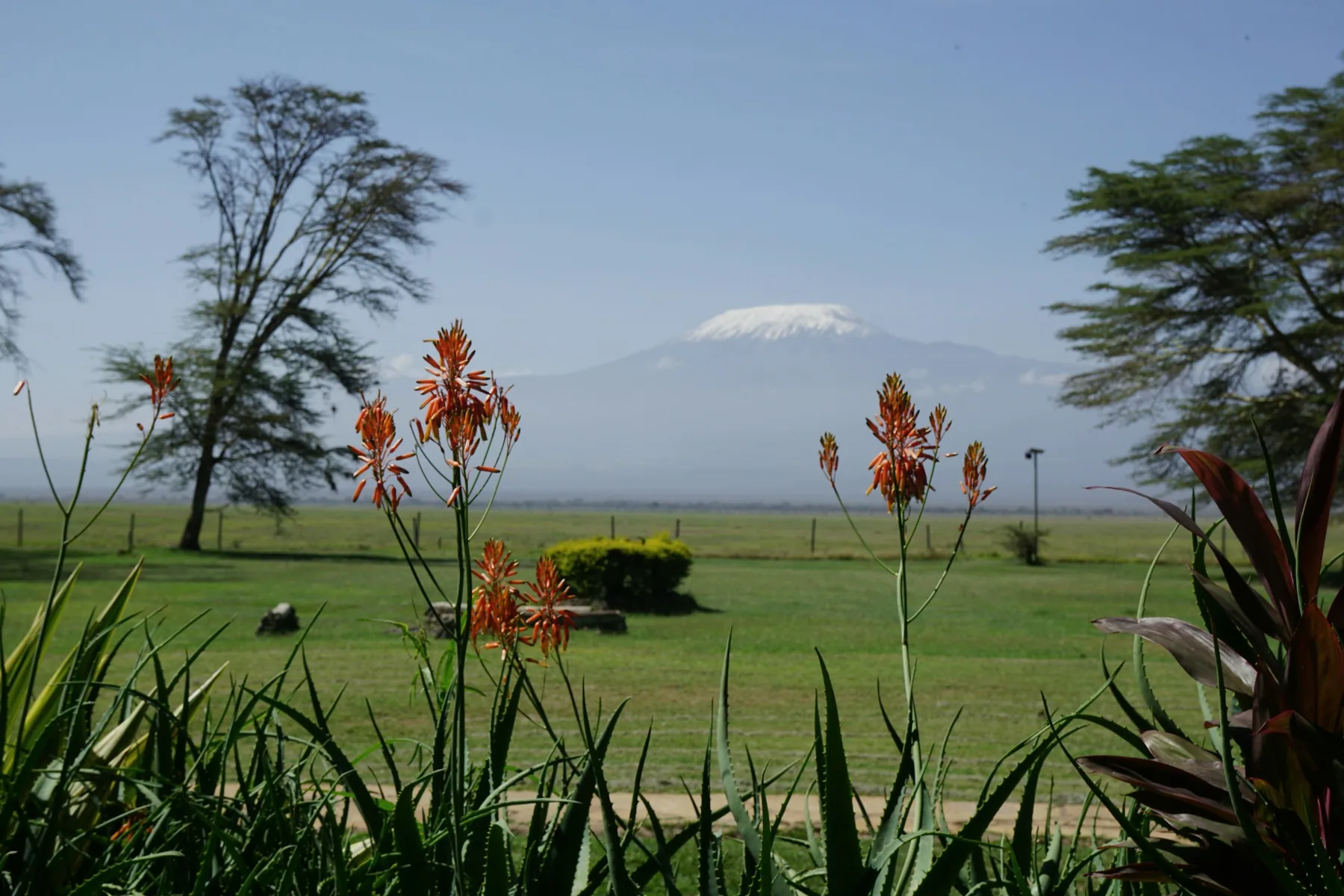
Elerai's position on the Kenyan footslopes can create an intimate relationship with Kilimanjaro. The mountain may look close enough to touch when the air is clear. Then cloud can gather and remove it completely. Travellers who stay two or three nights have more dawns and evenings for the mountain to appear than someone arriving for a single lunch.
Early morning often offers cleaner air, but no month guarantees visibility. Rain, haze, smoke, dust and local cloud all matter. Build the stay around habitat, walking and atmosphere so the trip still works when the summit is hidden.
| Kilimanjaro plan | Why it helps |
|---|---|
| Stay more than one night | More weather windows |
| Ask room orientation | Not every bed or veranda has the same angle |
| Protect dawn time | Clear periods can be brief |
| Carry a mid-range lens | The mountain can dominate a wide frame |
| Keep a wildlife foreground option | Giraffe, acacia and grass can tell the story |
| Accept cloud | It is weather, not a service failure |
The Amboseli and Kilimanjaro photography guide explains light, lenses and useful positions across the ecosystem.
Wildlife at Elerai follows water, rain and patience
Elerai is not a fenced collection of guaranteed animals. Wildlife moves through private land, community areas, bush and neighbouring properties. A waterhole can draw elephants, giraffes, antelope and birds, then fall quiet. Rain can spread animals toward fresh forage. Human and livestock activity can shift patterns too.
The right expectation is diversity over time, not a checklist in one drive. Elerai Camp lists nocturnal possibilities such as genet, civet, porcupine, bushbaby and owl. Treat that as a field guide to what may occur, not as a promise. The park remains the stronger place for sustained access to Amboseli's famous elephant and swamp ecology.
| Wildlife interest | Elerai | Amboseli National Park |
|---|---|---|
| Elephant families | Possible, including movement through wider land | Stronger sustained viewing around swamps and open basin |
| Giraffe | Well suited to bush and open slopes | Common in several habitats |
| Nocturnal mammals | Night-drive opportunity | Ordinary visitor night driving is restricted |
| Wetland birds | Limited by local water | Swamps are the stronger setting |
| Tracks and signs | Excellent on foot | Mostly interpreted from a vehicle |
| Big cats | Possible but unpredictable | Broader search area and prey context |
| Waterhole behaviour | Can be watched from camp | Several water sources, usually from park roads |
Elerai cannot replace Amboseli’s swamps
It is tempting to book an outside conservancy and describe the whole stay as Amboseli. That makes sense geographically, but it can hide the experience a traveller actually bought. Elerai gives privacy and activities the park cannot easily offer. Amboseli National Park gives access to Enkongo Narok, Longinye and other wetland systems, Observation Hill, the lake basin and a broad network of game-viewing roads.
If this is a first visit, include both. A full park day with a picnic can reduce repeated gate transfers. An Elerai walk or night drive on another day keeps the private-land reason for staying alive.
| Stay pattern | What works | What can disappoint |
|---|---|---|
| One night Elerai only | Quiet stop and a possible evening activity | Too little time for both park and conservancy |
| Two nights | One substantial park day plus one walk or night drive | Tight if arrival is late |
| Three nights | Better balance of park, private land and rest | Higher total cost |
| Park lodge only | Maximum park-road efficiency | No equivalent private-land walking or night drive |
| Split stay | Contrasting landscapes and less transfer repetition | Packing and another check-in |
Read the Amboseli safari guide before deciding how much national-park time belongs in the plan.
The road to the park can shape the whole stay
Travel time between Elerai and an Amboseli gate is not a fixed brochure number. The route, road surface, rain, vehicle, stops and chosen gate all change it. A traveller on Tripadvisor put the warning plainly: “Be aware it’s a long way to the park on bumpy roads.”
That does not make Elerai a poor choice. It makes it a specific choice. If every day is built around dawn inside the national park, an inside-park or gate-adjacent base may be more efficient. If walking, quiet and private-land time matter, the road is part of the trade.
| Transfer issue | Ask for this detail |
|---|---|
| Gate | Name the planned entry point |
| Distance | Road distance, not a straight line |
| Typical dry-road time | A range, not an exact promise |
| Wet-weather alternative | Route and extra time |
| Vehicle | Safari 4×4, seat layout and suspension |
| Dawn plan | Departure time and packed breakfast |
| Re-entry | Whether the itinerary pays and enters once or repeatedly |
Our Nairobi to Amboseli guide covers the larger arrival choice by road or air.
Staying outside the park changes the daily rhythm
A park lodge can place a vehicle closer to the swamps at first light. Elerai can place a traveller closer to an unhurried veranda, walking trail and private-land sunset. Neither rhythm is universally better.
A thoughtful Elerai day may begin with Kilimanjaro from camp, continue with a long walk after breakfast, leave the heat for lunch and rest, then use the cool evening for a private-land drive and night return. A park day may start before sunrise, carry breakfast and lunch, stay inside through the middle of the day and return only once.
| Priority | Stronger base |
|---|---|
| First vehicle at an Amboseli swamp | Inside park or very near the chosen gate |
| Guided walking | Elerai or another authorised private area |
| Night wildlife activity | Elerai or another authorised private area |
| Slow lodge time with mountain views | Elerai can be very strong |
| Several park drives in two days | Inside park reduces transfer repetition |
| Private-land and park contrast | Elerai with a full park day |
Elerai Camp is the main visitor base, but the land is the subject
Most travellers encounter Elerai through Elerai Camp. Kenya Wildlife Service lists the camp among accommodation associated with Amboseli, and the camp's own material describes tented rooms, a waterhole, walks, drives and community activity. That makes it the practical doorway into the area, not proof that the lodge and the conservation landscape are the same thing.
Read the room description and the safari description separately. A beautiful tent may have a mountain-facing veranda while the game-drive vehicle is shared. A stay may include full board but charge separately for a walk, sundowner or park excursion. A waterhole may be visible from common areas but not every room.
| Booking line | What the final proposal should name |
|---|---|
| Room | Exact category, bed, view, bathroom and occupancy |
| Meals | Full board or all inclusive, drinks and packed meals |
| Vehicle | Private or shared, open or closed side, seats and charging |
| Elerai activity | Which walk, drive or sundowner is included |
| Amboseli activity | Full-day or half-day park drive, gate and fees |
| Transfers | Road or airstrip, vehicle and luggage limit |
| Conservation payment | Amount or mechanism, beneficiary and inclusion |
| Cancellation | Deposit, balance date and refund terms |
This detail does not make the holiday less romantic. It prevents the first afternoon from becoming a negotiation about an activity everyone assumed was included.
A two-night itinerary can work if arrival is early
Two nights provide one complete day. Use that day according to the reason for choosing Elerai. If this is the only Amboseli stop, devote the full day to the national park and fit an evening walk or night drive around arrival or the second morning. If other nights are inside the park, use the Elerai day for private-land activity and rest.
Sample two-night Elerai stay
| Time | Plan | Why it works |
|---|---|---|
| Day 1 afternoon | Arrive, settle, waterhole and short orientation | Avoids rushing straight back into a vehicle |
| Day 1 evening | Guided walk or conservancy drive | Uses the reason for staying outside the park |
| Day 1 night | Night drive if pre-booked | Adds a distinct ecosystem layer |
| Day 2 dawn | Depart for Amboseli National Park | Protects cooler wildlife hours |
| Day 2 midday | Picnic inside the park | Avoids a return transfer for lunch |
| Day 2 afternoon | Continue swamp and basin circuit | Gives the park a complete day |
| Day 3 dawn | Mountain view, short birding or rest | A second weather window before departure |
If arrival is after dark, two nights feel much shorter. Ask for the actual arrival estimate before placing a walk on day one.
Three nights reveal why the two landscapes belong together
Three nights remove the need to make every hour productive. One day can belong to Amboseli National Park. Another can belong to Elerai, with walking, a private-land drive, waterhole time and an unhurried lunch. A spare dawn protects the mountain-view ambition from one cloudy morning.
Sample three-night Elerai stay
| Day | Morning | Afternoon and evening |
|---|---|---|
| Arrival | Road or air arrival | Settle, waterhole and sundowner |
| Full day 1 | Dawn departure to Amboseli | Picnic, swamps, Observation Hill and late return |
| Full day 2 | Guided walk and breakfast | Rest, community visit or drive, then night activity |
| Departure | Birding, view or slow breakfast | Continue to Tsavo, Nairobi or the airstrip |
Three nights also help photographers and families. The photographer can wait for light instead of abandoning breakfast at every break in the cloud. Children can have a pool or rest period between drives. Honeymooners can enjoy privacy without feeling that they paid for a remote room and never saw it.
Elerai for honeymooners: quiet only matters when the logistics support it
Elerai can be a strong honeymoon choice because privacy, mountain atmosphere and a small-camp rhythm suit couples. The right romantic detail might be breakfast after a walk, a private sundowner or an evening at the waterhole. It is not enough to add petals to a bed while two couples share a crowded vehicle and every park morning starts with a punishing road transfer.
| Honeymoon priority | What to confirm |
|---|---|
| Privacy | Tent spacing, room location and family-group dates |
| View | Exact room orientation, not a general lodge photograph |
| Private vehicle | Entire stay, park day only or not included |
| Sundowner | Private setting, drinks and weather alternative |
| Bush meal | Location, menu, dietary needs and wildlife safety |
| Rest | No forced activity schedule |
| Special occasion | Clear request and realistic deliverable |
Our Kenya honeymoon safari guide explains how to build romance around the route rather than decorative extras.
Families need space, rhythm and honest age limits
Children may love Elerai because tracks, stars, insects and a waterhole bring nature close. They may also tire of the transfer road or be too young for a scheduled walk. A family plan should name the youngest child first, then build safe activity around that age.
Ask whether the room configuration keeps children close to parents, whether escorts are required after dark and whether the pool has barriers or supervision. A private vehicle lets a family stop for a snack, return early or spend twenty minutes with a dung beetle without apologising to strangers.
| Family question | Why it matters |
|---|---|
| Minimum walking age | Private-land rules and guide judgement vary |
| Family tent layout | A separate tent can be unsuitable for young children |
| Escort after dark | Wildlife can move through an unfenced camp |
| Private vehicle | Controls pace, toilet breaks and noise |
| Meal times | Early dinners may need arranging |
| Pool safety | Bush camps rarely resemble supervised resorts |
| Medical plan | Remote response time should be understood |
The Kenya family safari guide helps match age, drive length and accommodation style across the full trip.
Photographers should protect dawn, dust and vehicle position
Elerai offers a broad mountain-facing landscape, but the best photograph may arrive before an activity officially begins. A private or photography-aware vehicle matters when the group needs to stop for backlight, choose a lower angle or wait for a giraffe to enter a clean line.
On foot, keep equipment simple. One body and a versatile lens are easier to carry than a heavy bag, and the guide's safety instruction always overrides the picture. On a night drive, high ISO and a fast lens help, but ethical spotlight use limits the time available.
| Photographic goal | Practical setup |
|---|---|
| Kilimanjaro landscape | Wide to mid-range zoom, dawn readiness and graduated exposure options |
| Giraffe with mountain | Mid-range lens and patience for separation |
| Waterhole behaviour | Telephoto, support and quiet observation |
| Walking details | Light macro or close-focusing zoom |
| Night animal | Fast lens, high ISO and no flash unless expressly permitted |
| Stars | Tripod permission, dark-sky position and an escort |
| Dust | Two bodies or careful lens changes and cleaning kit |
Read the Kenya photography safari guide for vehicle, guide and equipment planning.
Seasons change the balance between park and private land
The wider Amboseli ecosystem responds quickly to rain. Fresh grass can draw wildlife away from permanent swamps and spread animals across community land. Dry conditions pull many animals toward reliable water. Elerai can feel green and alive after rain or spare and dusty during a dry spell.
Road condition may be as important as wildlife distribution. Rain can lengthen the park transfer, alter walking routes and make a sundowner position unusable. Dry wind can carry dust into cameras and rooms. Pack and plan for the landscape you will meet, not one brochure season.
| Condition | Elerai character | Planning response |
|---|---|---|
| Clear dry dawn | Mountain views and cool walking | Be ready before sunrise |
| Hot dry afternoon | Quiet wildlife and strong glare | Rest, shade and waterhole watching |
| Recent rain | Fresh colour and dispersed wildlife | Add time and accept road changes |
| Heavy local shower | Mud, dramatic sky and possible route limits | Flexible activity order |
| Clouded mountain | Strong bush atmosphere without summit view | Focus on tracks, birds and habitat |
| Wind and dust | Graphic light but equipment risk | Covers, cloths and sealed storage |
Use the Amboseli weather guide and best time to visit Amboseli to place these conditions in a month-by-month plan.
Community visits should be hosted, paid and unforced
A Maasai visit can become one of the most memorable parts of an Elerai stay when the hosts control the encounter. It can also become uncomfortable when a group is moved through a performance, photographs are taken without consent and nobody can explain how the visit fee is shared.
Ask who invited the visit, whether a local guide interprets, how many guests attend, how long the visit lasts and where the payment goes. Seek conversation about present-day pastoral life, education, grazing and conservation rather than asking people to exist as a timeless attraction.
| Respectful practice | Avoid |
|---|---|
| Ask before photographing each person | Treating general entry as blanket photo consent |
| Pay through the stated host arrangement | Secret tips that undermine agreed sharing |
| Learn names and listen | Directing people for staged images |
| Ask about modern life and land choices | Reducing culture to clothing and jumping |
| Buy only if you want the work | Bargaining aggressively over handmade items |
| Keep children with the group | Handing out sweets or gifts directly |
Our planned Masai village visits guide will explore consent, payment and meaningful time with hosts in more depth.
Conservation language belongs in the proposal, not just the brochure
If conservation is part of the price, ask for a plain explanation. Does the payment take the form of a lease, a bed-night fee, a trust contribution, employment or a combination? Which landowners and communities participate? What was funded recently? How are grazing and wildlife conflict handled during drought?
A lodge does not need to solve the entire Amboseli ecosystem to give a good answer. Specificity is more persuasive than a large claim.
| Useful question | Strong answer sounds like |
|---|---|
| How is land kept open? | Named lease or land-use agreement with a current term |
| Who benefits? | Named owners, trust, staff and local suppliers |
| What is the guest contribution? | Amount or defined calculation |
| What changed last year? | A recent project, patrol result or payment record |
| How is grazing handled? | Agreed zones, timing and drought process |
| Who monitors wildlife? | Named scout or research partnership |
This is also the moment to ask how a community visit is priced. A cultural activity and a conservation levy may support different people and should not be merged into one vague sentence.
Accessibility requires a route, not a label
“Accessible” can mean a ramp to the dining area while the tent bathroom still has steps, loose stones or a narrow door. Elerai's natural terrain, rough approach and escorted movement after dark make detailed questions essential.
Describe the traveller's needs rather than asking a yes-or-no question. Include walking distance, transfer ability, wheelchair dimensions, bathroom support, hearing or vision requirements, medication storage and emergency needs. Request photographs or measurements of the exact assigned room and vehicle.
| Access detail | Confirm in writing |
|---|---|
| Approach | Surface, steps, slope and distance from vehicle |
| Room | Door width, bed height and turning space |
| Bathroom | Shower threshold, rails, seat and floor surface |
| Main area | Route to dining, lounge, pool and viewing point |
| Vehicle | Step height, grab points and seat transfer |
| Night movement | Escort and lighting |
| Medical support | Communication and evacuation arrangement |
Price comparisons must include the road and activities
Two full-board rates can describe very different safaris. One may include private-land drives, a walk and transfers. Another may cover only the room and meals, with park fees, vehicle, sundowner and airstrip transfer added later. Elerai's location makes the park-drive line especially important.
Compare the complete stay for the same dates, travellers and room arrangement. Use current written quotes because fees, fuel, taxes and seasonal rates change.
| Cost line | Include in both proposals |
|---|---|
| Accommodation | Exact room, meals, drinks and taxes |
| Amboseli fees | Park entry and vehicle or guide charges |
| Private-land fees | Conservancy, activity or bed-night charge |
| Vehicle | Private or shared and daily duration |
| Transfer | Nairobi, airstrip, gate and onward destination |
| Activities | Walk, night drive, sundowner and community visit |
| Meals away | Packed breakfast, picnic lunch and drinks |
| Staff payments | Included service, discretionary gratuity guidance |
What travellers praise, and what they warn about
Recent independent reviews tend to celebrate the calm setting, views, staff, waterhole and walking. The recurring caution is the road and the distance to the national park. Those two opinions are not contradictory. The same separation that creates privacy also creates a transfer.
| Review theme | What it means for planning |
|---|---|
| Peace and privacy | Good for rest, couples and a slower second half of a safari |
| Waterhole activity | Leave unscheduled time at camp |
| Kilimanjaro views | Protect dawn but expect cloud |
| Guided walking | Pre-book and confirm safety conditions |
| Bumpy park road | Use a suitable vehicle and consider a full park day |
| Short stay regret | Two nights are a minimum for most combinations |
Read reviews for the room category and season you are considering. A report from a wet month may say more about roads than one from a dry month. A honeymoon review may value privacy more than a family review. Look for operational details, not only star ratings.
Elerai, Kimana, Kitirua and Selenkay suit different trips
The community and private landscapes around Amboseli should not be sold as interchangeable “conservancy experiences.” Elerai is strongly associated with Kilimanjaro footslopes, quiet accommodation and camp-arranged walking. Kimana Sanctuary sits on a different eastern corridor and can be reached in a different road pattern. Kitirua lies toward the western and southwestern movement landscape. Selenkay is farther north and often functions as its own conservancy stay paired with park access.
| Area | Main planning lens | Do not assume |
|---|---|---|
| Elerai | Footslope setting, walking, night activity and park transfer | Public day access |
| Kimana Sanctuary | Eastern corridor, community context and local access | Same accommodation model as Elerai |
| Kitirua | Western movement landscape and concession context | That it is inside Elerai |
| Selenkay | Northern conservancy stay and private activity | Quick daily access to every Amboseli sector |
| Amboseli National Park | Swamps, basin and KWS road network | Walking and private night drives |
Use our forthcoming Kimana Sanctuary guide and Selenkay Conservancy guide to compare land, activity and route rather than names.
Who should choose Elerai
Elerai is best for a traveller who understands the trade. Privacy is worth more than immediate gate access. A walk and night drive are part of the purpose. The itinerary gives the national park a complete day instead of shuttling back and forth. The mountain is a welcome possibility, not the only reason for coming.
| Traveller | Fit | Best adjustment |
|---|---|---|
| First-time Kenya safari | Good when paired with a full park day | Stay at least two nights |
| Repeat Amboseli visitor | Excellent for a different ecosystem layer | Prioritise walking and community context |
| Honeymoon couple | Strong for privacy and atmosphere | Add a private vehicle and unplanned time |
| Family with young children | Possible with detailed age and room checks | Keep drives flexible |
| Serious photographer | Strong for landscape, weaker for instant park access | Protect dawn and use a private vehicle |
| Mobility-limited traveller | Case by case | Audit exact room, terrain and vehicle |
| Checklist wildlife traveller | Mixed | Add park time and avoid sighting guarantees |
Who may be happier elsewhere
Choose a park lodge or a base nearer the preferred gate when every dawn must begin inside Amboseli, when the traveller dislikes rough-road transfers or when a one-night schedule leaves no time for private-land activity. Choose another conservancy when its access, accommodation or community arrangement fits the wider route better.
| Priority | Consider instead |
|---|---|
| Maximum time around park swamps | Inside-park lodge |
| One-night Amboseli stop | Gate-efficient camp or lodge |
| Northern route connection | Selenkay, depending on the full itinerary |
| Eastern corridor interest | Kimana area |
| Western corridor research | Kitirua or other named western property |
| No rough approach road | Confirm a different base with current road detail |
The where to stay in Amboseli guide compares bases by gate, habitat and daily driving time.
The booking brief that prevents surprises
Send one short brief with the dates, number of travellers, ages, room needs, vehicle preference and the reason Elerai is on the list. Ask the planner to return the exact property, room, meal plan, daily route, gate, fees, activities and transfer range in writing.
| Brief field | Example of useful detail |
|---|---|
| Dates | Arrival and departure with flight times |
| Travellers | Adults, child ages and rooming |
| Main objective | Walking, elephants, honeymoon, photography or rest |
| Park plan | Number of full and half days inside Amboseli |
| Private-land plan | Walk, night drive, sundowner and waterhole time |
| Vehicle | Private 4×4, open sides, photography seating |
| Mobility or diet | Exact practical requirement |
| Budget | Total land budget and currency |
| Conservation interest | Current payment and community mechanism |
Do not ask only whether a package “includes Amboseli.” Ask how much of the day takes place inside the park and how much belongs to Elerai. Both can be valuable, but they are not the same purchase.
Frequently asked questions about Elerai
Is Elerai inside Amboseli National Park?
No. Elerai is private conservation land within the wider Amboseli ecosystem. A national-park visit requires a road transfer, gate entry and the applicable KWS arrangements.
Is Elerai the same as the Kitenden corridor?
No. Elerai is associated with the connected Kilimanjaro-Amboseli landscape, but KWS material identifies Elerai and Kitirua-Kitenden separately. Use exact land names in a proposal.
Can anyone pay at a gate and visit Elerai?
Do not assume public day access. Visitor activity is usually linked to arranged accommodation or an operator with permission. Confirm access before travelling.
Can I walk in Elerai?
Guided walking is advertised by Elerai Camp. It must be arranged and remains subject to guide judgement, wildlife, weather, age and safety rules.
Are night drives available?
Elerai Camp advertises night drives on private land. Confirm that the activity is operating on your dates and whether it is included.
Will I see Kilimanjaro from my room?
Possibly, depending on the exact room, vegetation and weather. Ask for the room orientation and allow more than one dawn.
How many nights should I stay?
Two nights are a practical minimum for one full park day plus a private-land activity. Three nights create a better balance.
Is Elerai good for children?
It can be, especially for families interested in tracks and camp life. Confirm room layout, walking age, escorts, pool safety and vehicle arrangements.
Is Elerai good for a honeymoon?
Yes, when quiet, view and private time matter. Confirm the room, vehicle and included romantic activities instead of relying on a generic honeymoon label.
Is Elerai better than staying inside Amboseli?
It is different. Elerai is stronger for private-land activities and quiet. An inside-park base is stronger for repeated early access to park roads and swamps.
The Elerai Conservation Area guide conclusion
Elerai makes sense when the traveller wants more than another park drive. The footslope setting, walking, night activity, waterhole time and private-land pace can reveal an Amboseli that is easy to miss from a vehicle racing toward the swamps. The price of that quiet is distance from the national park and the need to understand exactly what land, activity and transfer the booking includes.
Use Elerai and Amboseli together. Give the park a complete day for elephants, wetlands and the open basin. Give Elerai enough time for a walk, a night drive and an unscheduled hour when the mountain or wildlife may appear. Name the land, gate, room, vehicle and conservation arrangement before the deposit. That is how an Elerai Conservation Area guide becomes a useful safari plan rather than a collection of scenic promises.
Let us balance Elerai with Amboseli National Park
Share dates, travellers, nights, room needs, walking interest, park priorities and budget. We will build the route around real gate time, activities and conservation access.