
Amboseli National Park vs the Wider Amboseli Ecosystem
Compare the protected park with surrounding conservancies, sanctuaries, community land and wildlife corridors before choosing a lodge, activity or split stay.
- The simplest distinction
- How large is the park compared with the ecosystem?
- Why wildlife leaves the national park
- What the national park offers best
- What the wider ecosystem can add
- Conservancy does not mean the same thing everywhere
- Named areas readers should understand
- Inside the park or outside: where should you sleep?
- Game-drive rules change at the boundary
- Fees: park entry and conservancy access are separate
- Park access from outside camps
- Wildlife density is seasonal and local
- Elephants make the ecosystem argument visible
- Community land, pastoralism and tourism
- Threats outside the park affect the park itself
- A combined park and ecosystem itinerary
- Questions for specific camps and lodges
- What travellers noticed
- Common planning mistakes
- A booking brief for Amboseli land choice
- Final perspective
At six in the morning, the word “Amboseli” can mean two very different things. Inside the national park, a guide waits for the authorised driving day to begin, then follows established roads toward green swamps and elephant families. A few kilometres away, another guest wakes on community-owned land, drinks coffee beneath an acacia and watches cattle tracks cross the same wider landscape used by wildlife.
Both guests are in Amboseli. They are not under the same management, paying the same fees, following the same activity rules or starting from the same gate. One may spend the morning inside the protected park. The other may combine community land with a later park visit. A third may be sold a lodge “near Amboseli” without being told whether a conservancy, sanctuary or ordinary private parcel lies outside the room.
This is why the distinction matters. Amboseli National Park is a legally protected area managed by Kenya Wildlife Service. The wider Amboseli ecosystem is an ecological and human landscape, defined by the places wildlife uses across wet and dry seasons. It includes the park and surrounding group-ranch, community, conservancy, sanctuary and privately held land. Elephants do not stop at the signboard. Tourism rights, roads and fees do.
The simplest distinction
Amboseli National Park is a boundary on a map and in law. The wider ecosystem is a living pattern of water, grass, settlements, livestock and wildlife movement that extends far beyond that boundary.
National park
The national park is managed by Kenya Wildlife Service. KWS sets entry fees, gates, driving hours, road rules, wildlife-viewing standards, camping and permitted activities.
Wider ecosystem
The wider ecosystem includes the park plus land used by wildlife during different seasons. KWS defines it through dry- and wet-season dispersal and migratory limits rather than one tourism brand.
Conservancy
A conservancy is land managed under a conservation arrangement. Ownership, governance, lease, tourism access, ranger system and allowed activities vary. The word does not create one standard product.
Sanctuary
A sanctuary is a specifically managed wildlife area. Kimana Sanctuary, for example, sits in a crucial corridor landscape. Its entry, tourism partnerships and activity rules must be checked separately from the park.
Group ranch
Historic group-ranch landscapes surrounding the park have supported pastoralism and wildlife movement. Subdivision has turned parts into individual parcels, making coordinated land use more complex.
Private lodge land
A lodge outside the park may stand on its own parcel without access to a large conservancy. It may still be excellent, but its activities and wildlife area should not be described vaguely as private conservancy access.
One word, different booking products
| Itinerary wording | What it may mean | What must be named |
|---|---|---|
| “Amboseli stay” | Park lodge, gate-side camp or distant property | Exact accommodation and land |
| “Private conservancy” | Community or privately managed conservation area | Conservancy, manager and access rights |
| “Near the park” | Minutes or more than an hour from useful wildlife ground | Gate, distance and realistic drive time |
| “Amboseli game drive” | Park drive or drive on other land | Boundary, fees and activity rules |
| “Community experience” | Genuine hosted visit or staged stop | Host, consent, format and local benefit |
| “Night safari” | Activity outside normal park driving | Named authorised land and operator |
How large is the park compared with the ecosystem?
The difference in scale explains why the park cannot conserve Amboseli alone.
The park
The Amboseli National Park Management Plan 2020 to 2030 describes a protected area of about 390 square kilometres.
The ecosystem
The same plan describes an ecosystem of about 506,329 hectares in Loitokitok Sub County. That is more than ten times the area of the park.
Why the number is not a tourist circuit
The ecosystem figure does not mean visitors can drive anywhere across half a million hectares. Much of the land is community, pastoral, agricultural, settled, conserved or privately managed under different access rules.
Group-ranch landscape
The plan names Kimana or Tikondo, Olgulului or Ololarashi, Selengei, Mbirikani, Kuku and Rombo among surrounding group-ranch landscapes.
Connections beyond the named ecosystem
Wildlife relationships extend toward Kilimanjaro, the Chyulu Hills, Tsavo West and other dispersal areas. Connectivity matters even where an ordinary safari itinerary never travels.
Scale comparison
| Geography | Approximate scale or role | Visitor implication |
|---|---|---|
| Amboseli National Park | About 390 sq km | Defined gates, KWS rules and concentrated attractions |
| Wider Amboseli ecosystem | About 506,329 ha in cited plan | Multiple landholders, communities and conservation models |
| Kimana corridor | Strategic movement link | Tourism access must be named, not assumed |
| Chyulu and Tsavo connection | Broader regional movement | Supports multi-park conservation and routing |
| Kilimanjaro slopes | Water and ecological gradient | International and cross-border context |
Why wildlife leaves the national park
The park contains reliable water and important dry-season refuge, but animals need space, forage and movement routes beyond it.
Seasonal grass
Rain changes where grass becomes nutritious. Herbivores spread into surrounding areas when conditions allow, then contract toward permanent water in dry periods.
Water
Kilimanjaro-fed springs sustain major park swamps, while water sources outside the boundary also influence movement, livestock and settlement.
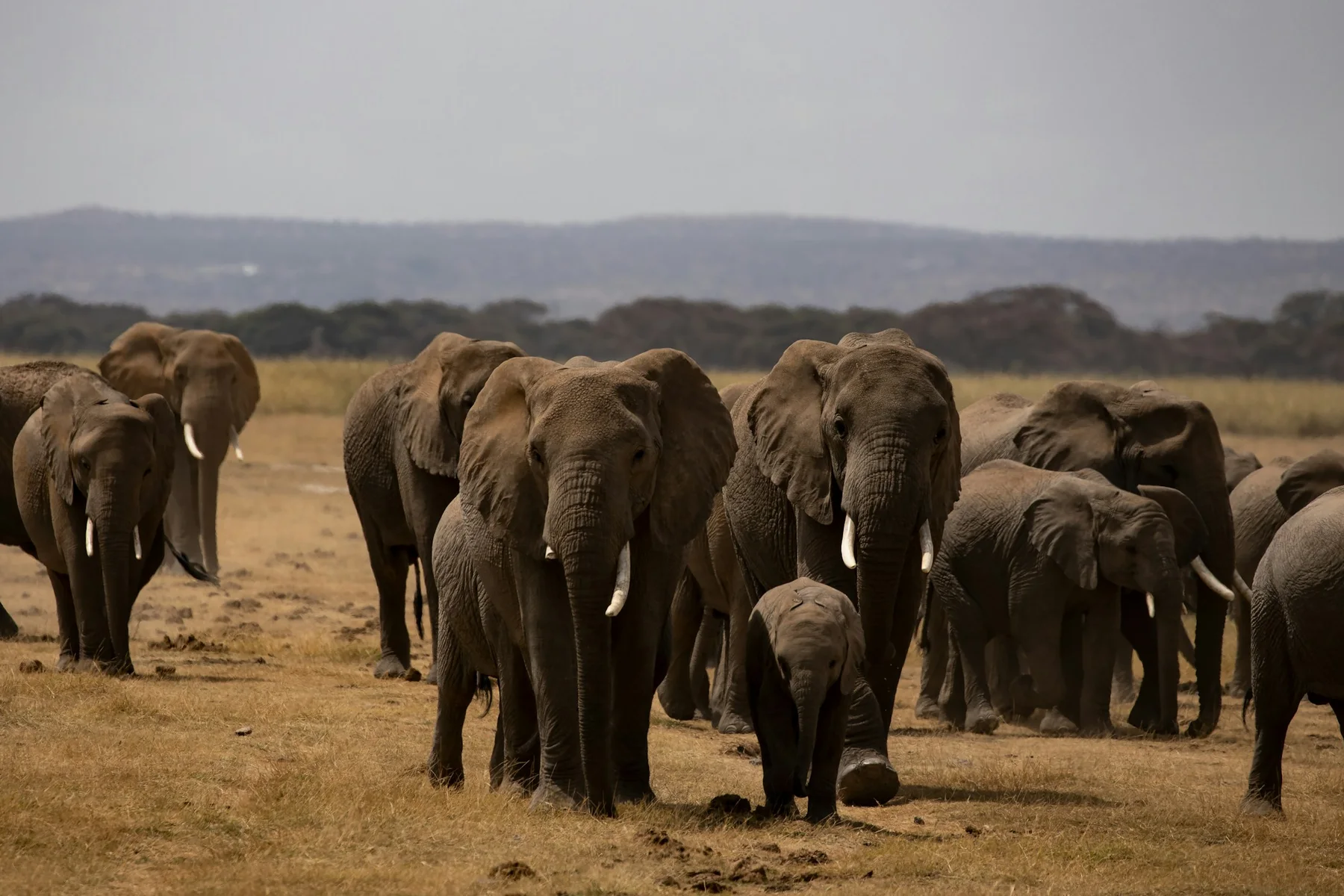
Elephants
Elephants travel between feeding, water, social and refuge areas. Adult bulls and families can use community land, corridors and farms as well as protected habitat.
Predators
Lions, hyenas and other carnivores follow prey and encounter livestock outside the park. Compensation, predator-proof bomas and community ranger systems become part of conservation.
Drought refuge
Swamps and highland areas can become vital during drought. Concentration raises pressure on vegetation, water and relationships between wildlife and livestock.
Genetic and ecological connection
Open corridors allow populations to move, mix and respond to climate and forage. Fencing and subdivision can isolate them even when the park itself remains intact.
A boundary does not predict the morning
One traveller correctly observed, “Animals do not pass at exactly the same point every day”. A lodge's old elephant photograph is evidence of one moment, not permanent inventory.
Movement table
| Driver | Likely movement effect | What a traveller may notice |
|---|---|---|
| Rain on dispersal land | Animals spread beyond swamps | Park density can feel lower |
| Long dry period | Greater reliance on permanent water | Strong swamp activity and dust |
| Farming or fencing | Routes narrow or change | Wildlife concentrated in remaining links |
| Livestock grazing | Shared forage and possible conflict | Mixed pastoral-wildlife landscape |
| Conservancy lease | Land remains more open | Quieter tourism and corridor protection |
| Fire or local storm | Short-term forage shifts | Different wildlife on consecutive days |
What the national park offers best
The park is not merely the crowded option beside more exclusive land. It protects the basin's most famous wetlands and contains experiences that surrounding camps often enter specifically to see.
Spring-fed swamps
Enkongo Narok and Longinye support green wetland, elephants, buffalo, hippos and rich birdlife. Their contrast with the dry basin is central to Amboseli.
Elephant viewing
Large families often use the swamp and open plains. KWS calls Amboseli the home of the African elephant, while sightings remain wild and unguaranteed.
Observation Hill
The designated viewpoint reveals the park's wetland channels, lake basin and habitat mosaic. It is one of the few ordinary visitor places where guests can leave the vehicle.
Lake Amboseli basin
The broad lake bed changes with rain, flood, dust and heat. It can hold flamingos in suitable conditions and creates the park's graphic open horizons.
Kilimanjaro relationship
Roads and open ground can align wildlife with the mountain when cloud and animal movement cooperate. The Amboseli and Kilimanjaro guide explains the real photography conditions.
Established road network
The network allows guides to cover varied habitats within a relatively compact protected area. KWS requires visitors to remain on established roads and trails.
Official visitor framework
Park entry, driving hours, safety, speed, distance and vehicle rules are publicly set. This creates clarity even when it limits flexibility.
Inside-park accommodation
Staying inside can reduce gate commuting and protect first and last light. Room category, vehicle and exact location still matter.
Park-strength table
| Park feature | Reader value | Limitation to accept |
|---|---|---|
| Swamps | Concentrated water-dependent wildlife | Roads and vehicles can gather |
| Observation Hill | Elevated ecosystem view | Steps and midday heat |
| Lake bed | Scale, dust and seasonal birds | Heat shimmer and changing water |
| Park roads | Broad habitat access | No off-road positioning |
| Inside lodging | Efficient early access | Fewer outside-park activities |
| KWS framework | Clear protected-area rules | Gate and time discipline |
The full Amboseli safari guide covers the park's habitats, gates, wildlife and trip planning.
What the wider ecosystem can add
The wider ecosystem can add space, community land, activities and conservation context that the park alone cannot provide. It does not automatically add more wildlife.
Quieter driving
A named conservancy with limited partner camps can have fewer vehicles than popular park roads. Ask how many camps and vehicles have access rather than accepting the word exclusive.
Night drives
Night activity is not part of ordinary national-park game driving. Selected authorised land outside the park may offer it under its own rules.
Guided walks
Community or conservancy land may offer nature walks, hill walks or wildlife-oriented walking with trained guides and appropriate safety systems.
Sundowners
Private or community land can permit planned stops in places where leaving the vehicle would not be allowed inside the park.
Cultural context
Amboseli is Maasai country, not empty scenery. A respectful hosted experience can explain pastoralism, conservation, education and modern life without staging people as decoration.
Different landscape
Woodland, dry riverbed, lava influence, hills and open grazing land show a broader Amboseli than the central swamps.
Camp atmosphere
Small camps can provide quiet, private dining and close guide continuity. These are accommodation strengths, not proof of superior ecology.
Community revenue
Tourism leases, bed-night fees, employment and conservancy payments can create value for landholders who keep land open. Ask how benefits are structured rather than relying on a generic community label.
Wider-ecosystem tradeoffs
| Possible benefit | Verification question | Common misunderstanding |
|---|---|---|
| Fewer vehicles | Which camps and day visitors have access? | All outside land is private |
| Night drive | On which named land and under whose rule? | Night driving is allowed everywhere outside the gate |
| Walking | Guide, ranger, route and age policy? | Any lodge walk is a big-game walk |
| Community benefit | Lease, fee, jobs or governance detail? | A Maasai name proves local ownership |
| Kilimanjaro outlook | From room, ridge or drive? | Mountain is always visible |
| Park access | Gate, transfer and fee arrangement? | Outside camp includes unlimited park entry |
Conservancy does not mean the same thing everywhere
Kenyan conservancies use different ownership and management structures. Amboseli should not be described with rules copied from the Masai Mara.
Community ownership
Some land is owned collectively or through many individual landholders whose agreements create a conservation area.
Land leases
Conservation organisations or tourism partners may lease parcels or pay landholders to keep them open and unfenced.
Tourism concession
A camp may receive defined tourism rights in return for fees, jobs, infrastructure or conservation support. The agreement's boundaries matter.
Sanctuary management
A sanctuary may have a board, head lease, tourism sublease and ranger structure distinct from neighbouring conservancies.
Open pastoral use
Conserved land may still support livestock grazing and community access. Conservation is not necessarily the removal of people or cattle.
Access exclusivity
Some areas restrict entry to partner camps. Others sell day access or permit multiple operators. Ask the current rule.
Off-road driving
Off-road permission, where granted, is not unlimited. Soil, wet conditions, nesting birds, wildlife stress and management zones should constrain it.
A traveller warning
One general conservancy discussion says benefits can include low vehicle density, off-road guiding, walks and night drives. Those claims must be verified for the named Amboseli land rather than imported automatically.
Conservancy model checklist
| Field | Why it matters |
|---|---|
| Legal land name | Prevents a vague “private reserve” claim |
| Owners or landholders | Shows who grants access |
| Manager | Identifies operational responsibility |
| Tourism partners | Explains vehicle access |
| Ranger system | Supports wildlife and guest safety |
| Revenue model | Tests community-benefit claims |
| Activity rules | Confirms night, walk and off-road permissions |
| Boundaries | Clarifies distance and neighbouring land |
Named areas readers should understand
The following names often appear in plans, conservation reports and itineraries. They are not interchangeable.
Olgulului or Ololarashi
This large community landscape borders much of the park and contains important dispersal and corridor land. Governance and tourism access vary across its different areas.
Kimana
Kimana lies east of the park and includes sanctuary, corridor, settlement, farming and tourism contexts. Saying a property is in Kimana does not identify its conservation access.
Kimana Sanctuary
The sanctuary is a specifically managed community wildlife area at an important end of the Kimana corridor. The Kimana Sanctuary guide examines access, management, habitat and current tourism.
Kitirua
Kitirua lies on the western side of the park landscape and is associated with conservancy and concession arrangements. Exact camp access and park relationship should be written.
Kitenden
Kitenden is part of a critical movement relationship between Amboseli lowlands and Kilimanjaro. It is conservation geography, not necessarily a normal tourist drive.
Elerai
Elerai sits toward Kilimanjaro's foothill landscape. Camps may market mountain views and private-land activities. The Elerai Conservation Area guide separates the land from similarly named accommodation.
Selenkay
Selenkay lies north of the park and offers a different, bushier ecosystem setting. A traveller described it as having “deep bush and a real feeling of ancient wilderness.” The Selenkay Conservancy guide covers its actual camp access and park commute.
Mbirikani and Kuku
These group-ranch landscapes connect toward the Chyulu Hills and Tsavo. They support pastoralism, conservation areas, tourism and wildlife movement.
Rombo
Rombo extends toward the Tanzania border and Kilimanjaro relationship. Its name should not be used as shorthand for national-park access.
Nairrabala
Nairrabala protects a northern corridor through conservation leases. Big Life reports a 37,500-acre initiative with more than a thousand landowners participating. This is evidence of collective land work, not an automatic visitor attraction.
Area comparison
| Name | Broad role | Booking question |
|---|---|---|
| Olgulului | Large community dispersal landscape | Which specific area can the camp access? |
| Kimana | Corridor, sanctuary, settlement and tourism | Sanctuary, conservancy or ordinary parcel? |
| Kitirua | Western conservation and camp landscape | Which drives are on concession land versus park? |
| Elerai | Foothill conservation setting | How far is the park gate and what is included locally? |
| Selenkay | Northern conservancy landscape | How long is the park day and who has conservancy access? |
| Mbirikani or Kuku | Chyulu and Tsavo connection | Is this a destination stay or transfer geography? |
| Nairrabala | Northern corridor lease landscape | Is tourism currently part of the itinerary at all? |
Inside the park or outside: where should you sleep?
The right location depends on how many nights you have, which activities matter and whether the outside property has valuable land access.
Inside for a short first visit
With two nights, an inside-park lodge can protect game-drive time and reduce gate dependency. It is often the cleanest choice when elephants and swamps are the priority.
Gate-side camp
A camp close to Kimana, Iremito or another useful gate can offer a tented atmosphere with limited commuting. One traveller praised a property because “It's on the doorstep of Kimana gate”.
Outside with real conservancy access
Choose this when the named land, night drive, walking, camp intimacy or community model matters enough to justify park transfers.
Outside without private wildlife land
This can still be a good-value room and gate base. It should not be priced or described as a conservancy experience unless access exists.
Split stay
For four or more nights, two bases can combine central park access with a distinct wider-ecosystem setting. The move must add more than another room.
The traveller preference is personal
A guest who stayed outside wrote, “we preferred the authentic safari feeling of being outside in a tent.” That describes accommodation atmosphere, not evidence that outside land has better wildlife.
Accommodation decision table
| Priority | Strong base | Why | Verify |
|---|---|---|---|
| Two-night elephant visit | Inside park or very close gate | Protects limited drive time | Exact park entry and vehicle |
| Night drive and walking | Named wider-ecosystem conservancy | Activities unavailable in ordinary park driving | Authorised land and safety |
| Families | Inside lodge or gate-side camp with pool | Easy midday rest | Room, paths and drive length |
| Photography | Location plus private vehicle | Light and waiting matter | Road, seat and guide continuity |
| Honeymoon privacy | Small camp on suitable land | Quiet and personal service | Shared vehicle and park commute |
| Conservation interest | Community-owned or lease-backed camp | Landholder and ranger context | Revenue and governance detail |
The where to stay in Amboseli guide compares exact properties, rooms, gates and land settings.
Game-drive rules change at the boundary
The park's rules are not a nuisance to escape. They protect wildlife, habitat and visitors. Outside the gate, another land manager may allow different activities, but responsible limits still matter.
Park hours
KWS currently states that gates open at 6:00 and close at 18:00, subject to current terms for overnight guests and authorised operations. A forum contributor summarised, “The park is officially open from 6AM to 6PM”. Use KWS, not an old forum, for the booking.
Established roads
KWS prohibits off-road driving inside the park. A clean elephant-and-Kilimanjaro angle does not justify leaving the track.
Speed
The stated maximum is 40 kilometres per hour. Driving slower improves safety, animal comfort and observation.
Wildlife distance
KWS states a minimum 20-metre viewing distance. Alert animals, calves and crowded sightings can require more.
Leaving the vehicle
Visitors remain inside except at designated places such as Observation Hill and approved facilities. A roadside picnic is not permitted simply because the plain looks empty.
Night driving
Ordinary night game drives are not allowed inside the national park. A traveller discussion states, “Night drives are only permitted in Private concessions/Conservancies not in Maasai Mara reserve or National Parks.” The Amboseli activity still needs named-land confirmation.
Conservancy roads
An outside manager may allow selected off-road positioning, but wet soil, nests, vegetation and animal stress should restrict it. Permission is not a licence to chase.
Walking
Walking must be a managed activity with trained guide, land authority and safety system. A stroll around fenced lodge grounds is different from a wildlife walk.
Rule comparison
| Activity | National park | Named conservancy or sanctuary | What to confirm |
|---|---|---|---|
| Day game drive | Yes on roads and hours | Often, under land rules | Vehicle and access fee |
| Off-road positioning | Prohibited | May be controlled or prohibited | Current manager policy |
| Night drive | Not ordinary park activity | May be offered | Land, hours and guide |
| Guided walk | Only authorised formats and places | May be offered | Route, ranger, age and risk |
| Sundowner outside vehicle | Designated or authorised only | May be offered | Site and return safety |
| Self-drive | Allowed under park rules | Often restricted | Entry rights and guide requirement |
Fees: park entry and conservancy access are separate
An itinerary can include park entry, a conservancy bed-night contribution, sanctuary admission, vehicle fees and activity charges. One label called “Amboseli fees” hides the tradeoffs.
Park entry
KWS sets categories and rates for citizens, residents, African citizens and non-residents, plus child categories. Rates change, so the dated official payment source and itinerary should agree.
Park stay duration
Entry validity and re-entry rules belong to current KWS terms. Do not assume that sleeping outside or crossing a gate twice has no financial effect.
Vehicle fee
Vehicle or service charges may sit separately from person entry. A package quote should state whether they are included.
Conservancy fee
A camp may include land access in its game package or add a per-person contribution. Ask which organisation receives it and whether it is charged by night or activity.
Sanctuary fee
Kimana or another sanctuary can have its own tariff and partner access. It is not covered merely because the itinerary also pays KWS.
Community activity fee
A hosted visit should state the fee, what the host group receives and whether purchases or gratuities are optional.
Double-fee days
A morning on conservancy land followed by a park drive may use both fee systems. That can be good value when the experiences differ, but it should be visible.
Fee comparison table
| Fee | Pays for | Ask |
|---|---|---|
| KWS park entry | Protected-area access | Dates, category and inclusions |
| Vehicle charge | Vehicle park access or service | Included in transport price? |
| Conservancy fee | Managed community or private land | Recipient and access rights? |
| Sanctuary admission | Specific wildlife area | Day or bed-night basis? |
| Activity fee | Walk, night drive or balloon | Land and operator included? |
| Community visit | Hosted cultural or conservation activity | Direct benefit and format? |
Park access from outside camps
Distance on a map is not the same as time to useful wildlife ground.
Gate name
Amboseli has Iremito, Kimana and Meshanani approaches. The right gate depends on road, lodge and planned park sector.
Gate queue
Payment checks, vehicle processing and busy dates add time. A ten-minute lodge-to-gate drive can become longer before wildlife viewing begins.
From gate to swamps
Entering the boundary does not place the vehicle beside elephants. Add the drive from gate to the habitat that matters that day.
Road weather
Rain, corrugation, dust and repair change transfer time. Ask for a range, not a single optimistic minute count.
Return before closure
An outside camp must leave enough time to reach the gate. An inside-park lodge may continue to its property under current park arrangements, but still follows driving rules.
Park lunch
A full-day park visit can reduce repeated gate commuting. Ask where lunch and toilets are arranged and whether the vehicle remains inside.
Travel fatigue
A traveller noted, “Safari can be quite tiring especially with those early morning game drives.” Adding gate commutes, night drives and a dawn start every day can weaken the holiday.
Access-time worksheet
| Segment | Estimate needed | Hidden delay |
|---|---|---|
| Room to vehicle | Walking, luggage and breakfast | Large lodge layout |
| Camp to gate | Current road time | Mud, livestock and stops |
| Gate processing | Entry and vehicle check | Queue or payment issue |
| Gate to habitat | Route for that morning | Wildlife movement |
| Habitat to lunch | Park route | Road condition |
| Final sighting to gate | Closure-safe timing | Crowd or elephant crossing |
| Gate to camp | Dark-road policy | Weather and fatigue |
The Nairobi to Amboseli guide explains gate logic in the wider arrival route.
Wildlife density is seasonal and local
The national park can concentrate wildlife around permanent water, while surrounding land can be exceptional after rain or along a corridor. Neither side owns the animals.
Dry season
Water dependence often strengthens park swamp viewing. Outside land can feel dry and quiet, though elephants and other species still move through it.
Green season
Fresh grass disperses herbivores. Community and conservancy land may become more active while park concentrations loosen.
Local rainfall
A storm can fall on one sector and miss another. Wildlife responds to actual forage, not the month printed on an itinerary.
Daily movement
Animals may feed outside the park, drink at swamps and cross roads between them. A three-night stay gives more chance to see the pattern than a hurried day.
Predator distribution
Predators use prey, cover and territories. A conservancy known for a lion last year cannot promise the same individual now.
Traveller evidence
At a western camp, one guest wrote, “We had to drive 30-40 mins to see the eles” and “it was still pretty dry by Tortillis”. They also said they skipped a local conservancy drive because elephants were their priority. That is an honest example of matching the day's land choice to wildlife movement.
Density interpretation table
| Observation | Possible reason | Do not conclude |
|---|---|---|
| Many elephants at swamp | Dry-season water concentration | Elephants remain there all year |
| Quiet conservancy morning | Recent rain elsewhere or normal movement | Conservancy has no wildlife |
| Wildlife beside camp | Route used that day | Permanent lodge inventory |
| Predator seen off road | Territory and guide knowledge | Every drive can repeat it |
| Few vehicles | Restricted access or quiet season | Wildlife is automatically better |
Read the best time to visit Amboseli guide and Amboseli weather guide together.
Elephants make the ecosystem argument visible
Amboseli's elephants show why a small protected core and open surrounding land must work together.
Families
Family groups use water, feeding areas and movement routes according to season and social needs. A road or fence that appears small to a visitor can disrupt a habitual path.
Bulls
Adult bulls can range widely. Kimana Sanctuary and corridor land have been used by some of Amboseli's best-known tuskers.
Farms
Crop areas create high-stakes conflict. Elephants can destroy livelihoods in one night, while retaliation threatens animals.
Fences
Subdivision and fencing can narrow movement into risky bottlenecks. Conservation leases aim to keep selected parcels open.
Water
Groundwater and swamps support people, livestock and wildlife. Intensive extraction or land change affects more than tourism.
Community rangers
Rangers respond to conflict, poaching and injured wildlife outside the park, where KWS cannot be the only daily presence.
Visitor behaviour
Inside or outside the boundary, guides should preserve distance, right of way and family cohesion. The ethical elephant viewing guide explains the details.
Super tuskers
The Amboseli super tuskers guide separates conservation history and individual identification from a promise that a famous bull will appear.
Elephant-landscape table
| Need | Park role | Wider-ecosystem role |
|---|---|---|
| Reliable water | Protects major swamps | Protects catchment and outside water relationships |
| Dry-season refuge | Concentrates secure habitat | Maintains routes into refuge |
| Wet-season forage | Limited protected core | Provides dispersal grassland |
| Conflict response | KWS authority | Community ranger and landholder partnership |
| Long-term movement | Boundary protection | Corridors toward Chyulu, Tsavo and Kilimanjaro |
Community land, pastoralism and tourism
The wider ecosystem is home. A safari plan should recognise livelihoods rather than describing community land only as empty space animals need.
Pastoralism
Livestock mobility has long used variable rangeland. Cattle and wildlife can share forage, while drought and subdivision intensify competition.
Ownership
Many landholders make individual and collective decisions. A conservation agreement must offer a reason to keep land open when farming, fencing or sale may promise another income.
Lease payment
Big Life describes annual payments to landowners in strategic corridor parcels, limiting development incompatible with conservation and pastoralism.
Tourism income
Camp leases, employment, ranger jobs and guest fees can link wildlife survival to household value. The distribution and transparency matter.
Education and health
Some conservation partnerships support schools, transport or medical access. These benefits should be described with evidence, not vague claims that tourism saves communities.
Cultural visits
A meaningful visit is hosted, consent-based and open to contemporary life. Ask whether photography is optional, how payment works and who controls the story.
Livestock is not scenery
Cattle below Kilimanjaro tell a land-use story. Do not photograph people or homes from close range without permission or publish invented captions.
Community-benefit questions
| Claim | Evidence to request |
|---|---|
| Community owned | Named ownership or governance body |
| Lease supports landholders | Payment structure and land area |
| Local employment | Roles and proportion, if published |
| Conservancy fee helps conservation | Recipient and use |
| Cultural visit benefits village | Host group and payment flow |
| Camp protects corridor | Map, agreement or credible partner report |
Threats outside the park affect the park itself
The wider-ecosystem discussion is not a branding exercise. It concerns whether the park can continue functioning as part of a connected landscape.
Subdivision
Large communal land has been divided into many smaller private parcels. Each owner faces legitimate economic choices, while thousands of fences can create an ecological wall.
Farming
Irrigated crops can use corridor land and groundwater. The question is not whether food production is bad, but which land uses are compatible in critical movement areas.
Settlement
Growing towns, homes and services change night movement, road risk, waste and human-wildlife encounters.
Fencing
Fences protect crops and property, yet block elephants and herbivores. Strategic planning and lease agreements seek open links.
Water extraction
The Kilimanjaro aquifer relationship supports swamps, farming, people and wildlife. Unsustainable use can reduce resilience across the basin.
Unplanned tourism
Too many camps, roads, lights and boreholes on corridor land can damage the wildlife appeal tourism sells.
Climate variability
Drought and irregular rain increase the value of connected refuge and dispersal land. Wildlife needs options when one area fails.
Corridor protection
The KWS wildlife corridors and dispersal areas report maps community conservation areas and connections around Amboseli.
Threat-response table
| Pressure | Ecological effect | Response example |
|---|---|---|
| Subdivision | Fragmented decisions and fences | Collective lease agreements |
| Farming in corridor | Lost vegetation and blocked movement | Land-use enforcement and compatible zoning |
| Settlement growth | Conflict and narrowed routes | Corridor planning and warning systems |
| Drought | Concentration at refuge | Protect water and movement options |
| Tourism expansion | Roads, water and light pressure | Carrying capacity and planned concessions |
| Livestock predation | Retaliation against carnivores | Predator-proof bomas and compensation |
A combined park and ecosystem itinerary
The strongest first trip often uses each land for what it does best.
Two nights
Stay inside or close to a useful gate. Focus on park swamps, elephants, Observation Hill and mountain windows. Add a brief outside activity only if it does not steal essential game time.
Three nights
Use two park mornings and one wider-ecosystem evening or walk. A single base can work if it has both efficient gate access and verified outside land.
Four nights
Split two and two only when the second camp changes the experience. Otherwise remain in one strong base and reduce packing.
Five nights
Combine central park depth with a more distant conservancy such as Selenkay or a Chyulu-linked landscape. Build rest into the schedule.
Park-first sequence
Starting with swamps gives the classic Amboseli introduction. Moving outward then reveals the land needed to keep those animals connected.
Ecosystem-first sequence
Beginning with community land can establish scale and human context before the park concentrates the wildlife story.
Itinerary table
| Stay | Park time | Wider-ecosystem time | Best for |
|---|---|---|---|
| 2 nights | Most drives | Optional short activity | First visit and tight route |
| 3 nights | Two full or several partial drives | One walk, night drive or hosted visit | Balanced introduction |
| 4 nights | Two nights or full days | Distinct second land if justified | Photography and honeymoon |
| 5 nights | Deep park behaviour | More remote conservancy stay | Slow travel and conservation interest |
Questions for specific camps and lodges
Property marketing often mixes room, park and conservancy language. Ask questions that force the itinerary to become geographic.
Is the property inside the national park?
Require yes or no, then name the boundary and gate.
If outside, what land surrounds it?
Ask whether it is conservancy, sanctuary, concession, community lease or ordinary private land.
What can guests do without entering the park?
List day drive, night drive, walk, sundowner, birding, cultural visit and camp wildlife separately.
Who else has access?
Name partner camps, day visitors and self-drivers. Exclusive does not mean nobody else.
How long to the gate?
Ask for property-to-gate and gate-to-swamp times under ordinary conditions.
Which fees are included?
Separate room, meals, conservancy, park, vehicle, activity, transfer and community charges.
Which vehicle is used?
An outside camp may use its own open vehicle locally and a different closed vehicle on public-road transfers.
Which guide stays with us?
Guide continuity helps combine park and outside knowledge. A transfer driver is not automatically authorised for conservancy guiding.
Camp-question table
| Marketing phrase | Follow-up |
|---|---|
| “In Amboseli” | Inside which boundary? |
| “Private conservancy” | Exact legal name and manager? |
| “Exclusive game drives” | Exclusive to which camps and how many vehicles? |
| “Minutes from the park” | Which gate and normal time to swamps? |
| “Community owned” | Ownership and revenue structure? |
| “All activities included” | Name every fee and frequency? |
| “Kilimanjaro views” | From room, camp or drive, and weather disclaimer? |
What travellers noticed
Independent accounts are useful when their exact camp, season and priority remain attached.
“The park itself is all about the beautiful, emerald-green swamps”
The traveller who wrote this also valued Selenkay's deep bush and recommended visiting both. It captures complementary habitats rather than declaring a winner.
“Lots of eles when I was last there”
The same person remembered elephants in Selenkay camp. The phrase “when I was last there” preserves the correct limit: a past sighting, not a current guarantee.
“It is super-convenient to the National Park.”
This referred to a lodge close to a gate with wildlife at its waterhole. Gate convenience and camp wildlife can coexist, but they should be verified for the exact property.
“I would try to visit both areas.”
This is the most useful conclusion for a traveller with enough nights. Park and wider ecosystem answer different questions.
“We had to drive 30-40 mins to see the eles”
At a western camp after rain elsewhere, the elephants were near swamps. The review shows how location and season can change commute even when a camp has conservation land.
Real-quote interpretation
| Exact observation | Useful planning lesson | Not a guarantee |
|---|---|---|
| Emerald-green swamps | Park wetland is distinctive | Same water level every month |
| Deep bush | Selenkay landscape differs | Dense wildlife every drive |
| Elephants in camp | Wildlife used outside land | Permanent close sighting |
| Gate convenient | Some outside stays protect time | Every outside camp is close |
| 30 to 40 minutes to elephants | Movement can require commute | Same drive time tomorrow |
| Visit both | Complementary land adds depth | Split stay always worth moving |
Common planning mistakes
Treating every outside lodge as a conservancy
A room beyond the gate may have no private wildlife acreage or special activity rights.
Treating every conservancy as the Mara
Amboseli land, wildlife density, camp partnerships and park relationship differ from famous Mara conservancy models.
Choosing night drives without protecting sleep
A late return followed by a dawn start can make the trip exhausting. Select activities, not every available checkbox.
Ignoring gate-to-habitat time
Ten minutes to the gate may still mean a longer drive to swamps or Observation Hill.
Assuming off-road means better guiding
Patient prediction from a road can be more ethical and rewarding than aggressive positioning on land that permits more flexibility.
Paying two fee systems without using both
If a conservancy fee is charged, schedule meaningful time there instead of entering the park every morning and returning after dark.
Booking by mountain photograph
Cloud, room orientation and vegetation change. The rest of the land and service must justify the stay.
Calling community land empty
Homes, livestock and roads belong to a lived landscape. Conservation plans must work for people as well as wildlife.
Promising a corridor animal
A corridor is a route possibility, not a sighting station.
A booking brief for Amboseli land choice
Dates
Give month, year, nights and arrival or departure time. Season affects movement and fees affect the complete price.
Priority wildlife
Rank elephants, birds, predators, mountain landscapes and general variety. Park and outside land may serve them differently.
Activities
Choose park drives, night drive, walking, balloon, community visit and sundowner in priority order.
Pace
State dawn tolerance, full-day preference, child needs and rest. A combined itinerary should not become a transport schedule.
Accommodation
Name room style, pool, privacy, family connection, mobility and camp size.
Vehicle
State private or shared, open or closed, guide continuity and photography support.
Land values
If community ownership or conservation impact matters, request evidence of governance and revenue.
Budget
Ask for room, park, conservancy, sanctuary, vehicle, activities, transfer and taxes as understandable lines.
Brief table
| Field | Useful detail |
|---|---|
| Dates | 8 to 12 February, four nights |
| Group | Two adults and child aged 10 |
| Priorities | Elephants, birds, one night drive |
| Pace | Two dawns, one rest morning |
| Land | At least two full park sessions plus verified conservancy time |
| Room | Triple tent, pool and short paths |
| Vehicle | Private for park photography |
| Community | Named fee or lease benefit |
| Budget | Complete per-person range |
Final perspective
Amboseli National Park protects the green heart of the basin. The wider ecosystem gives that heart room to keep beating. That is the real meaning of Amboseli National Park vs the wider Amboseli ecosystem.
Inside the park, follow the roads to swamps, elephant families, birds, the lake bed and Observation Hill. Outside, ask whose land you are on, how it is managed, which activities are authorised and how tourism supports the people keeping it open. Do not demand that one side be better at everything.
For a short first visit, protect park time. For a longer stay, add a named conservancy, sanctuary or community experience because it changes the story, not because the word private sounds luxurious. The best itinerary makes every boundary visible on paper while allowing wildlife to cross it freely in the landscape.
Sources and further reading
- Amboseli National Park Management Plan 2020 to 2030 for park history, scale, ecosystem definition, group-ranch context and management.
- Amboseli Ecosystem Management Plan 2008 to 2018 for dispersal, drought refuge, connectivity, swamps and threats.
- KWS wildlife corridors and dispersal areas report for the official corridor map and conservation-area context.
- Kenya Wildlife Service: Amboseli National Park for current park attractions, gates, fees and visitor rules.
- Big Life: securing wildlife habitat for land leases, the Kimana corridor and community conservation work.
- Big Life: launching Nairrabala Conservancy for the northern corridor lease initiative.
- Amboseli beginner discussion for exact short traveller observations about gate location, tented atmosphere and park hours.
- Amboseli conservancy discussion for exact short accounts of Selenkay, park swamps, gate convenience and combining areas.
- Ol Tukai versus Tortilis discussion for an exact short account of seasonal elephant location and drive time.
Let us compare the exact Amboseli experience
Share dates, guests, camps, wildlife priorities, activities and budget. We will identify boundaries, access rights, gate time, fees and community-benefit evidence before proposing the route.