
Accessible Kenya Safaris for Travellers with Limited Mobility
Build the route around the traveller’s actual transfers, equipment, stamina, room needs and preferred safari rhythm.

- Start with the person, not the disability label
- What accessible should mean on a Kenya safari
- Flying to Kenya with a wheelchair or mobility aid
- JKIA arrival and the first Nairobi transfer
- Road safari or fly-in safari?
- Getting into a safari vehicle
- Game-drive comfort and pacing
- How to audit a safari room
- Verified accommodation starting points
- Route ideas by access complexity
- Travelling with a companion or personal assistant
- Build the route around reliable rest points
- Test the plan before departure
- Access needs beyond wheelchair use
- Mobility equipment, charging and repairs
- Toilets, medication and personal care on the road
- Emergency planning and insurance
- What an accessible safari may cost
- The access brief we send to every supplier
- Frequently asked questions
An accessible safari begins long before anyone opens a vehicle door. It begins with a conversation that is specific enough to be useful.
Can you stand for a transfer? How high a step is comfortable? Does your wheelchair fold? Can it travel in a small aircraft? Do you need a roll-in shower, a shower chair, grab rails or space beside the bed? Would two short game drives feel better than one long day? Is fatigue a bigger concern than steps? These details shape the route far more than a lodge describing itself as “accessible.”
Kenya can be an excellent safari destination for travellers with limited mobility, but not every route, aircraft, vehicle or camp is suitable for every person. The right approach is to design the journey around the traveller's actual movements, equipment, stamina and preferences, then verify each link in writing.
This page explains how we build that plan. It does not provide medical advice or decide whether someone is fit to travel. Those decisions remain with the traveller and, when appropriate, a qualified clinician or occupational therapist.
Start with the person, not the disability label
“Limited mobility” covers very different experiences. One traveller may walk fifty metres with a stick but struggle with uneven ground. Another may use a manual wheelchair full time and transfer independently. Someone recovering from surgery may manage a normal room but need shorter days. A person with arthritis may find a high vehicle step harder than a long seated game drive. A traveller with multiple sclerosis may need careful temperature and fatigue planning.
The planning conversation should cover capability without turning the traveller into a diagnosis. Useful information includes:
- walking distance on level and uneven ground;
- ability to climb steps and the maximum comfortable step height;
- ability to stand, pivot or slide during a transfer;
- wheelchair or scooter type, folded dimensions and weight;
- whether the chair has removable batteries, cushions, wheels or controls;
- need for a hoist, transfer board, portable ramp or physical assistance;
- bed height and space needed beside the bed;
- bathroom requirements, including doorway width, shower access, seat and rails;
- reach, grip, balance, pain, fatigue and heat considerations;
- preferred pace and maximum comfortable time in a vehicle;
- support provided by a companion or personal assistant; and
- tasks for which trained help is required.
This information is private and should be shared only with the people who need it to deliver the trip. It should also be written clearly enough that the hotel, airline, driver and ground team understand the same plan.
What accessible should mean on a Kenya safari
Accessibility is a chain. A perfect hotel room does not solve an aircraft that cannot carry the chair. A suitable vehicle does not solve three steep steps into the bathroom. A ramp at reception does not help when the allocated tent sits along a rough path with a drainage channel.
| Part of the journey | Evidence to obtain | Weak wording to reject |
|---|---|---|
| International flight | Confirmed assistance code, mobility-aid record and battery details | “The airport should help” |
| Domestic flight | Aircraft type, door dimensions, chair acceptance and boarding method | “Small planes are usually fine” |
| Road transfer | Vehicle model, door opening, step height, seat and luggage plan | “Private transfer included” |
| Safari vehicle | Boarding sequence, transfer support, seating and secure chair storage | “Accessible game drives” |
| Bedroom | Threshold, doorway, bed height, turning space and route to public areas | “Wheelchair-friendly room” |
| Bathroom | Doorway, shower threshold, seat, rails, toilet height and floor space | “Adapted bathroom” |
| Lodge paths | Surface, gradient, distance, lighting and rain plan | “Rooms are near reception” |
| Activities | Exact physical demands and alternative experience | “All activities available” |
| Emergency plan | Communication, evacuation cover and nearest suitable care | “Flying Doctor included” |
The goal is not to demand perfection from a wilderness camp. It is to replace surprise with an honest, workable plan.
Flying to Kenya with a wheelchair or mobility aid
Request assistance when the international flight is booked, not at the airport door. Kenya Airways asks travellers with reduced mobility to make arrangements in advance and says a personal wheelchair or mobility aid can be carried free of charge. It advises at least 48 hours' notice for several routes and requires equipment details. Other airlines have their own deadlines and forms.
Airline assistance codes distinguish between a traveller who can walk to the seat, someone who cannot use stairs and someone who needs help to the aircraft seat. The correct code matters. A generic wheelchair request may deliver assistance through the terminal but not the boarding support required at the aircraft door.
Provide:
- chair make, model, dimensions and weight;
- whether it folds or comes apart;
- battery type, watt-hour rating and removal method when powered;
- safe lifting points and parts that must not be used as handles;
- instructions for brakes, freewheel mode and joystick removal;
- whether an aisle chair is needed;
- ability to use stairs, walk to a seat and sit upright;
- any companion or personal-care arrangement; and
- a photograph and simple handling sheet attached to the chair.
Keep removable cushions, controls and critical parts with you when airline rules allow. Carry a compact repair kit, charger, adapter and essential spares. Photograph the equipment before check-in and inspect it before leaving baggage reclaim.
Medical clearance is separate from wheelchair assistance. Some health situations may require a MEDIF or other airline clearance. The airline and traveller's clinician decide that requirement.
JKIA arrival and the first Nairobi transfer
The easiest first day is rarely the most ambitious one. After a long flight, the plan should leave room for a delayed chair, slow immigration, fatigue and time to settle into the vehicle.
A representative can meet after the formal airport process and coordinate the road transfer, but airport wheelchair assistance is delivered through the airline and airport system. The assistance booking should be visible in the passenger record before departure.
The transfer vehicle must be chosen for the person, not merely for luggage volume. A low minivan may be easier for someone who can stand and pivot. A tall 4×4 may be better on rough safari roads but harder to enter. A wheelchair-accessible vehicle with a lift or ramp may be needed for a traveller remaining seated in the chair. Availability is more limited, so it must be secured early.
An overnight in Nairobi can be valuable even when a same-day connection is technically possible. It creates time to recover, check equipment, resolve baggage issues and begin the safari rested.
Road safari or fly-in safari?
Neither format is automatically more accessible.
Why a private road safari can work well
A private road safari keeps one vehicle and driver-guide with the traveller. The seat can be adapted, a step or transfer board can remain on board, stops can be taken whenever needed and mobility equipment does not face the strict hold limits of a bush aircraft.
The trade-off is road time. Nairobi to Amboseli, the Mara or Samburu can be a long seated journey. Rough approaches, vibration and toilet access may be more demanding than a short flight. The route should use sensible stages and avoid treating every transfer day as a race.
Why flying can reduce fatigue
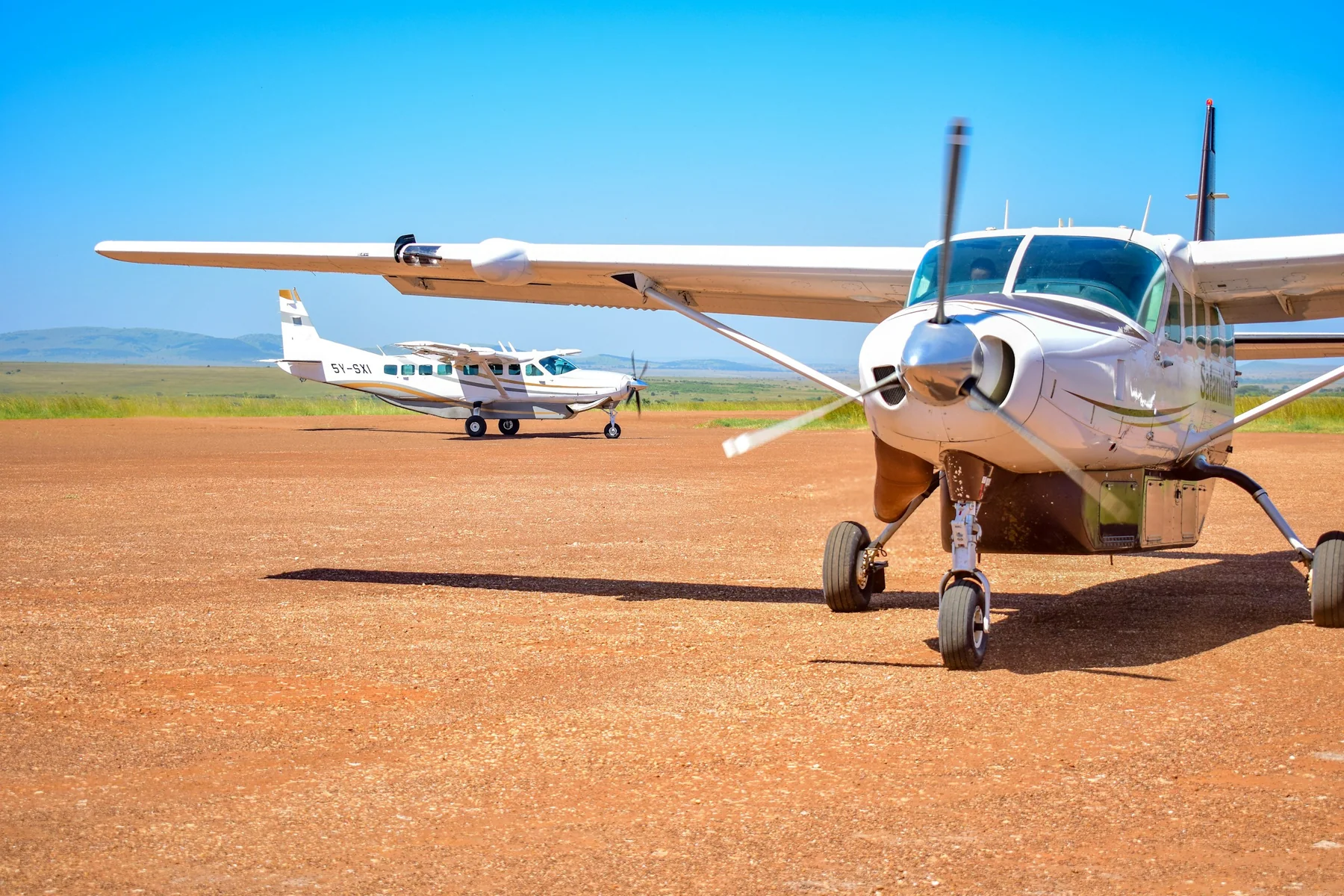
A flight can replace many hours on the road. That may be transformative for pain, stamina or pressure management. The challenge is the aircraft. Scheduled bush flights often use small planes with narrow doors, steps, limited cabin space and strict baggage rules. Passengers may need to climb into the cabin, and a heavy powered chair may not fit or be accepted.
Before selecting a Kenya fly-in safari, obtain written confirmation from the actual carrier for the equipment and boarding needs. A charter may offer more flexibility, but aircraft type still decides what is possible.
A mixed itinerary
Some of the best solutions combine both. A private vehicle can handle Nairobi, Amboseli and Tsavo, followed by a larger-aircraft coastal connection. Another traveller may fly to a lodge whose transfer team can manage the chair, then use a private safari vehicle in the destination.
| Traveller priority | Often the stronger starting point | What still needs checking |
|---|---|---|
| Heavy powered wheelchair | Road route or specially confirmed charter | Lift, charging, storage and rough-road tolerance |
| Manual folding wheelchair | Road or carefully verified fly-in | Aircraft door, weight, stairs and transfer ability |
| Reduced stamina but walks independently | Fly-in with short lodge transfers | Aircraft steps and walking distance |
| Pain affected by long sitting | Short flights or shorter road stages | Turbulence, boarding and rest breaks |
| Needs frequent accessible toilets | Route with verified stops and lodge spacing | Availability between parks |
| Wants maximum daily flexibility | Private road vehicle | Total drive time and vehicle comfort |
Check which safari format fits my mobility needs
Share the traveller’s mobility, transfer, room, bathroom, equipment and pacing requirements. We will verify the route, vehicle and exact rooms before proposing the safari.
Getting into a safari vehicle
Safari vehicles are usually higher than ordinary cars. That improves wildlife views and ground clearance, but the first step can be substantial. Pop-up roofs, open sides and seat layouts vary.
The boarding method should be agreed before the vehicle is assigned. Possible solutions include a stable portable step with a handle, a transfer board, a swivel cushion, a front passenger seat with a wider door, removal of an unnecessary seat, or a properly engineered lift. Staff should never improvise a lift that the traveller has not agreed to.
Ask for:
- ground-to-first-step height;
- number and height of remaining steps;
- door width and opening angle;
- seat height and firmness;
- grab-handle position;
- legroom and ability to change position;
- seat-belt type;
- storage and restraint for the mobility aid;
- roof mechanism and wildlife viewing line;
- maximum number of passengers; and
- a recent photograph of the exact vehicle.
If a physical lift by people is part of the plan, the traveller must consent, the method must be safe, and sufficient trained help must be present. Dignity and control matter as much as speed.
Game-drive comfort and pacing
Once seated, safari can be wonderfully accessible because wildlife viewing happens from the vehicle. The challenge is duration, vibration, dust, heat and the scarcity of suitable toilets in the field.
Shorter morning and afternoon drives may work better than a full day. A full-day drive can still be excellent when the vehicle has supportive seating, pressure-relief breaks, shade, water, medication storage and a realistic toilet plan.
A private vehicle is particularly valuable. The traveller decides when to return, how long to wait at a sighting, which seat to use and whether the route avoids the roughest tracks. The guide also learns the transfer method and daily rhythm rather than starting again with a new shared group.
How to audit a safari room
A room is not accessible because it is on the ground floor. Request measurements and photographs for the exact unit.
Route to the room
Check the path from arrival to reception, dining, bedroom and game-drive departure point. Record distance, gradient, surface, steps, bridge boards, drainage channels and lighting. A smooth 100-metre path may be easier than a short path of loose stones. Rain changes compacted earth, wooden ramps and grass.
Bedroom
Measure the door clear width, threshold, turning space, bed height and clear space beside the preferred side of the bed. Confirm whether furniture can be removed. Ask about power outlets for charging and whether electricity runs overnight.
Bathroom
The bathroom needs the most detail:
- clear doorway width;
- inward or outward door swing;
- shower threshold and opening width;
- fixed or portable shower seat;
- grab-rail position and load rating;
- handheld shower reach;
- toilet height and transfer space;
- basin knee clearance and tap reach;
- slip resistance and drainage; and
- emergency call or method to summon help.
A photograph taken from the bathroom doorway is more useful than a close-up of a towel arrangement.
Public areas
Confirm access to dining, lounge, pool deck, spa and any viewing hide. A traveller may accept that a pool is inaccessible while considering dining access essential. The decision belongs to the traveller.
Verified accommodation starting points
The properties below publish a specific accessibility feature. They are starting points for an audit, not universal endorsements.
Ol Tukai Lodge in Amboseli
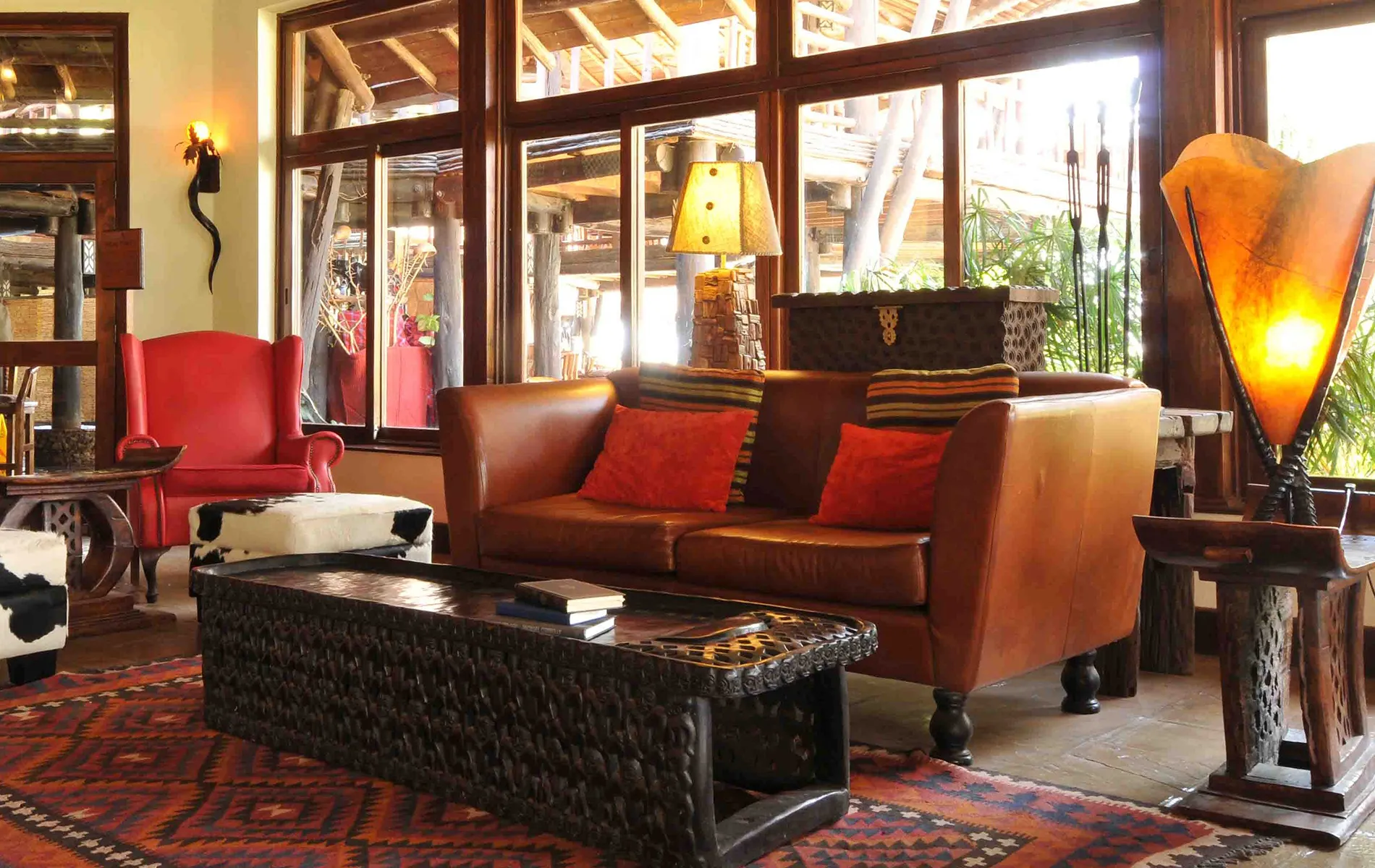
Ol Tukai states that two rooms are designed for guests with disabilities. It describes ramps, reachable furniture and bathroom support rails, and says the rooms are close to amenities. Its inside-park location can reduce daily gate transfers.
Before booking, obtain the exact room numbers, bathroom photographs, door widths, bed height and path details. Confirm the safari vehicle separately. Read the Ol Tukai Lodge guide and the Amboseli accommodation directory when comparing alternatives.
Tawi Lodge near Amboseli
Tawi says Cottage 7 is suitable for wheelchair access. The lodge sits in a private conservancy close to Kimana Gate, giving access to both lodge grounds and Amboseli National Park.
“Suitable” still needs translation into the traveller's requirements. Verify the cottage path, bathroom, bed, dining route and vehicle boarding. Private-conservancy walks may not be appropriate, but the waterhole and lodge setting can still make time outside the vehicle rewarding.
Sweetwaters Serena Camp in Ol Pejeta
Sweetwaters Serena states that one Morani Deluxe Tent was designed for guests with reduced mobility and offers wheelchair access. Ol Pejeta is a useful route candidate because a safari can combine vehicle-based wildlife viewing with a lodge waterhole and shorter transfers from Nanyuki when planned well.
The exact tent must be confirmed, because one accessible unit cannot be substituted with a standard tent. Ask about the route to dining, platform threshold, bathroom measurements and game-drive vehicle.
Nairobi hotels
Nairobi has the broadest hotel choice and is the easiest place to solve a room mismatch. Choose a hotel based on the measured room, airport transfer and next-day departure logistics. A city room advertised to an international accessibility standard still needs confirmation of the exact allocated unit.
Other lodges
Many properties can support a traveller who walks short distances or transfers with assistance even when they do not publish an adapted room. That does not justify adding them to a wheelchair-accessible list without evidence. We request current photographs, measurements and a named contact willing to hold the verified room.
Audit a lodge and vehicle for my trip
Share the traveller’s mobility, transfer, room, bathroom, equipment and pacing requirements. We will verify the route, vehicle and exact rooms before proposing the safari.
Route ideas by access complexity
Nairobi and Amboseli by private road vehicle
This is a strong first design for a traveller who benefits from one vehicle and fewer handovers. Nairobi provides a recovery night. Amboseli offers wildlife-rich vehicle viewing, and Ol Tukai or a verified Tawi stay provides a concrete accommodation starting point.
Break the road journey as needed, carry a reliable step or transfer aid, and arrange an appropriate stop. A two-night Amboseli rush may be less comfortable than three nights with a gentler rhythm.
Nairobi, Ol Pejeta and Lake Nakuru
This central route avoids bush flights and uses manageable road sectors. Sweetwaters provides a published reduced-mobility room. Lake Nakuru can be explored largely by vehicle, though the chosen lodge and viewpoint access need checking.
The route also keeps the traveller within reach of larger towns and Nairobi compared with a remote multi-park circuit.
Amboseli, Tsavo and the coast
A private road vehicle can link Amboseli with Tsavo West, Tsavo East and the coast. It is a beautiful route but involves more total driving. Some Tsavo lodges sit on slopes or have long paths, so room selection is critical.
The coast adds hotel choice and rest days, but beach access can be difficult for a standard wheelchair. Ask about boardwalks, sand chairs, pool lifts, room-to-restaurant paths and tides rather than assuming an oceanfront hotel gives ocean access.
Masai Mara
The Mara is possible for many travellers, but access is property-specific. Roads can be rough, camps may have long natural paths and bush aircraft may be restrictive. A private road safari removes the aircraft problem but adds a long journey from Nairobi.
Choose the reserve sector and lodge after the access audit. The Masai Mara accommodation directory helps narrow geography, but each shortlisted property needs fresh measurements.
Routes that demand more caution
Tree lodges reached by stairs, steep escarpment properties, walking-focused conservancies, mountain trekking, remote fly camps and beach camps reached across sand may require major adaptation or may not fit the traveller's priorities. Sometimes the best planning decision is to choose a different property with equally good wildlife and a much easier daily life.
Travelling with a companion or personal assistant
A companion should not automatically become unpaid lifting staff. Decide which support the companion wants and is able to provide, which tasks the traveller handles independently, and which require trained assistance.
Plan room proximity, bed configuration, privacy, night-time communication and costs. If a personal assistant needs a separate room, include it from the first quote. If the traveller requires assistance with personal care, lodge staff should not be assumed to provide it.
The itinerary can also protect the companion's holiday. A private vehicle lets one person rest while the other takes an optional drive. A lodge waterhole gives both travellers wildlife time without a transfer.
Build the route around reliable rest points
Accessible Kenya safaris work best when the itinerary contains places where the traveller can stop without losing the entire experience. A lodge waterhole, room veranda, garden, photographic hide reached by a level path or a view from the dining terrace can turn a rest afternoon into part of the safari.
This matters because energy is not always predictable. A plan that offers only two choices, join a six-hour drive or remain in a closed room, creates unnecessary pressure. A stronger lodge gives the traveller several ways to stay connected to the landscape.
When comparing two properties, ask:
- Can wildlife be seen from a level public area?
- Is there an accessible toilet near the departure point?
- Can lunch be served near the room when fatigue is high?
- How long does it take to reach the vehicle?
- Can the room veranda be used independently?
- Is there reliable shade and a firm chair with arms?
- Can a companion take a short drive without changing the transport plan?
- Is staff help available by telephone, radio or an agreed signal?
A sample gentle nine-night route
The following is an example of pacing, not a universal prescription:
| Night | Base | Purpose |
|---|---|---|
| 1 and 2 | Nairobi | Recover from the international flight, inspect equipment and confirm the safari vehicle |
| 3 to 5 | Amboseli | Three nights in one verified room, with short morning and afternoon drives |
| 6 | Nairobi or a suitable midpoint | Break the return journey and reset before the next destination |
| 7 to 9 | Ol Pejeta | Use one verified accessible tent and vehicle-based wildlife viewing |
This route avoids bush aircraft and keeps only two safari bases. It can be shortened or extended, but removing every recovery night simply to add another park may make the trip less rewarding.
When a one-park safari is the better safari
A traveller does not need to cross Kenya to have a complete experience. Four nights in Amboseli can include elephants, wetlands, plains, Kilimanjaro views, relaxed lunches and private-conservancy time without repeated packing. Four nights in Ol Pejeta can combine rhino conservation, game drives and waterhole viewing.
The best accessible Kenya safaris often feel spacious because the logistics have been reduced, not because the traveller has been excluded from adventure.
Test the plan before departure
Written verification is essential, but a practical rehearsal can reveal details that a form misses.
A traveller’s view: A wheelchair user described a carefully planned Kenya trip as a dream and a tick off our bucket list.
Read the full independent accessible-safari review. The phrase is joyful, but the planning behind it is the important part.
If possible, the traveller should practise the planned transfer into a vehicle of similar height. Check whether the portable step is broad and stable, whether the chosen side of the vehicle works, where hands will go and how the wheelchair will be folded. Time is not the issue. Safety and confidence are.
For a powered chair, make a one-page handling sheet and ask someone unfamiliar with the equipment to follow it. If the instructions are confusing at home, they will be harder on an airport ramp. Label the freewheel lever, lift points, battery isolation and removable controls.
Try the likely daily rhythm. Sit for the planned game-drive length, use the pressure-relief schedule, test medication storage and decide what must stay within reach. Pack a small vehicle bag containing water, medication, wipes, transfer aid, cushion items, sun protection, repair tools and a lightweight layer.
The final 72-hour reconfirmation
Before departure, reconfirm:
- airline assistance and mobility-aid record;
- airport transfer vehicle and contact;
- exact hotel and safari room numbers;
- safari vehicle registration or type;
- transfer aid and who brings it;
- domestic carrier approval when flying;
- power and charging arrangements;
- assistant or companion rooms;
- insurance and evacuation contacts; and
- the person responsible for resolving a last-minute substitution.
A room substitution is not an ordinary upgrade when accessibility is involved. The replacement must pass the same audit before it is accepted.
Access needs beyond wheelchair use
Mobility planning also helps travellers who do not use a wheelchair. Someone with limited grip may need lever taps, light doors and staff help with luggage. A traveller with balance difficulty may need armrests, rails and excellent night lighting. Someone with reduced stamina may need the nearest room even when a more distant suite has a better view.
Pain and fatigue can fluctuate. Build permission to change the day without apology. A late start, private picnic, vehicle nap or missed afternoon drive is not a failed safari.
Accessible Kenya safaris can also intersect with hearing, vision, sensory or cognitive access. Written schedules, clear step-by-step explanations, seating that supports lip reading, reduced background noise and a consistent guide may be important. The access brief should reflect the whole person rather than one visible mobility aid.
Mobility equipment, charging and repairs
Create an equipment register with photographs and serial numbers. Include chargers, adapters, batteries, cushions, transfer boards, straps, tools and spares. Kenya commonly uses Type G plugs, but voltage and overnight power availability must be checked.
A powered chair or scooter needs:
- battery chemistry and airline documentation;
- charger voltage compatibility;
- reliable overnight power;
- surge protection where appropriate;
- dry and secure storage;
- manual freewheel instructions; and
- a plan if the equipment cannot be repaired locally.
Do not place essential equipment in a separate vehicle unless the traveller agrees and the reunion plan is reliable.
Toilets, medication and personal care on the road
Accessible public toilets are not consistently available between parks. Build stops around verified facilities and carry the equipment the traveller normally uses. A portable urinal, commode solution or privacy plan may be useful for some people, but it should never be assumed or imposed.
Essential medication belongs in hand luggage in labelled packaging. Carry more than the exact trip duration where the prescriber permits, plus copies of prescriptions and a concise medical summary. Temperature-sensitive medicine needs a validated storage plan, not simply a cool box used for drinks.
For medical and vaccine planning, use the Kenya safari health guide and speak with a qualified clinician who understands the traveller's condition.
Emergency planning and insurance
Travel insurance must cover the traveller's declared medical history, mobility equipment, planned activities and emergency evacuation. “Flying Doctor cover” and full medical insurance are not the same thing. Evacuation membership may move a patient to an appropriate facility, while the insurance policy decides who pays for treatment, further transport and other losses.
The trip file should include:
- insurance policy and emergency contacts;
- equipment values and serial numbers;
- medical summary and medication list;
- allergies and communication needs;
- transfer instructions;
- local contact for each destination;
- companion details; and
- consent about what information may be shared in an emergency.
What an accessible safari may cost
Accessibility should not be treated as a luxury label, but genuine adaptations can add cost. The most common additions are a private vehicle, a wheelchair-accessible transfer, an extra room for an assistant, charter flight, specialised equipment or extra nights to reduce pace.
| Possible cost | When it adds real value |
|---|---|
| Private safari vehicle | Flexible timing, consistent boarding setup and chosen seat |
| Accessible transfer vehicle | Traveller remains in wheelchair or needs a lift |
| Charter flight | Scheduled aircraft cannot accept equipment or boarding needs |
| Extra Nairobi night | Recovery, equipment check and delay protection |
| Longer stays | Fewer transfers and gentler daily pace |
| Companion room | Privacy and sustainable support arrangement |
| Equipment hire | Portable ramp, shower chair or other verified aid |
Ask for an itemised Kenya safari cost so each adaptation is visible. A higher total should buy a clear solution, not vague reassurance.
Price an accessible Kenya safari
Share the traveller’s mobility, transfer, room, bathroom, equipment and pacing requirements. We will verify the route, vehicle and exact rooms before proposing the safari.
The access brief we send to every supplier
Use one agreed document throughout the trip:
- traveller's preferred name and communication method;
- mobility aid type, dimensions, weight and battery;
- independent movements and support requested;
- transfer method and equipment;
- maximum comfortable steps and walking distance;
- bedroom and bathroom minimums;
- preferred safari seat and boarding process;
- fatigue, pain, heat and pressure-management schedule;
- medication or equipment storage requirements;
- companion or assistant responsibilities;
- emergency contacts and consent; and
- photographs or diagrams needed for staff.
The final confirmation should attach property photographs and vehicle details. If the assigned room changes, the access approval must be repeated for the new room.
Frequently asked questions
Can a wheelchair user go on safari in Kenya?
Yes, many wheelchair users can enjoy a Kenya safari when flights, transfers, vehicles, rooms and daily pacing are matched to the individual. The chair, transfer method and route must be checked before booking.
Are safari vehicles wheelchair accessible?
Most standard safari vehicles are high and do not have a built-in lift. Some travellers transfer with a step or board, while others need a modified vehicle. Request details of the exact vehicle.
Can a wheelchair travel on a bush plane?
Sometimes. Acceptance depends on aircraft type, door size, weight, battery and the traveller's boarding needs. Written carrier approval is essential.
Which Kenya safari lodges have accessible rooms?
Ol Tukai publishes two disability rooms, Tawi identifies Cottage 7 as wheelchair-suitable, and Sweetwaters Serena identifies one wheelchair-accessible Morani Deluxe Tent. These are starting points, and the exact unit still needs a detailed audit.
Is a road safari better for limited mobility?
It can be because one vehicle and driver remain with the traveller and equipment. Long road hours may be difficult for some people, so the answer depends on stamina, pain and the route.
Do I need a private safari vehicle?
It is strongly useful when the traveller needs a particular seat, transfer method, shorter drives, frequent breaks or secure equipment storage. It is not mandatory for every traveller.
Can lodge staff lift a traveller?
Never assume it. Any assisted transfer needs consent, a safe agreed method and enough trained people. Personal-care support should be arranged separately where required.
Are Kenya’s national parks free for travellers with disabilities?
Current KWS regulations include a disability exemption subject to the required documentation. Rules and documents should be confirmed for the traveller and travel date. County-managed reserves and private conservancies have separate fee systems.
Can I combine safari and beach?
Yes, but sand access, pool access and the route from room to restaurant need checking. A beach wheelchair or boardwalk may be required for direct shore access.
How early should I plan an accessible safari?
Begin as early as possible, especially when the trip needs one of a small number of adapted rooms, a modified vehicle, a personal assistant room or airline equipment approval.
Design my accessible Kenya safari
Share the traveller’s mobility, transfer, room, bathroom, equipment and pacing requirements. We will verify the route, vehicle and exact rooms before proposing the safari.
Tell us how the traveller moves
Share equipment dimensions, transfer ability, room and bathroom minimums, stamina, companions and the Kenya experiences that matter. We will verify each link before recommending a route.