
Great Migration River Crossings: When, Where and What Nobody Can Promise
The herd reaches the bank. Dust hangs above thousands of backs. Then nothing happens for an hour, or everything happens at once.

Great Migration river crossings are powerful because they are wild decisions. No guide, camp or calendar can command a herd into the Mara River at 10:30 on Tuesday.
- The Great Migration is a year-round cycle
- Mara River, Sand River and Grumeti are different stories
- July to October is a window, not an appointment
- Where to stay for crossing interest
- A crossing day can be long, quiet and extraordinary
- Vehicles, pressure and ethical viewing
- Photography without losing the experience
- Kenya, Tanzania and combined migration routes
- What a good migration itinerary promises
- Traveller opinions
- FAQs
The Great Migration is a year-round cycle
More than a river spectacle, the migration is a continuous movement through the Serengeti-Mara ecosystem in search of water and grazing. Calving country in the southern Serengeti receives attention early in the year. As conditions change, herds move through central and western Tanzania, toward the north and potentially into Kenya.
The exact pattern is neither a perfect circle nor one solid column. Herds split, stall, turn back and follow local rain. Zebra and other grazers move alongside wildebeest in different ways. A satellite image, camp report or guide message describes a moment. It does not lock the herds into next week.
| Broad period | General migration focus | What can change it |
|---|---|---|
| January to March | Southern Serengeti and calving areas | Local rain and grass growth |
| April to June | Northward and western movement in Tanzania | Long rains, river levels and grazing |
| July to October | Northern Serengeti and Greater Mara | Dry-season pressure and new rain |
| November to December | Southward return through Tanzania | Short rains and scattered storms |
Mara River, Sand River and Grumeti are different stories
The Mara River is the famous stage for steep banks, deep channels, crocodiles and large gatherings. It winds through northern Tanzania and Kenya, so Mara River crossings are not exclusive to the Masai Mara. Northern Serengeti camps may access important points on the Tanzanian side, while camps in the Mara Triangle and western or central Mara follow movement in Kenya.
The Sand River marks part of the international boundary and can produce arrivals into the Mara ecosystem. The Grumeti system lies farther west in Tanzania and belongs to a different phase of the migration. Marketing often bundles every dramatic water scene into one phrase, which is why travellers should ask which river and which region a camp actually serves.
Mara River
The main northern crossing focus in both Tanzania and Kenya.
Sand River
A border-region movement route that can mark entry into the Mara.
Grumeti
A western Serengeti chapter, earlier and geographically separate from northern Mara crossings.
July to October is a window, not an appointment
Crossing interest usually rises from July through October, yet the first major herds can arrive earlier or later. Rain in Tanzania may hold animals south. New rain in Kenya may pull them north. Later storms can draw them back again. One season may bring repeated movement; another may concentrate drama in shorter bursts.
A herd can gather at the bank in the morning, retreat at noon and cross after you leave. It may cross, turn around days later and cross again. That uncertainty is not a flaw in the safari. It is the reason the moment feels different from a scheduled show.
| Planning choice | Better approach | Weak approach |
|---|---|---|
| Dates | Use a broad migration window | Choose one date sold as guaranteed |
| Nights | Stay four or more near likely movement | Arrive for a single afternoon |
| Guide plan | Follow fresh local information | Drive to one famous point every day |
| Expectations | Value the full ecosystem | Call the trip a failure without a crossing |
Where to stay for crossing interest
In Kenya, the Mara Triangle gives access to western river country. Mara Serena and Little Governors’ are inside the Triangle, while several camps outside use it. Central reserve properties near the Mara and Talek systems can also be well placed depending on herd movement. A camp name is less useful than a map showing the airstrip, gate and normal driving radius.
In Tanzania, northern Serengeti camps around Kogatende and Lamai are associated with Mara River season. Seasonal camps move into the region, while permanent properties remain year-round. If combining both countries, remember that safari vehicles do not simply cross the park border. Flights or formal land-border logistics add time and cost.
| Base | Strength | Question to ask |
|---|---|---|
| Mara Triangle | Western Kenya river access | How far are likely crossing areas from this exact camp? |
| Central or northern Mara reserve | Flexible access to resident wildlife and some river sectors | Which fee and gate plan applies to long drives? |
| Northern Serengeti | Tanzanian Mara River country | Is the camp seasonal and where will it operate on my dates? |
| Conservancy plus reserve | Quiet local drives with selected reserve days | How many crossing-area days are included? |
A crossing day can be long, quiet and extraordinary
The day may begin with a picnic packed before dawn. Your guide checks tracks, herd direction and messages from other guides, then decides whether to commit to river country. Once a herd gathers, vehicles wait at a respectful distance. Engines, sudden movement and crowd pressure can influence animals, so patience is not just for the traveller.
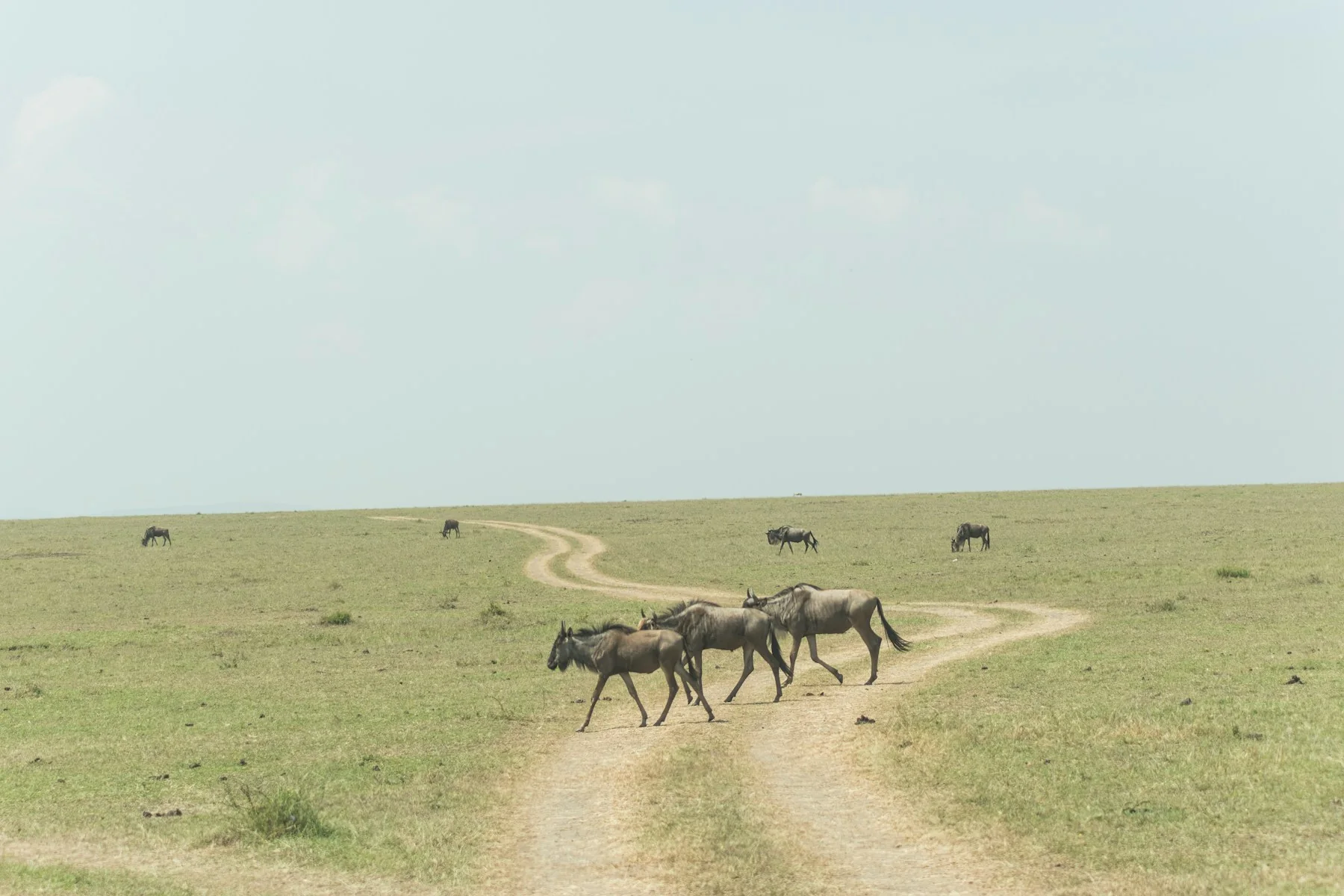
There may be dust, false starts and hours of grazing. When one wildebeest commits, thousands can follow. The scene is noisy, confusing and sometimes difficult, with strong animals, calves, steep banks and predators. It is not a gentle documentary clip. A thoughtful guide helps the group understand what is happening without turning suffering into entertainment.
Vehicles, pressure and ethical viewing
Major crossings can attract a wall of vehicles. Poor positioning, racing, blocking exit points and pushing close to the bank damage the experience and may affect the herd. Follow park rules and the guide’s instructions. Do not pressure a driver to break a rule because another vehicle did.
A responsible vehicle leaves animal corridors open, avoids surrounding distressed wildlife and accepts that the best photographic angle may not be the closest one. If a scene becomes chaotic, moving away can lead to a quieter and more meaningful sighting elsewhere. Migration season still holds lions, elephants, giraffes, hyenas, birds and beautiful empty landscapes.
- Keep clear of entry and exit routes
- Never demand off-road rule breaking
- Limit noise and sudden vehicle movement
- Give animals room to retreat
- Accept that crossing points can close or change
- Value the wider wildlife day
Photography without losing the experience
A medium telephoto lens captures groups and landscape, while a longer lens isolates behaviour. Keep a wider body or phone ready because a crossing can fill the whole river. Dust protection, spare batteries, cards and a beanbag are more useful than changing lenses repeatedly in the vehicle.
Do not spend the entire event looking at the back screen. Make a few frames, check exposure once and watch. A crossing can last minutes after hours of waiting. The memory of sound, scale and movement deserves space beside the photograph.
Kenya, Tanzania and combined migration routes
A Kenya migration trip can use four or five nights in one Mara area, or split six nights between a conservancy and the reserve or Triangle. One base is simpler when the herd is moving near it. A split stay gives broader scenery and activities, but it should not force the guide to abandon fresh information simply because the luggage must move.
A Tanzania route follows the seasonal region. Northern Serengeti is the relevant Mara River choice during the broad crossing period. Central Serengeti may be added for resident wildlife and kopjes, but the road between regions is substantial. A bush flight protects time when the trip is short.
A Kenya and Tanzania combination needs a real transfer day or flight sequence. There is no simple tourist gate between the Mara and Serengeti. With fewer than ten safari days, one country usually gives better odds because more mornings remain in the field. With twelve or fourteen days, both sides can become a rich migration journey rather than a hurried border exercise.
Build a fallback that you would enjoy even if herd movement changes. In the Mara, that may mean a camp known for resident cats, access to marshes and a conservancy activity menu. In Tanzania, it may mean combining northern river country with central Serengeti. A resilient itinerary never spends every night beside one predicted point on a map. It gives the guide more than one good wildlife story to follow.
| Route | Suggested shape | Main strength |
|---|---|---|
| Kenya only | 4 to 6 Mara nights | Flexible river days and easy Nairobi access |
| Tanzania only | 4 to 7 nights in seasonal Serengeti regions | Scale and the ability to follow the wider cycle |
| Kenya plus Tanzania | 10 to 14 safari nights with planned transfer | Two perspectives on the same ecosystem |

What a good migration itinerary promises
It can promise a suitable seasonal area, enough nights, a knowledgeable guide, a capable vehicle, transparent fees and a plan that can change with field information. It can describe previous patterns and explain alternatives. It cannot promise the date, hour, crossing point, herd size or predator action.
The most resilient trip includes excellent resident wildlife even if the herds are elsewhere. Choose a camp you will enjoy, a landscape that interests you and a guide with permission to make decisions. Then a crossing becomes an extraordinary gift, not the only reason the safari mattered.
What travellers say after the trip
These are exact words from public reviews and discussions. Each person had their own route, budget and expectations, so the value is in the detail rather than treating one experience as a promise.
The volume of game will take your breath away.
A traveller remembering the scale of wildlife during a Serengeti safari.
The volume of vehicles watching the crossing will leave a bad taste in your mouth!
The same traveller giving an unfiltered warning about crowding at a major crossing.
They started migrating earlier than usual that year and the guide took us out last minute and we spent a whole day watching the spectacle.
A Kenya traveller describing why flexible guiding mattered more than a fixed timetable.
Great Migration crossing questions
What is the short answer about Great Migration river crossings?
Crossings may occur in northern Serengeti and the Greater Mara during the broad July to October period, but timing and location change with rain and herd movement.
How many safari nights should I allow?
Four or five nights near a likely crossing area improve the odds, but nothing guarantees a crossing.
Will I see the Big Five?
A migration safari can also produce excellent predator and plains-game viewing, but the Big Five should not become a promise attached to the crossing.
Is the Great Migration guaranteed?
No. The migration is a continuous natural movement shaped by rain and grazing. River crossings are unpredictable events, not appointments.
Is a private vehicle worth the cost?
It is valuable for photographers, families and travellers who want control over pace. Shared drives cost less and can be sociable, but the group agrees on timing and sighting length.
Can I travel in the rainy season?
Yes. Expect greener landscapes, fewer vehicles and the chance of muddy tracks. A capable vehicle and flexible itinerary matter.
Should I fly or drive?
Flying saves time and can make a short safari feel longer. Driving costs less, allows more luggage and makes the journey part of the trip.
Can children enjoy this trip?
Yes, when drive length, room layout, meal times, pool safety and toilet breaks are planned around their ages.
How far ahead should I book?
Migration months, festive periods and small camps fill first. For flexible green-season dates, there is often more room to compare.
How can NLS Safaris help?
We can design the Kenya part of the journey around your dates, preferred Mara area, accommodation style, vehicle choice and onward beach or regional travel.
Sources and further reading
Official park, heritage, tourism, aviation and regulatory sources support the practical details in this guide.
Plan for the migration without pretending to control it
Tell us your dates and number of nights. We will recommend a sensible Mara area, camp style and daily plan.
Plan a Great Migration safari
Share your travel window, preferred comfort level and whether a river crossing is one hope or the entire focus.