
Amboseli vs Tarangire: Which Elephant Safari Should You Choose?
Choose between Amboseli’s swamps and Kilimanjaro and Tarangire’s river, baobabs and dry-season refuge without wasting safari days at the border.
- Amboseli vs Tarangire at a glance
- The elephant experience is different, not simply bigger
- Amboseli is an open basin of water and sky
- Tarangire is a river-and-baobab park
- Which landscape photographs better?
- Tarangire’s dry season is a major deciding factor
- Amboseli is more consistent, but never static
- Wildlife beyond elephants
- Which is better for big cats?
- The wider ecosystems matter in both parks
- Access from Nairobi and Arusha changes the answer
- How many nights should you give each park?
- Crowds and vehicle pressure
- Which is better for families?
- Which is better for honeymooners?
- Which is better for birders?
- What travellers who compared both said
- Cost comparisons must include the border
- When Amboseli is the clear choice
- When Tarangire is the clear choice
- When doing both makes sense
- The booking questions that settle the comparison
- The final verdict
- Related guides
- Sources and traveller accounts
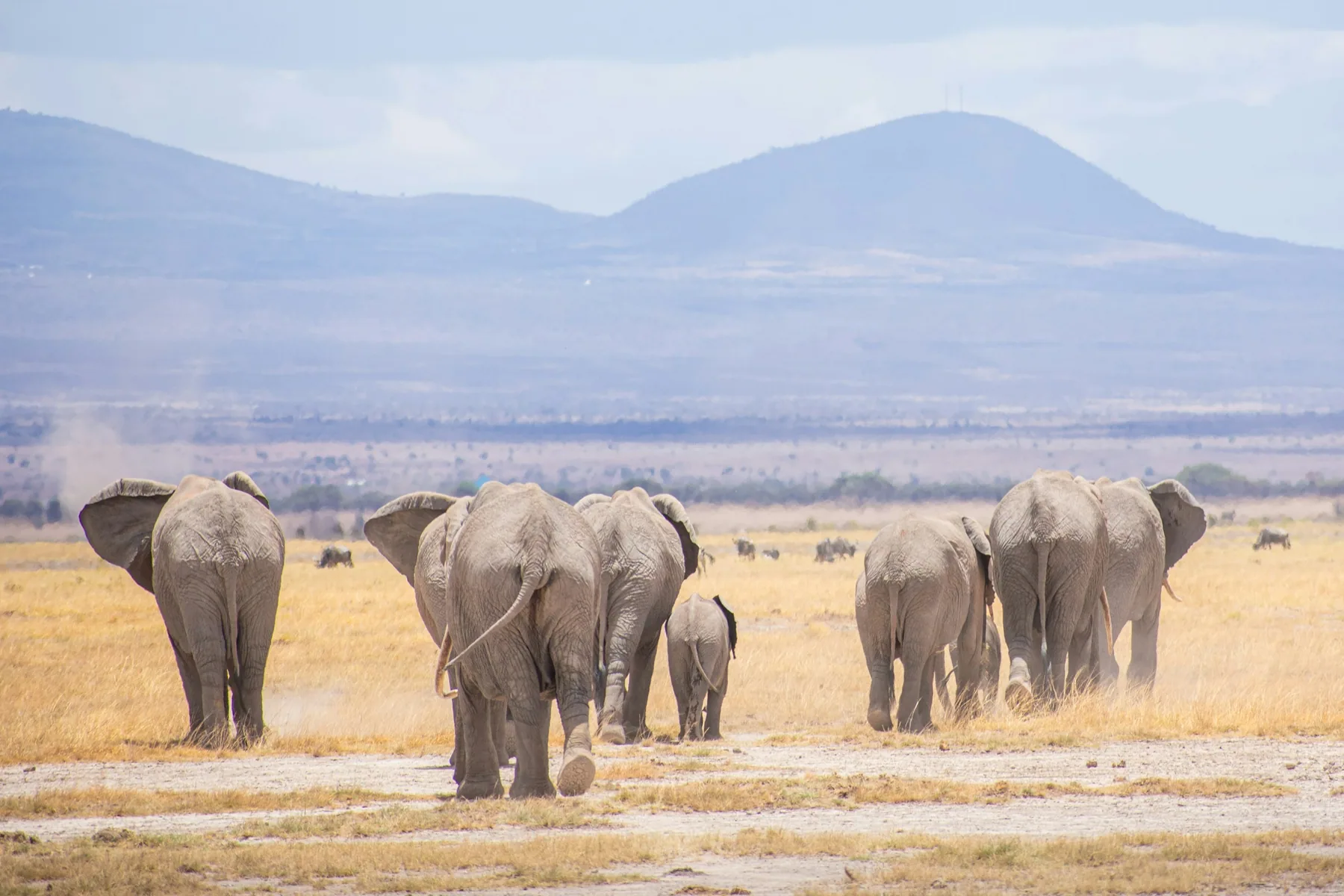
In Amboseli, the elephant may be a dark shape against white dust, moving toward a swamp that stays green when the rest of the basin looks thirsty. The mountain behind him belongs to Tanzania, but the vehicle is still in Kenya. If Kilimanjaro appears, every camera in the vehicle turns toward the same frame.
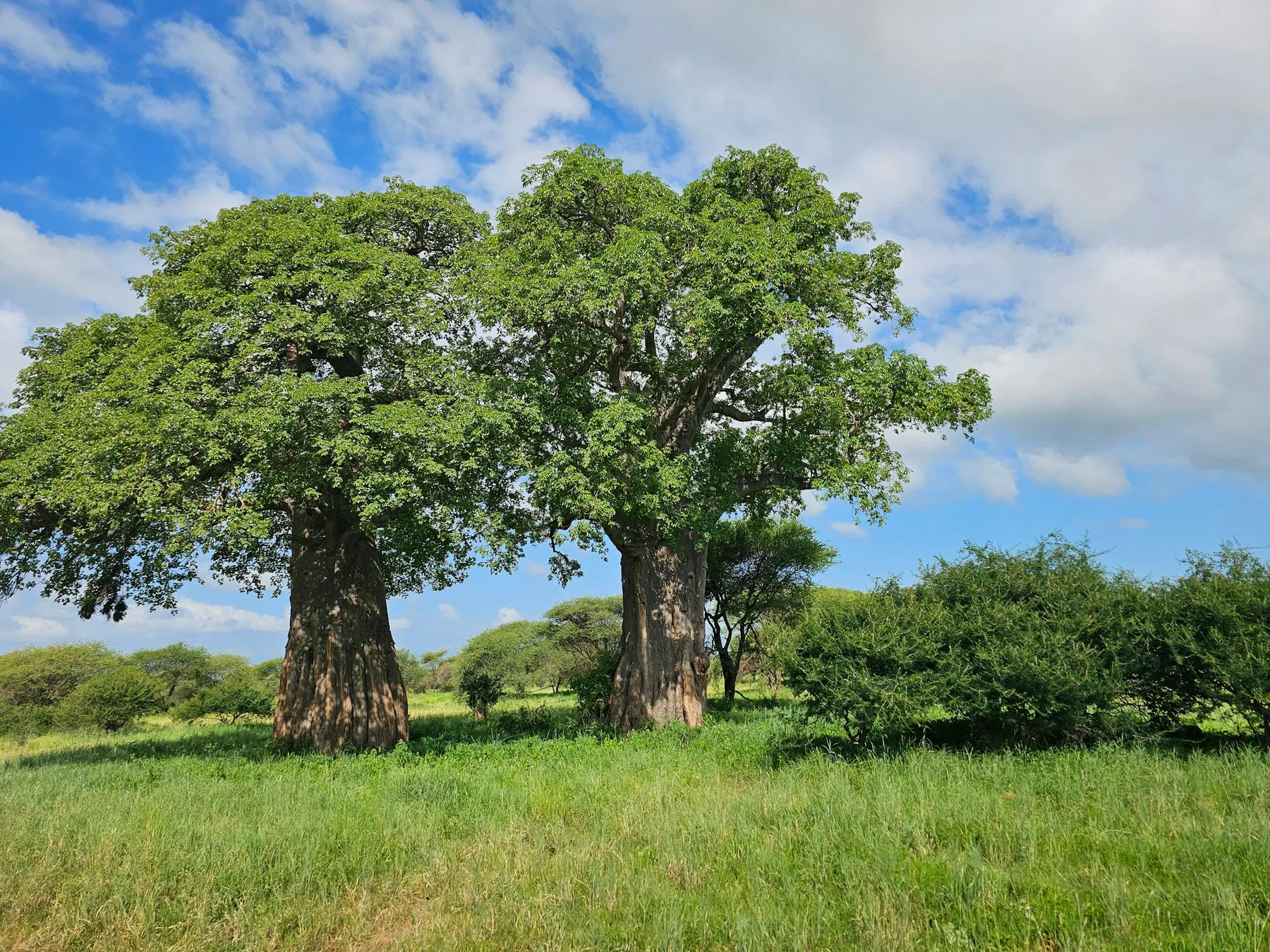
In Tarangire, the elephant may step from behind a baobab trunk so wide that the tree seems older than the landscape around it. The river below can shrink to pools in the dry season. Elephants, zebra, wildebeest, buffalo and antelope gather around what remains, while woodland and long grass keep the scene more enclosed than Amboseli's open lake basin.
Both parks are famous for elephants. That similarity is where the easy comparison ends. Amboseli is a compact Kenyan national park within a cross-border elephant ecosystem. Tarangire is a much larger Tanzanian national park within the Maasai Steppe, and its strongest wildlife concentration is tied closely to the dry season. Amboseli fits naturally with Nairobi, Tsavo and the Kenyan coast. Tarangire fits naturally with Arusha, Lake Manyara, Ngorongoro, Serengeti and Zanzibar.
The right Amboseli vs Tarangire choice therefore begins with the whole itinerary. Choosing a park in the wrong country can cost more safari time than the wildlife difference is worth.
Amboseli vs Tarangire at a glance
| Question | Amboseli | Tarangire |
|---|---|---|
| Country | Kenya | Tanzania |
| Protected area | National park | National park |
| Approximate size | 390 sq km | 2,850 sq km |
| Signature landscape | Swamps, dry lake basin, open plain, Kilimanjaro | River valley, baobabs, acacia woodland, seasonal swamps |
| Elephant strength | Families, known individuals and open viewing | Dry-season concentration and woodland encounters |
| Strongest specialist season | Good year-round, distribution changes | July to November dry-season refuge is especially strong |
| Typical circuit | Nairobi, Tsavo, coast, Mara by flight or long road link | Arusha, Manyara, Ngorongoro, Serengeti, Zanzibar |
| Best short stay | 2 to 3 nights | 2 to 3 nights, with more for the southern park |
| Main expectation risk | Kilimanjaro treated as guaranteed | Dry-season density assumed year-round |
| Visual signature | Elephant and mountain | Elephant and baobab |
The elephant experience is different, not simply bigger
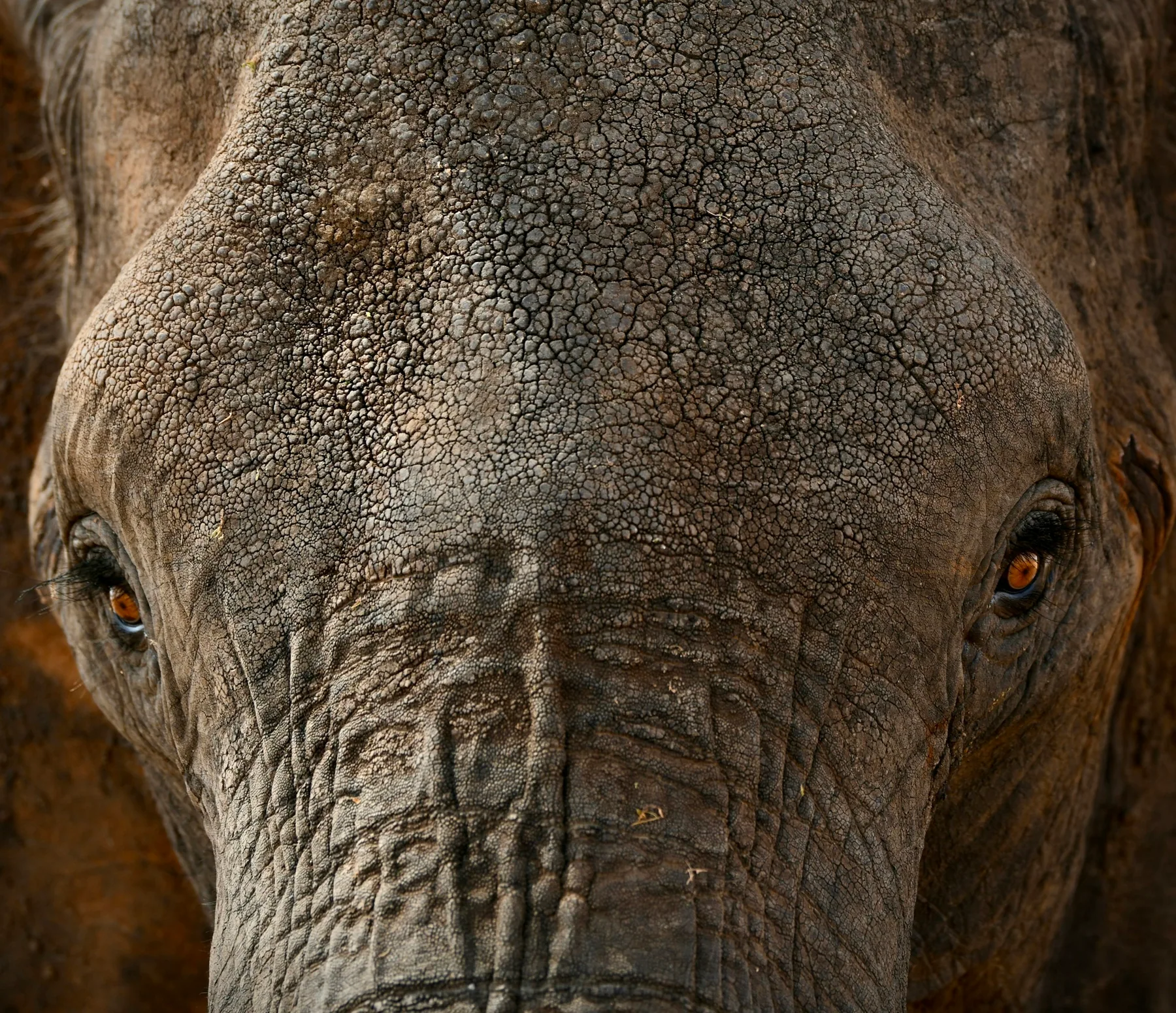
Amboseli makes elephant society visible. Families can emerge onto open ground, enter swamp vegetation, gather around water and cross the pale basin. Decades of research by the Amboseli Elephant Research Project mean that individuals and family histories are unusually well documented.
Tarangire can produce immense dry-season elephant encounters. TANAPA describes the park as an elephant paradise and a refuge for wildlife moving in from a much larger ecosystem. Around the river and Silale Swamp, bulls and breeding groups may concentrate as water disappears elsewhere.
Counting elephants does not decide the better experience. A large Tarangire aggregation may be spectacular, while an hour with one Amboseli family can reveal more social behaviour. Weather, water, guide quality and patience matter in both.
Elephant comparison
| Elephant interest | Stronger starting point | Why |
|---|---|---|
| Known family histories | Amboseli | Long-term individual research |
| Open family-group observation | Amboseli | Basin and swamp-edge visibility |
| Dry-season concentration | Tarangire | River and swamp refuge within wider steppe |
| Woodland elephant photography | Tarangire | Baobab and acacia habitat |
| Super-tusker history | Amboseli ecosystem | Craig, Tim and Tolstoy are documented examples |
| Elephant behaviour over several days | Both | Different habitats reveal different choices |
Amboseli is an open basin of water and sky
The park looks flat from a distance, but water makes it complex. Springs fed through Kilimanjaro's volcanic system sustain permanent swamps. Elephants, buffalo, hippos and birds use the green wetland, while dry plains and lakebed create long sightlines.
Kilimanjaro is the most famous background, not the only landscape. Observation Hill reveals the relationship among swamp, open basin and woodland. Palm areas, acacias and seasonal water add variety within a relatively small park.
Amboseli habitat
| Habitat | What it adds | Planning note |
|---|---|---|
| Permanent swamp | Water, forage, elephants, buffalo and birds | Roads and animal approach control the angle |
| Dry lake basin | Dust, open movement and graphic compositions | Heat shimmer can be severe |
| Open grassland | Herd visibility and predator scanning | Wildlife spreads after rain |
| Acacia woodland | Shade and browsing | Shorter sightlines |
| Observation Hill | Landscape overview | Alight only in designated area |
| Wider community land | Corridors, conservancies and human-elephant coexistence | Visitor access must be named separately |
The Amboseli safari guide and park versus wider ecosystem guide explain the landscape beyond a single mountain photograph.
Tarangire is a river-and-baobab park
TANAPA describes Tarangire as 2,850 square kilometres, gazetted in 1970 and embedded in a much larger ecosystem. The Tarangire River and Silale Swamp become especially important as the wider steppe dries. Wildlife moves toward the park's remaining water, creating its famous seasonal concentration.
Baobabs give the park its visual identity. Acacia woodland, riverine vegetation, ridges, plains and swamp make the north and south feel different. A quick day trip from Arusha sees only part of that story.
Tarangire habitat
| Habitat | What it adds | Planning note |
|---|---|---|
| Tarangire River | Dry-season water and animal movement | Pools and crossings change with conditions |
| Baobab woodland | Shade, texture and iconic scenery | Animals can disappear behind vegetation |
| Acacia savanna | Browse and mixed wildlife | Tsetse flies occur in some wooded areas |
| Silale Swamp | Water, elephants and broad southern scenery | Requires time from northern accommodation |
| Northern circuit | Easy arrival and concentrated use | Can feel busy on day-trip routes |
| Southern park | Greater remoteness and depth | Longer drives and fewer lodging choices |
Which landscape photographs better?
Amboseli is graphic. A clean horizon, single elephant, strip of green swamp and mountain can reduce the frame to four strong elements. Dust and backlight create silhouettes. The risk is that cloud removes Kilimanjaro and midday heat erases detail.
Tarangire is layered. Baobabs, elephants, river bends and woodland create depth. The scene may feel less immediately iconic, but it offers more foreground and texture. Branches can frame an animal or block it completely.
Photography choice
| Photograph | Better fit |
|---|---|
| Elephant beneath Kilimanjaro | Amboseli |
| Elephant beside baobab | Tarangire |
| Large family crossing open ground | Amboseli |
| Bull moving through woodland | Tarangire |
| Dust silhouette | Amboseli, also possible in Tarangire |
| Riverbed and wildlife layers | Tarangire |
| Wetland reflection | Amboseli swamp edges |
| Dense dry-season gathering | Tarangire |
One traveller described Amboseli's draw as “the iconic view of Kilimanjaro, assuming she isn’t shy”. The qualification is the important part. A mountain hidden by cloud does not make the park a failure.
Tarangire’s dry season is a major deciding factor
TANAPA's park brochure identifies July to November as an extraordinary period when wildlife gathers around permanent water. At the driest stage, animal density can be exceptional around the river and Silale Swamp.
During rains, wildlife can disperse into the wider ecosystem. Tarangire remains beautiful, often green and quieter, but a traveller expecting the same dry-season concentration may be disappointed. Tall vegetation can make searching slower.
Tarangire seasonal pattern
| Condition | Likely character | Best for |
|---|---|---|
| Early dry season | Movement toward permanent water begins | Balanced scenery and wildlife |
| Mid dry season | Strong river and swamp concentration | Elephant and mixed-herd viewing |
| Late dry season | Dust, heat and intense water dependence | Dramatic ecology, with harsher conditions |
| First rains | Wildlife distribution changes quickly | Storm light and fresh colour |
| Green season | Dispersed game and lush woodland | Birding, quiet travel and atmosphere |
| Heavy local rain | Road and vegetation changes | Flexible travellers |
Amboseli is more consistent, but never static
Permanent swamps give Amboseli reliable water through dry periods. Elephants use the park throughout the year, although families and bulls also move across the wider ecosystem. Rain can spread animals onto fresh grass outside the central basin, while drought concentrates them more strongly around water.
The mountain, road conditions, dust, birdlife and lake water change. Year-round does not mean identical.
Amboseli seasonal pattern
| Condition | Likely character | Planning response |
|---|---|---|
| Dry spell | More activity around permanent water | Prioritise dawn and swamp circuits |
| Rain on dispersal land | Wildlife may spread wider | Add time and avoid judging one drive |
| Green basin | Colour, cloud and bird activity | Protect equipment from showers |
| Dusty months | Strong atmosphere and silhouettes | Carry camera covers and cleaning kit |
| Cool dawn | Clearer air and movement | Stay inside or near a useful gate |
| Clouded mountain | Elephant and wetland story remains | Change the photographic assignment |
Use the Amboseli weather guide and best time to visit Amboseli for month-by-month planning.
Wildlife beyond elephants
Amboseli offers buffalo, hippo, giraffe, zebra, wildebeest, gazelles, hyenas, lions, occasional cheetah and rich birdlife. Flamingos may use suitable basin water, while swamp birds can occupy an entire morning.
Tarangire adds dry-country specialists such as fringe-eared oryx and gerenuk in suitable areas, plus buffalo, giraffe, zebra, wildebeest, eland, kudu, lions, leopards and a notable bird list. TANAPA calls it a birder's paradise with an exceptional range of resident breeding species.
Wildlife comparison
| Interest | Amboseli | Tarangire |
|---|---|---|
| Elephants | Core year-round identity | Core identity, strongest concentration in dry season |
| Lions | Present | Present, with strong dry-season prey context |
| Leopards | Elusive | Woodland and river habitat offers opportunity, still elusive |
| Cheetahs | Possible on open plains | Possible but less central in dense woodland |
| Hippos | Swamps and pools | Less defining |
| Dry-country antelope | Some wider-ecosystem opportunity | Stronger range, including oryx and gerenuk |
| Birding | Wetland and dry-basin contrast | Woodland, river and dry-country strength |
| Baobab ecology | Not a defining park feature | Major visual and ecological feature |
Which is better for big cats?
Neither should replace the Mara or Serengeti when big cats are the main reason for travel. Lions occur in both. Leopards can be found in Tarangire's wooded and riverine habitat. Cheetahs use open Amboseli ground. Every sighting remains a matter of time, season and guide skill.
Predator expectations
| Goal | Better choice | Caution |
|---|---|---|
| Elephants plus occasional cats | Either | Cats are not guaranteed |
| Cheetah scanning | Amboseli's open areas | Low grass and luck still matter |
| Leopard habitat | Tarangire | Woodland also conceals animals |
| Lion with broad prey concentration | Tarangire in dry season | Position changes daily |
| Dedicated big-cat safari | Add Mara or Serengeti | Do not overload a short itinerary |
The wider ecosystems matter in both parks
Amboseli's protected core is only part of the land elephants use. Community group-ranch landscapes, corridors toward Tsavo and Kilimanjaro and agricultural areas all influence survival. Tim, one of Amboseli's famous tuskers, spent much of his time outside the park.
Tarangire is also a refuge within a larger migratory system. Zebra, wildebeest and elephants disperse beyond the park during wetter periods. Farms, livestock, village land, wildlife management areas and corridors affect whether that movement remains possible.
Ecosystem comparison
| Question | Amboseli | Tarangire |
|---|---|---|
| Is the park enough alone? | No | No |
| Main movement context | Kilimanjaro, community ranches, Kimana and Tsavo links | Maasai Steppe dispersal and calving areas |
| Dry-season refuge | Permanent swamps | River pools and Silale Swamp |
| Human interface | Pastoralism, farms, subdivision and corridors | Pastoralism, farms, village land and corridors |
| Tourism outside park | Conservancies and sanctuaries with varied access | Wildlife management areas and private concessions with varied access |
| Essential booking question | Which named land is included? | Which park sector or outside land is included? |
Access from Nairobi and Arusha changes the answer
Amboseli is reached naturally from Nairobi and can continue toward Tsavo. Tarangire is reached naturally from Arusha and fits between the city, Lake Manyara and Ngorongoro.
Travelling from Amboseli to Tarangire involves crossing the Kenya-Tanzania border, normally through the Namanga corridor in a road itinerary. Immigration, vehicle arrangements, luggage, guides and travel documents must be confirmed for the actual date. A vehicle or guide change may be required by the operator's cross-border arrangement.
Routing comparison
| Existing itinerary | Better addition | Reason |
|---|---|---|
| Nairobi and Tsavo | Amboseli | Direct geographic fit |
| Masai Mara and Kenyan lakes | Amboseli if enough time, often by air or long transfer | Remains within Kenya |
| Arusha, Ngorongoro and Serengeti | Tarangire | Direct northern-circuit fit |
| Zanzibar after northern Tanzania | Tarangire | Kuro or Arusha routing may connect naturally |
| Both Kenya and Tanzania over two weeks | Either or both | Border is already part of the plan |
| Seven days across both countries | Usually choose one | Avoid losing wildlife time to transfers |
One experienced contributor advised, “Given that your trip is in Tanzania, I'd stay in Tanzania and go to Tarangire”. That practical route logic often matters more than an abstract park ranking.
How many nights should you give each park?
Two nights in Amboseli create one full day plus arrival and departure drives. Three nights protect against cloud and allow elephant behaviour to unfold. Tarangire also deserves two nights, while three or four help travellers reach the southern park and Silale Swamp without turning every drive into a transfer.
Stay-length comparison
| Nights | Amboseli | Tarangire |
|---|---|---|
| 1 | A rushed glimpse unless route is very efficient | Often a northern day-trip experience |
| 2 | Strong compact introduction | Useful north and central exploration |
| 3 | Better weather recovery and elephant depth | Time for river, woodland and deeper sectors |
| 4 | Photographer or split park/wider-land stay | Strong for south, slow observation and remote camp |
| 5+ | Specialist elephant research pace | Specialist birding, photography or combined concession stay |
Crowds and vehicle pressure
Amboseli's compact core means vehicles can converge around cats or an exceptional elephant scene. Tarangire's northern routes receive day visitors and short northern-circuit stays, while its size gives multi-night guests room to travel farther south.
Crowd avoidance depends on location, not park reputation. A remote camp can still share one rare sighting with several vehicles. A busy park can feel empty when a guide leaves the radio and works a quieter habitat.
Crowd strategy
| Choice | Amboseli effect | Tarangire effect |
|---|---|---|
| Stay 3 nights | More chances outside peak moments | Time to leave northern day-trip routes |
| Private vehicle | Control over waiting and departure | Freedom to travel deeper |
| Early start | Reach swamps before convergence | Reach river routes before day visitors |
| Quiet season | Fewer visitors, variable wildlife spread | Fewer visitors, lower concentration possible |
| Experienced guide | Reads elephant routes and road options | Uses habitat and water knowledge |
Which is better for families?
Amboseli's compact game-drive circuit can suit younger children. Elephant families are easy to understand, and a lodge break can be built around shorter drives. Tarangire suits children who enjoy varied scenery, baobabs, elephants and the feeling of exploration, but long southern drives need realistic pacing.
Family choice
| Family need | Better fit |
|---|---|
| Two safari nights from Nairobi | Amboseli |
| Northern Tanzania family circuit | Tarangire |
| Shorter drives | Amboseli, depending on lodge |
| Baobab and nature storytelling | Tarangire |
| Elephant social learning | Amboseli |
| Quiet multi-night camp | Either with careful property choice |
| Tsetse sensitivity | Discuss Tarangire sector and season |
Which is better for honeymooners?
Amboseli offers sunrise mountain views, elephants and a natural bridge to Tsavo or the Kenyan coast. Tarangire offers baobab sunsets, river valleys and intimate camps that can fit before Ngorongoro, Serengeti or Zanzibar.
The better honeymoon choice is the one that avoids a needless border day. Privacy, private drives, flexible meals and room atmosphere matter more than squeezing both elephant parks into a short itinerary.
Honeymoon comparison
| Priority | Stronger option |
|---|---|
| Kilimanjaro sunrise | Amboseli |
| Baobab sunset | Tarangire |
| Kenya coast road circuit | Amboseli |
| Zanzibar after northern circuit | Tarangire |
| Deep elephant research story | Amboseli |
| Remote southern camp | Tarangire |
| Short Nairobi add-on | Amboseli |
Which is better for birders?
Amboseli combines permanent wetland, dry lake basin, grassland and woodland in a compact area. Tarangire combines dry-country species, woodland, river, swamp and raptors across a larger park.
Birders who value wetland concentration may prefer Amboseli. Travellers building a Tanzania list through Manyara, Tarangire and Ngorongoro may gain more overall variety by keeping Tarangire in the northern circuit.
Birding comparison
| Habitat or interest | Amboseli | Tarangire |
|---|---|---|
| Wetland birds | Major strength | Silale and river wetlands add value |
| Raptors | Strong | TANAPA highlights abundant raptors |
| Dry-country species | Good in wider mosaic | Strong |
| Flamingo possibility | Basin conditions may attract them | Not a defining attraction |
| Woodland birding | Localised | Major part of park character |
| Birding with elephants | Excellent | Excellent |
What travellers who compared both said
First-hand accounts are most useful when the season and route are kept attached.
One visitor wrote, “We saw more animals in Tarangire than Amboseli” and found Tarangire more scenic on the drives taken. That observation does not create a permanent ranking. It records one set of conditions.
Another discussion described both as “known for elephants including some of the last tuskers”, then separated their visual identities: Kilimanjaro in Amboseli and baobabs in Tarangire.
A traveller who had visited both in September wrote, “I would vote for Tarangire every time”, while still liking Amboseli's scenery and wildlife. The itinerary already focused on Tanzania, which shaped the advice.
How to use these opinions
| Quote or opinion | Useful clue | Limit |
|---|---|---|
| More animals in Tarangire | Dry-season or local conditions may favour density | Not a year-round census |
| Amboseli has the mountain | Unique visual possibility | Cloud can hide it |
| Stay in Tanzania | Route efficiency matters | Does not compare a Kenya-only holiday |
| Tarangire every time | Personal landscape and wildlife preference | Not universal advice |
| Both have elephants | Valid shared strength | Encounters and ecology differ |
Cost comparisons must include the border
Park fees are only one line. A cross-border itinerary may add visas or travel authorisations, separate vehicles, border transfer time, guide changes, extra flights and an overnight positioned for logistics. Requirements and fees change, so use current official immigration and park sources for the travel dates.
Cost table
| Line | Amboseli-only Kenya route | Tarangire in Tanzania route | Combining both |
|---|---|---|---|
| Park fee | KWS system | TANAPA system plus applicable taxes | Both systems |
| Vehicle | Kenya vehicle | Tanzania vehicle | Possible change or cross-border arrangement |
| Guide | Kenya-based | Tanzania-based | Continuity must be confirmed |
| Travel document | Kenya entry rules | Tanzania entry rules | Both countries' current requirements |
| Transfer time | Nairobi or Tsavo routing | Arusha or northern circuit | Border and onward road time |
| Accommodation | Park, gate or wider ecosystem | North, central, south or outside park | More nights and packing |
| Flight | Optional on many Kenya routes | Optional from Kuro or Arusha | Cross-border air schedule may add cost |
When Amboseli is the clear choice
Choose Amboseli when the rest of the trip is in Kenya, elephants and their known histories come first, Kilimanjaro has personal importance, you are pairing Nairobi with Tsavo or you have only two or three nights for a specialist elephant destination.
Amboseli decision signals
| Signal | Why it matters |
|---|---|
| Kenya-only itinerary | No border diversion |
| Elephant family research matters | Decades of individual records |
| Open photography matters | Swamp and basin sightlines |
| Tsavo follows | Natural road circuit |
| Short add-on from Nairobi | More efficient than crossing into Tanzania |
| Super-tusker history matters | Well-documented individuals |
When Tarangire is the clear choice
Choose Tarangire when the rest of the trip is Tanzania's northern circuit, travel falls in the dry season, baobab woodland is a priority, you want to explore beyond a compact park or you are continuing from Ngorongoro toward Arusha and Zanzibar.
Tarangire decision signals
| Signal | Why it matters |
|---|---|
| Tanzania-only itinerary | Direct northern-circuit fit |
| July to November travel | Strong dry-season concentration |
| Baobabs matter | Signature park landscape |
| Three or four nights available | Time for southern sectors |
| Dry-country birding matters | Strong woodland and raptor context |
| Zanzibar follows | Natural Tanzania routing |
When doing both makes sense
Both parks belong in a longer Kenya-Tanzania trip when the border already forms part of the route. Amboseli can precede a Namanga crossing and Tarangire can begin the Tanzanian northern circuit. The pairing works best with at least two nights in each and enough time for Ngorongoro or Serengeti without one-night packing every day.
Combination options
| Route | Strength | Risk |
|---|---|---|
| Nairobi, Amboseli, Tarangire, Ngorongoro, Serengeti | Clear overland progression | Border and long driving need honest timing |
| Mara, Amboseli, Tarangire, Serengeti | Broad ecosystems | Too ambitious when compressed below two weeks |
| Amboseli, Tsavo, coast | Strong Kenya alternative | Tarangire does not fit without diversion |
| Tarangire, Ngorongoro, Serengeti, Zanzibar | Strong Tanzania alternative | Amboseli does not fit without border cost |
| Fly between key parks | Protects time | Higher cost and luggage limits |
The booking questions that settle the comparison
Ask how the park sits inside the itinerary, not only what animals live there.
Final questions
| Question | Why it matters |
|---|---|
| Which country is the rest of the safari in? | Determines route efficiency |
| What month am I travelling? | Tarangire density changes strongly by season |
| Are elephants or broader wildlife the priority? | Both are elephant parks with different supporting stories |
| Is Kilimanjaro a hope or a requirement? | Visibility cannot be guaranteed |
| How many complete dawn drives are included? | Arrival labels hide lost time |
| Which Tarangire sector will we reach? | North and south offer different depth |
| Is the Amboseli camp inside the park? | Gate travel affects dawn |
| What happens at the border? | Vehicle, guide, luggage and documents must be clear |
| Are all park fees and taxes included? | Kenya and Tanzania quote structures differ |
| Is the vehicle private? | Controls pace, seats and photography |
The final verdict
Amboseli is the better answer to a Kenya question. Tarangire is the better answer to a northern Tanzania question. When the itinerary is genuinely open, choose by season and visual preference.
Amboseli turns elephants into individuals against water, dust and a mountain that may or may not appear. Tarangire places elephants inside a larger river-and-woodland story, where the dry season gathers wildlife around shrinking water beneath baobabs.
Neither park is the lesser copy of the other. The strongest safari uses their difference. Stay in one country when time is short. Include both when the border already belongs to the journey and there is enough time to slow down on each side.
Related guides
- Amboseli safari guide
- Amboseli super tuskers guide
- Amboseli National Park versus the wider ecosystem
- Best time to visit Amboseli
- Amboseli weather guide
- Where to stay in Amboseli
- Nairobi to Amboseli
- Kenya and Tanzania safari combinations
- Kenya vs Tanzania safari
- Kenya photography safari guide
Sources and traveller accounts
- KWS Amboseli National Park for current park attractions, access and visitor rules.
- Amboseli National Park Management Plan 2020 to 2030 for protected-area size, ecosystem and tourism management.
- TANAPA Tarangire National Park brochure for the 2,850 sq km area, river, Silale, baobabs, birdlife and July-to-November dry-season context.
- TANAPA Northern Zone Quick Reference 2024 for current authority and northern-zone context.
- Tripadvisor Tarangire attraction answer for an exact short visitor comparison.
- Kenya-Tanzania planning discussion for the exact short comparison of both elephant destinations.
- Amboseli or Tarangire discussion for a first-hand September preference tied to route.
- Amboseli and Tarangire itinerary discussion for exact short remarks on Kilimanjaro, elephants and routing.
Let us compare Amboseli and Tarangire
Share dates, countries, travellers, nights, wildlife priorities, lodging and budget. We will compare the complete trip rather than two park names in isolation.