
Amboseli Hot-Air-Balloon Safari: Location, Cost, Safety and Kilimanjaro Views
Compare launch location, flight flow, true cost, safety, passenger fit, weather terms, Kilimanjaro uncertainty, wildlife expectations, photography and lodge transfers.
- Is an Amboseli balloon safari worth it?
- Where Amboseli balloon flights launch
- The morning from pickup to return
- What the flight feels like
- Kilimanjaro views are possible, not promised
- Wildlife from the air
- What an Amboseli balloon safari costs
- Safety: what to verify before booking
- Passenger restrictions and physical requirements
- Weather, cancellations and refunds
- Choosing a balloon operator
- Families and children
- Honeymoon and special-occasion flights
- Accessibility and mobility
- Photography and video in the basket
- What to wear and carry
- Best season for ballooning in Amboseli
- Balloon safari versus a sunrise game drive
- Amboseli balloon versus Masai Mara balloon
- Real traveller experiences, with context
- How the balloon fits a complete Amboseli stay
- Booking checklist before payment
- Final perspective
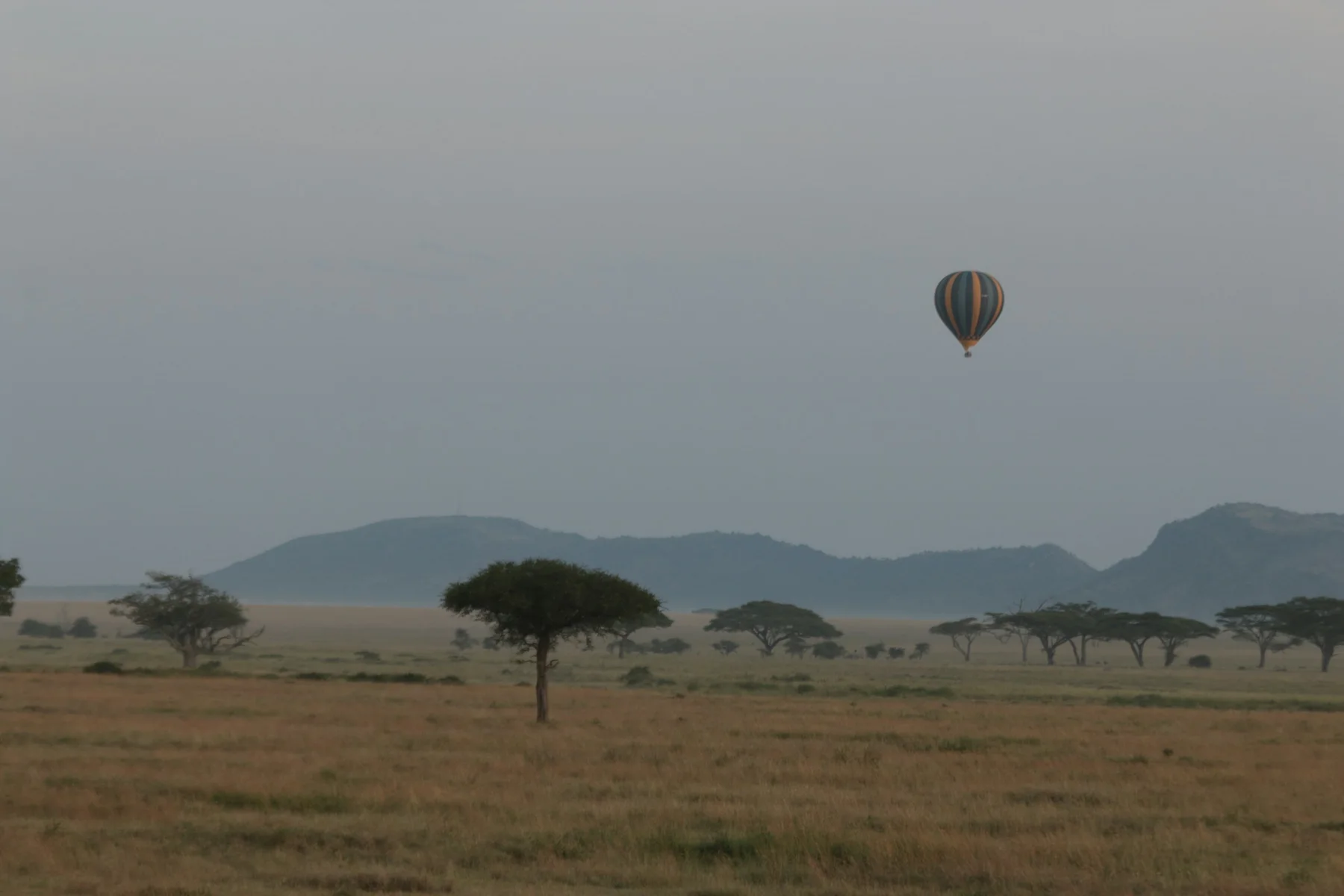
Long before the first game-drive vehicle reaches the swamps, a burner roars in the dark near Amboseli. The balloon envelope, almost invisible at first, begins to lift from the ground. Coffee warms cold hands. Kilimanjaro may be a black shape on the southern horizon, a summit floating above cloud, or nothing more than a direction the pilot points toward.
Then the basket leaves the earth. The noise of the burner comes in brief, bright bursts. Between them, the morning is surprisingly quiet. Tracks, bomas, woodland and open ground begin to connect below. Elephants may look small from this height. A giraffe's shadow can stretch farther than the animal. The balloon moves with the wind, so the view arrives rather than being chased.
An Amboseli hot-air-balloon safari is expensive, early and dependent on weather. It can also be one of the most beautiful mornings in Kenya. The decision is easier when the romance and the practical details sit on the same page. This guide explains the actual schedule, launch area, flight, landing, costs, park fees, passenger restrictions, safety questions, wildlife expectations, Kilimanjaro uncertainty, lodge transfers, photography and cancellation planning.
Is an Amboseli balloon safari worth it?
It is worth considering when you value landscape, first light and the feeling of flight more than a guaranteed list of animals. It is less suitable when the budget would force you to remove an essential safari night, when a passenger cannot meet the physical requirements, or when a conventional game drive is the only acceptable way to see wildlife closely.
What the flight adds
A game drive sees Amboseli from animal height. A balloon reveals structure. Tracks join water. woodland gives way to grass. Homesteads, livestock routes and conservation land show that the ecosystem continues outside the national park boundary.
What it does not replace
The balloon does not replace a patient ground drive. Wildlife is often distant from the basket, the route cannot be steered toward a sighting, and the flight usually occupies one morning only. Keep enough ground time for elephants, birds, swamps and guide interpretation.
The emotional part
Travellers often remember the quiet between burner blasts, the first moment of lift and the scale of the landscape. One independent reviewer called it “One of the most unreal experiences of my life.” Another wrote that it was “So so worth the early start”.
The hard tradeoff
At about the price of a substantial safari upgrade, the balloon must compete with an extra night, a private vehicle or a better-located room. The right choice depends on which experience changes the trip most for you.
Quick decision table
| Choose the balloon when | Think carefully when | Choose another use of the budget when |
|---|---|---|
| First light and aerial landscape matter deeply | A passenger is anxious about basket entry or landing | Removing a night leaves only one full Amboseli day |
| The group can manage the physical requirements | Weather cancellation would disrupt onward travel | A private vehicle solves a more important need |
| You have at least two or three nights in the area | Young children face a very early start | Close wildlife photography is the sole priority |
| The price fits after core safari costs | Kilimanjaro is treated as essential | Pregnancy or medical advice makes flight unsuitable |
| You accept wind-led route and wildlife luck | The lodge transfer is unusually long | The operator cannot answer safety or insurance questions |
Where Amboseli balloon flights launch
Flights operate in the greater Amboseli area near the national park and Kimana side, rather than from one permanent point in the centre of every visitor's map. The named operator, launch camp, lodge transfer and land overflown should appear in the booking.
Near the Kimana side
Kilimanjaro Balloon Safaris gives its physical location on Kimana Gate Road and describes a custom balloon camp at the edge of Amboseli National Park. Other providers may use their own operating area. Do not assume every product with “Amboseli” in the title leaves from the same field.
National park versus wider ecosystem
The wider ecosystem includes community land, conservancies, settlements, livestock, seasonal water and wildlife movement beyond the park. A flight may reveal both protected-area and lived-landscape relationships. Ask which land is crossed rather than treating the entire view below as national park.
Why the exact launch site matters
It changes pickup time, likely flight scenery, transfer cost, land permissions and how the morning fits with the next game drive. It can also affect which side of the basket faces Kilimanjaro during parts of the flight.
Wind still decides the route
A pilot can change altitude to find air moving in different directions, but a balloon does not steer like a helicopter. The operator FAQ describes “walking the winds,” with distance and landing place determined by wind and the availability of safe ground.
The balloon will not necessarily cross your lodge
An operator may launch near several camps, but cannot promise to fly over a particular roof. A lodge visible from the ground may sit upwind and never appear beneath the basket.
Kilimanjaro is south of the Kenyan plains
The mountain itself is in Tanzania. From the Amboseli area, passengers look south toward its northern face. Cloud can reveal Kibo, Mawenzi, both, or neither.
Location questions
| Ask | Why it matters | What a complete answer names |
|---|---|---|
| Who operates the flight? | Safety, policy and communication belong to that company | Legal operator and contact |
| Where is the balloon camp? | Sets pickup and morning length | Road, landmark and land area |
| Is the launch inside the park? | Changes fee and route assumptions | Park, conservancy or community land |
| Which lodges receive transfers? | Avoids surprise supplements | Exact property and pickup time |
| Is transfer private or shared? | Affects return time | Vehicle and waiting arrangement |
| What land may be overflown? | Adds cultural and conservation context | Named ecosystem areas without a guaranteed track |
The Amboseli National Park versus wider ecosystem guide explains why boundaries and land management change activities and expectations.

The morning from pickup to return
The flight itself is only one part of a four- or five-hour experience. The rest includes darkness, transfers, check-in, safety procedures, inflation, landing recovery and breakfast.
The alarm
Expect to wake well before sunrise. Lay out clothing, shoes, glasses, medication and a small camera bag the night before. The aim is to leave quietly without searching a dark room for a battery.
Lodge pickup
Pickup varies by property. The Kilimanjaro Balloon Safaris FAQ gives examples around 5:00 to 5:15 for several nearer lodges and 4:30 to 4:45 for farther properties. These are operator-specific examples, not a schedule for every flight.
Transfer in darkness
The drive may cross rough ground and wildlife areas. Remain seated, follow the driver and keep a warm layer accessible. Wildlife seen by headlights is a bonus, not a reason to stop long enough to miss check-in.
Check-in
Passenger details, waivers and health information may be confirmed. Give truthful weight, mobility, pregnancy and medical information. The pilot needs accurate data for safe load planning.
Warm drink
Some operations offer coffee, tea, hot chocolate and a biscuit while the crew prepares. Drink moderately if toilet access worries you, but do not arrive dehydrated.
Walking to the launch field
Ground can be uneven, thorny, dusty or damp. Closed shoes are more practical than sandals. Anyone needing assistance should have arranged it before dawn rather than discovering the issue at the basket.
The pilot briefing
Listen even if you have flown before. Basket design, landing position, emergency instruction and crew procedure differ. Ask questions before the burner makes conversation difficult.
Inflation
Fans first fill the envelope with cool air. Burners then heat it until the balloon stands. Ropes, vehicles and crew move quickly, so guests must remain where directed.
Basket entry
The cited operator describes a basket around 1.3 metres high with footholds. Passengers climb over the side. Crew can assist, but a person must still meet the operator's participation standard.
Takeoff position
Some baskets use seated or crouched positions during takeoff. Follow the pilot, not another traveller's memory from a different aircraft.
Lift
Takeoff can feel gentler than expected. The ground simply begins to move away. The burner is loud above the basket, while the flight between burns is calm.
Sunrise flight
Operators plan around calm early conditions. The cited FAQ says launch is generally between 6:15 and 6:30, with a flight around an hour and a possible range of about 45 to 90 minutes depending on wind and weather.
Landing search
After roughly part of the flight, the pilot begins evaluating open ground. A suitable landing is more important than extending the flight for a better view.
Landing position
Passengers sit or crouch on padded benches, bend knees and hold designated handles. The basket may touch gently, bump more than once, tip or drag before stopping.
Chase crew
Ground vehicles follow the balloon as roads and terrain allow. They may arrive immediately or after passengers wait safely with the pilot.
Return game drive
The drive from landing can add wildlife and landscape. It is not a guaranteed full game drive and may cross wider-ecosystem land rather than the park.
Toast and breakfast
Many balloon traditions include sparkling wine or champagne, with non-alcoholic alternatives, followed by breakfast. Confirm dietary needs and whether breakfast is at a permanent pavilion or field setup.
Lodge return
Return time depends on property, landing site, breakfast and shared transfers. One traveller reported, “Back at the lodge by 9.30am,” but that is one morning, not a schedule promise.
Morning timeline
| Approximate stage | What happens | What can change |
|---|---|---|
| 04:30 to 05:15 | Lodge pickup for many properties | Distance and shared route |
| Around 05:15 | Check-in and warm drink | Operator and launch readiness |
| Before sunrise | Briefing and inflation | Wind and technical checks |
| Around first light | Takeoff | Pilot safety decision |
| About 45 to 90 minutes | Flight | Wind, landing options and weather |
| After landing | Recovery and vehicle return | Road access and distance |
| Later morning | Toast and breakfast | Pavilion, menu and group pace |
| About four to five hours after pickup | Lodge or onward return | Property location and shared transfer |
What the flight feels like
People who expect a windy aircraft are often surprised. Because the basket moves with the air mass, there may be little feeling of wind during calm flight.
The burner is loud
The burner blast is close overhead and can startle a child or noise-sensitive passenger. Between burns, conversation and natural sound return.
The basket is shared
Large baskets are divided into compartments. The cited operator says its balloons carry 12 to 16 passengers. You may not stand beside your partner in the exact corner you imagined unless the loading plan allows it.
Space is functional
There is room to stand and turn within a compartment, not to walk around freely. Bags must be small and secure. Long lenses and loose straps need care.
There is no conventional seat during flight
Passengers normally stand for the flight, then use benches or a crouched position for landing. Anyone who cannot stand unassisted for about an hour must discuss suitability in advance.
Height changes
The pilot can fly low for detail or climb for wind and panorama, subject to rules and safety. No particular altitude can be promised.
Direction changes gradually
Some baskets or balloons allow controlled rotation, while the flight track remains wind-led. Everyone may receive a view, but not simultaneously.
The ground feels different from above
Elephants become part of a larger pattern. Livestock trails, manyattas, wetland edges and road lines reveal how people and wildlife share the wider landscape.
The landing may be the lively part
A calm flight can finish with bumps, tipping or dragging. This is why the landing position matters. One review described “it felt like we were literally gliding through the air,” but smooth flight does not remove the need to brace correctly.
Sensory guide
| Moment | Likely sensation | Helpful preparation |
|---|---|---|
| Inflation | Heat, fan noise and crew movement | Stay within the marked guest area |
| Burner blast | Sudden loud roar and radiant heat | Wear a hat and brief children |
| Takeoff | Gentle lift and visual surprise | Keep phone or camera secured |
| Calm flight | Quiet, little wind and wide view | Look beyond the screen |
| Higher climb | Cooler-looking panorama, not necessarily colder | Keep layer on until comfortable |
| Descent | Increasing ground detail | Listen for landing instruction |
| Landing | Bumps, possible tip or drag | Bend knees, hold handles and remain in position |
Kilimanjaro views are possible, not promised
Amboseli is a celebrated northern viewpoint, but the mountain can stay behind cloud for the entire flight. No premium, pilot or launch time can purchase a hole in the weather.
Why dawn helps
Early conditions are usually calmer for flight, and the mountain may show before daytime cloud develops. The same quiet air that supports ballooning can support clear long-distance visibility.
Cloud can create a better reveal
Passengers sometimes climb above lower cloud and see the summit floating beyond it. A reviewer described how “we popped out above the white fluffy clouds”. That remarkable event cannot be scheduled.
Cloud can also hide everything
Another traveller wrote, “We went on a cloudy day”. They still described glimpses and a good first balloon experience. The decision should remain worthwhile without a clear summit.
The sun does not wait for the basket
Inflation or safety checks can continue as sunrise develops. A safe launch outranks a perfectly timed photograph.
Mountain-facing does not mean mountain-filled
The basket may rotate or travel at an angle that keeps the mountain behind another compartment. Look when the pilot points it out and share space fairly.
A clear summit may be distant
Phone photographs can make it appear small. A moderate telephoto produces a more substantial mountain, but long lenses are harder in a shared basket.
Read the complete photo guide
The Amboseli and Kilimanjaro guide explains cloud, haze, seasonal character, lens compression and honest wildlife foregrounds in depth.
Mountain expectation table
| Expectation | Reality | Better plan |
|---|---|---|
| Clear summit throughout | Cloud changes by the minute | Value landscape and flight first |
| Balloon directly in front of mountain | Your basket cannot photograph itself and route is wind-led | Photograph mountain from the basket and balloons from the ground |
| Sunrise exactly beside Kibo | Sun position changes through the year | Ask for general dawn orientation, not a fixed alignment |
| Elephants under the summit | Wildlife chooses its own route | Enjoy any ethical aerial sighting |
| Every passenger gets the same frame | Compartments and rotation change angles | Share edges and use short bursts |
Wildlife from the air
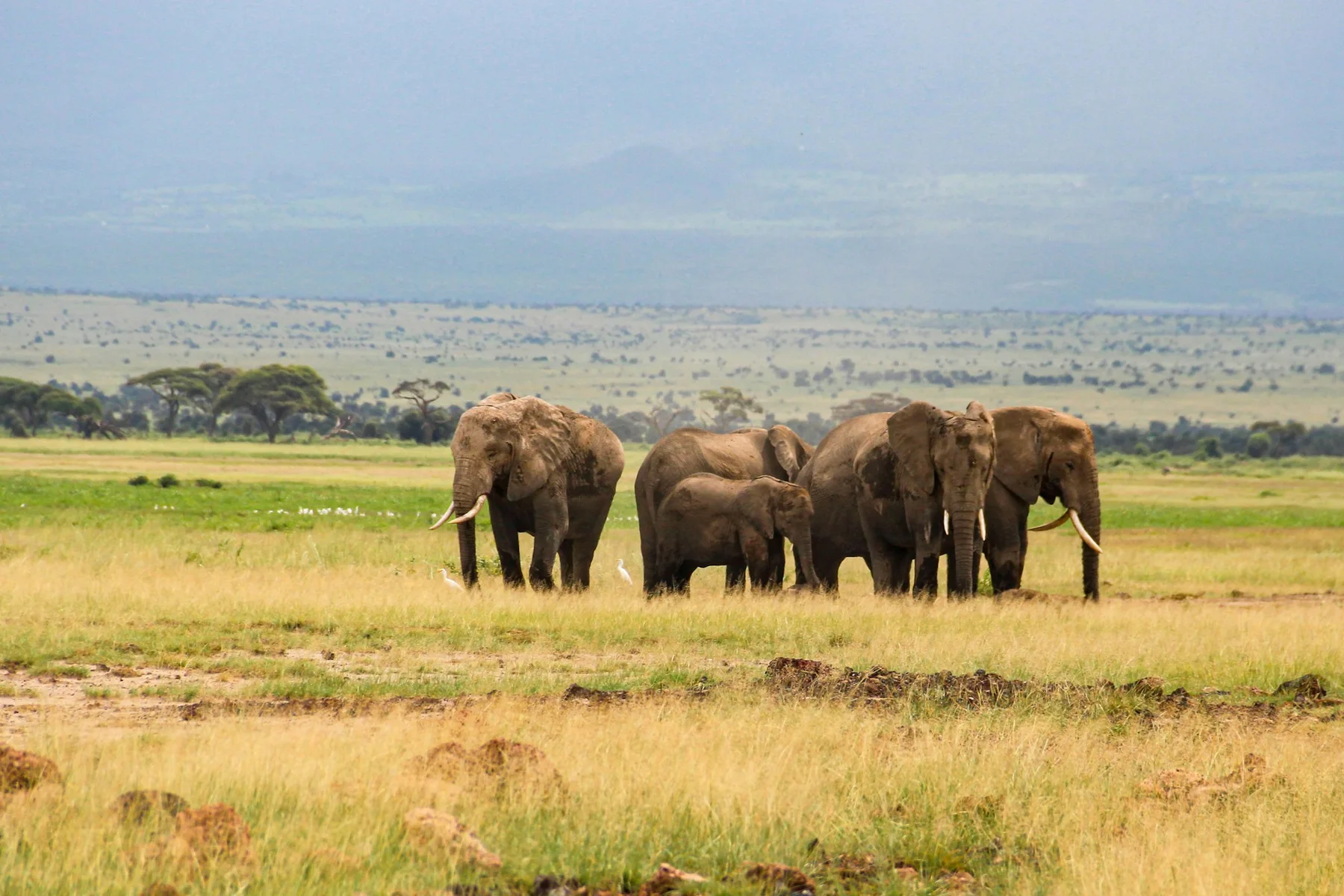
Balloon wildlife viewing is about pattern and movement more than close portraits. A herd crossing open ground may be easier to read than a lion resting under bush.
Elephants
Amboseli elephant families can be visible on open plains, near wetland or moving between habitats. From higher altitude they may look small. Low flight is controlled by the pilot and cannot be requested simply for a photograph.
Giraffes
Giraffes are easier to identify by shape and shadow in open woodland. Their movement through acacia country gives strong scale.
Zebra and wildebeest
Striping, group shape and trails can read well from above. Concentration varies with water and grazing.
Buffalo
Dark groups near wetlands may be visible, but distance and vegetation make identification dependent on the pilot and binoculars.
Predators
Lion, cheetah or hyena sightings are possible, not expected. Predators can disappear into grass and bush from the air.
Birds
Amboseli has rich birdlife, yet a moving basket is not a bird-hide. Large waterbirds and flocks are more noticeable than small species.
Livestock and settlements
Flights across the wider ecosystem may show cattle, tracks, bomas and daily life. These are not interruptions to the safari. They are evidence that the landscape is inhabited and managed.
Aerial distance protects wildlife
The pilot must operate within aviation and wildlife rules. Guests should not press for repeated low passes over animals, homes or livestock.
Wildlife expectation table
| Subject | What the balloon shows well | What a ground drive does better |
|---|---|---|
| Elephant herd | Family shape, movement and habitat | Behaviour, age detail and close portraits |
| Giraffe | Height, shadow and woodland pattern | Feeding and individual detail |
| Zebra or wildebeest | Group lines and tracks | Eye-level movement and interaction |
| Predator | Rare overview if visible | Tracking, interpretation and patient watching |
| Birds | Flocks and wetland pattern | Species identification and close photography |
| Human landscape | Settlement and route relationships | Consent-based conversation and context |
The ethical elephant viewing guide applies on the ground before and after the flight. The balloon should never become an excuse to pressure wildlife from above.
What an Amboseli balloon safari costs
The cost has several layers: the flight product, any park or special-activity fee, lodge transfer, taxes, breakfast, booking commission, currency conversion and the effect on the rest of the itinerary.
Public operator rate example
Kilimanjaro Balloon Safaris lists US$450 per international adult and US$350 per international child aged 4 to 11. It lists US$395 for a resident or citizen adult and US$295 for a resident or citizen child aged 4 to 11 on its live rate page.
These are supplier-specific public rates. The actual booking confirmation and invoice govern. Do not assume the same rate, age band, transfer or inclusions apply to another balloon company.
Ask whether park-related fees are included
KWS eCitizen material lists balloon safari among special activities. A package may include the relevant fee, or an itinerary may show it separately. Ask for one clear line rather than adding a public fee yourself and risking double counting.
Ask whether ordinary park entry is included
National park entry is separate from many activities. A flight outside the park boundary, a return drive, or a same-day game drive can produce different fee treatment. The operator and safari planner should state it.
Transfer inclusion
Some operator FAQs include pickups and drop-offs for named Amboseli lodges. A distant property, private transfer, late onward route or unlisted camp may change the price.
Breakfast inclusion
Confirm whether the rate includes a full hot breakfast, dietary requests, alcoholic toast, non-alcoholic drink and return from the landing site.
Child rate
A lower rate does not establish suitability. Age, height, ability to see over the basket, standing, landing position and operator rules still matter.
Currency and payment
Even a USD price can be charged in another currency by a card or intermediary. Ask which currency reaches the supplier, card fee, exchange basis and payment beneficiary.
Cancellation value
The useful price is the amount protected if weather cancels the flight. A cheap non-refundable intermediary product can be worse value than a clearer direct or package term.
Cost comparison table
| Cost line | May be included | Must be confirmed |
|---|---|---|
| Balloon seat | Usually the core product | Named operator and date |
| Lodge pickup | Often included for listed properties | Exact camp and private or shared vehicle |
| Return from landing | Commonly included | Final destination and timing |
| Breakfast | Commonly included | Menu and dietary arrangement |
| Toast | Often included | Alcoholic and non-alcoholic options |
| Park special-activity fee | Varies by package | Included or separate line |
| Ordinary park entry | Varies by route and itinerary | Which date and which land |
| Taxes and card fee | May be embedded or added | Final payable total and currency |
| Weather cancellation | Depends on terms | Refund, rebook and processing time |
Safety: what to verify before booking
Ballooning is an aviation activity. The right question is not whether reviews use the word safe. It is whether the named operator, aircraft, pilot, maintenance, weather decision and insurance meet current legal and professional requirements.
Licensed operator
Ask for the legal operating company and confirmation that it is authorised for commercial passenger balloon operations in Kenya. A safari seller or lodge may take payment while a separate aviation company flies the balloon.
Commercial pilot
The pilot should hold the appropriate commercial licence and current medical, training and proficiency requirements. The Kilimanjaro Balloon Safaris FAQ states that its captains hold full commercial licences and follow Kenya Civil Aviation Authority testing and training requirements.
Aircraft registration
The confirmation should identify the actual operator, not just a marketing brand. Guests do not need to audit an aircraft, but they should be able to ask who owns and maintains it.
Maintenance
Balloon envelope, burner, fuel system, basket and instruments require documented inspection and maintenance. A professional operator can explain the system without becoming defensive.
Weather authority
The pilot must have final authority to delay or cancel. A guide, lodge, guest or sales agent should not pressure a launch because someone has an international flight later.
Passenger manifest
Names and weights support load calculations. Give honest information. Moving weight between compartments may be part of the pilot's balance plan.
Safety briefing
The briefing must cover entry, takeoff, position during flight, landing posture, handles, when to leave the basket and what to do if the basket tips.
Chase crew
The ground team follows, recovers passengers and handles equipment. Ask how communication works if roads delay the vehicle.
Insurance
Ask what passenger liability or aviation cover the operator carries, then check whether personal travel insurance includes ballooning. Operator insurance and travel insurance solve different risks.
Emergency plan
The operation should have communication, first aid and a response plan. Travellers with allergies, cardiovascular conditions or medication needs should disclose relevant information and carry medicine as instructed.
Review evidence is not certification
One family reviewer wrote that “we all felt totally safe including our children 7 and 9”. Another wrote, “we felt completely safe and well taken care of”. These are valuable descriptions of personal experience, but they do not replace current licensing and operator checks.
Safety verification table
| Safety field | Ask for | Red flag |
|---|---|---|
| Commercial authority | Named licensed balloon operator | Only a reseller name |
| Pilot | Commercial captain and current requirements | No clear pilot responsibility |
| Weather | Captain has final cancel authority | Sales pressure to fly |
| Manifest | Accurate passenger details and weights | “It does not matter” |
| Briefing | Takeoff, flight and landing instructions | Rushed or inaudible briefing |
| Basket | Capacity, compartments and entry method | More passengers than stated capacity |
| Ground crew | Chase vehicles and communication | No explanation of recovery |
| Insurance | Operator cover and personal policy compatibility | Vague promise without terms |
| Cancellation | Written refund or rebooking rule | Decision only after payment with no policy |
Passenger restrictions and physical requirements
Rules vary by operator, basket and insurance. The following details come from one established Amboseli operator's published FAQ and must be reconfirmed for the actual booking.
Minimum age
The cited FAQ sets a minimum age of four and requires children to travel with a responsible adult. Another operator may set a different minimum, height test or child policy.
Ability to see over the basket
A young child may meet the age rule but see mostly wicker. Ask basket-wall height, whether the child can stand safely and whether lifting a child during flight is prohibited.
Standing
Passengers need to stand unassisted for about the duration of the flight. There is no normal passenger seat used like an aircraft seat during cruise.
Basket entry
The cited basket is about 1.3 metres high, with footholds for climbing. Crew assistance helps, but it is not a mechanical lift.
Landing position
Passengers must bend knees, sit or crouch as directed and hold handles. Knee, hip, back or balance limitations may affect safe participation.
Pregnancy
The cited operator does not fly passengers who are or may be pregnant. Do not ask for an informal exception from a driver or seller.
Weight
The operator says it has no stated maximum weight but requires physical ability and accurate passenger information. Other operators may have thresholds, surcharges or individual review.
Disability
Disability does not produce one automatic answer. Basket design, climbing, standing, landing posture and emergency response must be discussed directly and respectfully before booking.
Medical conditions
Recent surgery, brittle bones, severe joint disease, uncontrolled cardiovascular illness, seizure risk, balance difficulty and conditions affected by a firm landing require professional medical advice and operator disclosure.
Hearing
The burner and outdoor briefing can make speech difficult. Ask for a clear position near the pilot, written instructions or another reasonable communication arrangement.
Anxiety and fear of heights
Balloon flight often feels calmer than a high balcony because the basket has no visual floor gap, but fear is personal. Watch an operator video, understand basket height and landing, and avoid promising a nervous traveller that they will definitely enjoy it.
Passenger suitability table
| Situation | What to confirm | Possible alternative |
|---|---|---|
| Child aged 4 to 11 | Minimum age, wall height, landing posture and price | Dawn game drive and balloon-view breakfast |
| Pregnancy | Operator prohibition and medical advice | Private sunrise drive |
| Knee or hip limitation | Climb, one-hour standing and crouched landing | Vehicle-based landscape safari |
| Back condition | Landing impact and doctor advice | Observation Hill only if walking is suitable |
| Hearing difficulty | Briefing access and burner noise | Written briefing and close pilot position if accepted |
| High anxiety | Cancellation terms and realistic sensory preview | Ground sunrise plan |
| Larger body size | Accurate weight and compartment plan | Private discussion with operator before payment |
Weather, cancellations and refunds
The best safety decision may be not to fly. A cancellation is disappointing, but it demonstrates that the pilot is protecting passengers rather than selling a sunrise at any cost.
Wind
Wind affects takeoff, flight path, speed, landing and recovery. Stronger wind can shorten the flight if a safe landing must be used earlier. One traveller reported, “Due to the strong wind our speed was high” and “the flight did not last as long as hoped”.
Rain
Rain affects visibility, envelope performance, comfort and safe operation. Operators typically require no rain at launch and suitable weather along the expected route.
Visibility
Poor visibility can affect aviation safety even when the ground feels calm. A clouded Kilimanjaro view alone does not necessarily cancel the flight, while aviation visibility concerns may.
Thunderstorms
Convective weather, gust fronts and lightning are serious hazards. A storm elsewhere can influence local wind before rain reaches the launch field.
Ground condition
The pilot needs a suitable launch and landing. Wet ground, standing water, obstacles, livestock and access for the chase crew all matter.
Cancellation timing
The operator may decide before pickup, at balloon camp or after waiting for conditions. A late cancellation can still be the correct decision because weather observations become clearer near launch.
Rebooking
If the itinerary has another morning, rebooking may be offered. It depends on weather, seats and the rest of the route. This is another reason to balloon before the final Amboseli morning when possible.
Refund
The supplier's written terms should state whether weather cancellation produces a full refund, credit or rebooking, and how payment-processing or intermediary fees are handled.
Guest cancellation
Personal illness, alarm failure, late pickup caused by the guest or a voluntary decision not to board may fall under different terms from weather cancellation.
Intermediary terms
A tour marketplace, lodge and balloon operator may each display a policy. The policy attached to the actual payment and confirmation governs. Ask who issues the refund.
Travel insurance
Insurance may cover missed activity for defined insured events, not simple cloud or personal disappointment. Read adventure-activity, cancellation and medical clauses.
Weather-plan table
| Event | Likely response | Question before payment |
|---|---|---|
| Unsafe wind before pickup | Cancel or delay | Who contacts the lodge and when? |
| Uncertain conditions at camp | Wait for pilot decision | How long can the operation wait? |
| Cloud hides Kilimanjaro | Flight may continue safely | Is mountain visibility ever a refund reason? |
| Weather cancels flight | Rebook or refund under terms | Who returns funds and how quickly? |
| Guest becomes ill | Guest-cancellation policy | Can the seat move to another date or person? |
| Landing far from camp | Longer recovery | Is all return transport included? |
| Shorter flight for safety | Usually treated as completed if above minimum terms | Is a minimum duration defined? |
Choosing a balloon operator
Do not choose only by the prettiest Kilimanjaro photograph. Compare the legal operator, launch location, lodge transfer, basket, pilot, passenger rules, cancellation and complete cost.
Start with your lodge
A close launch can save sleep and reduce dark-road transfer. A farther operator may still be worthwhile for a stronger safety, service or availability fit. Ask for actual pickup time from the exact property.
Name the aviation company
The website selling the seat may not fly the aircraft. The confirmation should identify the operator that carries operational responsibility.
Compare basket capacity
Ask total passengers, compartment layout and whether children count toward the same capacity. More people are not automatically unsafe within certification, but they change personal space and photography.
Compare facilities honestly
One operator may use a permanent pavilion with washrooms and made-to-order breakfast. Another may provide a traditional field breakfast. Preference is personal, but the description should be clear.
Compare the full morning
Pickup, drinks, briefing, flight, recovery, breakfast and drop-off make the product. Two one-hour flights can create different four-hour experiences.
Compare local relationship
Flights over community land depend on permission and respectful operation. Ask how the operator works with landowners, handles low flight near homes and contributes locally.
Compare communication
Weather messages, passenger forms and pickup details should arrive before the night of flight. A prompt booking email is less important than complete information.
Compare price on the same basis
Align adult and child age, fees, transfer, breakfast, taxes, cancellation and payment currency. An apparently lower seat price can finish higher after additions.
Operator comparison table
| Field | Operator A | Operator B | Decision standard |
|---|---|---|---|
| Legal balloon operator | Name | Name | Must be clear |
| Launch location | Named area | Named area | Best fit with lodge and land interest |
| Pickup time | Exact property time | Exact property time | Protect sleep and onward plan |
| Basket capacity | Passengers and compartments | Passengers and compartments | Comfort and photo space |
| Passenger rules | Age, pregnancy, mobility and weight | Same fields | Fit every traveller |
| Flight range | Stated typical and weather dependence | Same | No route guarantee |
| Breakfast | Pavilion or field, menu | Same | Preference and dietary needs |
| Fees | Included or separate | Included or separate | Compare final total |
| Weather policy | Written | Written | Refund and rebook clarity |
| Insurance | Stated cover | Stated cover | Verify personal policy too |
Families and children
For the right child, the balloon can become the story they tell for years. For a tired, noise-sensitive or too-short child, it can be a long morning behind a high basket wall.
Minimum age is not the whole decision
The cited minimum is four. Parents should also consider height, ability to listen, comfort with burner noise, early waking, standing and landing position.
Prepare for the burner
Explain that fire and a sudden roar above the basket are how the balloon climbs. Hearing protection must still allow the child to understand the pilot, so discuss it with the operator.
Prepare for landing
Practise bending knees and holding a fixed point only if the operator provides the correct position. Do not invent a home drill that conflicts with the actual basket.
Food and toilets
Confirm preflight toilets, breakfast time, dietary needs and what happens if a child feels sick during flight. There is no toilet in the basket.
Seating with parents
Ask compartment allocation. The pilot decides loading and balance, so a family should disclose the need to keep a young child beside a responsible adult.
After the flight
Do not automatically add a full, hot game drive until lunch. Many children need rest after waking before 5:00.
Family value
Compare the cost for all seats with a private vehicle, family room upgrade or extra night. The balloon wins when flight itself excites the family, not because a parent wants one social-media image.
Family questions
| Question | Why it matters |
|---|---|
| What is the minimum age and height policy? | Eligibility and ability to see |
| Can the child follow the briefing in the flight language? | Safety response |
| Will family members share a compartment? | Supervision and reassurance |
| What if the child refuses at launch? | Cancellation and family split plan |
| Are non-alcoholic toast drinks offered? | Inclusion without awkwardness |
| When is breakfast and what can the child eat? | Hunger and dietary needs |
| What is planned after return? | Fatigue and pacing |
The Kenya family safari guide helps place the balloon within room, vehicle, school-holiday and daily-rhythm decisions.
Honeymoon and special-occasion flights
A balloon morning can feel naturally celebratory, but most scheduled baskets are shared. Romance depends on expectations, not a label attached to the booking.
Shared basket
Expect other passengers in adjacent compartments unless a private charter is confirmed. You may not stand together during every part of loading or landing.
Proposal planning
Tell the operator before the morning. A ring should never be held loose over the basket. The pilot may suggest a safer moment at breakfast or after landing.
Private balloon
A private charter may be possible at a much higher price and subject to aircraft, crew and load. Confirm whether “private” means the entire balloon or private transfer only.
Photography
Ask another passenger only when safe and avoid directing a long photoshoot during briefing or landing. A few honest photographs are better than missing the flight while posing.
Breakfast celebration
Cake, flowers, private table or non-alcoholic toast may be arranged with notice. Confirm cost and who transports items.
Balance the honeymoon morning
Return for a slow lunch or rest rather than making the balloon the first item in a packed day. The Kenya honeymoon safari guide can combine privacy, pacing and lodge choice around the flight.
Accessibility and mobility
Balloon baskets are not generally step-free. Honest pre-booking discussion protects dignity and prevents a painful refusal at dawn.
Describe function, not only diagnosis
Tell the operator whether the passenger can climb using footholds, stand for an hour, bend knees, hold a landing handle, react quickly and remain without a toilet.
Ask for basket photographs
A clear current image of entry points, bench, compartment and wall height answers more than the word accessible.
Crew assistance has limits
Crew may steady or guide a passenger, but manual lifting can be unsafe for everyone and may not be permitted.
Landing cannot be made step-free
Even a gentle landing occurs on uneven natural ground. The basket can tip. A person who manages lodge paths may still find the landing posture unsuitable.
Alternative sunrise experience
A private vehicle can follow dawn light on park roads, visit Observation Hill only if walking suits the guest, or arrange an accessible breakfast outlook. The alternative should be designed as a real experience, not consolation.
Mobility checklist
| Function | Balloon requirement to discuss | Ground alternative |
|---|---|---|
| Basket entry | Climb over about 1.3 m wall using footholds on cited basket | Low-step safari vehicle |
| Standing | About one hour without normal seat | Seated drive with breaks |
| Landing | Bent-knee seated or crouched brace | Road-based sunrise stop |
| Uneven ground | Walk at launch and landing | Lodge terrace or authorised viewpoint |
| Toilet interval | Several hours around flight | Flexible private vehicle |
| Fast instruction | Hear and act promptly | Slower personalised briefing on ground |
Photography and video in the basket
The best balloon photographs show the shape of the land. A long wildlife lens can be useful, but it can also consume space, magnify movement and prevent quick response to the mountain.
One camera with a versatile lens
A 24 to 105 mm equivalent range covers inflation, basket detail, landscape, mountain and medium wildlife. A phone can handle much of the same in good light.
Long lens
A 70 to 200 mm can compress Kilimanjaro and pick out animals. A super-telephoto is awkward unless the operator allows it and the compartment has space.
Secure every item
Use a strap. Keep caps and accessories in a closed pocket. Nothing should fall over the basket or interfere with burner lines and passenger movement.
Avoid lens changes
Dust, confined space and moving equipment make changes risky. If using two bodies, keep both secured and confirm baggage rules.
Shutter speed
The balloon is moving even when it feels still. Use a shutter speed fast enough for basket movement, animal motion and focal length.
Exposure at sunrise
The basket may rotate between bright sun and dark ground. Protect highlights and use raw capture when possible. Review the histogram briefly, then return attention to the view.
Burner flame
Inflation photographs can be dramatic. Stay in the guest area, expose for the bright flame and never step through ropes for a cleaner angle.
People and privacy
Ask before filming other passengers at close range. Do not publish identifiable homes or people below with an invented cultural story.
Video
Short stable clips convey burner sound, quiet and movement. Avoid narrating constantly into other guests' experience. Wind noise may be lower than expected in flight but strong during landing.
Drone
Do not launch a drone from or near the balloon. Aviation, wildlife, land and privacy rules make it incompatible without specialist authorisation.
Photo plan table
| Stage | Best subject | Useful lens | Safety boundary |
|---|---|---|---|
| Dark arrival | Lanterns, coffee and silhouettes | Phone or fast normal lens | Do not block check-in |
| Inflation | Envelope, fan, burner and crew scale | 24 to 70 mm | Remain in guest area |
| Takeoff | Basket rim and receding ground | Wide lens | Hold camera securely |
| First light | Kilimanjaro, cloud and land | 24 to 200 mm | Share compartment edge |
| Low flight | Tracks, trees and wildlife groups | 70 to 200 mm | Do not request wildlife pressure |
| High flight | Ecosystem pattern | 24 to 70 mm | Protect equipment from basket edge |
| Landing | Usually put camera away | None | Follow landing position fully |
| Breakfast | People, certificate and landscape | Phone or normal lens | Ask consent |
The Kenya photography safari guide covers vehicle support, files, ethics and destination sequencing beyond the balloon.
What to wear and carry
Dress for a cool, active outdoor morning that becomes warmer after sunrise. The basket can receive radiant heat from the burner even when the surrounding air feels cool.
Closed shoes
Launch and landing ground may contain thorns, weeds, dust, mud or uneven holes. Wear closed shoes with grip.
Layers
Start with a light warm layer that can be removed and secured. Loose scarves can interfere with equipment and burner systems.
Hat
A brimmed or close-fitting hat protects from burner heat and sun. Make sure it cannot blow away during landing.
Natural practical clothing
Wear clothes that can collect dust or grass stains. High heels and open sandals are unsuitable for rough ground and basket entry.
Small bag
Carry only essentials in a compact secure bag. Large daypacks reduce compartment space and may be refused.
Medication
Keep essential medication on your person in a secure pocket, not in a chase vehicle that may be kilometres away.
Water
Ask the operator about water and bottle restrictions. Drink enough before flight without ignoring the lack of an onboard toilet.
Binoculars
Compact binoculars can help, but a camera, phone and binoculars together may be too much to manage. Prioritise what you will actually use.
Packing table
| Bring | Why | Leave behind or secure elsewhere |
|---|---|---|
| Closed shoes | Rough launch and landing | High heels and flip-flops |
| Light layer | Pre-dawn cool | Loose heavy coat |
| Secure hat | Burner and sun | Loose fashion hat |
| Small camera or phone | Landscape and memory | Unsecured equipment |
| Essential medication | No access to chase vehicle | Nonessential large first-aid bag |
| Small soft bag | Compact storage | Hard camera case unless approved |
| Sunglasses | Bright sunrise and dust | Loose accessories |
Best season for ballooning in Amboseli
Balloon flights may operate throughout the year when weather is suitable. Season changes ground colour, cloud, dust, water and wildlife distribution more than it changes the basic dawn schedule.
Dry-season mornings
June through October often brings pale grass, dust and wildlife reliance on permanent water. Long views can be clear at dawn, but dust and haze remain possible.
Short-rain period
November and December can bring fresh green, storm cloud and clean air after rain. Wet ground and active weather may affect launch or landing.
January and February
The shorter drier interval can offer green remnants, warmth and variable mountain cloud. Early flight avoids the strongest daytime heating.
Long-rain period
March through May can create saturated colour, dramatic cloud and fewer visitors. Sustained rain, wet access and visibility can produce more operational uncertainty.
No month guarantees Kilimanjaro
The mountain has its own cloud patterns. Use the Amboseli weather guide and best time to visit Amboseli guide to compare the whole safari, not one flight photograph.
Seasonal comparison
| Period | Landscape | Balloon opportunity | Main uncertainty |
|---|---|---|---|
| January to February | Warm, partly green and drying | Stable dawn windows possible | Heat and mountain cloud |
| March to May | Green, stormy and reflective | Dramatic light and quiet | Rain, visibility and ground access |
| June | Transitional colour | Cool first light | Residual cloud and changing ground |
| July to September | Dry grass, dust and wetland concentration | Classic open-basin pattern | Dust haze and popular dates |
| October | Hot, dry and graphic | Strong shadows and dust | Heat and first-rain timing |
| November to December | Fresh colour and cloud | Clean post-rain atmosphere | Showers and wet landing ground |
Balloon safari versus a sunrise game drive
They are not substitutes. One gives an aerial, wind-led journey. The other gives road-led wildlife depth and guide interpretation.
Route control
A game-drive guide chooses from legal roads. A balloon pilot chooses altitude and landing while wind controls horizontal movement.
Wildlife
Ground drives offer closer, longer behaviour observation. Balloon flights reveal herds and habitat at scale.
Kilimanjaro
Both depend on cloud. A vehicle can reposition on roads, while a balloon may climb above low cloud or move away from the desired angle.
Comfort
The vehicle has seats and may allow stops. The balloon requires standing, basket entry and landing posture.
Photography
The vehicle supports long lenses and patient waiting. The balloon rewards wide to medium focal lengths and quick composition.
Cost
A balloon seat is a substantial per-person addition. A private vehicle cost may be spread across the group and used for several drives.
The best combination
Fly one morning and keep at least one other dawn for a ground drive. If the itinerary has only one dawn, choose according to the group's deepest priority.
Comparison table
| Feature | Balloon safari | Sunrise game drive |
|---|---|---|
| Direction | Wind-led | Road-led |
| Duration | About an hour in air, four to five hours total | Flexible within park and itinerary |
| Wildlife distance | Often far | Potentially closer within rules |
| Physical demand | Climb, stand and brace | Step into vehicle and sit |
| Kilimanjaro | Aerial angle, still weather dependent | Multiple road angles, still weather dependent |
| Breakfast | Usually part of experience | Packed, camp or lodge arrangement |
| Cost | Premium per person | Included drive or vehicle supplement |
| Cancellation | Aviation-weather sensitive | Operates in wider conditions |
Amboseli balloon versus Masai Mara balloon
Both are Kenyan balloon experiences, but the landscapes and wildlife expectations differ.
Amboseli signature
Amboseli offers Kilimanjaro possibility, elephants, wetlands, open basin and wider community landscape.
Mara signature
The Mara offers rolling grassland, river systems, predator country and seasonal migrant herds. A river crossing is not guaranteed from the air.
Flight density
The number of balloons, operators and nearby camps can differ by region and season. Ask about the actual launch rather than relying on destination reputation.
Wildlife scale
Migration months can create massed-herd patterns in the Mara. Amboseli provides year-round resident wildlife relationships, especially elephants, while every flight remains variable.
Mountain choice
Choose Amboseli if the northern Kilimanjaro relationship matters. Choose the Mara for its own grassland and river landscape, not because it is assumed to offer more animals on every flight.
Regional comparison
| Priority | Amboseli | Masai Mara |
|---|---|---|
| Iconic background | Kilimanjaro when visible | Grassland, escarpment and river landscape |
| Elephant context | Strong year-round ecosystem identity | Present but not the sole signature |
| Migration | Resident movement and seasonal changes | Large migrant herds in variable season |
| Community landscape | Greater Amboseli pastoral setting | Conservancy and reserve mosaic |
| Combine with | Tsavo, Chyulu or Nairobi route | Lake Nakuru, Naivasha or broader Mara stay |
Real traveller experiences, with context
Reviews help readers imagine the morning, but a five-star account is not an operations manual or weather forecast.
“Breathtaking views over the Savannah and Kilimanjaro.”
This independent Amboseli balloon review confirms the view is possible. The same review also mentions children aged seven and nine feeling safe, which describes one family under one operator and pilot.
“Possible to see lots of animals and settlements from high”
The sentence captures what the aerial perspective does well. It also reminds travellers that settlements are part of the view, not an error in the safari.
“Due to the strong wind our speed was high”
Wind changes the experience. The reviewer added that “the flight did not last as long as hoped”, then accepted the reason as nature. This is useful evidence for reading minimum-duration and safety terms.
“We were blessed with perfect weather for the flight”
The phrase from another Amboseli balloon product review correctly treats perfect weather as luck, not part of the purchase.
“We went on a cloudy day”
That traveller still enjoyed the calm first flight and wildlife glimpses. Reviews become most useful when positive and imperfect conditions sit together.
“We felt very secured and in good hand.”
This exact wording describes a passenger's feeling after a pilot briefing. Licensing and current operator checks still belong in the booking process.
Review-to-question table
| Review theme | What it tells you | What to ask |
|---|---|---|
| Worth the early start | Dawn can justify lost sleep | Exact pickup from our lodge? |
| Felt safe | Briefing and pilot inspired confidence | Who is the licensed operator and captain? |
| Strong wind shortened flight | Duration varies for safety | Minimum-duration and refund term? |
| Animals and settlements visible | Wider ecosystem is part of view | Which land may we fly over? |
| Perfect weather | Best conditions occur | What if our morning is unsuitable? |
| Cloudy but enjoyable | Mountain is not the whole product | Would we still value flight without Kibo? |
How the balloon fits a complete Amboseli stay
The activity works best when it adds one distinct morning rather than swallowing the only chance for a conventional safari.
Two-night stay
Use one dawn for the balloon and the other for a ground drive. Arrival time must leave a proper evening session, or the itinerary becomes too thin.
Three-night stay
This is the comfortable structure for most balloon travellers. It allows repeated Kilimanjaro windows, a full wildlife day and recovery after the early morning.
Four-night stay
Add Observation Hill, deeper swamp time, a conservancy or community activity, photography and rest. Avoid making every session compulsory.
Flight on the first full morning
This leaves another morning for weather rebooking. It also introduces the ecosystem from above before deeper ground exploration.
Flight on the last morning
This can connect to an onward transfer, but cancellation cannot be moved easily. Landing, breakfast and lodge return may also conflict with an airstrip or long road departure.
Lodge location
The where to stay in Amboseli guide compares inside-park access, gate-side camps, wider-ecosystem bases, room style and transfer logic.
Nairobi route
The Nairobi to Amboseli guide helps protect arrival and departure time whether the trip uses road, scheduled flight or an onward Tsavo connection.
Itinerary examples
| Stay | Dawn 1 | Dawn 2 | Dawn 3 | Best use |
|---|---|---|---|---|
| 2 nights | Balloon | Ground drive or departure | Not available | Fast trip with clear priorities |
| 3 nights | Balloon | Ground drive | Flexible final dawn | Balanced first visit |
| 4 nights | Ground drive | Balloon | Rest or weather reserve | Deeper landscape and family pacing |
| 5 nights | Ground drive | Balloon | Specialist photography | Slow travel and wider ecosystem |
Booking checklist before payment
The final confirmation should answer every line below for the exact date, passengers and lodge.
Operator and pilot
Name the commercial balloon company and confirm current aviation authority, pilot licensing and operational responsibility.
Launch and transfer
Name the balloon camp, pickup time, vehicle, shared stops, return destination and any supplement.
Passenger details
Record every age, accurate weight, pregnancy status, mobility or medical concern and communication need.
Basket
Confirm capacity, compartments, wall height, entry footholds, standing expectation and landing position.
Flight
State the typical duration as a range, wind-led route, no wildlife or Kilimanjaro guarantee and the pilot's right to shorten for safety.
Price
Show adult and child rate, taxes, card fee, park or special-activity fees, transfer, breakfast and any intermediary charge.
Weather
State how cancellation is communicated, rebooking priority, refund amount, currency and processing responsibility.
Breakfast
State location, meal style, dietary request, alcohol alternative, toilet and approximate finish.
Photography
Confirm small-bag and camera restrictions, especially for long lenses, multiple bodies or professional filming.
Insurance
Confirm operator passenger cover and verify personal travel insurance separately.
Onward itinerary
Do not book an airstrip departure or long road transfer against an optimistic return time. Build contingency.
Final checklist table
| Confirmed item | Written detail needed |
|---|---|
| Balloon operator | Legal company and contact |
| Flight date | Local date and pickup time |
| Passenger manifest | Names, ages and accurate weights |
| Restrictions | Pregnancy, mobility, health and minimum age |
| Basket | Capacity, compartments and entry |
| Price | Final total and currency |
| Fees | Park, special activity, tax and card treatment |
| Transfers | Exact lodge and return destination |
| Breakfast | Menu, dietary and drink alternatives |
| Weather | Cancel, rebook and refund process |
| Insurance | Operator and personal policy |
| Next service | Safe timing after expected return |
Final perspective
An Amboseli hot-air-balloon safari is not a controlled sightseeing route. It is a dawn flight through whatever the wind, cloud and living landscape offer that morning.
That uncertainty is not a flaw hidden behind the brochure. It is the experience. Kilimanjaro may fill the horizon, appear for five minutes or remain behind cloud. Elephants may form a clear family line or look like distant grey commas. The basket may touch down softly or finish with a lively drag. Breakfast may begin while everyone is still talking about a sunrise no camera quite captured.
Book it when flight itself excites you. Choose the operator by safety, location, passenger fit and written terms. Give the itinerary another dawn for ground wildlife and possible weather rebooking. Then, when the burner falls quiet, remember to look across the basket without a screen between you and the morning.
Use the complete Amboseli safari guide to connect the balloon with wildlife areas, lodges, gates, road and air access, seasons and the number of nights the wider trip needs.
Sources and further reading
- Kenya Wildlife Service: Amboseli National Park for the official park setting, habitats, wildlife, access and visitor rules.
- KWS eCitizen Amboseli special activities for the current official payment context that should be reconciled with package inclusions.
- Kilimanjaro Balloon Safaris FAQs for that operator's launch, timing, duration, basket, passenger, weather, landing and safety policies.
- Kilimanjaro Balloon Safaris live rate page for the supplier-specific adult and child prices cited in this guide.
- Kenya Balloon Safaris Amboseli experience for that operator's morning flow, facilities, stated flight range and route limitations.
- Independent Kilimanjaro Balloon Safaris reviews for the exact short passenger quotations used here.
- Independent Amboseli balloon product reviews for exact short accounts of weather, feeling and pilot briefing.
Let us build the balloon morning into the full safari
Share travellers, ages, lodge, health or mobility considerations, dates, onward services and budget. We will verify current operator details and present the complete cost and cancellation terms before booking.