
Masai Mara, Serengeti and Zanzibar Extension: One Ecosystem, Two Borders, a Final Island
The grassland continues beyond the border, but the journey does not. Vehicles change, immigration matters and the route must respect geography before the Indian Ocean finally slows everything down.
A masai mara, serengeti, and zanzibar extension can be the defining East Africa journey when each region receives enough time. It can also become exhausting when the itinerary treats borders, airstrips and island entry as footnotes.
- The natural shape of the journey
- Match the route to the migration stage
- How the Kenya to Tanzania connection works
- Where to stay in the Masai Mara
- Southern, central, western and northern Serengeti
- Where Ngorongoro fits
- Stone Town, north, east and southeast Zanzibar
- Visas, Zanzibar insurance and documents
- Flights and baggage across three regions
- What changes the cost
- Mistakes that turn East Africa into an airport tour
- Independent videos
- Traveller opinions
- FAQs
The natural shape of the journey
Begin with either the Masai Mara or northern Tanzania according to international flights and migration season. Give the Mara three or four nights in one useful area. Use a formal transfer day into Tanzania. Give the Serengeti four or five nights across one or two regions only when movement or scenery justifies the change. Add Ngorongoro only with enough road time. Fly to Zanzibar and stay long enough to recover from the safari rather than leaving after two sleeps.
The island should not be treated as a decorative final photograph. Stone Town, the spice history, fishing communities, tides, reefs and very different coasts deserve decisions of their own. A twelve-night route can work with tight flights. Fourteen to sixteen nights lets travel feel like part of the story rather than a daily interruption.
| Stage | Useful nights | Main decision |
|---|---|---|
| Masai Mara | 3 to 5 | Reserve, Triangle or conservancy |
| Transfer | 1 travel sequence | Road border or air connection |
| Serengeti and optional crater | 4 to 6 | Seasonal region and route |
| Zanzibar | 4 to 7 | Coast, hotel and island interests |
Match the route to the migration stage
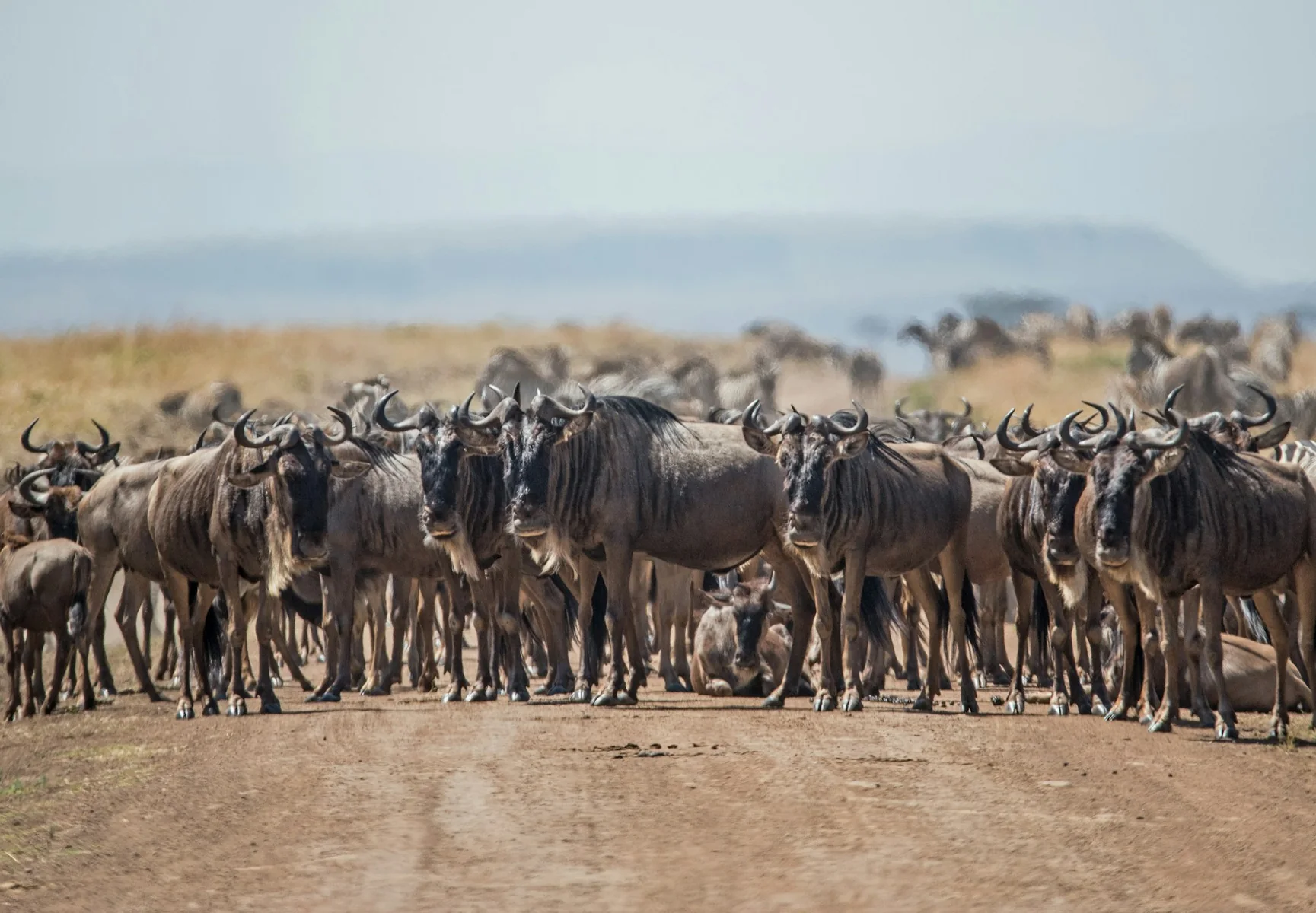
Early-year calving is associated with Ndutu and the southern Serengeti. As grazing changes, herds move through central and western sectors. Northern Serengeti and Greater Mara interest rises in the drier middle of the year, with possible river crossings that cannot be scheduled. Short rains later can draw movement south again. A route that uses both Kenya and Tanzania should earn the extra border by matching the likely stage.
Resident wildlife keeps both ecosystems rewarding when the herds are elsewhere. The Mara supports year-round cats and plains game. Serengeti regions hold their own resident patterns. Ask whether the trip is truly about migration, a first Big Five safari, photography or experiencing both countries. The honest answer can remove an unnecessary transfer.
How the Kenya to Tanzania connection works
Safari vehicles do not normally carry tourists straight across the reserve boundary. Road itineraries use formal immigration points and change vehicles according to licensing and operating arrangements. An air connection can involve a Kenyan airstrip, a ground border procedure and a Tanzanian airstrip, or a connection through larger airports. Each version has baggage, visa and timing details.
Treat the border as a full travel sequence. Keep passports, required certificates and booking details accessible. Confirm which company meets on each side, how luggage moves, what happens after delay and whether lunch is packed. A vague line saying “cross to Serengeti” is not enough for a premium itinerary.
| Connection | Strength | Trade-off |
|---|---|---|
| Road via formal border | Landscape and private vehicle continuity within each country | Long day and vehicle change |
| Bush-flight connection | Protects time | Strict baggage and coordinated steps |
| Flight via Nairobi or Arusha | More conventional airports | Backtracking |
| One-country safari | Simpler and slower | Less cross-border contrast |
Where to stay in the Masai Mara
The eastern reserve gives broad access and camp choice. Musiara serves northern riverine country. The Mara Triangle opens the west. Conservancies such as Mara North, Naboisho and Olare Motorogi can add lower vehicle density, night drives and walks under their own rules. A short stay needs one well-positioned base. Four or five nights can justify a reserve and conservancy split.
Named choices span many styles: Governors’, Little Governors’, Angama Mara, Mara Serena, Rekero, Entim, Sand River, Sala’s Camp, Kicheche properties, Mara Plains, Mahali Mzuri and Cottar’s 1920s Camp. They are not interchangeable. Land position, vehicle policy, airstrip and season should narrow the list before design and price.
Southern, central, western and northern Serengeti
The southern plains and Ndutu area matter strongly during calving months. Central Seronera offers year-round resident wildlife and a wide accommodation network. The western corridor becomes relevant during parts of the northward movement. Northern Serengeti serves late dry-season herd concentrations and possible Mara River activity. Camp selection has to follow the month and transfer path.
Permanent lodges provide stable facilities, while seasonal tented camps may position closer to a migration stage. A moving camp name does not guarantee that every unit sits beside the herds. Ask for the exact seasonal location, nearby airstrip, drive area, private vehicle terms and what the trip will do if the movement differs.

Where Ngorongoro fits
Ngorongoro Crater adds a contained highland and caldera landscape unlike the open migration plains. It can fit naturally after central or southern Serengeti on a route toward Arusha. It fits less naturally when a northern Serengeti and Mara itinerary already has limited days and then must turn far south before Zanzibar.
One crater night can be rushed, especially when the lodge sits far from the descent road. Two nights protect one full crater experience and a slower highland transition. Families should consider altitude, early start and vehicle time. Photographers should understand that traffic patterns and descent rules differ from private conservancy freedom.
Stone Town, north, east and southeast Zanzibar
Stone Town offers history, food, carved doors and a walking urban experience. Nungwi and Kendwa in the north are popular for beaches and sunsets with different tidal character from much of the east coast. Paje and Jambiani appeal to travellers interested in wind sports, village atmosphere and long tidal flats. Matemwe and the northeast can suit quieter stays and reef access. One “Zanzibar hotel” label hides these differences.
Choose the coast by desired swimming, tide, nightlife, diving, food and transfer time. A split between Stone Town and the beach works when there are at least five or six island nights. With four nights, one beach base and a planned Stone Town visit may be calmer than moving hotels.
| Area | Character | Check |
|---|---|---|
| Stone Town | History, food and walking | Heat, stairs and vehicle access |
| Nungwi or Kendwa | Livelier north and sunsets | Hotel density and beach atmosphere |
| Paje or Jambiani | Tides, kitesurfing and village coast | Swimming conditions by tide |
| Matemwe and northeast | Quieter reef-oriented stay | Boat transfer and sea conditions |
Visas, Zanzibar insurance and documents
Kenya and Tanzania have separate immigration requirements, and nationality changes what is needed. Zanzibar is part of Tanzania but applies its own mandatory inbound insurance requirement for foreign visitors. Use the official government portal and carry the certificate or QR code as instructed. Do not rely on a general travel-insurance policy as a substitute without official confirmation.
Check passport validity, visas, yellow-fever certificate rules for the actual routing and any health guidance well before departure. Keep digital and paper copies. Requirements can change, so check the official portals while planning and again before departure.

Flights and baggage across three regions
Bush flights in Kenya and Tanzania commonly use small aircraft and soft-sided baggage limits. International or larger regional flights to Zanzibar may allow more, but the smallest allowance governs unless luggage storage or freight is arranged. Camera equipment must be discussed before ticketing, not at the airstrip.
The flight chain may include Wilson, Kilimanjaro, Arusha, Seronera, Kogatende or Zanzibar depending on route. Airport names and terminals matter. Leave buffer before an international departure and avoid two fragile connections on the same final day.
What changes the cost
Peak-season camps, internal flights, private vehicles, park and conservancy fees, crater access, border handling, Zanzibar hotel and meal plan shape the total. The most expensive mistake is not always a luxury lodge. It can be a poor route that flies backward, changes camps too often or needs private transfers to repair an unrealistic plan.
The quote should name every camp, seasonal location, room, flight, baggage rule, border step, vehicle arrangement, fee day, Zanzibar hotel, meal basis and entry cost excluded from the package. Compare one complete route against another, not a safari price against a beach-only price.
Mistakes that turn East Africa into an airport tour
The first mistake is giving every famous place two nights. Two Mara nights, two northern Serengeti nights, one crater night and two Zanzibar nights may look complete, yet arrival and departure consume much of each stay. The second is using both countries when the migration stage sits clearly in one. The third is changing Serengeti camps without calculating the flight or road time between them.
The fourth is treating a border connection as an ordinary game drive. Immigration, vehicle handover, airstrips and weather need their own plan. The fifth is choosing Zanzibar by hotel brand without choosing a coast. A lively northern beach, tidal southeast village and Stone Town hotel deliver very different endings.
A stronger journey normally uses three or four Mara nights, a deliberate border day, four or more nights in one or two useful Tanzania areas and four or more island nights. It keeps one operator responsible for the connection chain, names every airport and airstrip, and leaves an international departure buffer. Fewer camps can produce more wildlife because the guide is not always driving toward the next check-in.
| Weak itinerary habit | What it costs | Stronger choice |
|---|---|---|
| Two nights everywhere | Usable time | Three or four nights in core areas |
| Both countries without a seasonal reason | Border time and budget | Follow the likely migration stage |
| Unclear border line | Missed handover risk | Name every vehicle and immigration step |
| Two Zanzibar nights | No real recovery | Use at least four nights |
| Small-aircraft luggage ignored | Airstrip disruption | Plan soft bags and storage |
Independent videos for the safari and island legs
These films are useful because they show small-aircraft boarding, airstrips, dust, game-drive pace and the sudden change to island life. Their own hotels, prices and timings belonged to their trips.
Flying into the Masai Mara and Serengeti
Independent aviation filmmaker Sam Chui shows the aircraft, dirt airstrips and wildlife around both ecosystems.
From Tanzania safari to Zanzibar
An independent traveller follows the Serengeti, Ngorongoro, a balloon flight and the move to Zanzibar.
What travellers say after the trip
These are exact words from public reviews and discussions. Each person had their own route, budget and expectations, so the value is in the detail rather than treating one experience as a promise.
TLDR: Kenya/Masai Mara (Hemingway’s Ol Seki Mara) and Tanzania/Serengeti (andbeyond Grumeti Serengeti Lodge) are perfection. Zanzibar/Zuri is a total skip.
A traveller loved both safari regions but disliked their chosen Zanzibar stay, a useful reminder that the island hotel and coast need their own careful choice.
I would personally take an early morning flight to Zanzibar and spend more time there than Arusha City or add more days in Serengeti.
A traveller responding to a twelve-day itinerary and choosing usable safari or island time over a lightly planned city stop.
Maasai Mara and Serengeti are one ecosystem but it is illegal to use the road being suggested by Google Maps.
A route discussion warning travellers not to mistake a wildlife boundary for a public cross-border road.
Masai Mara, Serengeti and Zanzibar extension questions
How many days do I need?
Twelve days is a compact minimum. Fourteen to sixteen days gives the Mara, Serengeti and Zanzibar enough time without constant transit.
Can I drive directly from the Masai Mara into the Serengeti?
Tourist routes use formal border and vehicle-change arrangements. The wildlife boundary is not a normal international road crossing for visitors.
Can I fly between the Mara and Serengeti?
Yes, specialised connections may combine airstrips, ground transfer and immigration. The live routing and baggage terms need confirmation.
Should I include Ngorongoro?
It adds a distinct crater experience but requires more time and a coherent northern Tanzania route. Do not add it to a short trip only for the name.
When is migration best?
Different stages occur in different Serengeti and Mara areas across the year. River crossings and herd positions remain unpredictable.
How many Zanzibar nights?
Four or five nights is a useful minimum after safari. Add more for diving, Stone Town and a truly slow beach stay.
Is Zanzibar in Kenya?
No. Zanzibar is a semi-autonomous part of Tanzania, so Tanzanian entry requirements apply.
Is special Zanzibar insurance required?
Foreign visitors should check and obtain the official mandatory inbound insurance that applies to Zanzibar entry, using the government portal.
Which airport serves Zanzibar?
Abeid Amani Karume International Airport serves the island near Zanzibar City. Hotel transfer time depends on the chosen coast.
Can this journey be customised?
Yes. Countries, migration regions, Ngorongoro, flights, camp levels, island area and number of beach nights can all change.
Sources and further reading
Official park, heritage, tourism, aviation and regulatory sources support the practical details in this guide.
- Tanzania National Parks: Serengeti visitor guide
- Ngorongoro Conservation Area Authority
- Mara Triangle visitor information
- Kenya electronic travel authorisation
- Tanzania electronic visa portal
- AirKenya baggage policy
- Safarilink travel information
- Zanzibar Commission for Tourism
- Zanzibar official inbound insurance portal
Design the East Africa journey as one story
Share your dates, international flights and the balance you want between wildlife and island time. We will build the border, camps and beach around a realistic rhythm.
Start the Kenya, Tanzania and Zanzibar route
Dates, total nights and comfort level are enough for the first map.